How much does roof color really change attic heat?
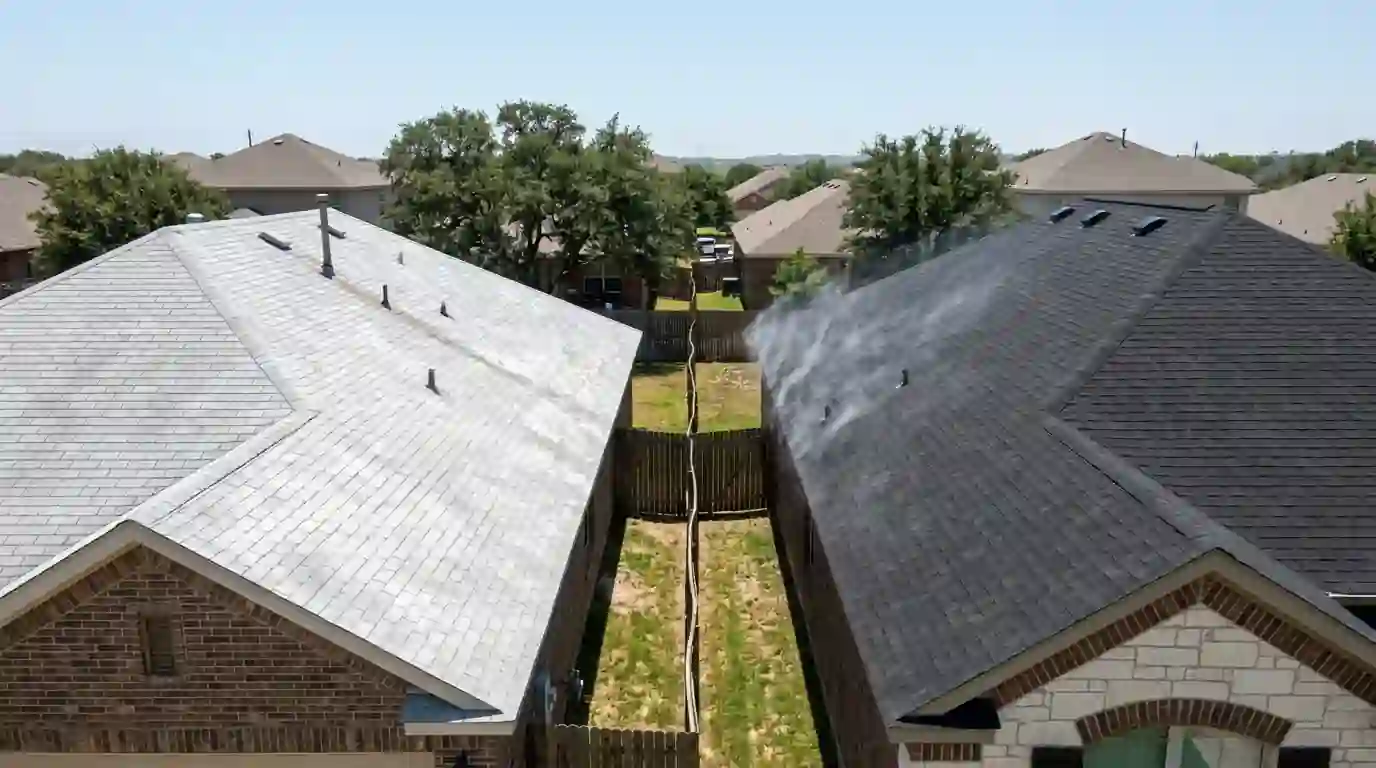
A dark roof soaks up most of the sunlight that hits it and turns it into heat. A light or reflective roof bounces more of that energy back to the sky. On a clear July afternoon, that difference shows up as a noticeably cooler roof surface, and some of the benefit carries through to the attic below.
How much you feel it inside depends on what sits under the roof. Summer attic temperatures here commonly pass 140 to 150 degrees, and many San Antonio homes run their ducts and air handler through that space. Color helps most on flat roofs, low-slope additions and vaulted ceilings with little insulation, where there's no deep, vented attic to buffer the heat.
Reading the numbers on a product sheet
Color names like Weathered Wood or Desert Tan don't tell you much about heat. Two numbers do. Solar reflectance measures how much sunlight a surface bounces away, and thermal emittance measures how readily it releases the heat it does absorb. Higher is better for both in a hot climate.
The Cool Roof Rating Council publishes tested values for many roofing products, and manufacturers often list them on product sheets. Ask for both the initial and the aged values, since dust, sun and weathering lower reflectance over the first few years.
- Solar reflectance: the share of sunlight the surface reflects.
- Thermal emittance: how well the surface sheds absorbed heat.
- Solar reflectance index: a single score that combines the two.
- Aged values: what the product measures after outdoor exposure, which is closer to real life.
Shingle colors that make sense in South Texas
True white architectural shingles are rare, so most homeowners choose between light grays, tans, browns and charcoal blends. Lighter blends run cooler, but the bigger jump comes from shingle lines made with reflective granules, which can keep a medium color while reflecting more sun. Those lines usually cost a little more and come in fewer colors.
Color doesn't change a shingle's impact rating, so you can pair a lighter blend with Class 4 impact-rated shingles if hail is your bigger worry. Light colors do show dark algae streaks sooner on shaded north slopes under live oaks. Algae-resistant granules help, and most mid-tone blends hide streaking and minor granule loss well.
Metal roof finishes that hold up to the sun
Metal gives you the widest range of reflective colors. Bare Galvalume reflects well when new, and painted whites, light grays and tans can reflect even more. Darker painted metal still gets hot in the afternoon, but it gives up that heat quickly once the sun drops, which is one reason metal roofs feel different from asphalt at night.
Finish quality matters as much as color here. PVDF-based paints, sold under several trade names, resist chalking and fading far better than basic polyester paints in strong sun. Bright reds and deep blues tend to fade fastest, so earth tones and grays usually look better after many summers. Our standing seam metal roofs come in a broad color range worth comparing in person.
Tile colors on Spanish and Mediterranean homes
Clay tile gets its color from the fired clay itself, so a terra cotta or buff clay roof keeps its look for decades. Natural terra cotta sits in the middle for reflectance, and the air space under the curved tiles helps carry heat away from the deck. Lighter buff and blended clays run a little cooler.
Concrete tile can be colored all the way through or coated only on the surface. Surface-coated tiles can wear and look patchy as they age, while through-colored tiles fade more evenly. When replacing broken tiles, matching an aged color is often the hardest part, so ask about sourcing before choosing a discontinued blend.
Matching color to your house, HOA and street
A roof covers a huge share of what people see from the street, so it should work with the brick, limestone or stucco below it. Cream limestone and light stucco pair well with warm grays and sandy tans. Red brick usually looks right with charcoal, weathered brown or a muted terra cotta.
Many master-planned communities around Stone Oak, Alamo Ranch and Cibolo Canyons limit roof colors to an approved palette. Our guide to HOA roof approvals covers what to submit. In local historic districts, the City of San Antonio Office of Historic Preservation reviews exterior changes, so a big color shift on an older home may need review before work starts.
Why the attic underneath matters as much as color
A reflective roof over a poorly vented attic still traps a lot of heat. Balanced intake at the soffits and exhaust at the ridge let hot air leave, and a radiant barrier cuts the heat that radiates down from the deck. Our article on radiant barriers and attic temperatures explains how those pieces fit together.
If you're replacing the roof anyway, that's the cheapest time to fix ventilation and add a barrier, because the deck is already exposed. A lighter color plus a well-vented attic usually beats either one alone. Give us a call at (210) 750-1898, and we'll bring physical samples and show you how they look against your walls in daylight.