What is a second layer of shingles hiding?
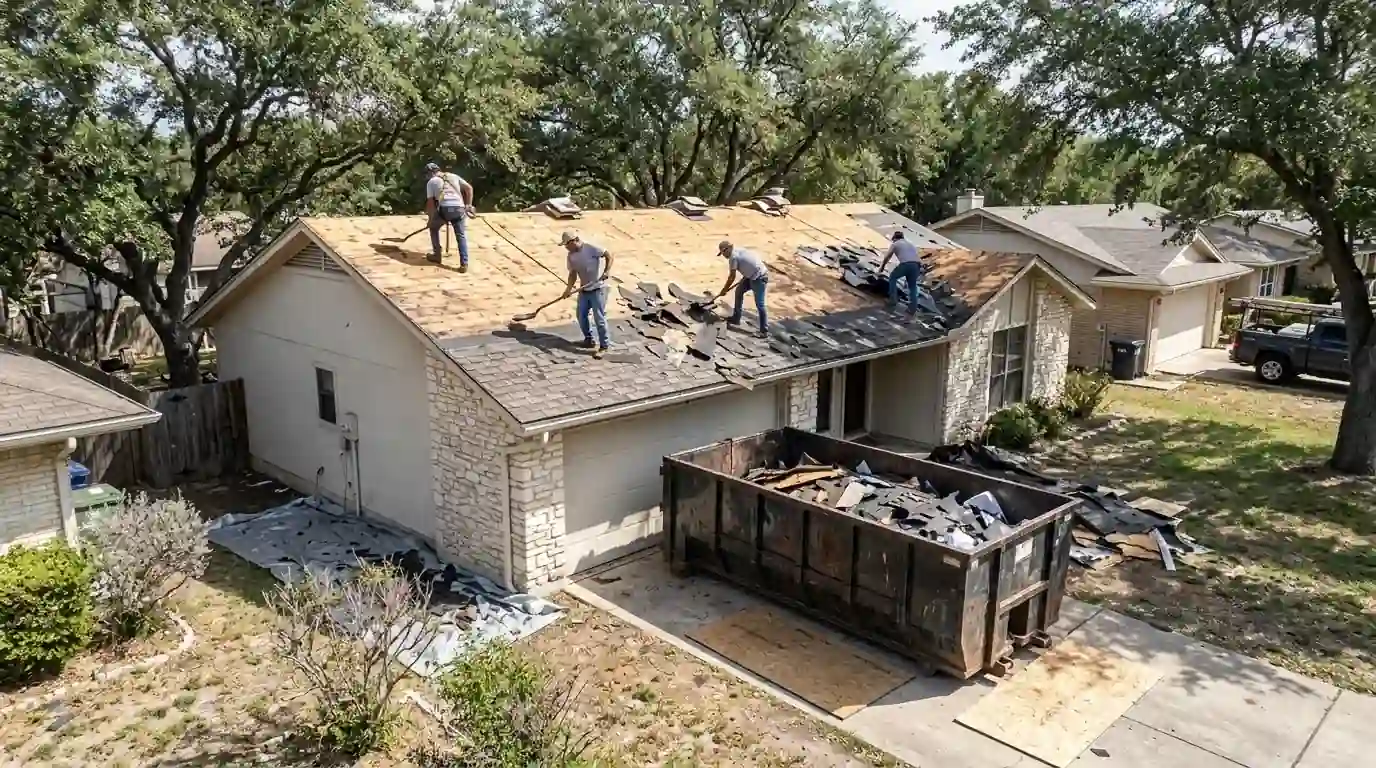
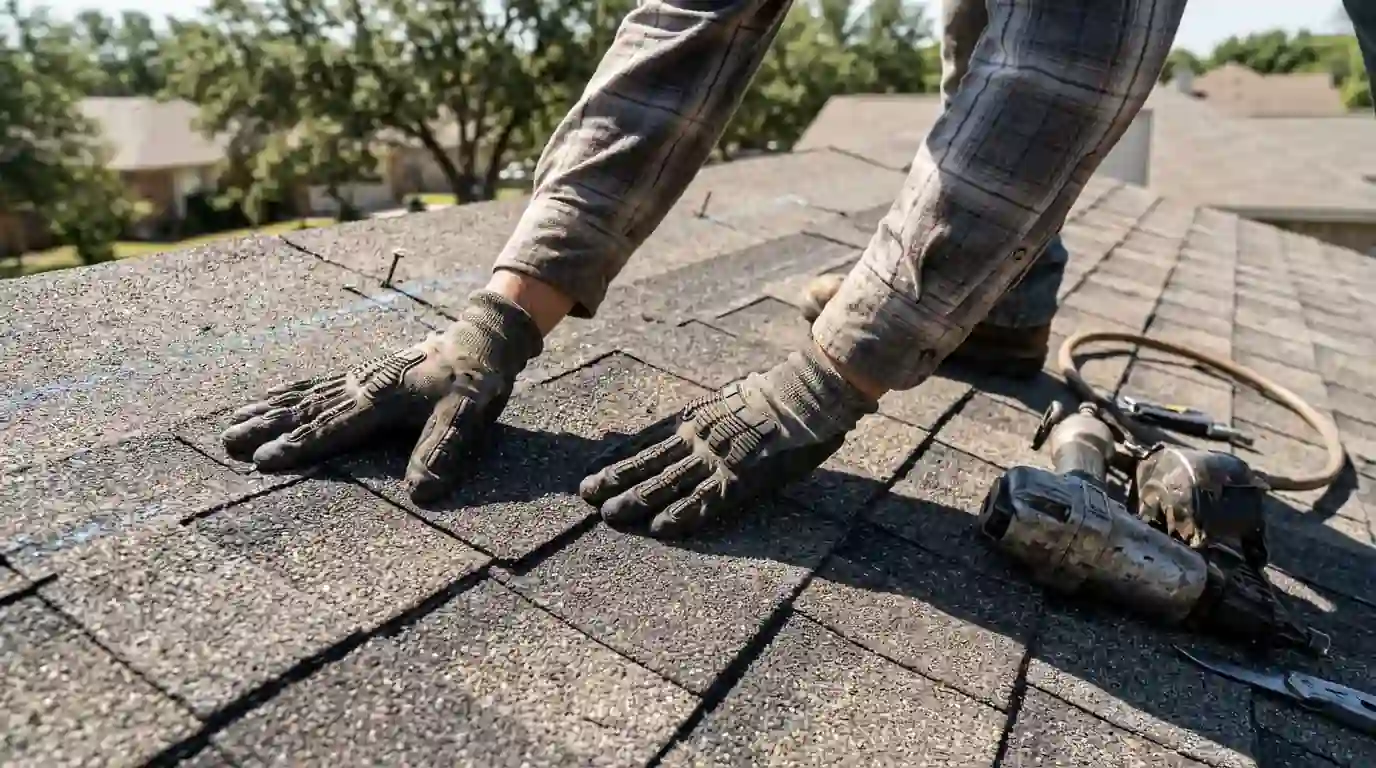
Laying new shingles over old ones was a common way to save money years ago. It adds weight, traps heat, and makes the roof surface lumpy where old tabs curl underneath. Worst of all, it hides the decking, so soft spots and rot near the eaves can go unseen for a long time.
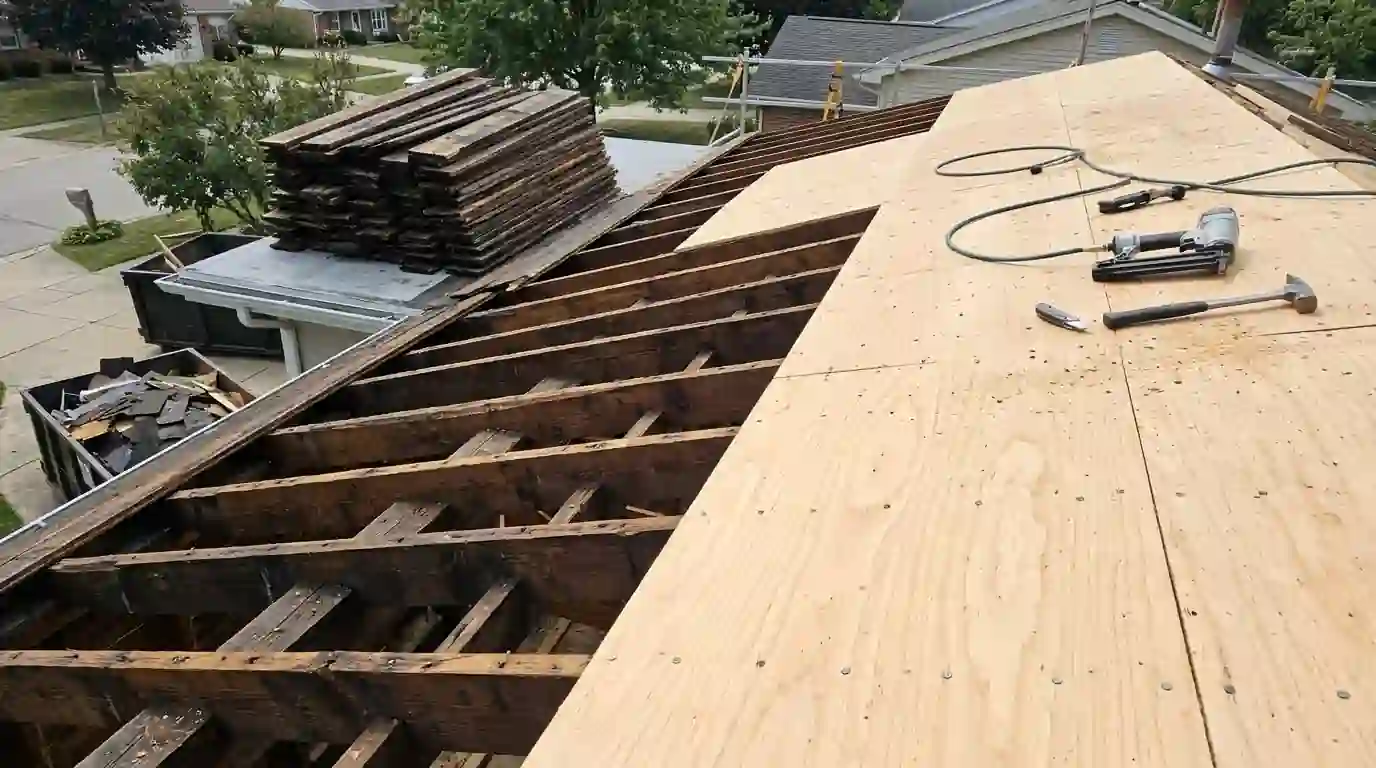
On a tear-off reroof, we strip every layer to the boards. Older Floresville homes often have plank decking with gaps between boards. Where planks are rotten or the gaps are wide, we add sheathing so new nails have something solid to grip. Our decking repair is priced per sheet, and we photograph every board we replace.
How do ranch house roofs outside town differ?
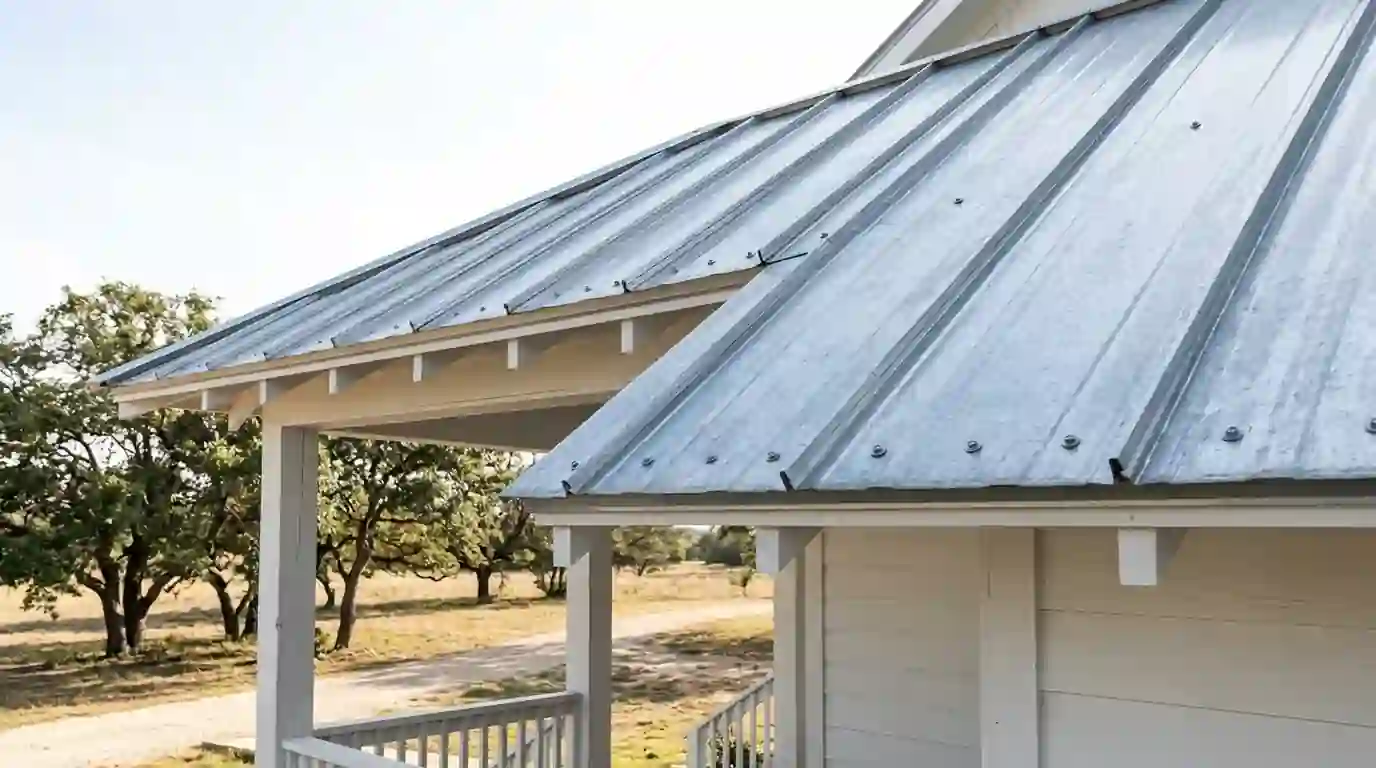
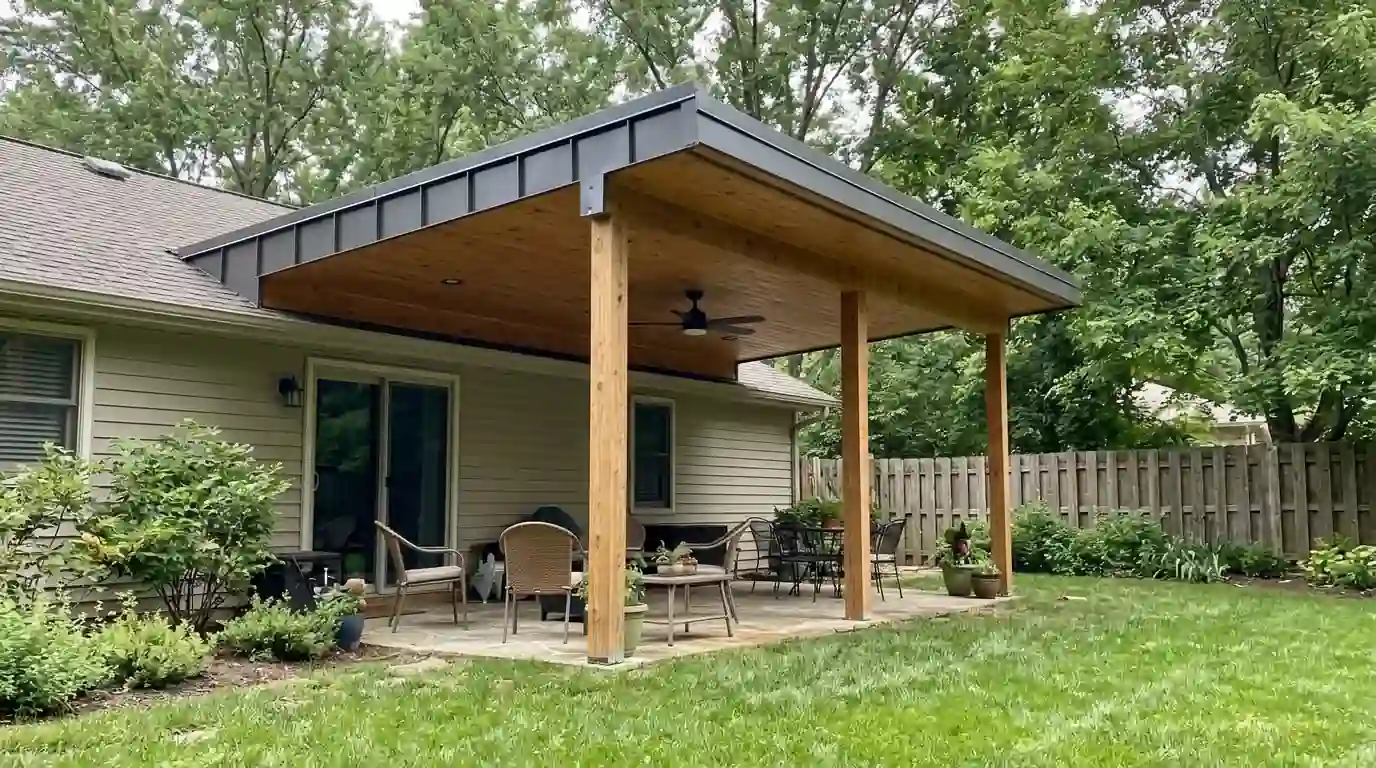
Ranch homes on acreage around Floresville often mix a shingle house roof with metal on porches, carports and barns. We inspect the whole set. Leaks on these properties frequently start where a porch roof ties into the main roof at a shallow pitch, which lets water back up under shingles during a hard rain.
For metal outbuildings and carport and patio roofs, we replace loose fasteners and rusted sheets, then fix the joint to the house with flashing that sheds water outward. It's a small detail, but it's where most porch leaks on these homes begin.
Why heat ages roofs here faster than hail does
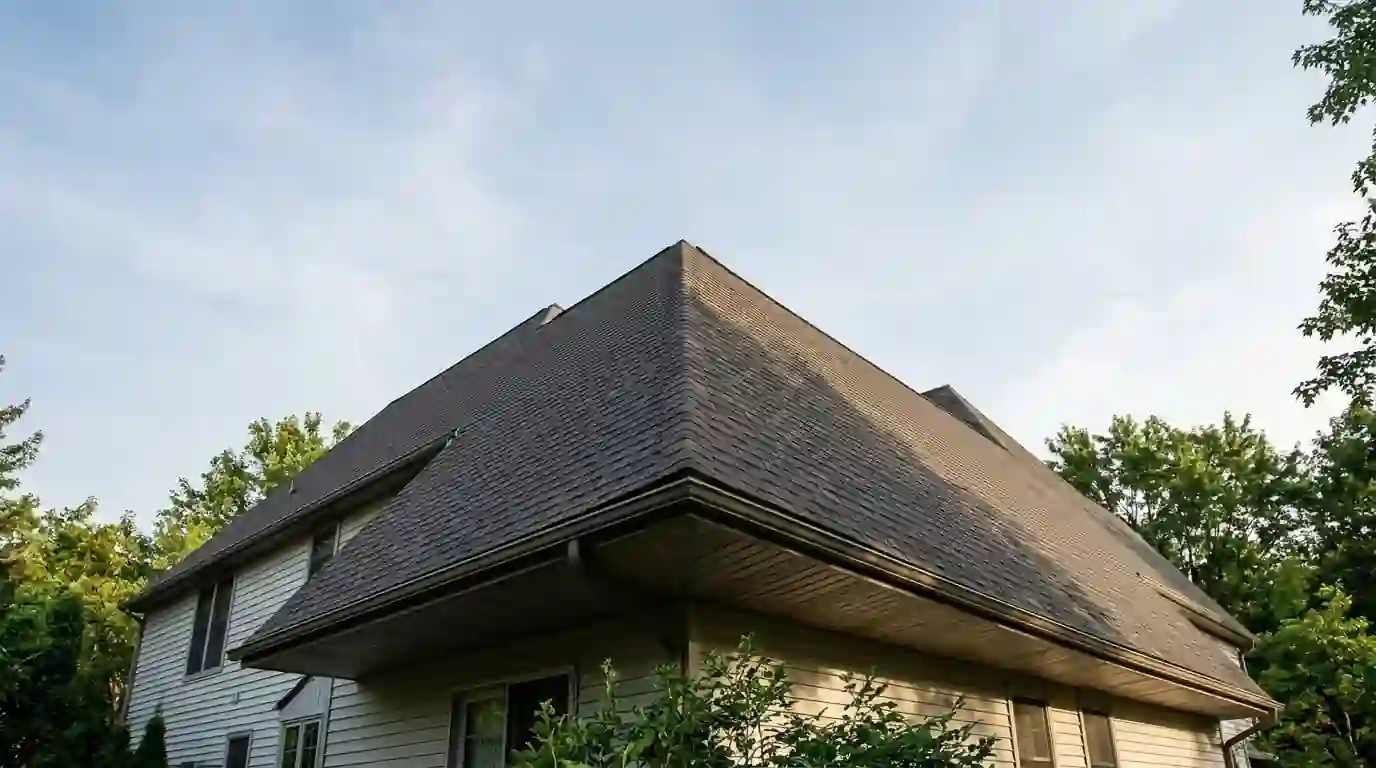
South of San Antonio, the long summer does more steady damage than any one storm. Attic temperatures commonly pass 140 to 150 degrees, and an attic with poor airflow cooks the shingles from below. That shows up as curling, blistering and early granule loss in the gutters.
We check soffit intake and roof exhaust on every inspection. Balanced attic ventilation can add years to a new roof and keep back bedrooms more comfortable. Hail still matters too, so after any spring storm we look for bruised shingles and dented vents before calling a roof sound.
If your roof is curling at the edges and you're not sure whether it's heat, age or a storm, ring our line at (210) 750-1898. We'll look, photograph it and tell you which one it is.