What we find when tearing off older Floresville roofs
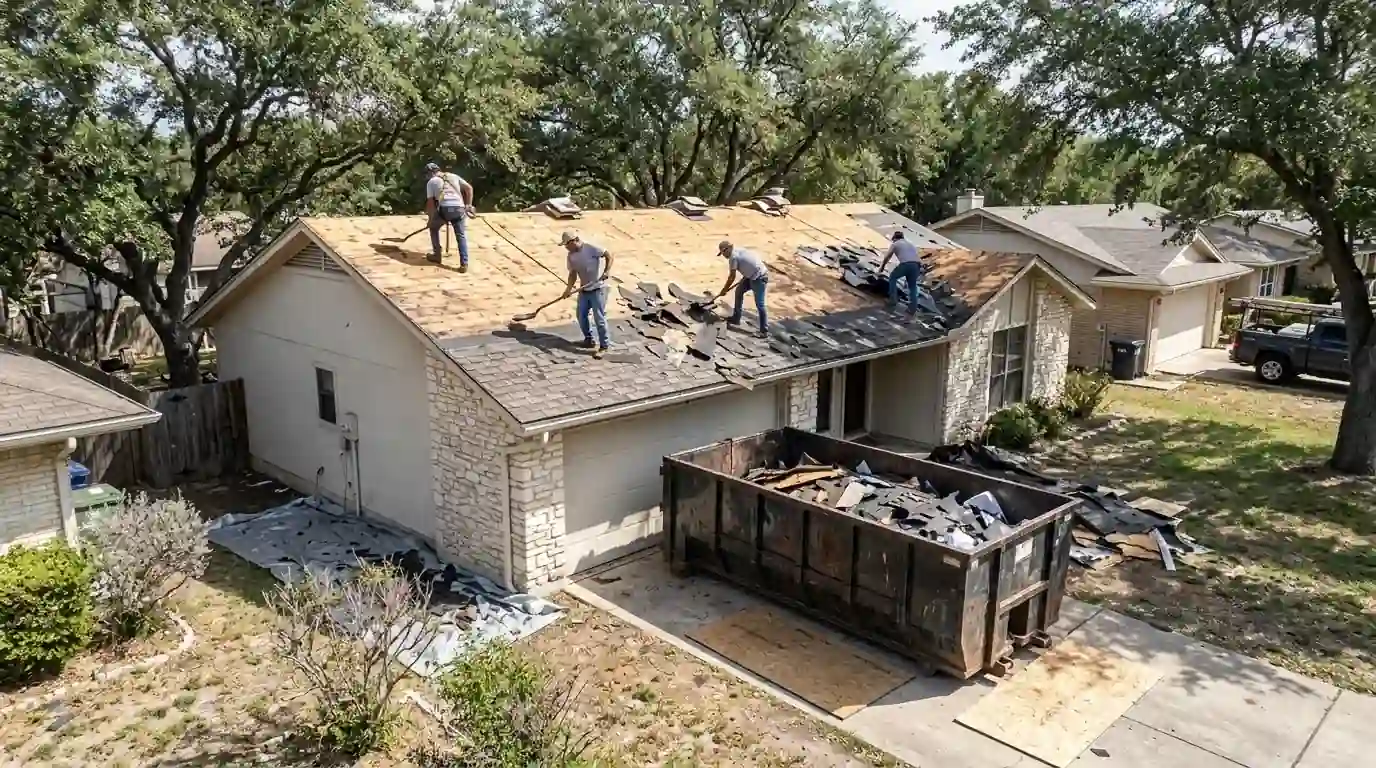
Many of the older houses near downtown Floresville have been reroofed more than once, and it's common to find a newer shingle layer nailed over an older one. Two layers add weight, trap heat and hide the condition of the decking. We tear off to the boards so we can see what's really under there.
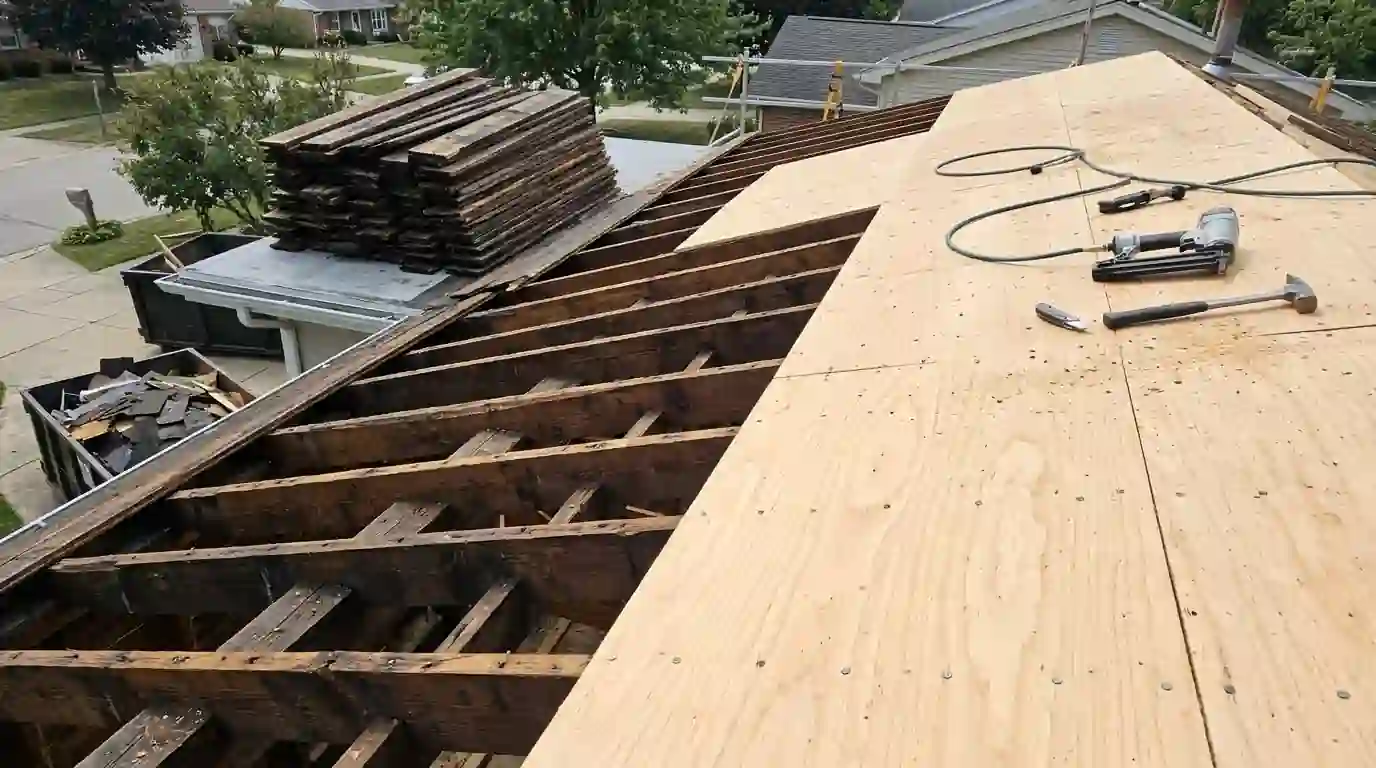
On houses from the early and middle 1900s, that decking is often 1x6 or 1x8 planks with gaps between them. Shingle nails don't hold well over wide gaps or brittle boards, so we replace bad sections or sheet over the planks. Our decking replacement work is priced by the sheet once we've seen it, which keeps the estimate honest.
How are La Vernia's newer acreage homes holding up?
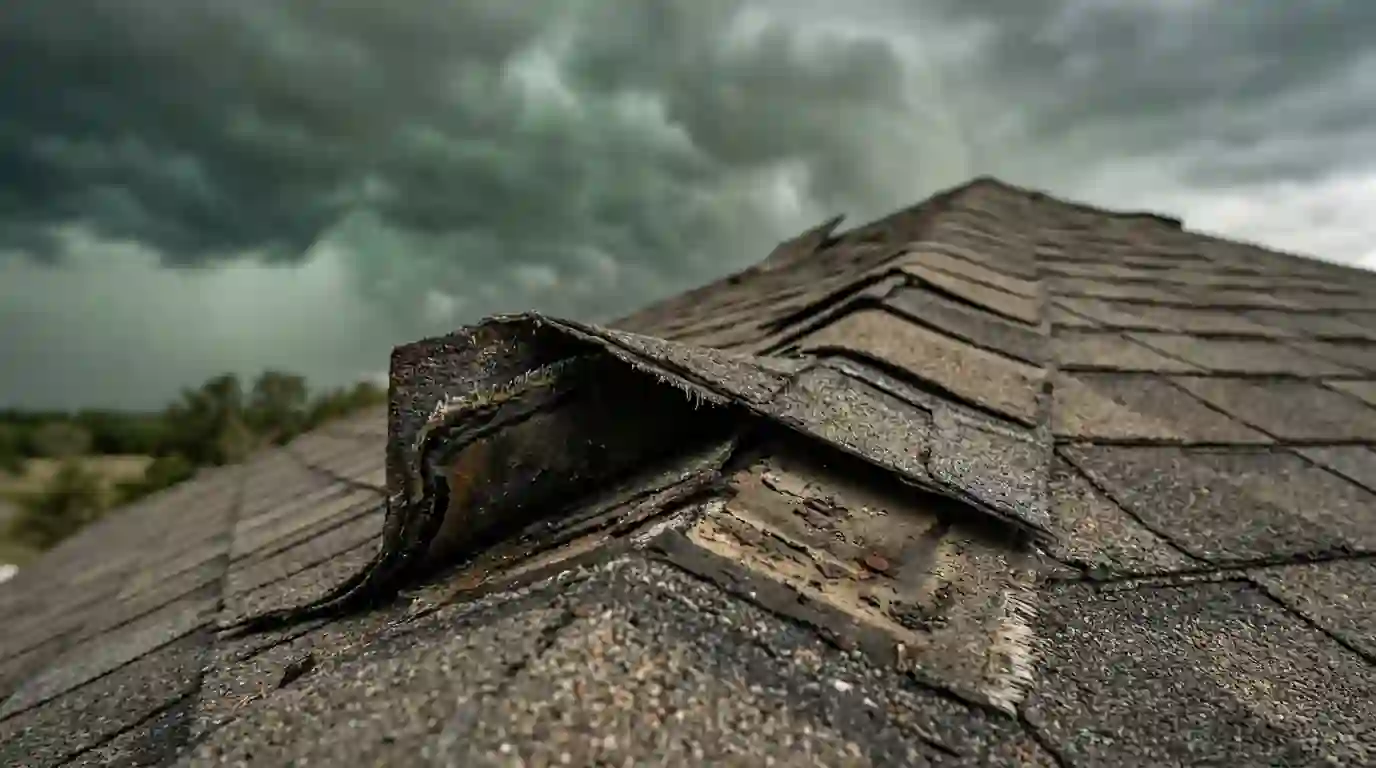
Around La Vernia, new homes on acreage lots have gone up quickly along US-87 and the farm roads. Most carry builder-grade architectural shingles, and the open lots mean nothing slows the wind before it reaches the roof. Lifted tabs along eaves and rakes are the early warning, and they're easy to fix before they turn into missing shingles.
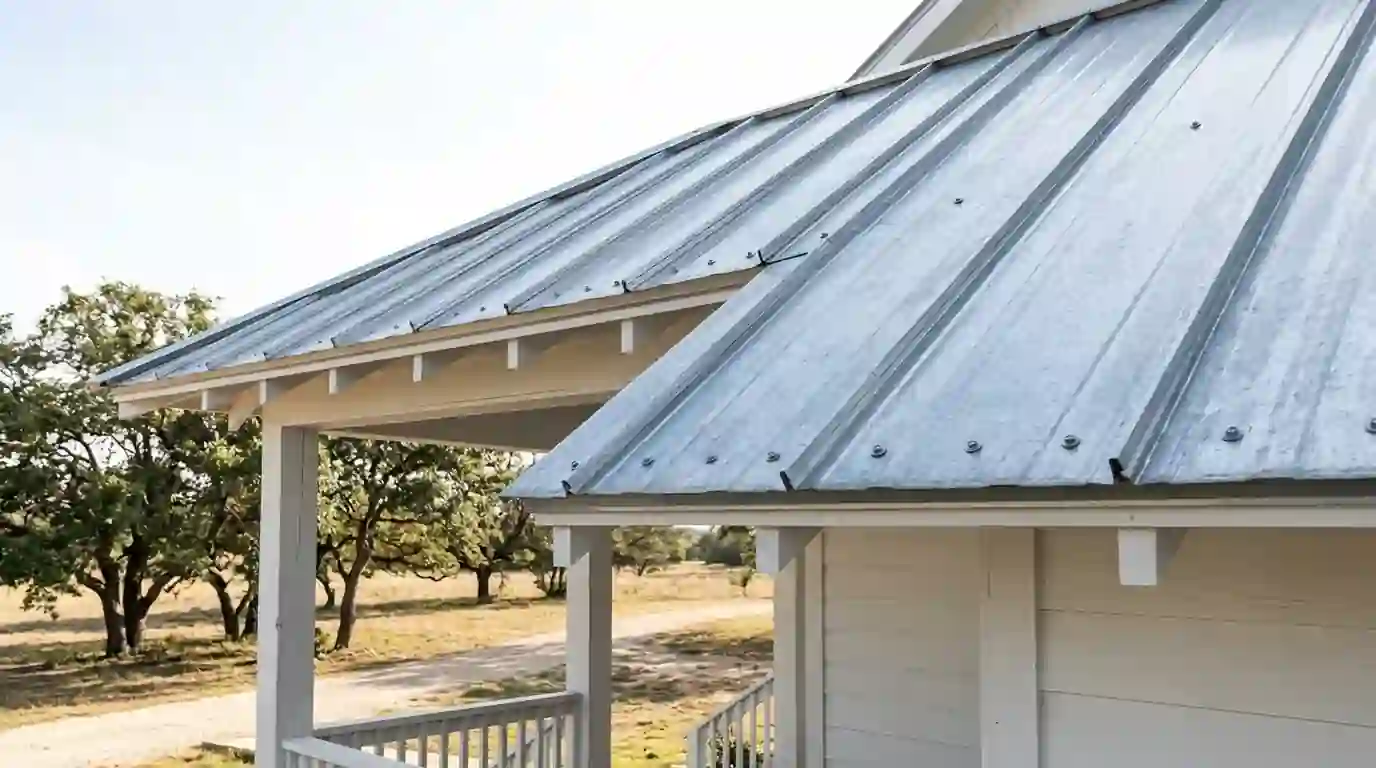
Some owners on acreage are choosing metal for their second roof, or adding a metal shop and matching the house to it. If you're weighing that change, we can price shingles and metal side by side on your actual roof.
Which outbuildings should get checked after a Wilson County storm?
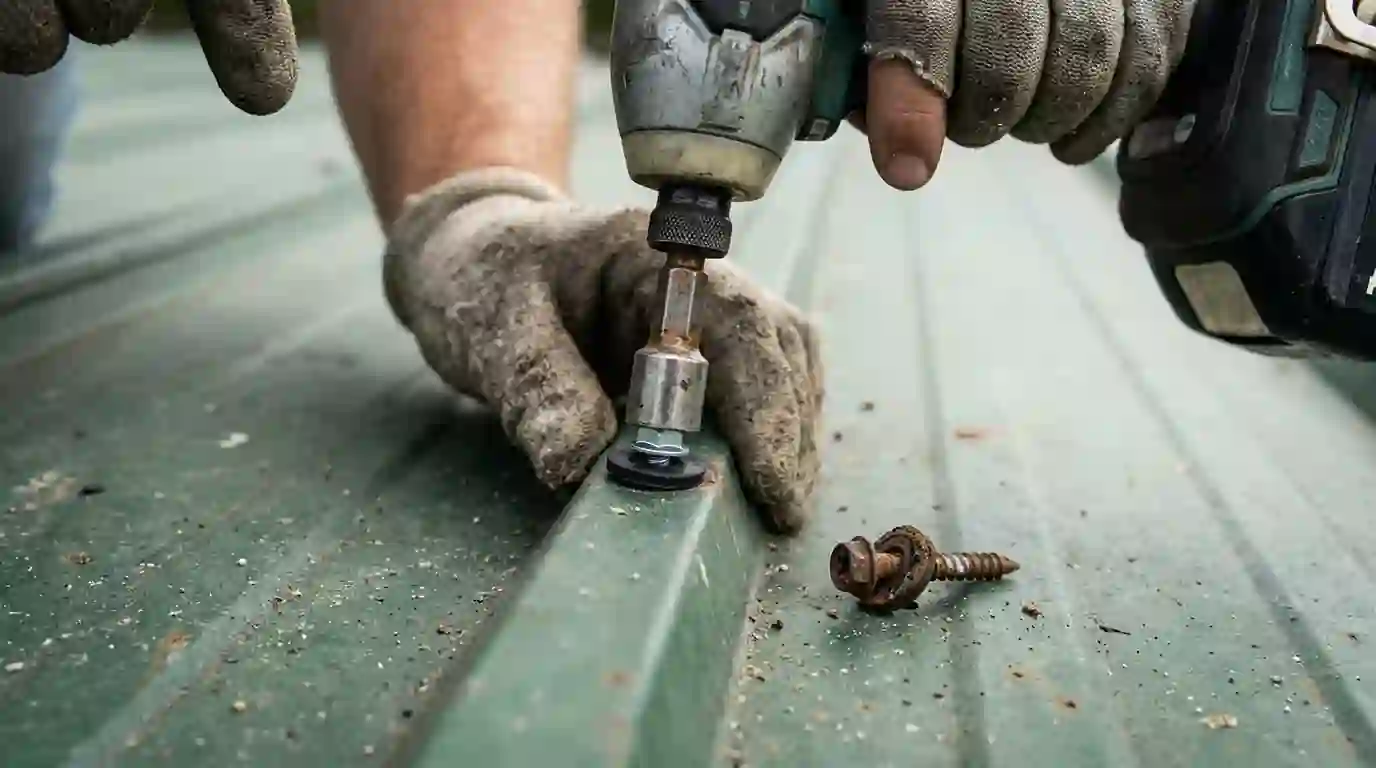
On ranch properties near Stockdale and Poth, the house is rarely the only roof. Barns, equipment sheds, carports and covered porches all catch the same hail and wind. Metal panels on these buildings tend to give out at fasteners and laps, and a single loose sheet can tear off and damage something else in the next storm.
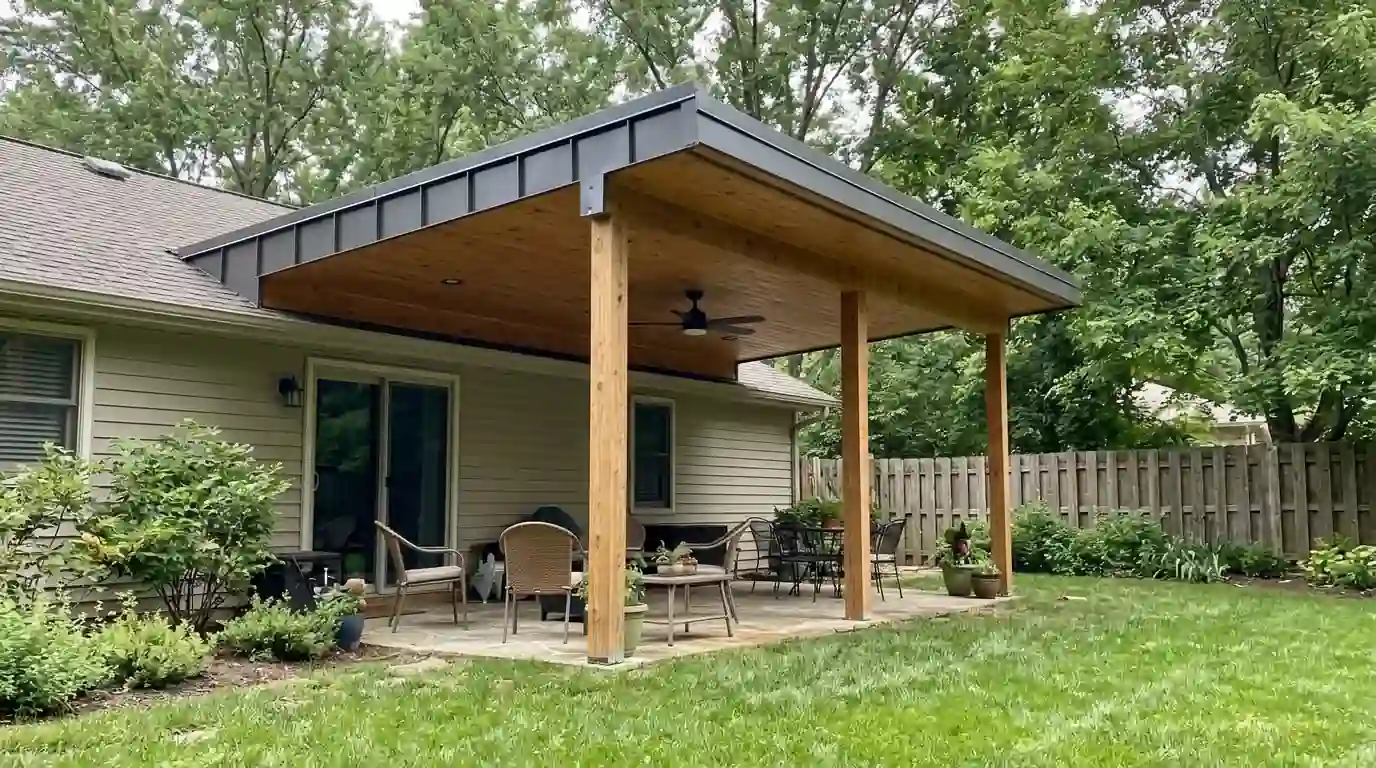
Attached porch roofs and carport and patio covers are another common leak source, especially where a low-slope porch ties into the main roof. That joint needs proper flashing, not just a bead of sealant, and we rebuild it when it's failing.
After a strong wind, walk the property before you climb anything. Look for shingle pieces in the yard, panels shifted out of line on barns and flashing bent upward at roof edges. Those clues tell us where to start, and they help you describe the damage when you phone.