Skip to content
Ortiz RoofingSan Antonio, Texas 24/7(210) 750-1898

Leak tracing and repair

Roof leak repair in San Antonio that finds the real source

A ceiling stain almost never sits directly under the hole. Water lands on the decking, runs along rafters and drips wherever gravity finally lets it go. We follow that path backward from the attic, confirm it with a moisture meter, and repair the spot where water actually gets in.

  • Phones answered 24/7
  • Roof Repair & Storm Damage
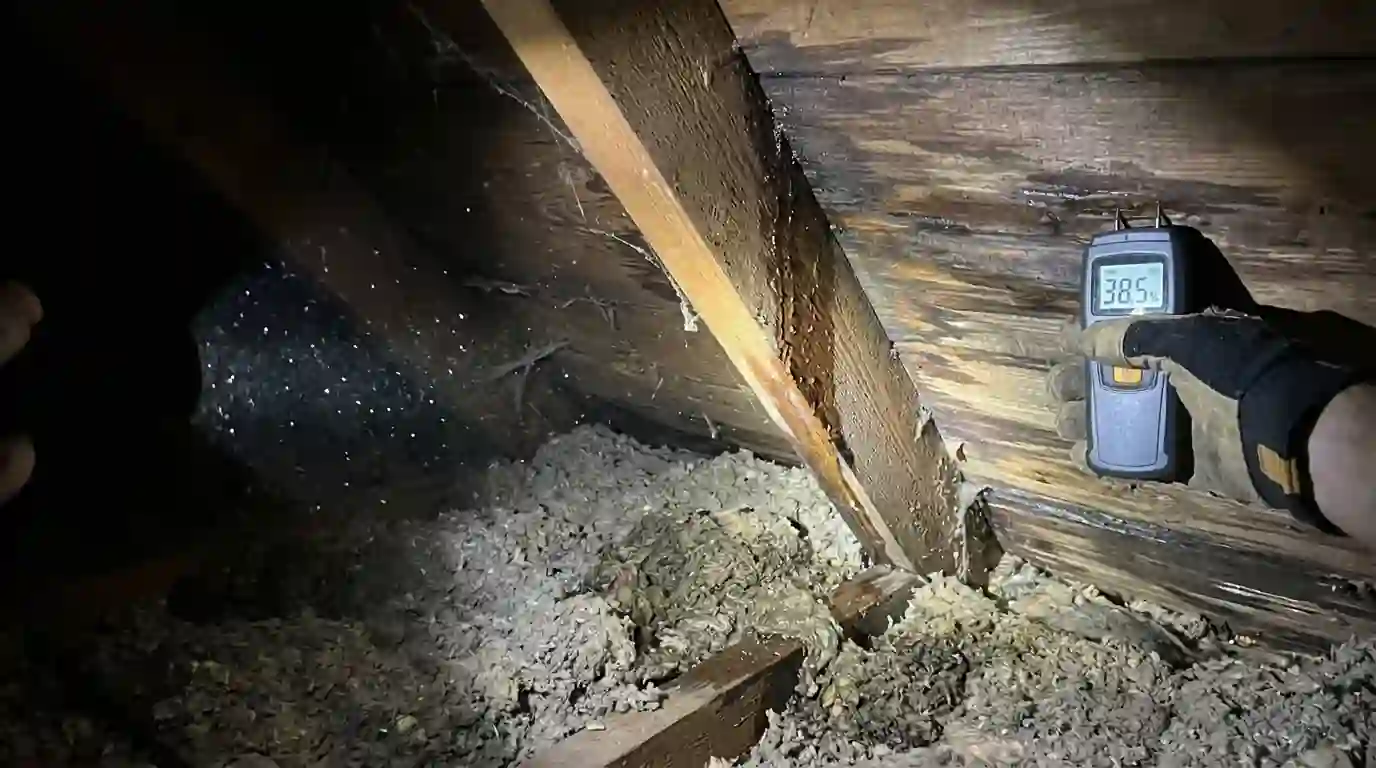
Flashlight beam in a dim San Antonio attic showing a dark water trail running down a wooden rafter toward wet blown-in insulation, a moisture meter pressed against the stained decking.
Typical San Antonio range$345 to $1,290
Short answer

Most roof leak repairs in San Antonio cost $345 to $1,290 once the source is found. The stain on your ceiling is usually several feet downhill from the entry point, so we trace the leak from inside the attic first, then confirm it on the roof. Common culprits here are pipe boots, wall flashing, valleys and nail holes from old satellite mounts.

Why the stain on your ceiling is in the wrong place

Water that gets past the shingles hits the underlayment or the decking and keeps moving. It follows the slope, clings to the underside of boards, and rides along rafters or truss chords until it reaches a low point or a nail. That's where it finally drops onto the drywall, sometimes six or eight feet from where it entered.

Insulation adds another layer of confusion. Blown-in insulation soaks up water and spreads it sideways before the ceiling shows anything. By the time a brown ring appears, the leak may have been running through several storms. That's why patching the shingles right above a stain so often fails to stop it.

How do we trace a leak back to its entry point?

We start in the attic with a bright light and a pin-type moisture meter. Decking and framing near a leak read noticeably wetter than dry wood nearby, even days after a rain. We follow those readings uphill, looking for water trails, rusted nail tips and darkened rings on the underside of the decking.

Once we have a likely entry zone, we go up on the roof and inspect everything above it: shingles, flashing, penetrations and the transitions between roof planes. If the source still isn't obvious, we water test, running a hose on one small section at a time while someone watches the attic. It's slow, but it isolates the exact spot.

We photograph each step, from the wet readings inside to the failed piece outside. You see the proof before we start the repair, and you have a record if the leak ever affects an insurance question later. If the photos show more than one entry point, we'll explain each one and price them separately so you can decide.

  • Moisture readings on decking, rafters and top plates.
  • Water trails and staining traced uphill toward the ridge.
  • Rusted or wet nail tips poking through the decking.
  • A controlled hose test on one section at a time when needed.
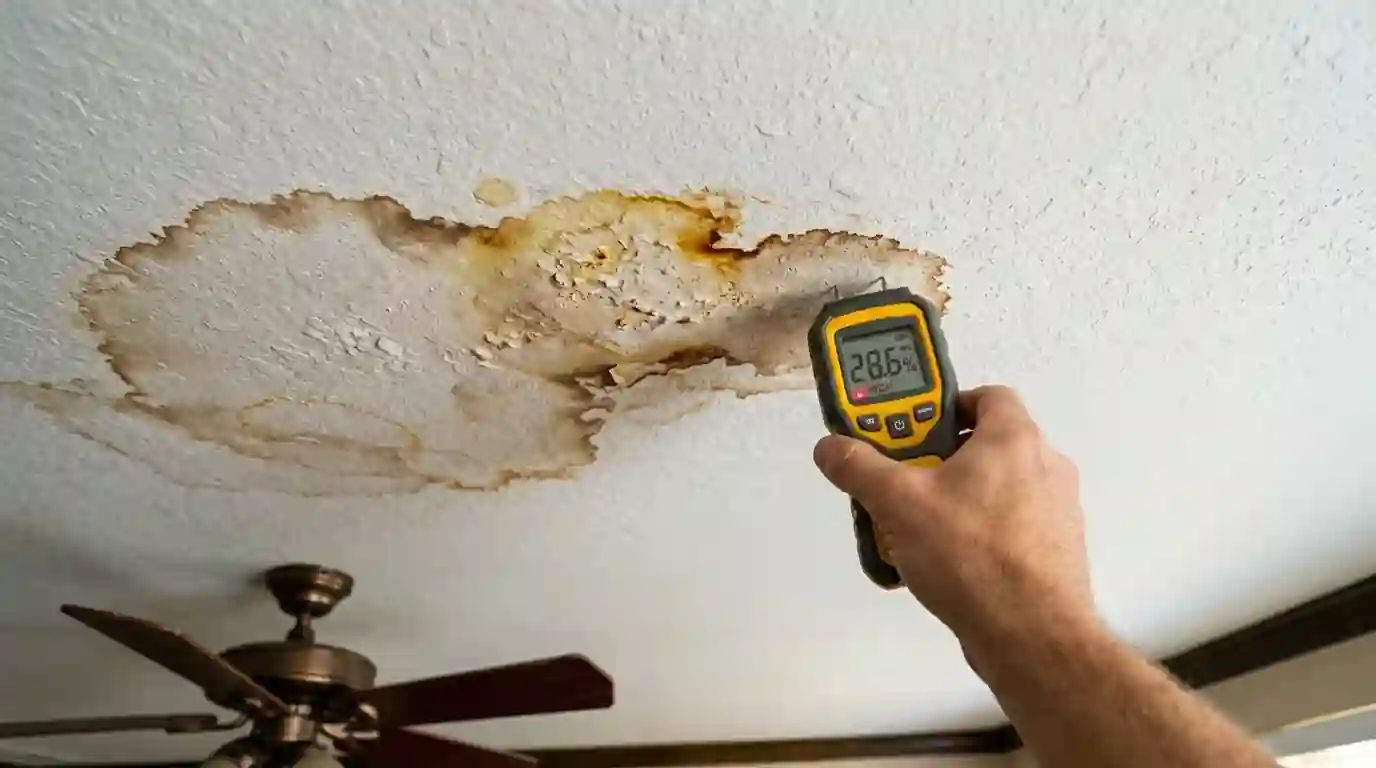
Brown water stain spreading across a white textured ceiling in a Texas living room, a moisture meter held up to the stain
Roof Leak Repair on a San Antonio area home.

Where San Antonio roofs leak most often

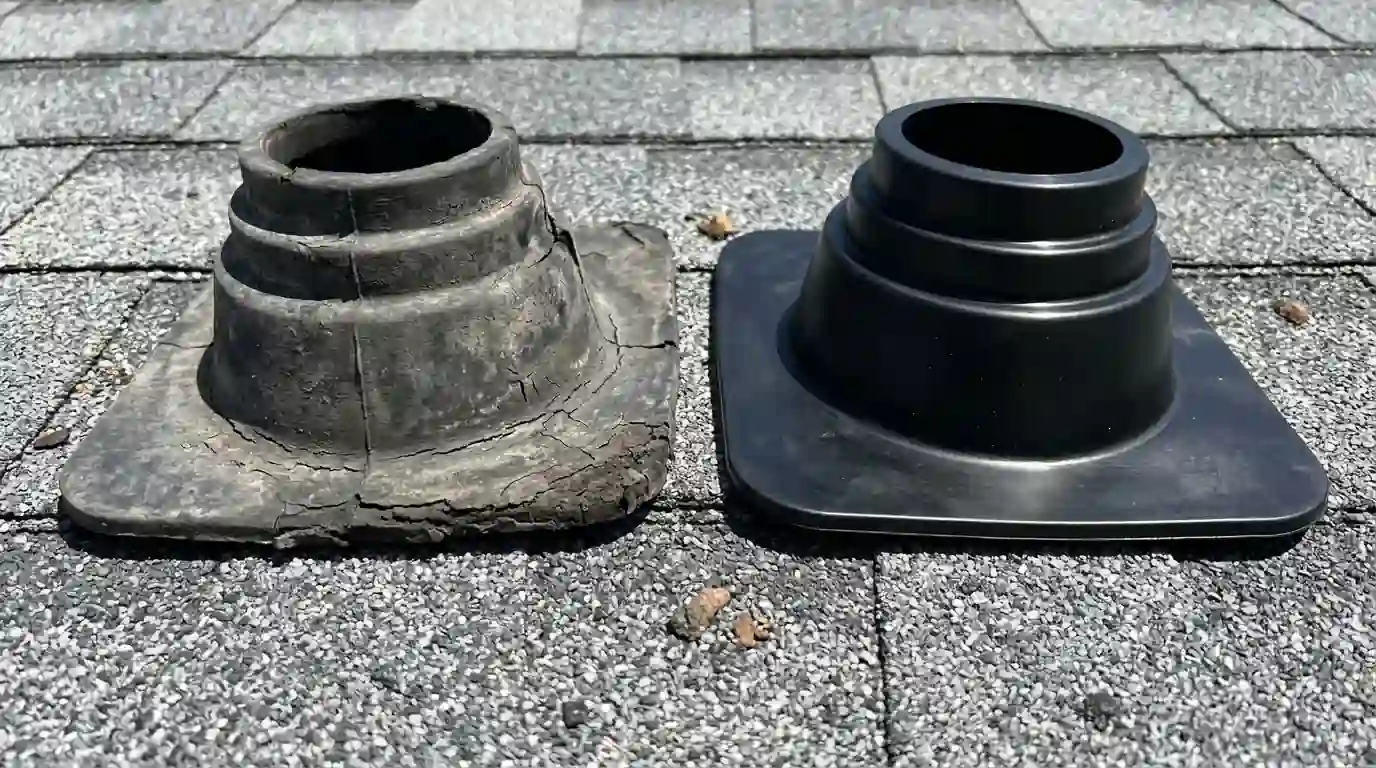
On local homes, the same handful of spots account for most leaks. Plumbing vent boots crack under years of UV, and our page on cracked pipe boots and vent leaks covers that fix in detail. Wall transitions are next, especially where a roof meets stucco or stone on a second-story wall or a garage that steps down.

Valleys collect live oak leaves and tassels, and the wet debris holds water against the shingles until it backs up under them. Old satellite dish mounts leave lag bolt holes that someone sealed with caulk years ago. That caulk dries out, cracks and lets water straight into the decking.

Wind-driven rain causes its own pattern. During spring storms, water can be pushed sideways under shingles on the windward slope, so a leak may show up only when rain comes from one direction. Telling us which way the storm blew, and whether the drip started early or late in the rain, helps narrow the search before we even climb a ladder.

What a permanent leak repair involves

Caulk on the surface isn't a repair. We remove the shingles around the entry point, check the underlayment and decking for rot, and replace any soft wood before closing it back up. Failed flashing gets new metal rather than another bead of sealant, and penetrations get new boots or properly flashed mounts.

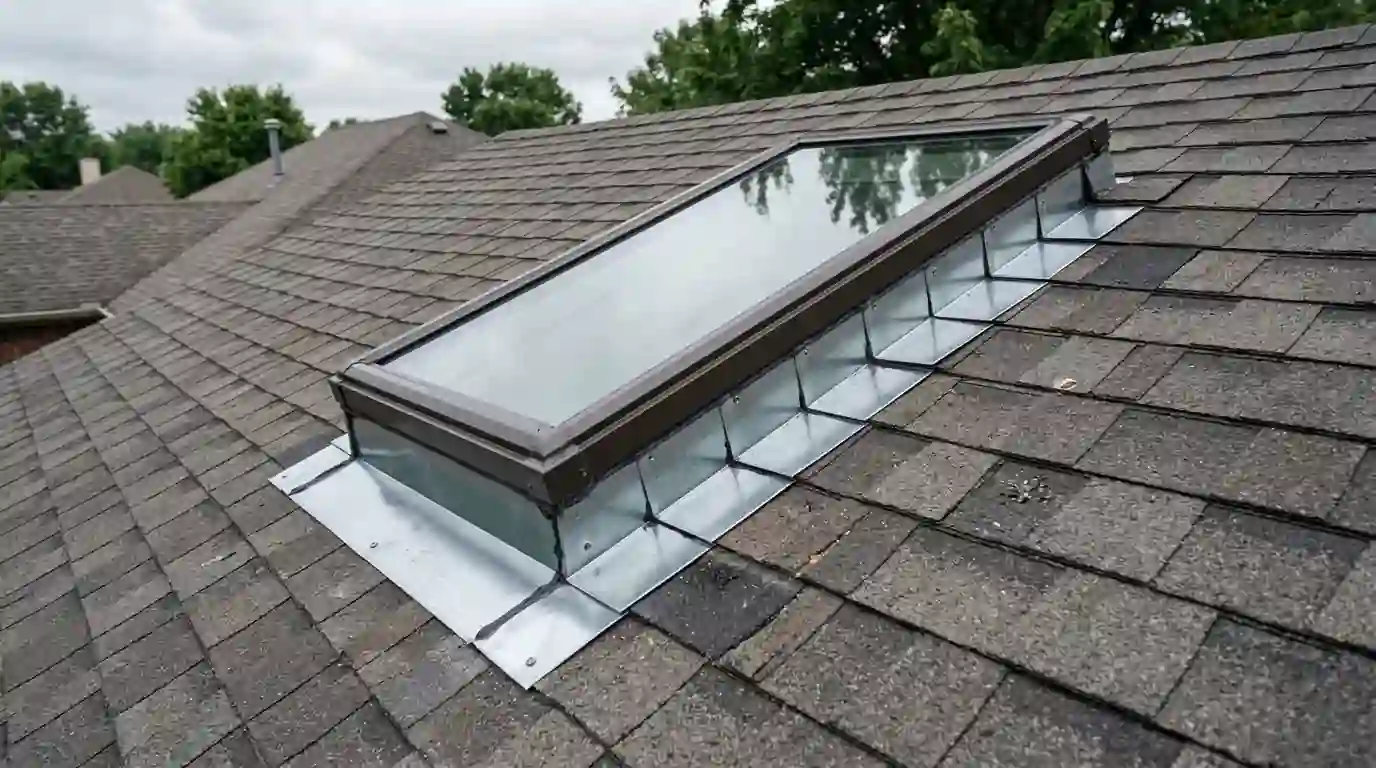
If the leak is at a wall where step or counter flashing has failed along a longer run, the work grows into a flashing job. Our wall and step flashing repairs page explains how that's handled on stucco and stone. Most single-point leaks, though, are fixed in one visit.

What should you do while a leak is active?

Move furniture and electronics, set a bucket under the drip and poke a small hole in a bulging ceiling spot to let water drain in one place. That sounds odd, but it keeps the whole ceiling from sagging or coming down. Turn off lights or fans on that circuit if water is near a fixture.

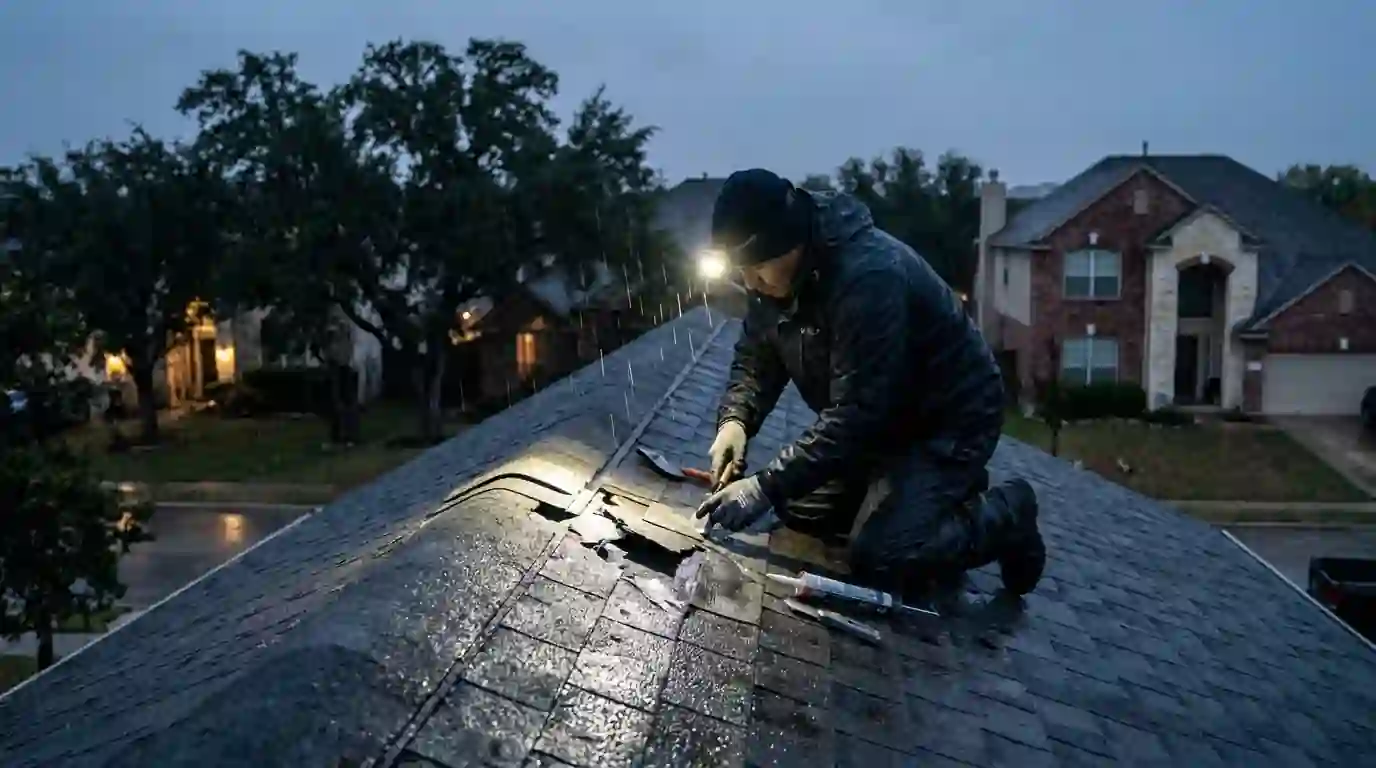
If water is pouring in during a storm or at night, that's an emergency rather than a tracing job. Ring our line any hour, and see our after-hours storm response page for what that first visit covers. We'll stop the water first and trace the source once it's safe.

How can you tell if a leak has caused hidden damage?

A short leak that dried quickly usually leaves only a stain. A leak that ran through several storms can soak insulation, rot decking and wet the top plates of walls. We check moisture levels in all of those during the trace and tell you if anything stays wet after the repair.

Wet insulation should be pulled and replaced, because it stays damp for weeks and loses most of its value. Musty smells in a closet or hallway after rain are a sign to have the attic checked, even if no ceiling stain has shown up yet.

Warning signs

Signs your roof needs roof leak repair

Brown rings on the ceiling

Rings that grow after each rain mean water is still getting in somewhere upslope.

Drips only in certain storms

A leak that appears with wind from one direction often points to wind-driven rain at a wall or vent.

Musty smell after rain

Damp insulation or decking can smell before any stain appears on the drywall.

Peeling paint high on walls

Bubbling paint near the ceiling line can mean water is running down inside the wall from a roof transition.

Rusty nail tips in the attic

Rust or water drops on nail points show moisture getting through the decking.

Dark streaks on rafters

Water trails on framing mark the path the leak takes on its way to the ceiling.

From first call to finished roof

How we handle roof leak repair from start to finish

  1. Step 1

    Interior and attic trace

    We follow stains and moisture readings uphill from the ceiling to find the likely entry zone.

  2. Step 2

    Roof inspection above the zone

    Shingles, flashing, valleys and penetrations above the wet area get a close look and photos.

  3. Step 3

    Water test if needed

    A controlled hose test on one small section at a time confirms the exact entry point.

  4. Step 4

    Open and inspect

    We remove shingles at the source to check underlayment and decking for rot.

  5. Step 5

    Repair the failed part

    Bad boots, flashing or shingles are replaced with new material, not covered with caulk.

  6. Step 6

    Moisture recheck and report

    We confirm readings are dropping and give you photos of the source and the finished repair.

What roof leak repair usually costs in San Antonio

Most leak repairs land between $345 and $1,290 in San Antonio. The price depends on the roof after inspection, mainly how hard the leak is to find and what has to be replaced at the source.

Line itemTypical range
Leak trace with attic moisture readings$145 to $235
Water test on a suspect section$95 to $185
Shingle and underlayment repair at entry point$215 to $545
Rotten decking replaced at the leak$72 to $118 per sheet
Sealing old mount holes and abandoned penetrations$125 to $265

What moves the price

  • Leaks that only appear in wind-driven rain take longer to isolate.
  • Tile, metal and steep roofs need different access and care than walkable shingle roofs.
  • Low attic clearance or no attic access slows the interior trace.
  • Rot found in the decking or fascia adds material and labor.
  • A leak with more than one entry point is priced as separate repairs.

Ranges are typical, not quotes. Your price depends on the roof we see at the inspection. See every service side by side in the roofing cost guide.

Materials we install and repair

  • GAF
  • Owens Corning
  • CertainTeed
  • Malarkey
  • TAMKO
  • Atlas Roofing
  • IKO
  • Eagle Roofing
  • Westlake Royal
  • DaVinci Roofscapes
  • Englert
  • Carlisle
  • Velux
  • Solatube
  • GAF
  • Owens Corning
  • CertainTeed
  • Malarkey
  • TAMKO
  • Atlas Roofing
  • IKO
  • Eagle Roofing
  • Westlake Royal
  • DaVinci Roofscapes
  • Englert
  • Carlisle
  • Velux
  • Solatube
  • GAF
  • Owens Corning
  • CertainTeed
  • Malarkey
  • TAMKO
  • Atlas Roofing
  • IKO
  • Eagle Roofing
  • Westlake Royal
  • DaVinci Roofscapes
  • Englert
  • Carlisle
  • Velux
  • Solatube

Answers

Roof Leak Repair questions from San Antonio homeowners

Why does my roof leak only when rain comes from a certain direction?

Wind pushes rain sideways under shingles, behind flashing and up into vents on the windward side. A wall transition or vent cap that stays dry in calm rain can leak badly in a storm from the north or southeast. Tell us the storm direction when you call, because it narrows down where we start looking.

Can a roof leak repair be done before the roof dries out?

The trace is most reliable a day or two after rain, while the wet path is still readable in the attic. The repair itself needs a dry surface so new shingles seal and materials bond. If rain is coming back soon, we can dry-in the entry point temporarily and return for the permanent leak fix.

How long does it take to find a hard-to-locate roof leak?

Most leaks are found within one to two hours of attic and roof inspection. Intermittent leaks that appear only in heavy or wind-driven rain can take a water test, which adds another hour or two. In rare cases we schedule a second visit during or right after a storm to watch the water move.

Should I replace my ceiling drywall right after a roof leak repair?

Wait until the attic and drywall read dry, usually one to three weeks. Painting over a stain too soon can trap moisture and invite mold. Small dry stains often clean up with a stain-blocking primer. Sagging or soft drywall should be cut out and replaced once the roof leak is confirmed stopped.

Is a leaking roof always a sign that the roof needs replacing?

No. Most leaks on San Antonio homes come from a single failed part, like a cracked pipe boot or loose wall flashing, on a roof that still has years left. We only recommend replacement when the shingles themselves are worn out across the slopes or leaks keep starting in new places.

Related work

Other roof work that often goes with this job

Close view of a roofer's gloved hands pressing a replacement architectural shingle into place on a sunny San Antonio ranch home roof, nail gun beside it

Roof Repair

Fixes for lifted shingles, nail pops, cracked ridge caps and small storm spots, with a straight answer on repair versus replacement.

Learn more
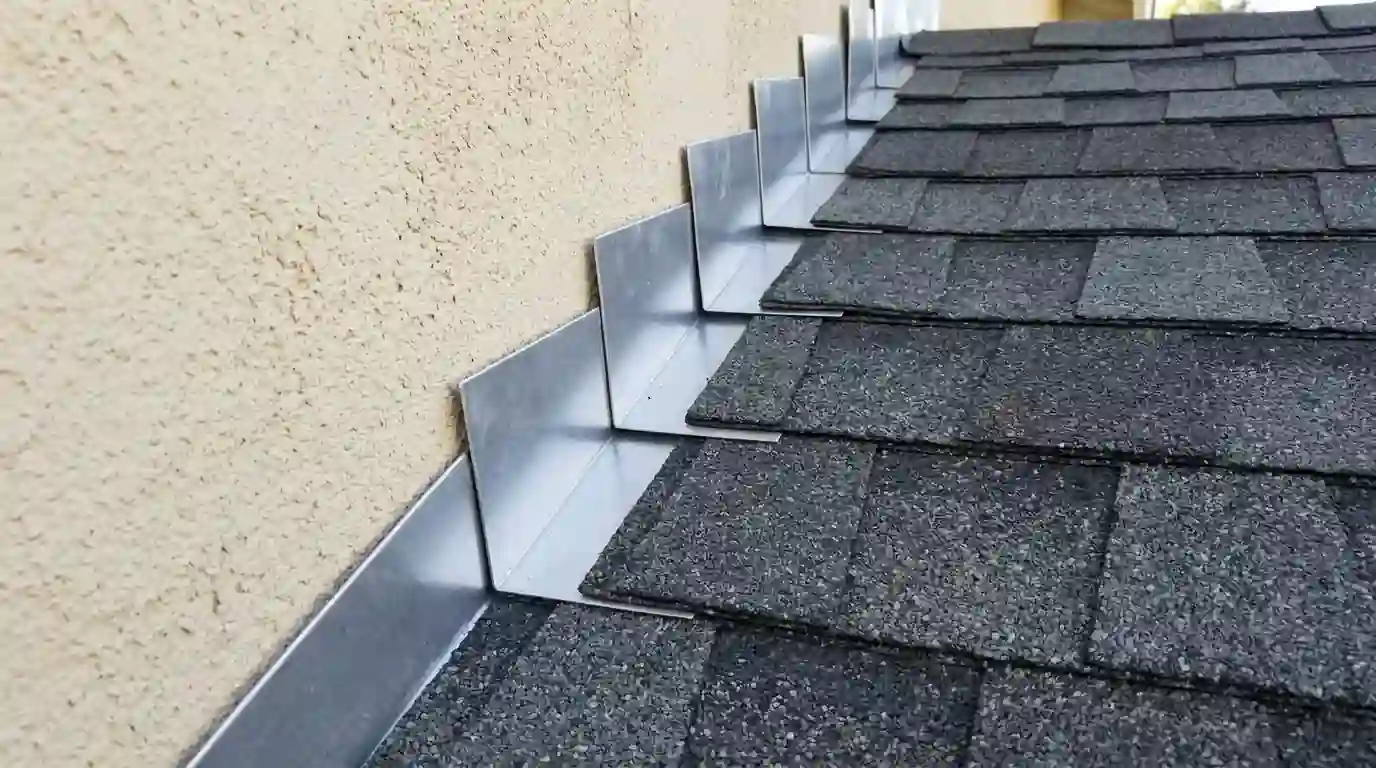
New aluminum step flashing tucked under shingles where a sloped roof meets a cream stucco wall

Roof Flashing Repair

New step, counter, headwall and kick-out flashing where roofs meet stucco and stone walls, the joint that leaks most on local homes.

Learn more

Roof trouble today? Talk to a roofer now.

Our phone line is answered 24/7. Tell us what you see and we will tell you the next step, even if that step is a tarp tonight and a full inspection tomorrow.

Call (210) 750-1898Answered 24 hours a day
Call (210) 750-189824/7