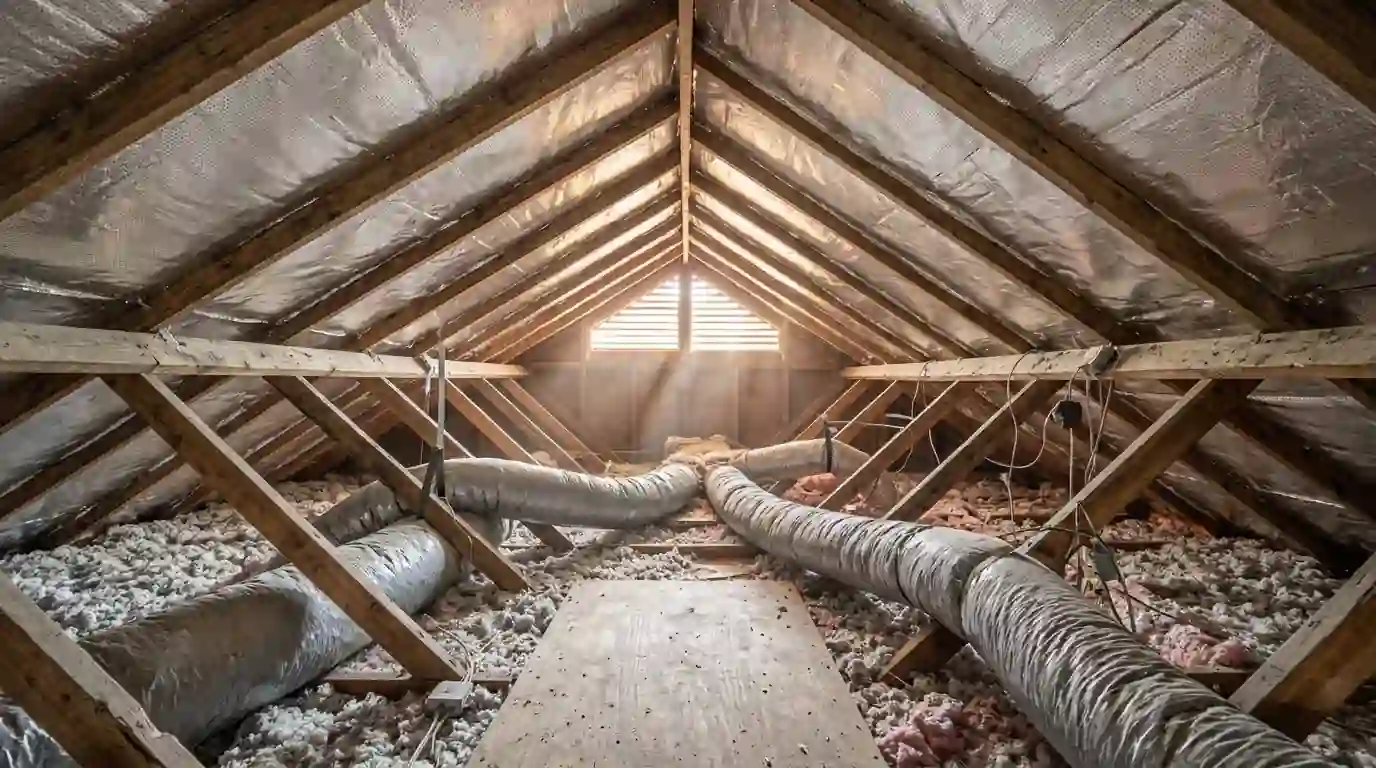
How does a radiant barrier actually reduce attic heat?
Sun heats the shingles, and the shingles heat the decking. A hot deck then radiates infrared heat down through the attic onto insulation, ducts and the ceiling. Insulation slows heat moving by conduction, but it doesn't stop radiant heat well. A shiny foil surface facing an air space reflects most of that radiant energy instead.
The barrier only works if the foil faces an open air gap. That's why we staple it to the bottom of the rafters rather than laying it directly against hot decking. The foil also needs to stay mostly clean, since dust on top reduces how well it reflects. That's one reason we don't lay it flat over insulation on the attic floor.
Which install method fits your house: rafters or decking?
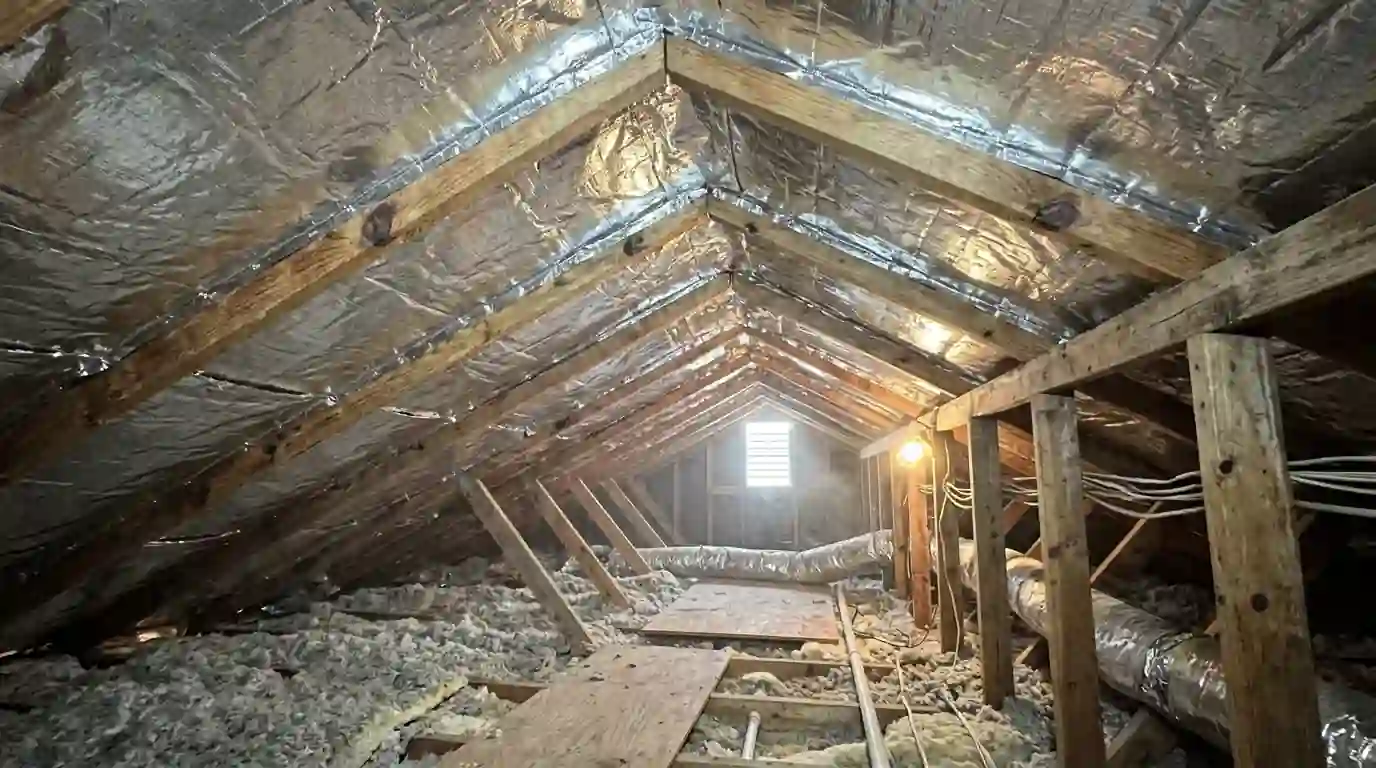
In an existing attic, we staple perforated, double-sided foil across the underside of the rafters, from the top plate up to near the ridge. We leave the bottom open at the eaves and a gap near the peak so air keeps moving from soffit to ridge. It's slow, careful work in a hot space, so we schedule it for early mornings in summer.
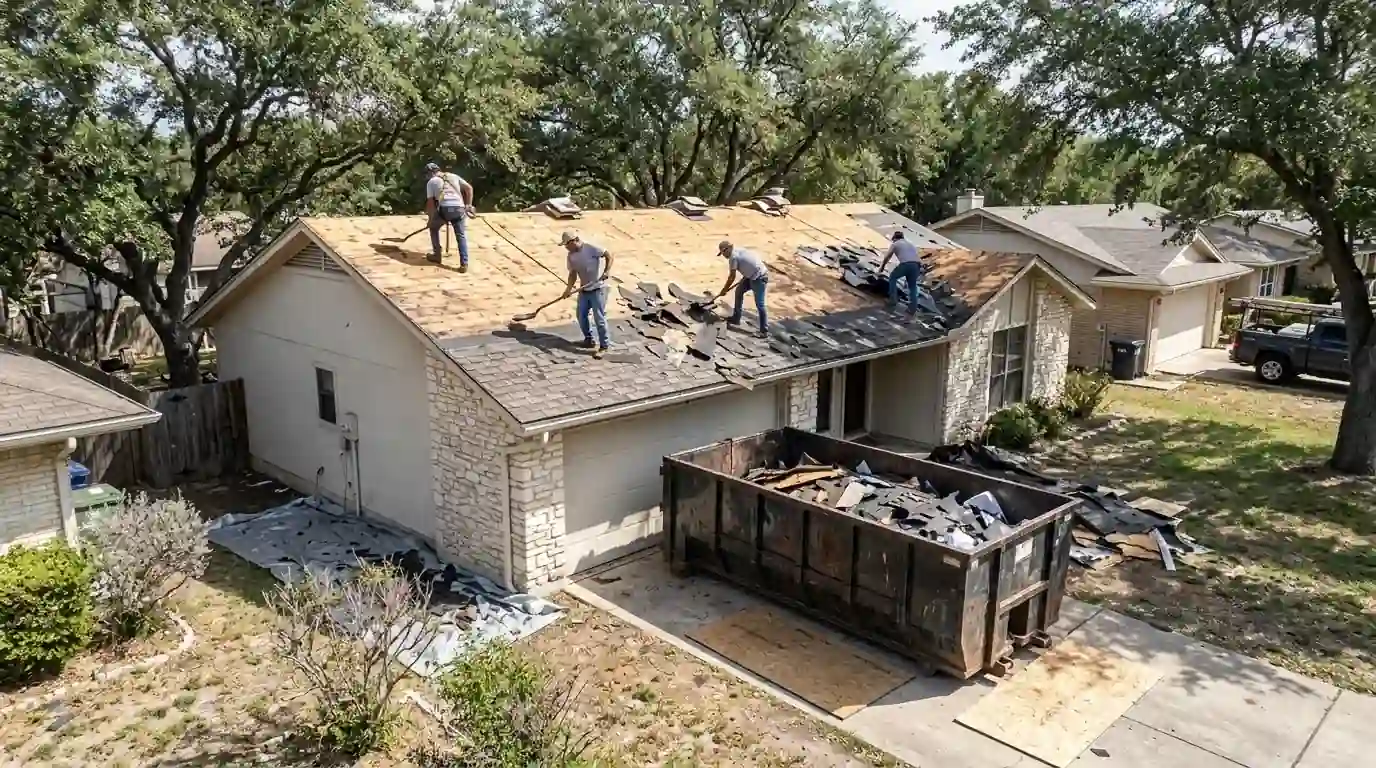
During a full tear-off and new roof, the simplest option is foil-faced decking, where the foil is laminated to the underside of each OSB sheet. It goes on as the roof deck and covers the whole attic with no extra labor in a cramped space. If you're planning a reroof within a year or two, waiting to do it then usually costs less.
What savings are realistic in a San Antonio attic?
Be wary of big promises. Results depend on how much insulation you have, whether ducts run through the attic, roof color, shading and how your house faces. Homes with ducts and an air handler in the attic tend to see the clearest benefit, because those ducts are sitting in the hottest part of the house.
What most homeowners notice is a smaller temperature swing, with rooms under the attic cooling off sooner in the evening and the AC running a little less on peak afternoons. We won't quote you a percentage, since we can't measure your bills in advance. We can show you the attic temperature and explain where the barrier will and won't help.
Why does ventilation have to be right before the foil goes up?
A radiant barrier keeps heat from reaching the attic floor, but that heat still has to leave. If the attic has blocked soffits or weak exhaust, hot air builds up between the foil and the decking. The barrier still helps, but the roof decking and shingles run hotter than they should.
Before we install, we check intake and exhaust and tell you if the attic needs work first. Balancing airflow is covered under our attic ventilation and ridge vent service. For a longer read on how these two fit together, see our guide to radiant barriers and attic heat, which walks through the tradeoffs room by room.
What gets in the way during an attic install?
Older San Antonio attics often have low clearance near the eaves, deep insulation, wiring and ductwork crossing the rafters. We work around each one, cutting foil to fit around ducts and leaving clearance around flues, exhaust pipes and recessed light housings so nothing hot touches the foil.
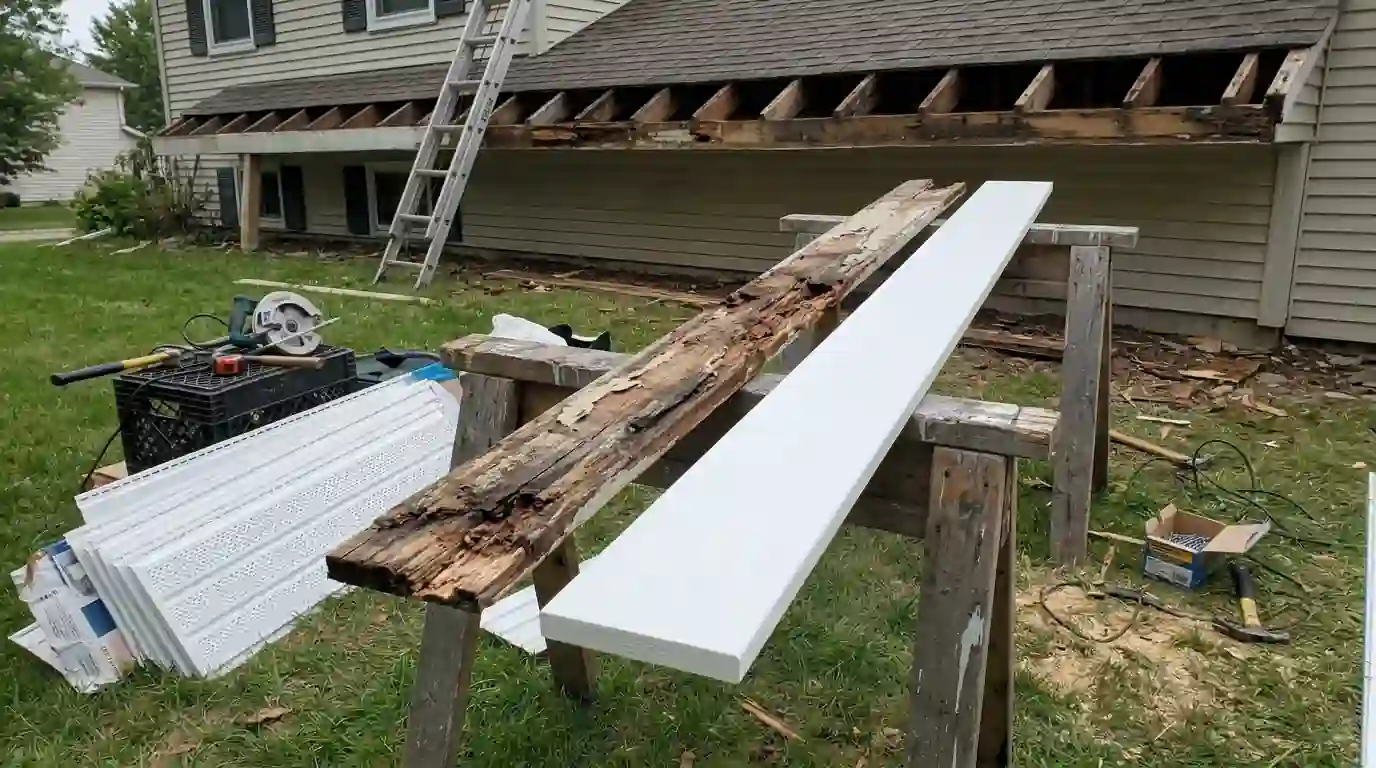
We also keep walkways and the attic hatch clear so the air handler stays serviceable. If we find stained decking, chewed wiring or animal nesting while we're up there, we stop and show you photos. Animal entry at the eaves often traces back to gaps in the soffit, which we can close as part of soffit and fascia repair.