Which kinds of flashing does your roof have?
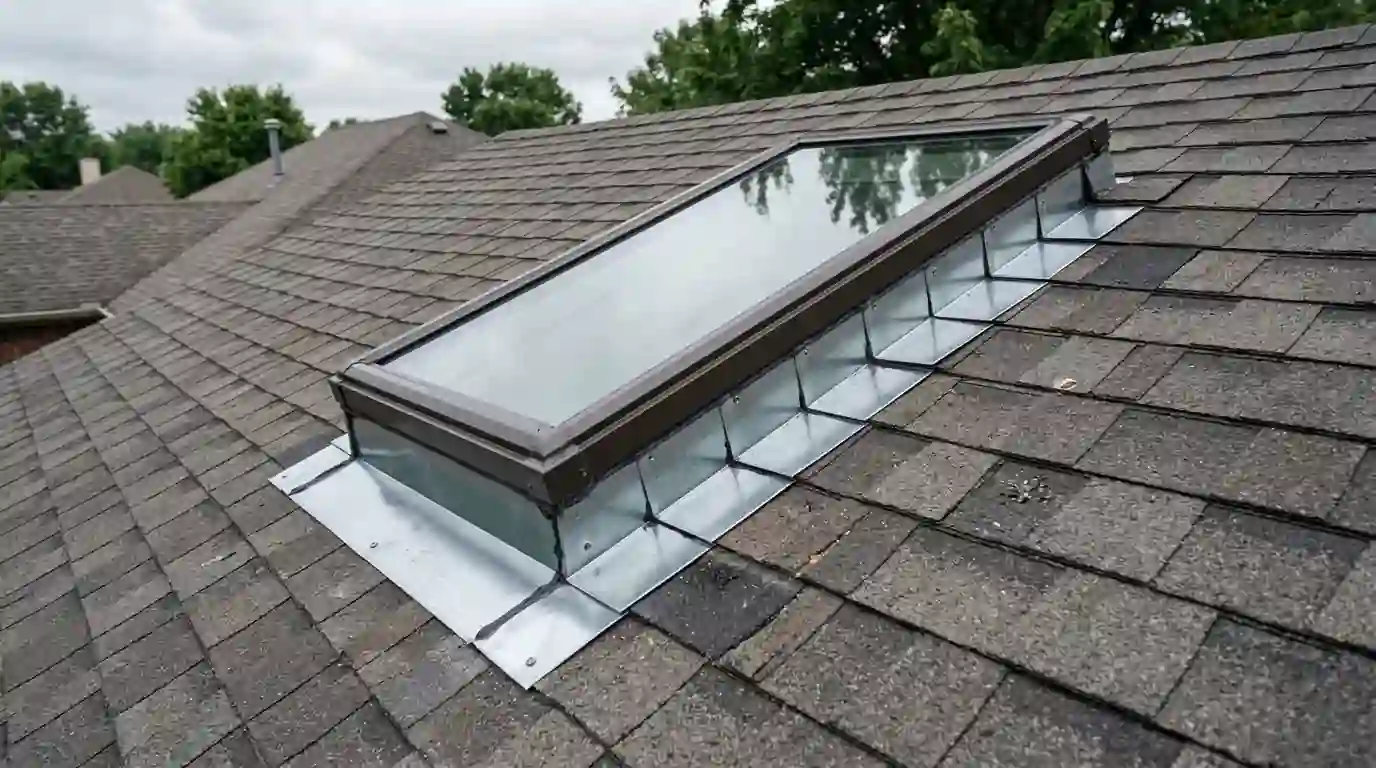
Flashing is the bent metal that bridges the gap between a roof and anything that sticks up through it or rises beside it. It works in layers, like shingles, so water always flows over a lower piece and never behind it. Each type has its own job, and a leak usually means one layer is missing, loose or installed backward.
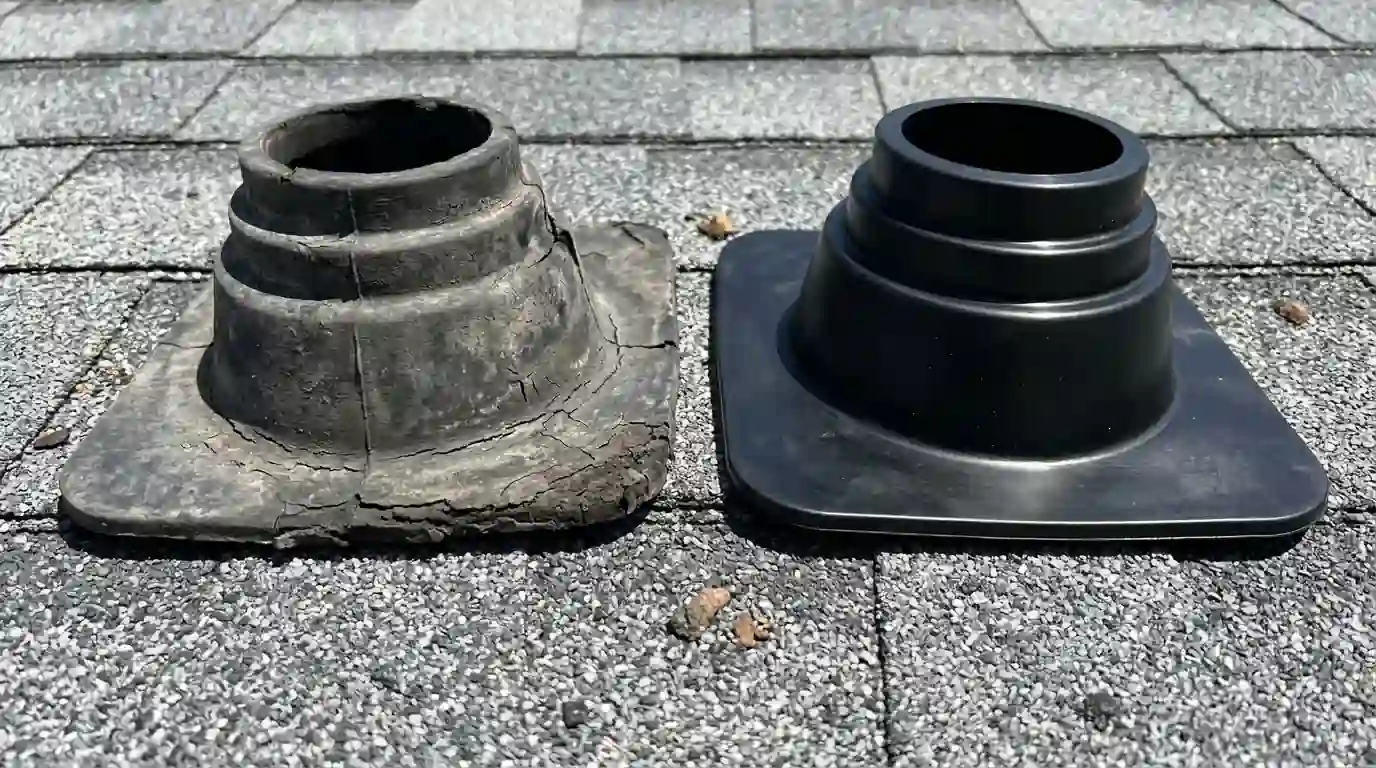
Chimneys have their own flashing system with crickets and reglets, covered on our chimney flashing and crown repairs page. Pipe and vent penetrations use boots and collars instead of wall flashing. This page focuses on the places where a roof meets a wall, which on two-story and split-level homes can add up to dozens of feet of flashing.
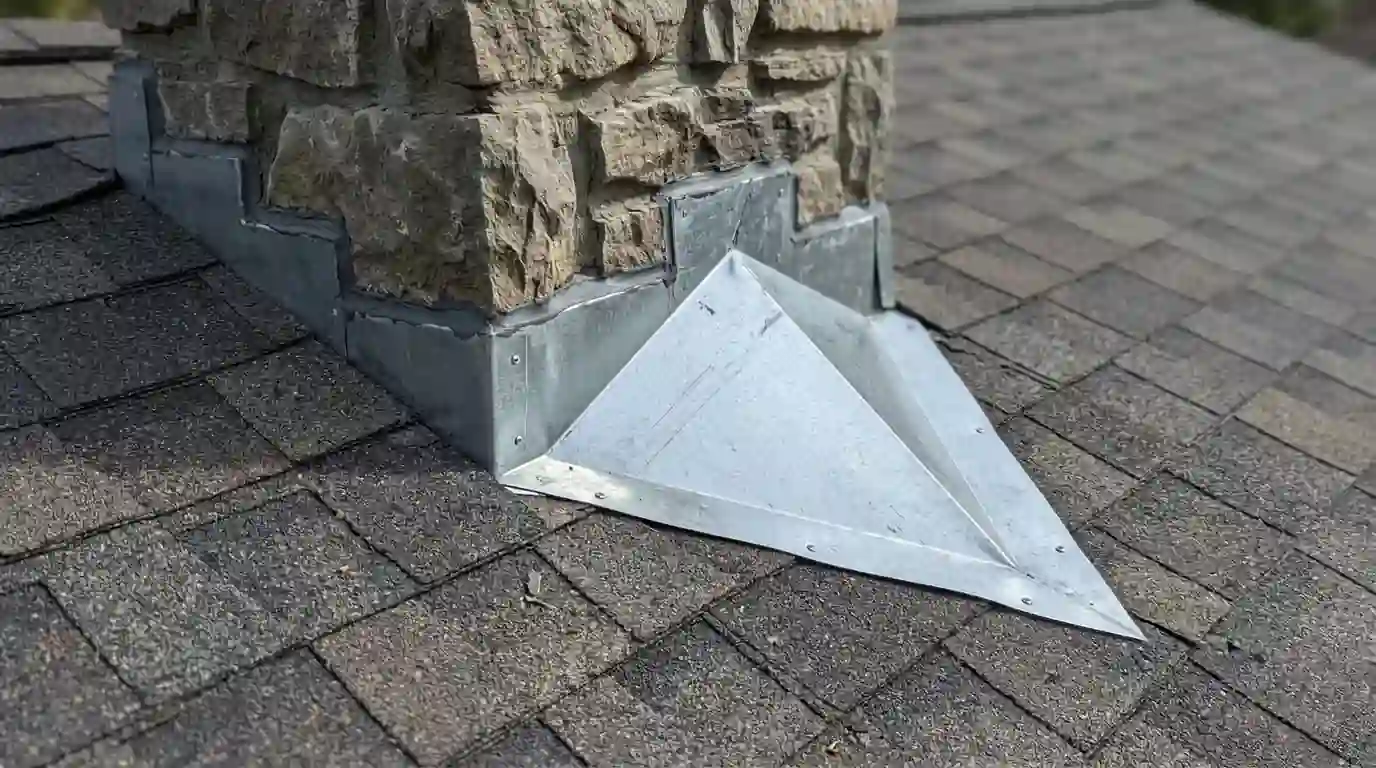
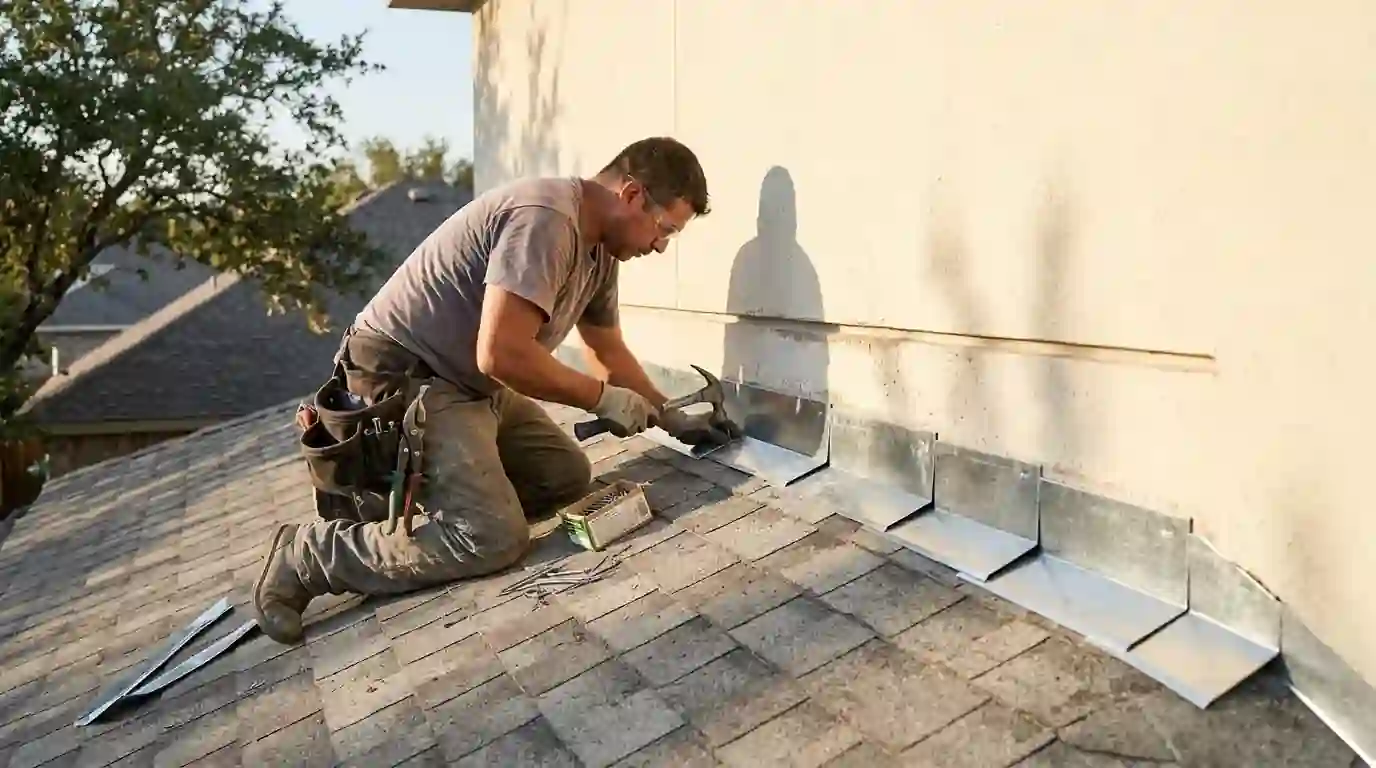
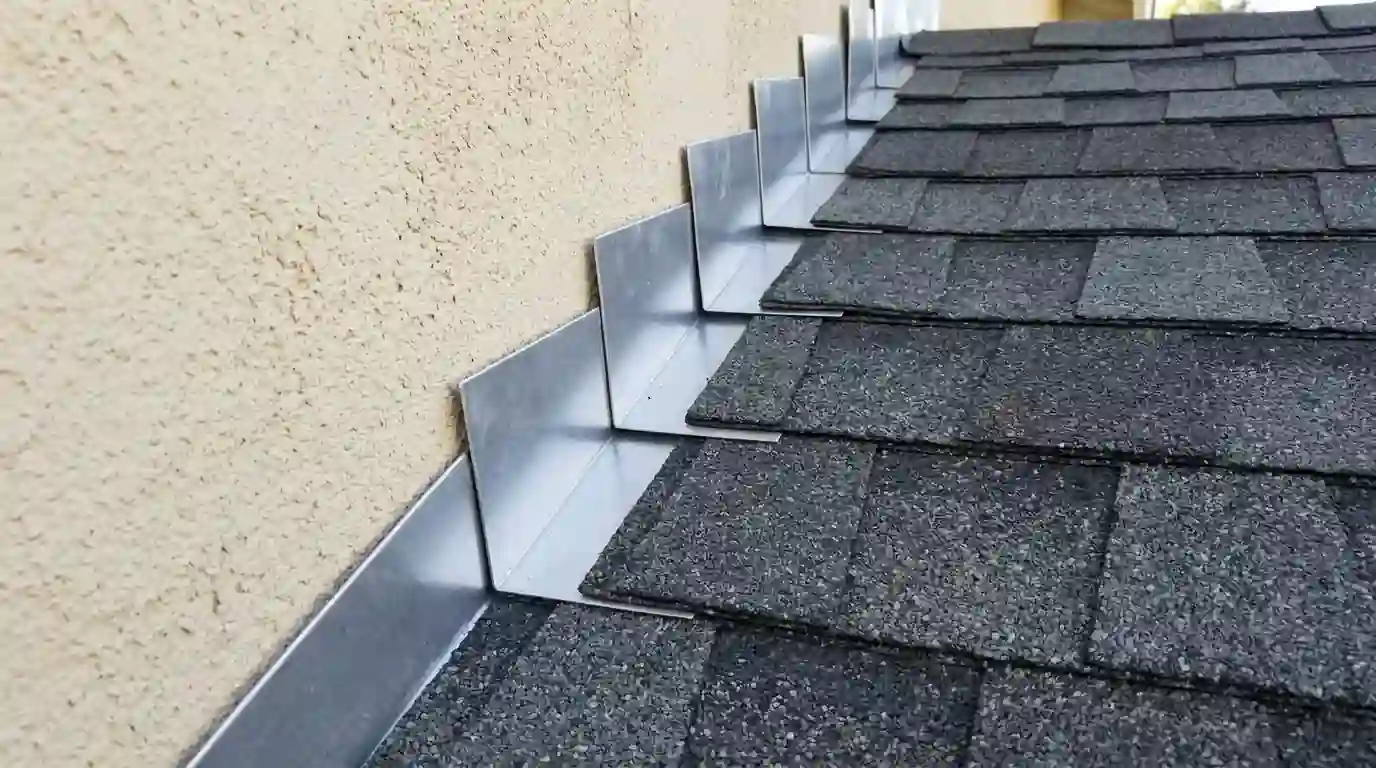
- Step flashing: L-shaped pieces woven into each shingle course along a sloped wall.
- Headwall flashing: one long piece where the top of a slope meets a vertical wall.
- Counter flashing: the upper layer set into or behind the wall finish, covering the step or headwall pieces.
- Kick-out flashing: a small diverter at the bottom of a sloped wall that turns water into the gutter.
Why stucco and stone walls make flashing harder
On siding, the counter flashing slips behind the boards. Stucco and stone are solid, so the flashing either has to be built in before the finish goes on or cut into the wall with a reglet groove later. Many local homes have neither. Instead, the stucco was simply run down onto the shingles, or a bead of caulk was meant to do the work.
Stucco cracks as the house moves through hot, dry summers and wet spells. Once there's a crack near the roof line, water runs down inside the wall face and comes out behind the step flashing, where nothing stops it. Stone veneer has a similar weakness at mortar joints, especially on the Hill Country style homes common on the north side.
Fixing this properly means cutting a clean reglet into the stucco or mortar, setting new counter flashing into it and sealing the groove. Sometimes the lower stucco band has to be cut back and patched so new step flashing can sit behind it. We'll show you which approach your wall needs before we start.
How do you know the flashing has failed?
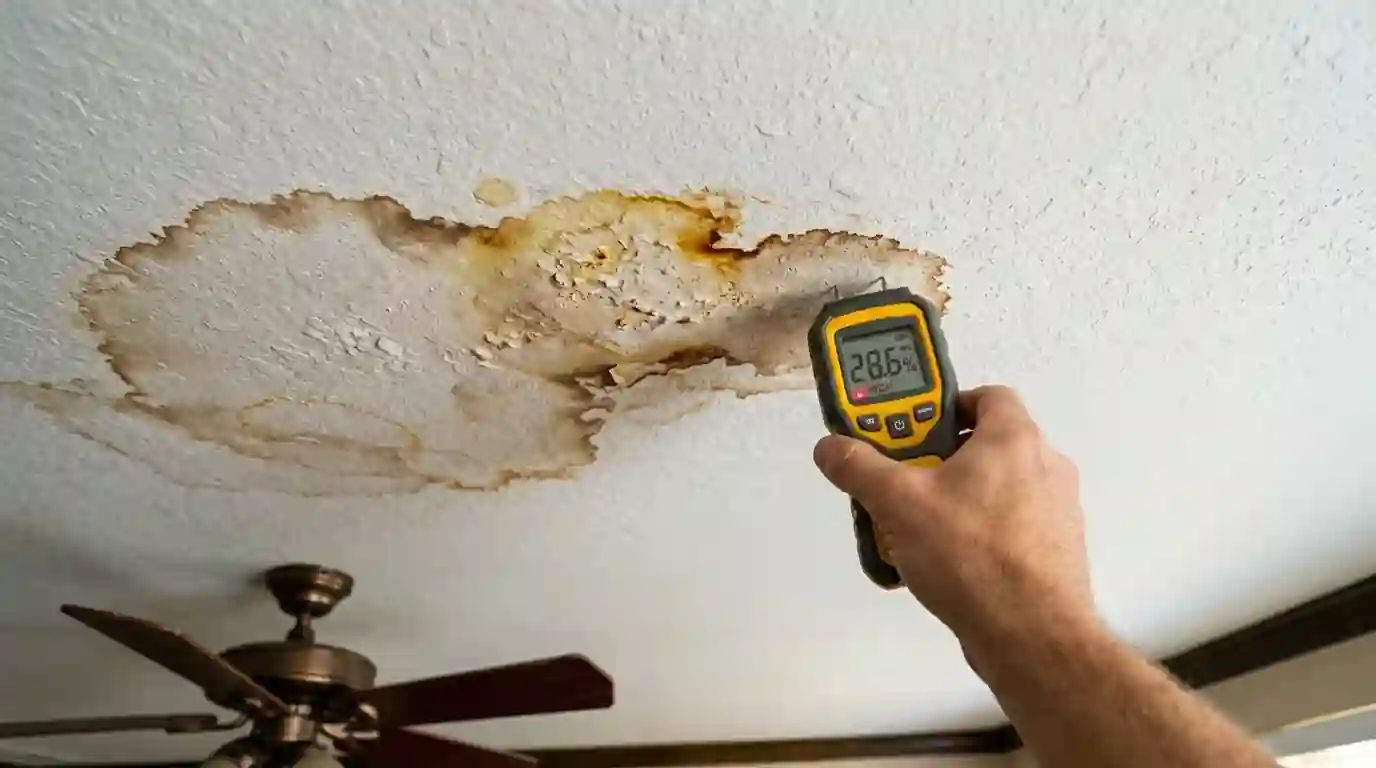
Wall flashing leaks often show up somewhere other than the ceiling. Look for water stains on the interior wall below a roof transition, peeling paint near baseboards, or soft drywall on a wall that backs up to a lower roof. Outside, dark streaks on stucco under the end of a roof slope are a strong clue.
Kick-out flashing problems show up lower on the wall. Without a kick-out, water running off the roof edge pours straight down the wall surface beside the gutter, soaking the stucco and sometimes the framing behind it. Over time you may see cracked or crumbling stucco and stains near the ground below that spot.
What we do on a flashing repair
We remove the shingles along the wall to see the step flashing directly. Rusted, bent or missing pieces are replaced, one per shingle course, so each piece laps over the one below. Underlayment is turned up the wall a few inches to add a second barrier, and new shingles are woven back in.
At the top, the counter flashing gets set into a fresh reglet or tucked behind the wall finish, then sealed with a polyurethane suited to masonry. At the bottom, we add a kick-out if there isn't one. If wet sheathing turns up behind the stucco, we stop and show you, because that may need more than roofing to fix.
Sometimes a ceiling stain looks like a flashing leak but turns out to be something else entirely. If the source isn't clear yet, our leak tracing and moisture checks start with the attic and confirm where the water actually enters before we open up a wall line.
Why caulk is a stopgap, not a flashing repair
A tube of sealant along the wall line looks like a fix, and it may stop a leak for a season. In San Antonio sun, though, most sealants harden and pull away from stucco within a year or two. Water then gets behind the bead and has nowhere to go but inside.
Good flashing doesn't depend on sealant to keep water out. It relies on metal lapped in the right order so gravity carries water over each piece. We use sealant only where it belongs, at reglet grooves and fastener heads, not as the main barrier. If your wall line is caulk only, the repair is less about finding a hole and more about adding the metal that was never there.
When is flashing repair part of a bigger job?
If the shingles near the wall are worn out, it makes sense to replace flashing during a reroof rather than twice. Our tear-off and reroof service always includes new step and headwall flashing. On a newer roof, a flashing repair can stand on its own.
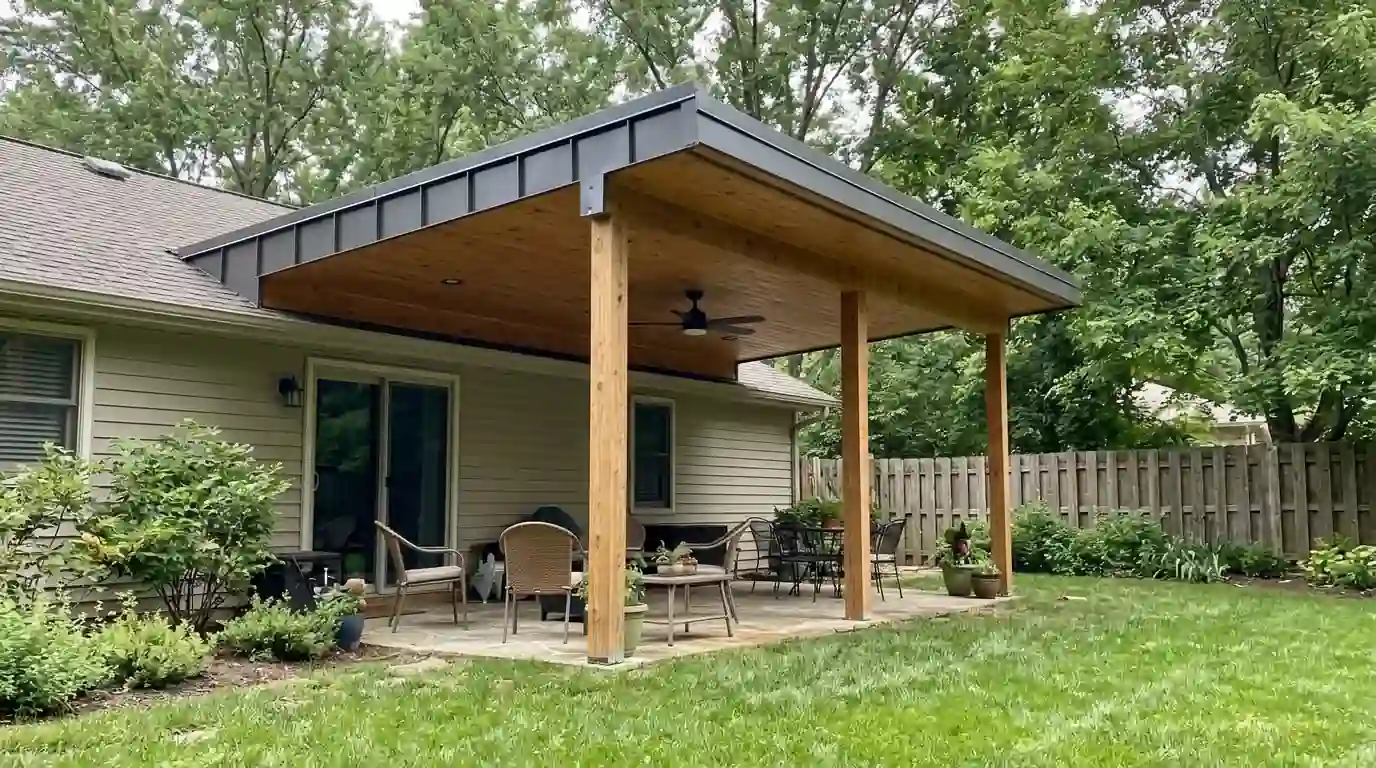
Flashing at patio cover tie-ins is another common trouble spot, where a newer patio roof meets the house wall. Those tie-ins are covered on our patio roof tie-in page, since they involve a different kind of connection. A poorly attached patio roof can send water straight into the house wall, so it's worth checking at the same visit.