How can you tell which reroof cycle your Encino Park roof is on?
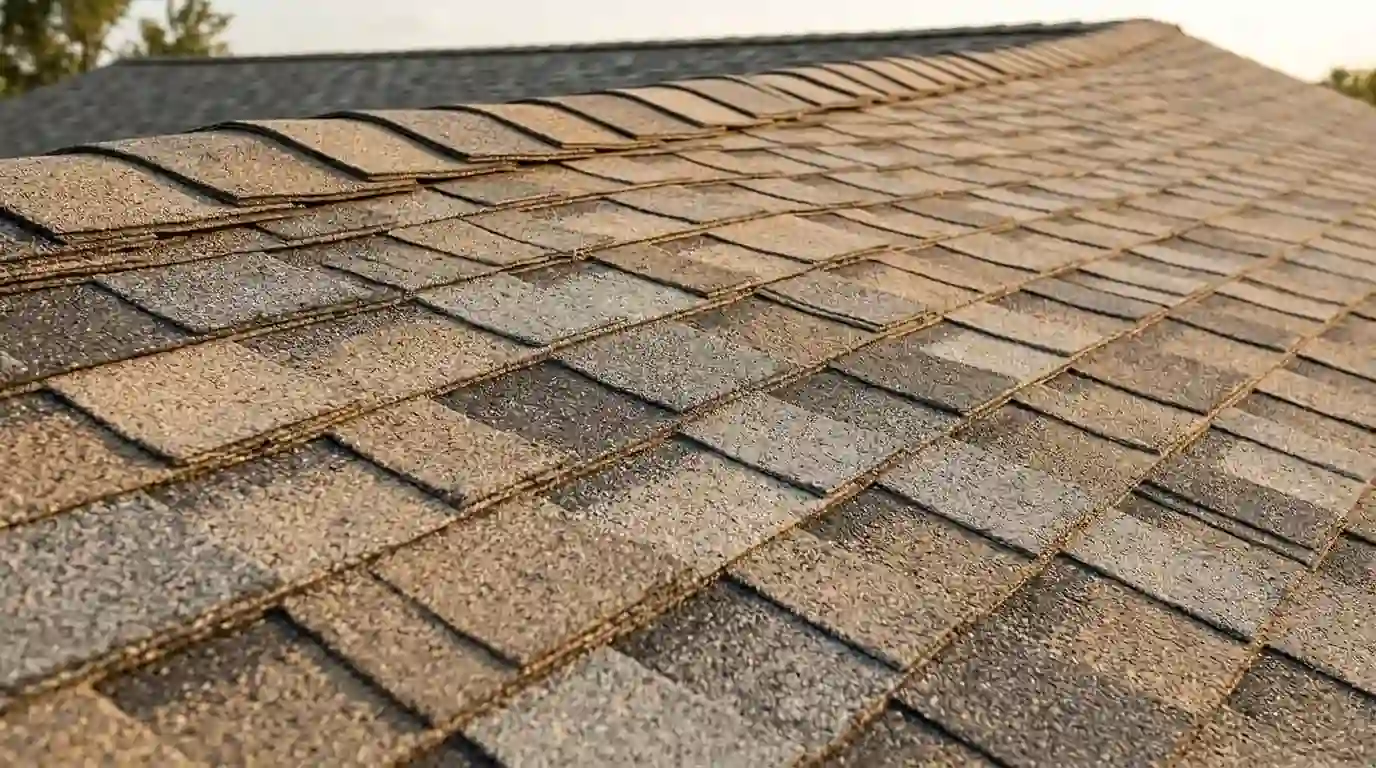
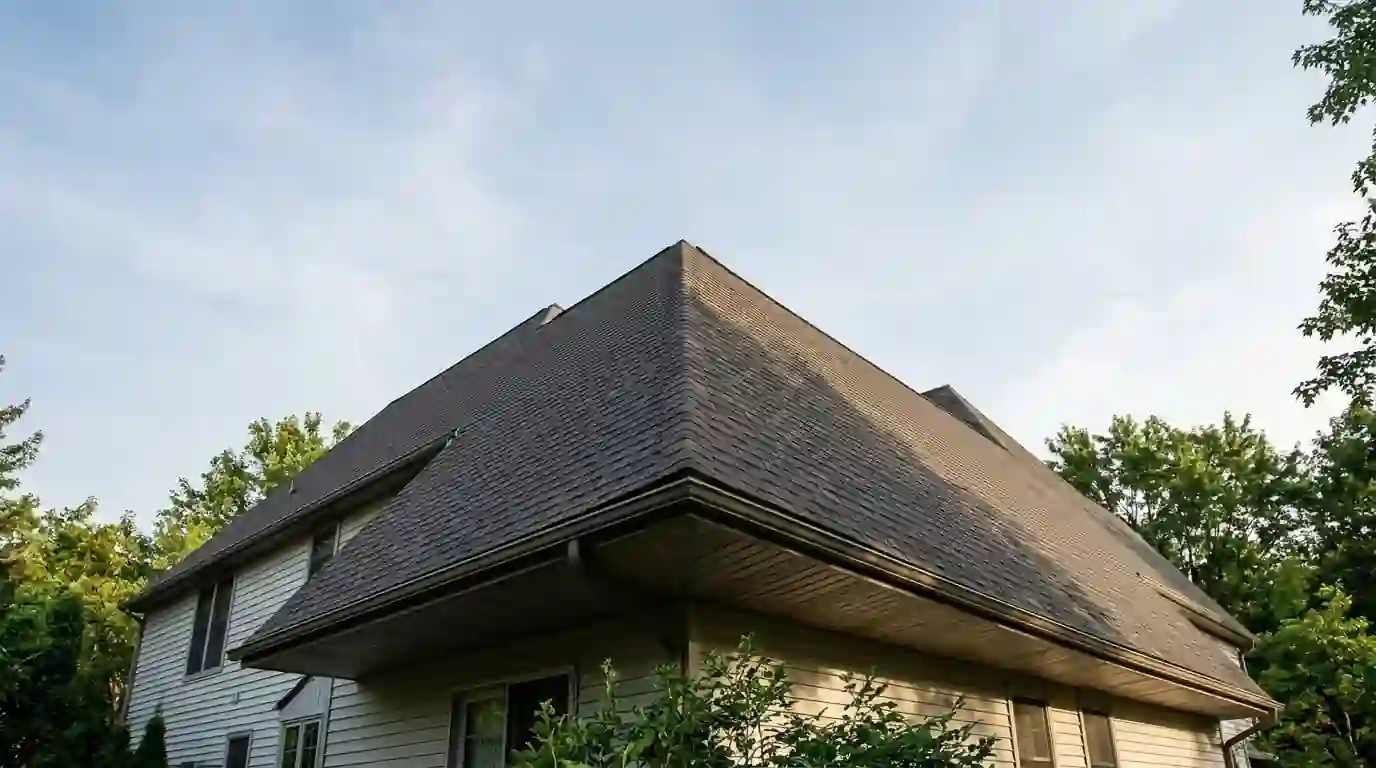
Start with the paperwork. A closing disclosure, an old insurance claim or a permit record often shows when the last roof went on. If nothing turns up, the roof itself gives clues. Flat, even 3-tab shingles usually date from before the mid-2000s, while thicker architectural shingles with a shadow line are more likely a replacement after the 2016 hail.
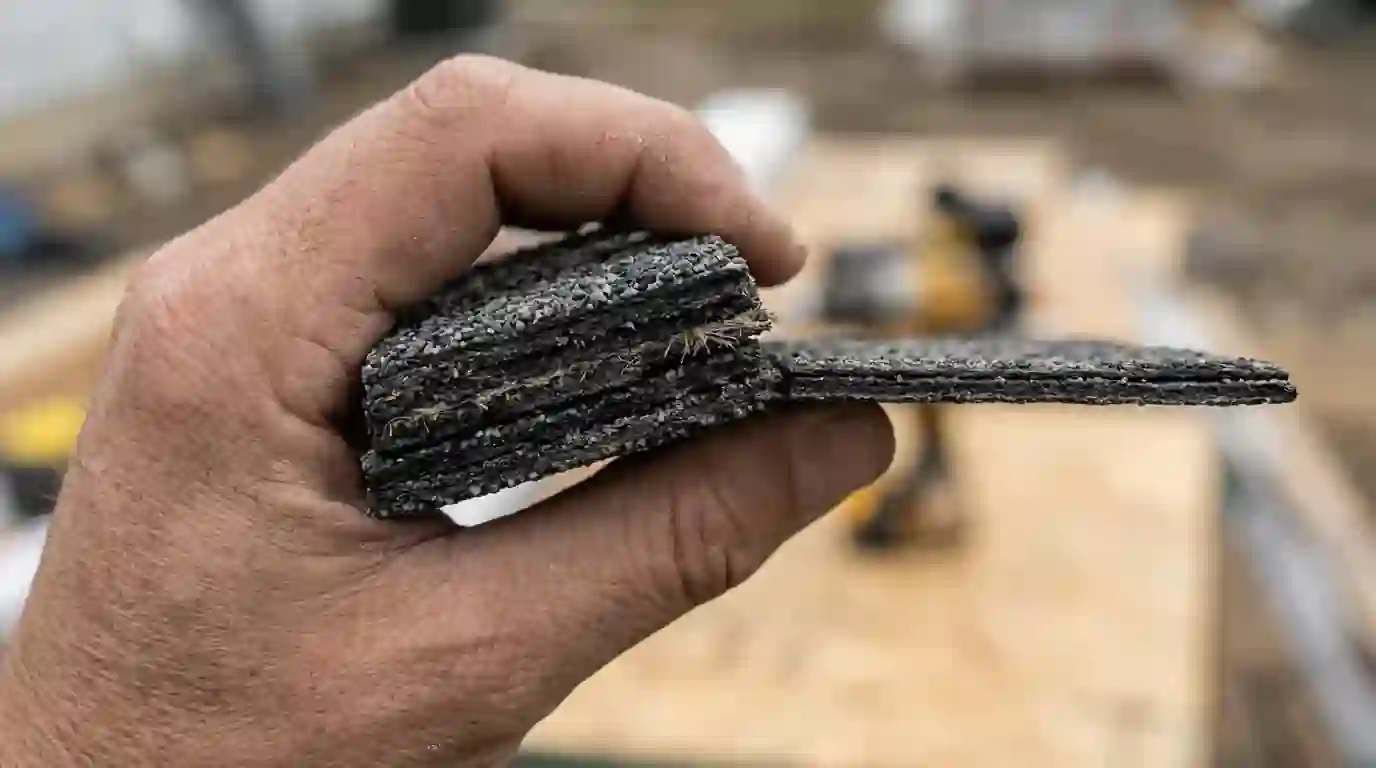
From the attic we can often see more. Two sets of nail tips poking through the decking, or a mix of older plywood and newer OSB patches, tell us a roof was laid over or partly redone. Those details change both the price and the right approach, so we write them down and photograph them for you.
Is a second layer of shingles ever a good idea here?
Laying new shingles over old ones saves the tear-off charge, and that's why it was common decades ago. The trade-off is heat. A second layer holds more of that 140 to 150 degree attic heat against the shingles, hides soft decking, and makes the next replacement heavier and messier. Most manufacturers also tie their product terms to installation over a clean deck.
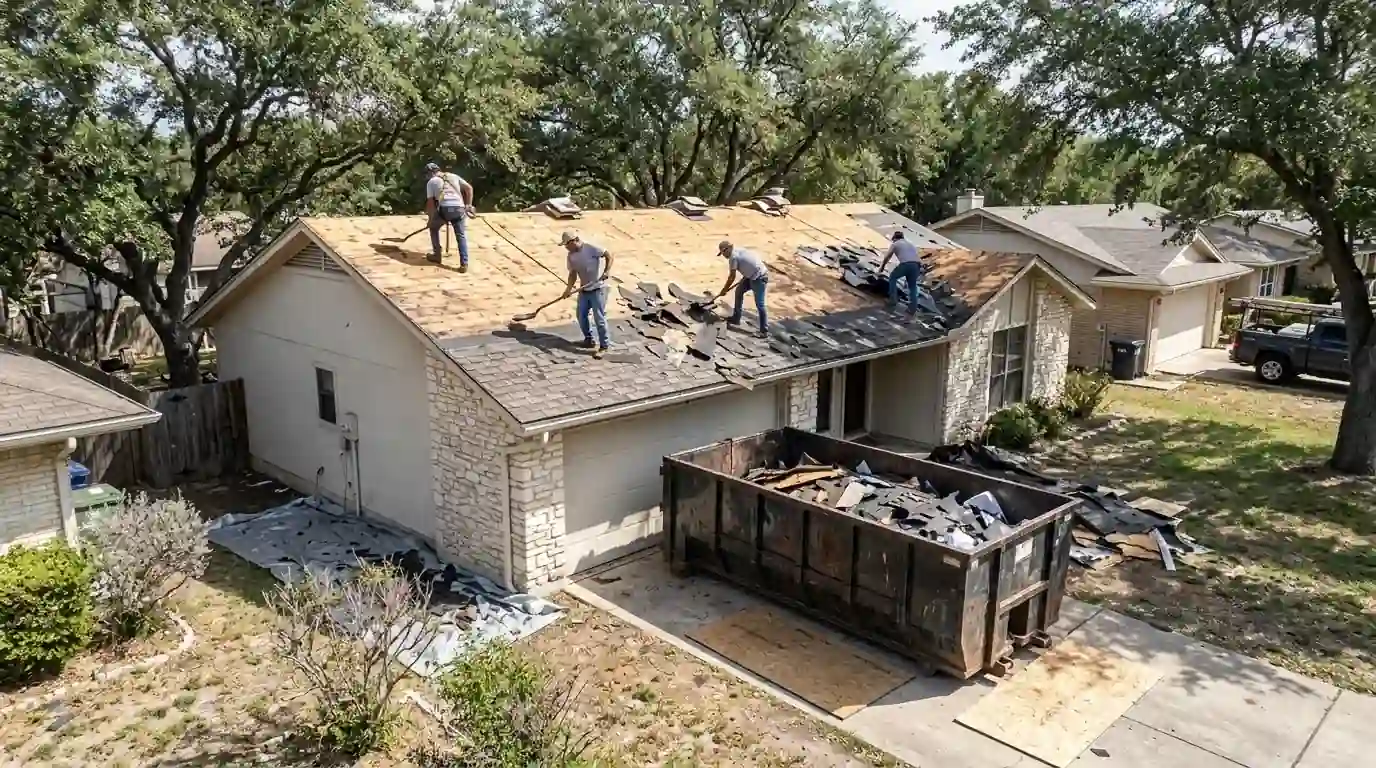
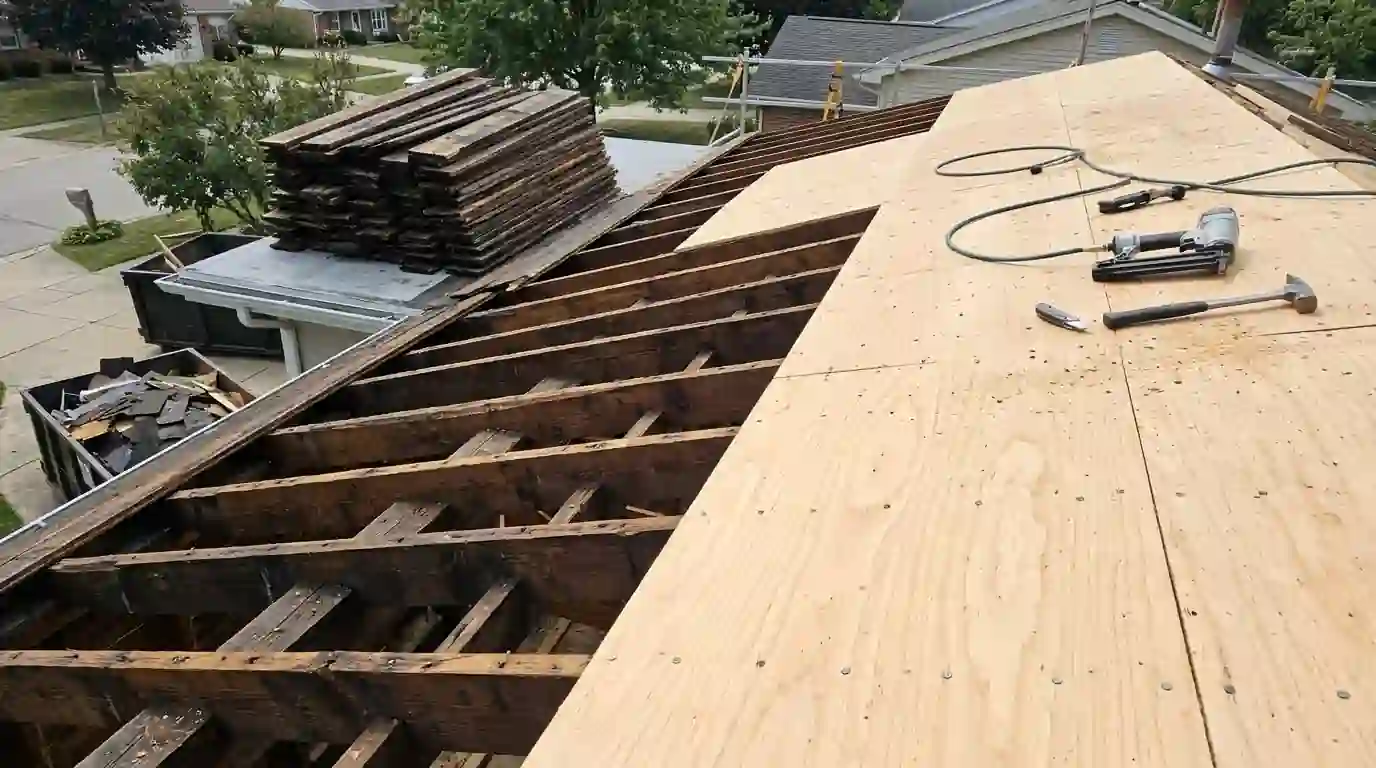
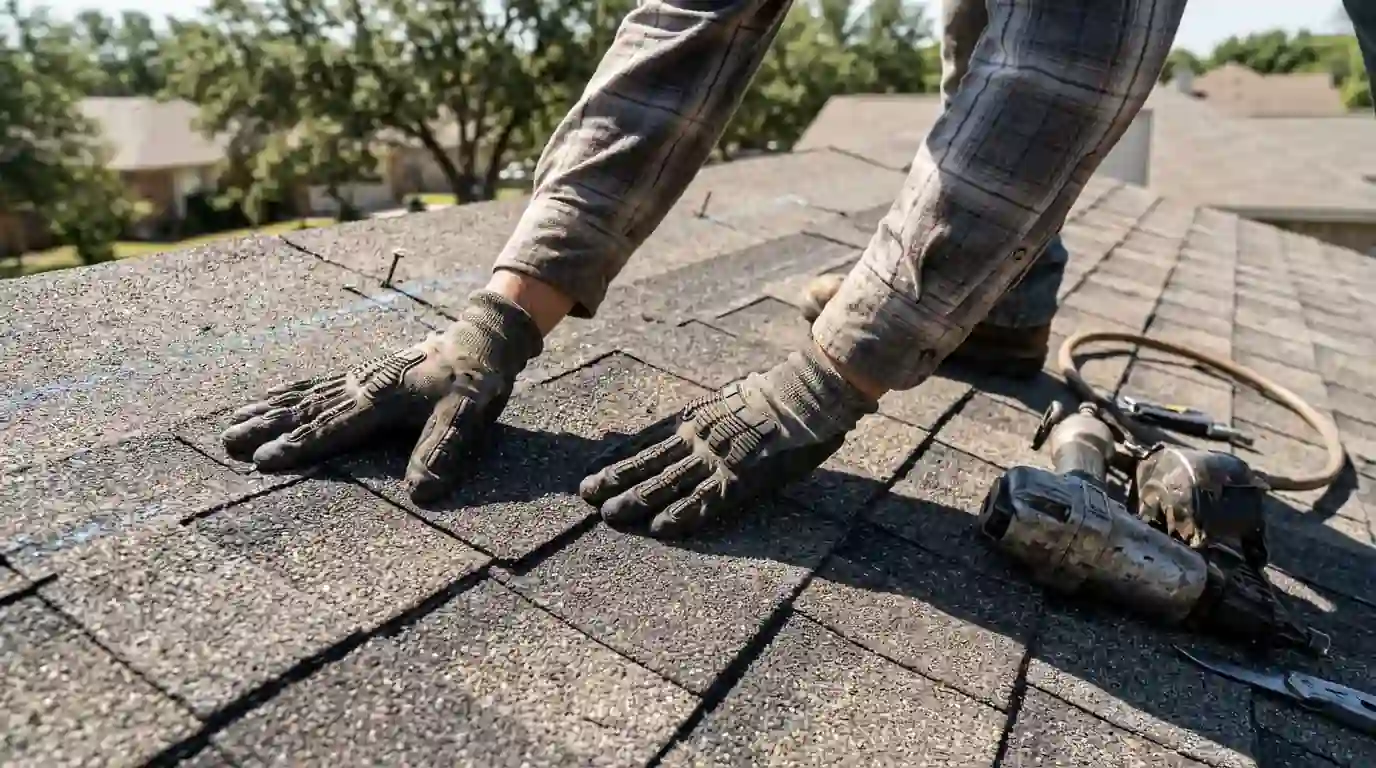
We almost always recommend a full tear-off in Encino Park. Once the old layers are off, we can see the decking, replace soft sheets, and correct the drip edge and valleys properly. Our full roof replacement page walks through each step, and swapping out damaged sheathing is priced per sheet so you only pay for what's actually bad.
What should you upgrade while the old roof is off?
A replacement is the cheapest moment to fix problems you've lived with for years. Many homes here were built with a handful of box vents and little intake at the soffit, so the attic cooks and upstairs bedrooms stay hot into the night. Balancing intake and exhaust with ridge vents and soffit intake costs far less during a reroof than as a separate job.
It's also when you choose the shingle. Class 4 impact-resistant shingles cost a little more than standard architectural lines, and Texas insurers must offer a premium discount for qualifying UL 2218 Class 4 roofs, with the amount set by each insurer. Ask your agent for the number before you pick, because on the north side that discount adds up over a roof's life.
When does a repair still make more sense?
If your roof went on within the last eight to ten years and the problem is one slope, one pipe boot or a few wind-lifted shingles, a repair is usually the right call. Spending replacement money on a roof with plenty of life left doesn't add up. We'll tell you plainly when a $285 to $765 repair is enough.
The harder cases are roofs in the middle, around 12 to 15 years old with scattered granule loss. For those we lay out both paths with photos, the cost of each, and what we'd expect over the next few storm seasons. Our repair or replace guide covers the same decision in more depth, and you can give us a call at (210) 750-1898 to set up the inspection.