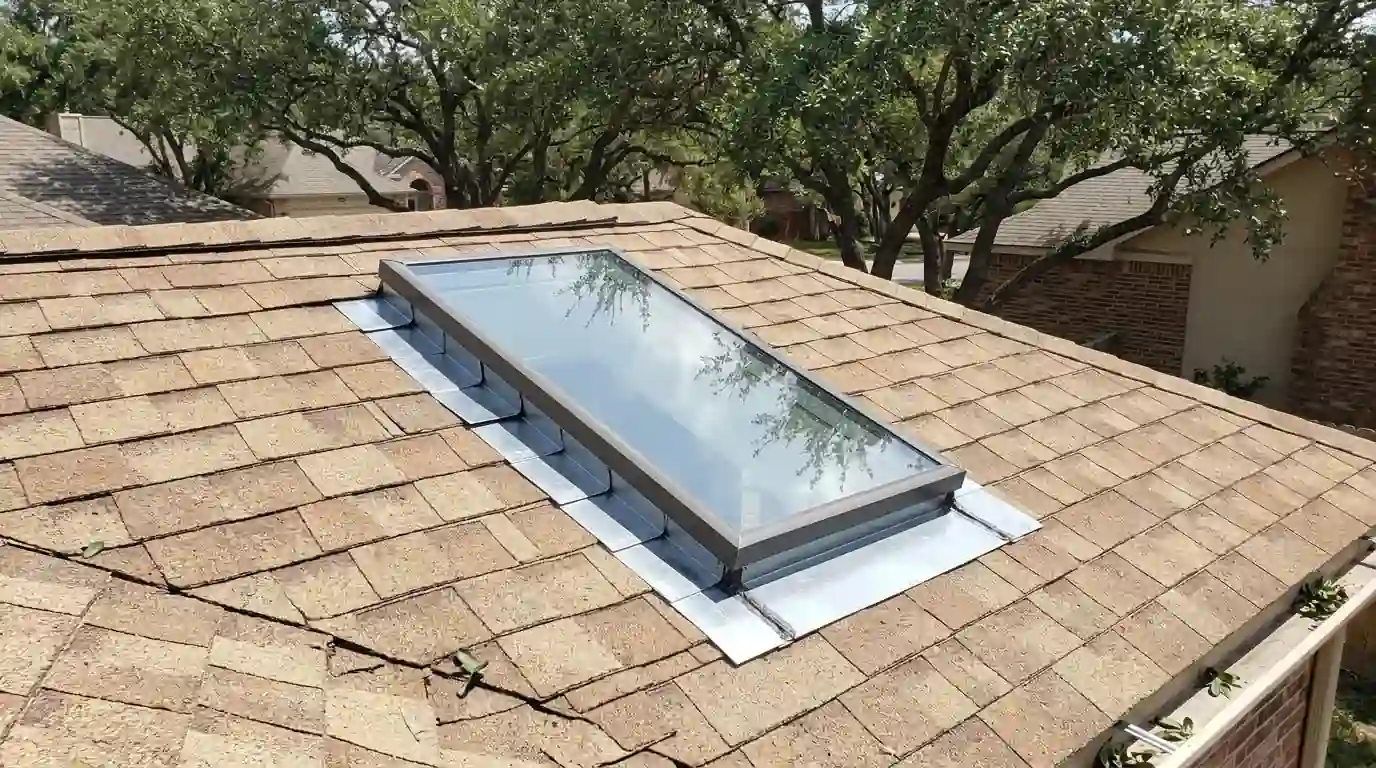
Is the skylight leaking, or is it condensation?
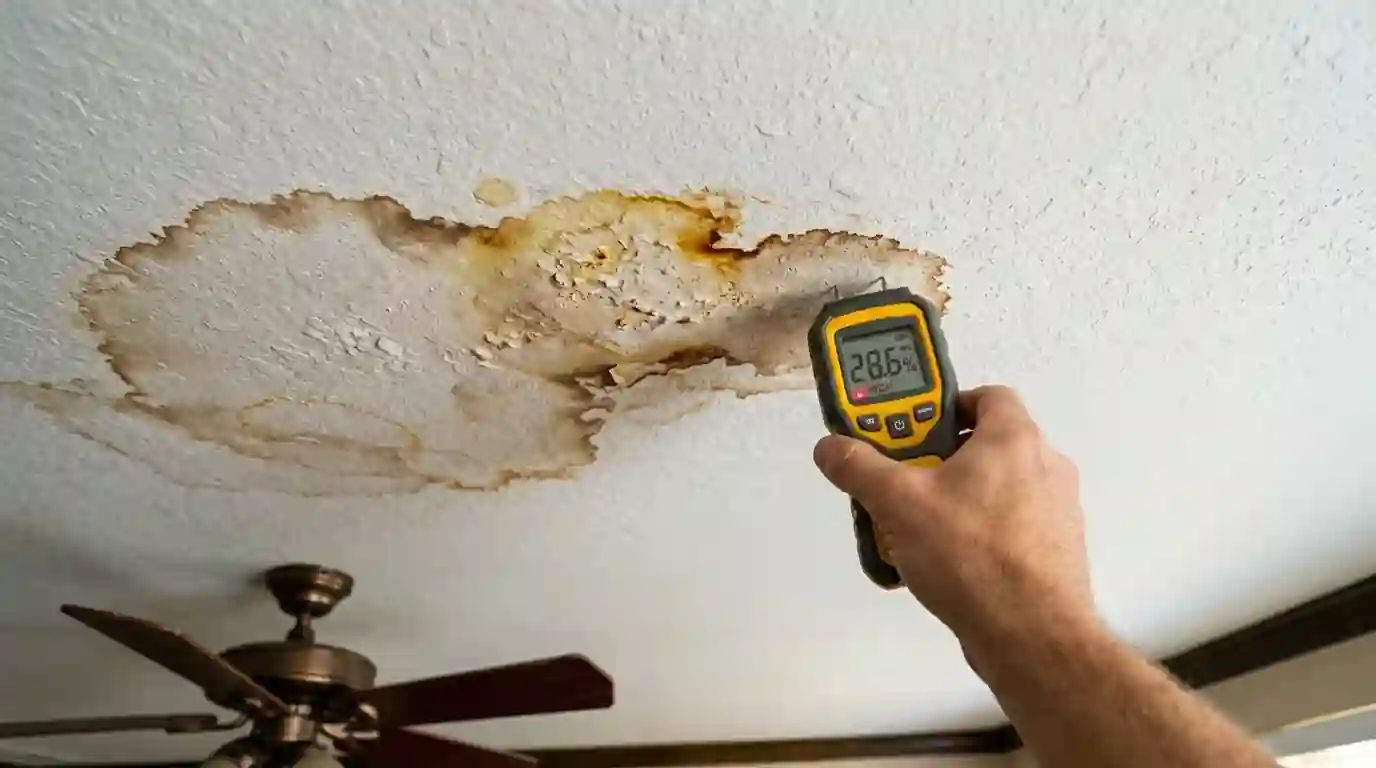
Not every drip under a skylight is a roof leak. In winter, warm, humid air from a kitchen or bathroom can condense on cold glass and run down the shaft walls. It usually shows up on chilly mornings, even when it hasn't rained, and stains tend to be spread evenly around the light well.
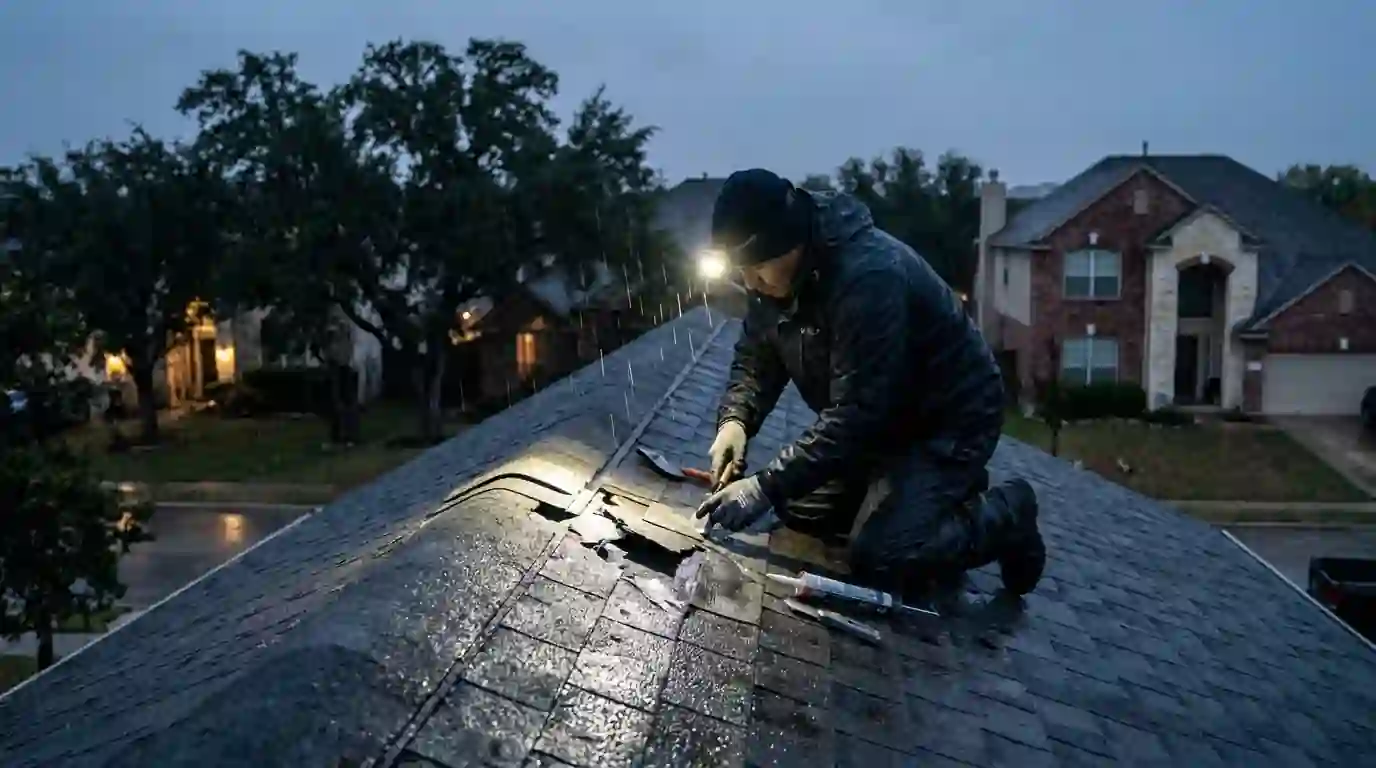
A true leak shows up during or after rain, often at one corner of the frame, and the stain grows on the uphill side. We check both possibilities by looking at the roof flashing, the curb and the shaft from inside. Condensation is usually solved with better bathroom exhaust, a newer insulated unit or improved attic airflow, not with roof flashing work.
Why does skylight flashing fail on San Antonio roofs?
Many skylights were installed with sealant doing the job that step flashing should do. Sealant dries and cracks in our summer heat, and then the first heavy downpour finds the gap. Others were flashed correctly, but the shingles around them were replaced later and the new roof was simply caulked up against the old curb.
Debris adds to the problem. Live oak leaves and spring tassels collect on the uphill side of the skylight, damming water against the curb. During a sudden storm, that water backs up higher than the flashing was designed for. A proper fix pairs a new flashing kit with a clear path for water and debris around the skylight.
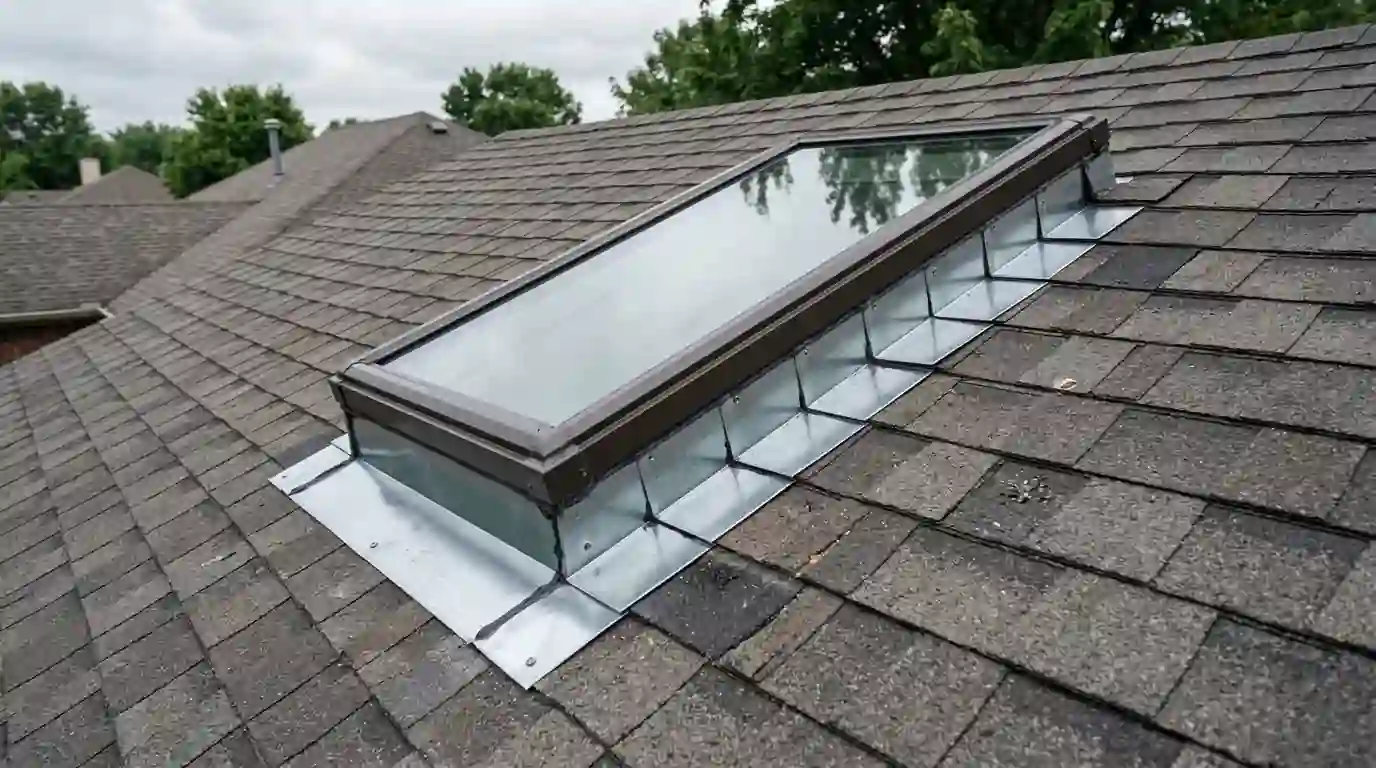
How do we reflash a leaking skylight?
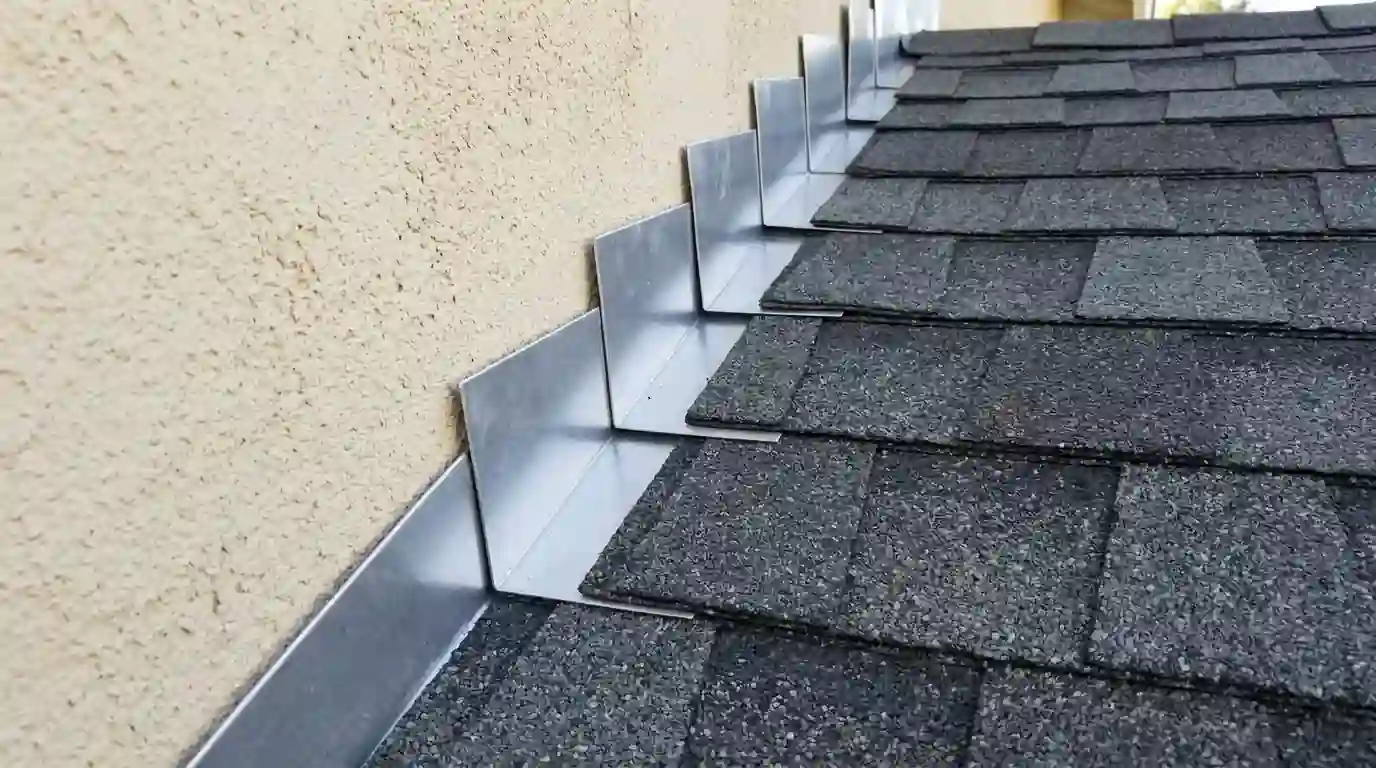
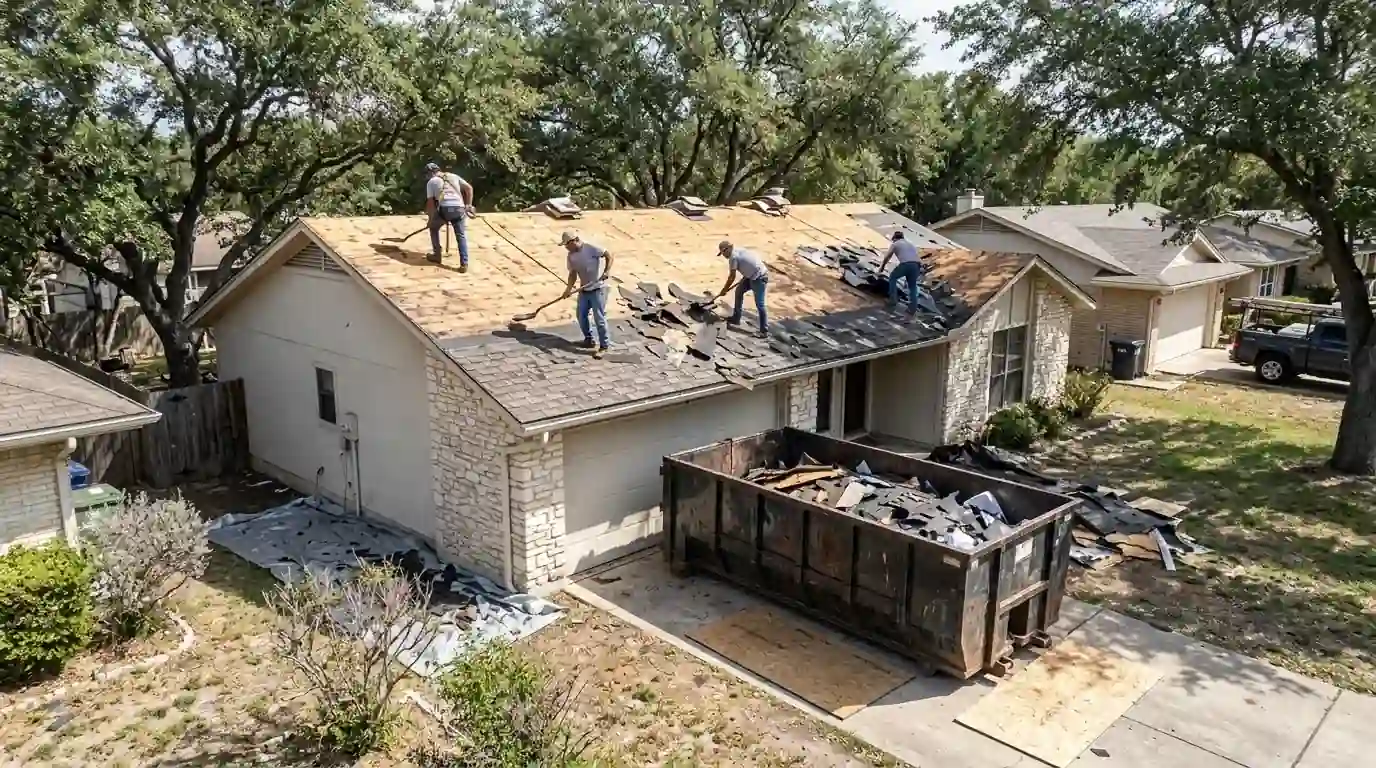
We remove the shingles or tile around the skylight, take off the old flashing and sealant, and inspect the curb and decking for rot. Soft wood gets cut out and replaced. Then we wrap the curb with self-adhering underlayment and install a manufacturer flashing kit made for that unit: a sill piece, step flashing up the sides, and a head flashing on top.
The surrounding roofing goes back in place, woven into the step flashing so each piece sheds water onto the next. Done this way, the skylight no longer depends on sealant at all. If the leak is actually coming from wall or chimney flashing nearby, that's part of flashing repair at walls and chimneys, and we'll show you the photos.
When should a skylight be replaced instead of repaired?
Older acrylic domes go yellow and brittle in South Texas sun and can crack from heat or a small hail strike. Insulated glass units can lose their seal, which leaves a permanent fog between the panes. Neither problem can be fixed with flashing, so the unit itself has to be replaced.
Age matters too. If the skylight is as old as the roof and the roof needs replacing, doing both together is the smart move. The roofing is already off, the flashing is new, and you avoid paying for the area to be opened twice. We coordinate it as part of your roof replacement project, with the new unit set before the roofing goes back on.
Are tubular skylights a good option for San Antonio homes?
Tubular skylights, sometimes called sun tunnels, use a small dome on the roof and a reflective tube to bring light down into a hallway, closet or bathroom. They need a much smaller roof opening than a traditional skylight, and they add very little heat compared to a large glass panel.
They're a good fit for interior rooms with no windows. We set the roof dome with its own flashing, run the tube through the attic and fit the ceiling diffuser. Older tubular units with cracked domes or failed flashing can also be repaired or swapped for a newer model without changing the ceiling opening.
What about removing a skylight you no longer want?
Some homeowners decide a skylight isn't worth the heat or the leak risk. We can remove the unit, frame in the roof opening with new rafters or blocking, add decking and roof over it to match the existing roofing. Inside, the ceiling opening is closed so a drywall finisher can patch and paint.
Matching roofing is easiest on shingle roofs, where we can usually find a close color. On tile, we use salvaged pieces from elsewhere on the roof when possible. If you're unsure whether to keep a skylight, phone (210) 750-1898 and we'll walk through what repair, replacement and removal would each involve on your roof.