Skip to content
Ortiz RoofingSan Antonio, Texas 24/7(210) 750-1898

Everyday roof repairs

Roof repair in San Antonio that fixes the cause, not just the symptom

Most San Antonio roofs don't need replacing when something goes wrong. They need a few shingles reset, a cracked ridge cap swapped or a row of popped nails pulled and sealed. We find the small failures, fix them properly and show you photos of the work before and after.

  • Phones answered 24/7
  • Roof Repair & Storm Damage
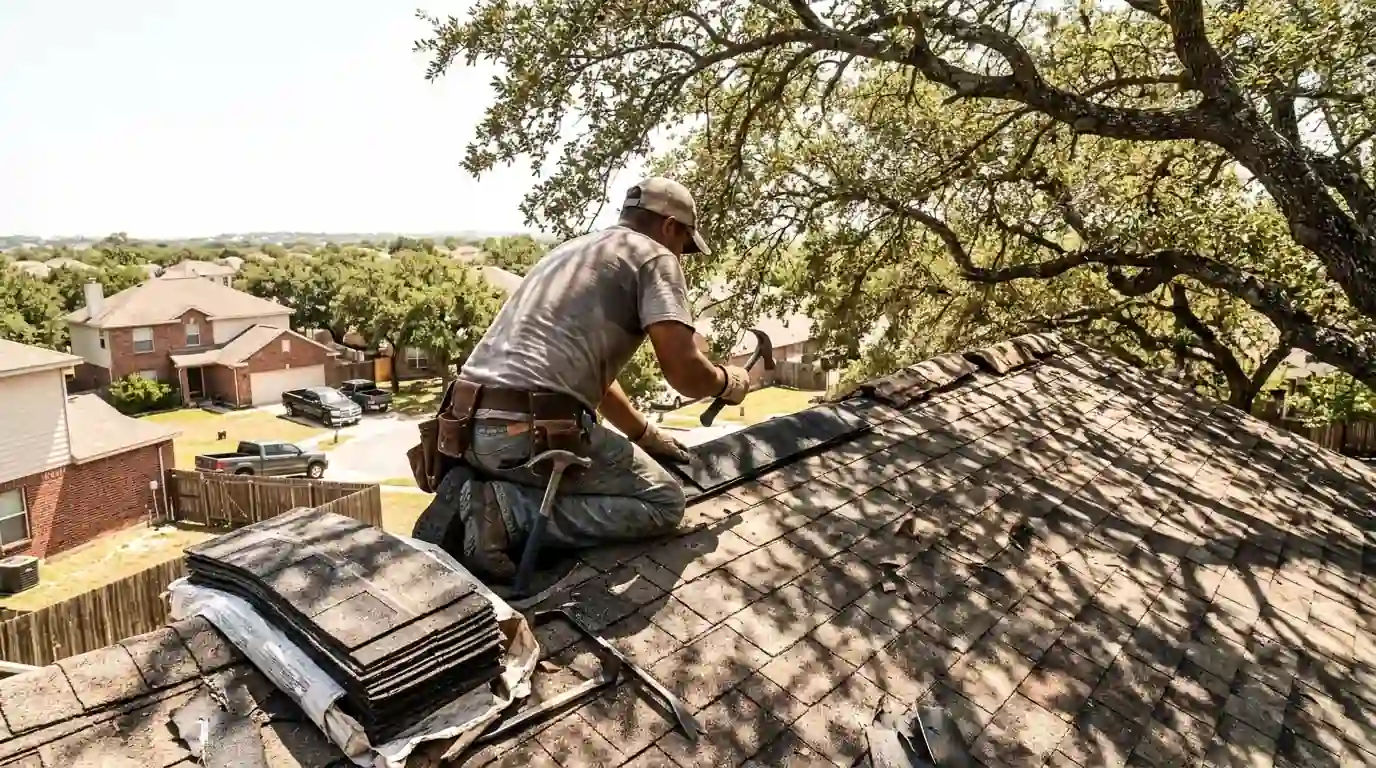
Roofer seen from behind replacing a cracked ridge cap on an aging asphalt shingle roof in a San Antonio subdivision, live oak branches overhead, harsh afternoon sun, shingle bundle beside him.
Typical San Antonio range$385 to $1,465
Short answer

A typical roof repair in San Antonio runs $385 to $1,465, depending on the material, the pitch and how many spots need work. Repair makes sense when damage is limited to a few areas and the shingles still flex without cracking. If granules are worn thin across whole slopes or leaks keep moving, replacement usually costs less over time.

What counts as an everyday roof repair?

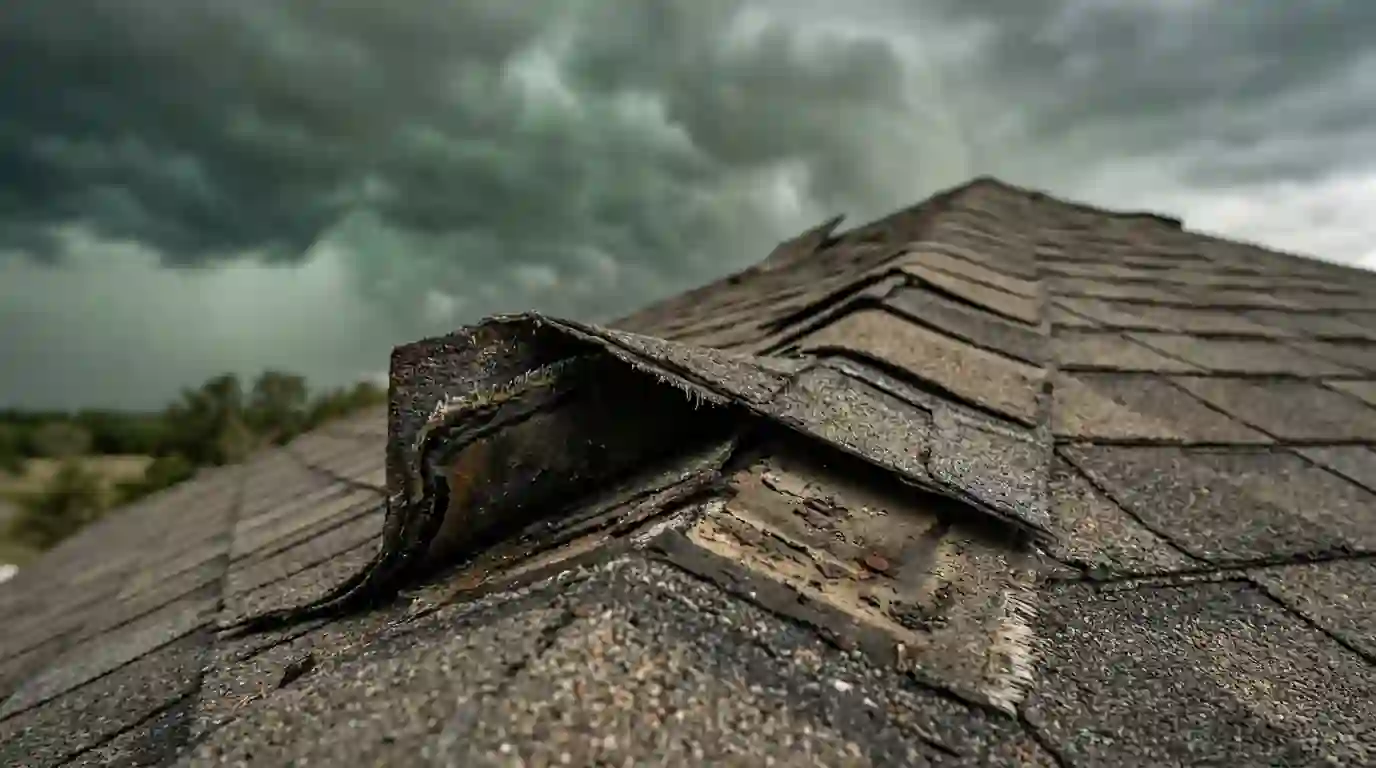
Everyday repairs cover the small failures that show up on almost every roof here after a few summers. Shingle tabs lift and crease in gusty wind. Nails back out as the decking expands and shrinks with the heat, then push up through the shingle above. Ridge caps crack because they're bent over the peak and bake in full sun all day.

None of these is dramatic on its own, but each one opens a path for water. A single popped nail can let rain run down the shank and into the decking for months before a ceiling stain appears. Catching these early keeps a modest repair visit from turning into a decking and drywall job.

  • Lifted or creased shingle tabs that no longer lie flat.
  • Nail pops pushing shingles up into small bumps.
  • Cracked or split ridge and hip caps.
  • Loose drip edge or rake trim along the roof edges.
  • Small scuffed or torn spots from limbs, foot traffic or an old storm.

How San Antonio heat wears down a roof between storms

Attic temperatures here commonly pass 140 to 150 degrees in summer, and that heat works on a roof from both sides. Asphalt shingles slowly lose the oils that keep them flexible. The sealant strips that hold each tab down dry out, so a roof that survived its first ten years can start shedding tabs in ordinary spring wind.

Thermal movement matters too. Decking swells in humid weather and shrinks during dry stretches, which loosens nails a little more each cycle. On many homes the south and west slopes age noticeably faster than the north side, so we often repair one face of the roof while the others still have years left.

If your attic runs especially hot, poor airflow may be speeding all of this up. We'll note it during the repair, and our page on balancing attic intake and exhaust explains what a fix involves. A cooler attic won't reverse aging that already happened, but it slows what comes next.
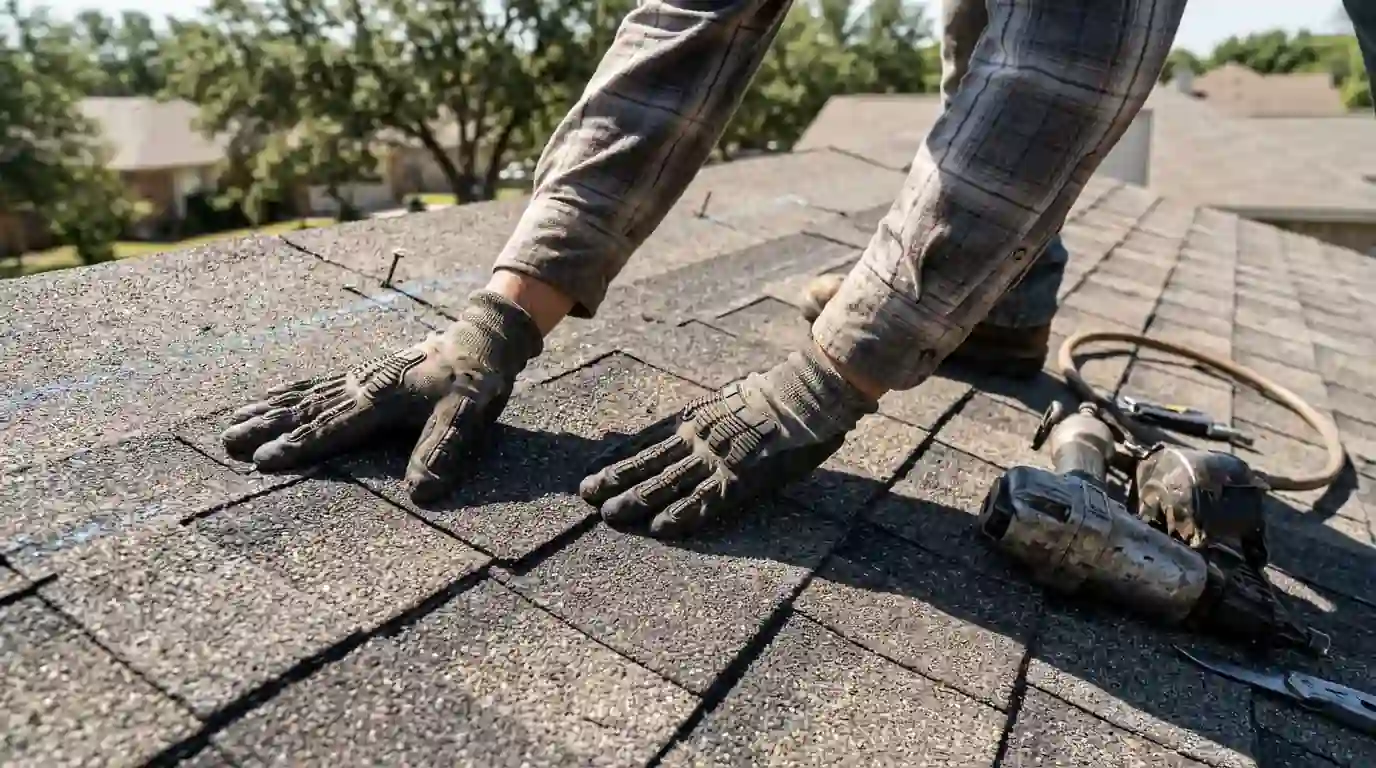
Close view of a roofer's gloved hands pressing a replacement architectural shingle into place on a sunny San Antonio ranch home roof, nail gun beside it
Roof Repair on a San Antonio area home.

How do we decide whether repair is enough?

We start with a bend test on shingles from several slopes. If a shingle folds back without cracking and still holds most of its granules, the roof can usually take a repair and keep going. If tabs snap, granules sit in the gutters by the handful and the mat shows through, patching just buys a season.

We also count how many separate areas need work. Two or three spots are a normal repair. When we find damage on every slope, or the same leak has been patched several times, we'll tell you plainly that replacement is the better spend. The repair or replace guide walks through the same reasoning with real examples.

Matching is the other limit. Shingle colors fade and product lines get discontinued, so a repair on an older roof may not match perfectly. We bring sample pieces so you can see the closest available color before we start, and we place new shingles where they'll be least visible when the layout allows it.

Which problems need a different kind of repair?

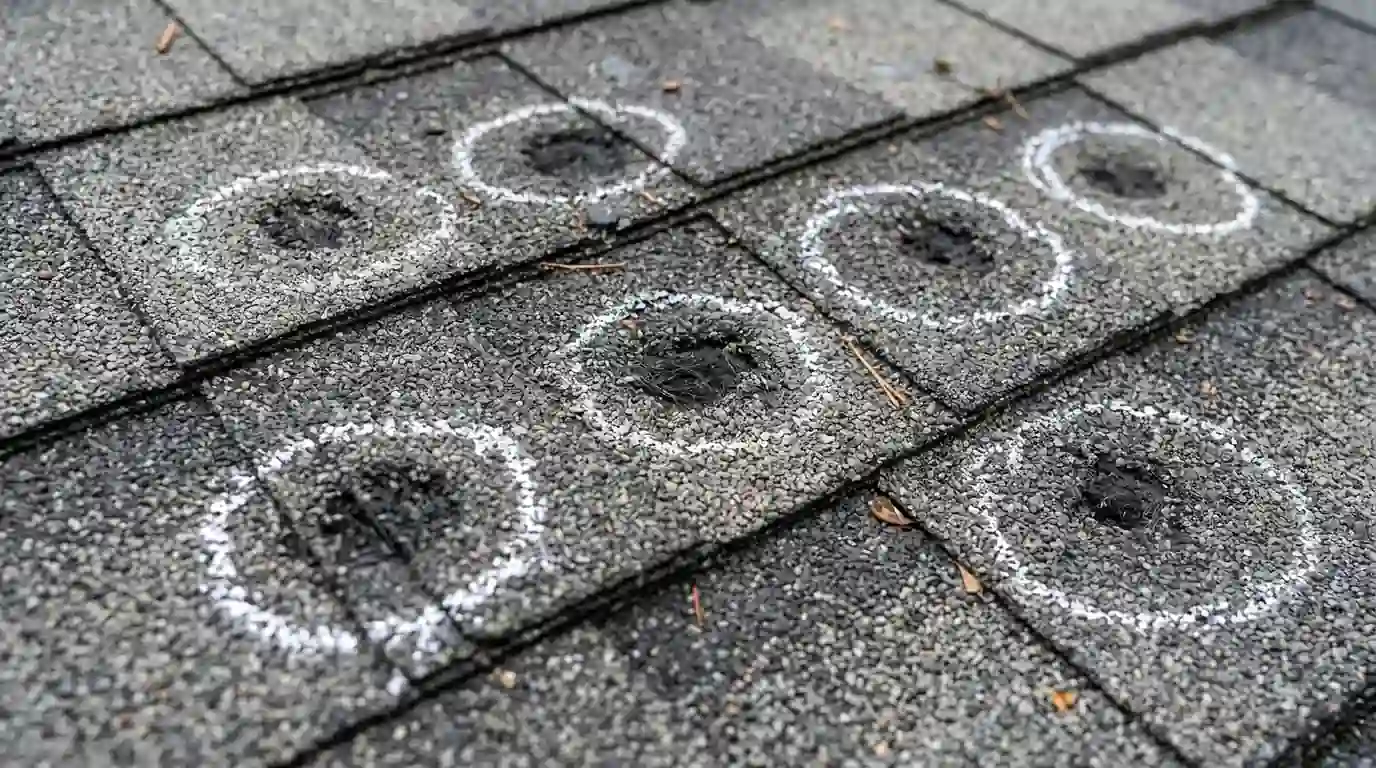
This page covers small, visible failures on shingle roofs. Some problems need a different approach. A ceiling stain with no obvious cause on the roof surface calls for a full trace, which is what our leak tracing service is built around. Fresh bruising after a storm points to hail, and that work starts with documentation before any repair.

Tile, metal and flat roofs each have their own repair methods, and walking them the wrong way causes more damage than it fixes. If you're not sure which category your problem falls into, describe it when you phone and we'll send a roofer with the right materials on the first trip.

What happens during a repair visit, start to finish

We photograph the problem area and the surrounding slopes before touching anything, so you can see what we saw. Then we lift the shingles above the repair, pull failed nails or broken pieces and replace them with matching material. New shingles get hand sealed so they hold down before summer heat activates the factory strip.

Ridge caps are replaced as full pieces, nailed at the correct exposure and sealed at the head. Nail pops get pulled rather than hammered back down, because a driven nail tends to rise again. Before we leave, we photograph the finished work and point out anything else on the roof that deserves watching.

How can you keep small problems from coming back?

Most repeat repairs come from the same three things: overhanging limbs, clogged valleys and a roof nobody has looked at since the last storm. Live oaks drop leaves and tassels into valleys every spring, and wet debris holds moisture against the shingles long after the rain stops.

Trimming limbs back several feet from the roof prevents scuffing in wind. A check before hail season catches lifted tabs while they're still easy to reset. If you'd rather not track it yourself, a scheduled twice-yearly roof tune up covers the same ground and usually costs less than a repair.
Warning signs

Signs your roof needs roof repair

Tabs flapping or creased

Tabs that stand up in wind or show a horizontal fold line have lost their seal and will tear off in the next strong gust.

Small bumps in straight rows

Raised spots along a nail line usually mean nails have backed out of the decking.

Cracked ridge caps

Splits across the caps at the peak let water reach the ridge nails and the decking below.

Shingle pieces in the yard

Corners or full tabs on the lawn after wind mean part of the roof is now exposed.

Granules piling at downspouts

Some loss is normal, but heavy piles from a newer roof point to wear or impact that needs a closer look.

Daylight or damp spots in the attic

Pinpoints of light or darkened decking near nails show where water already gets in.

From first call to finished roof

How we handle roof repair from start to finish

  1. Step 1

    Ground and attic check

    We look from the yard and inside the attic first to spot stains, light leaks and sagging decking.

  2. Step 2

    Slope by slope photos

    Each face of the roof gets photographed so you see the damage in context, not just a close up.

  3. Step 3

    Bend test and honest call

    We test shingle flexibility and tell you whether a repair will hold or whether replacement makes more sense.

  4. Step 4

    Material match

    We bring the closest available shingle color and profile and show it to you before installing.

  5. Step 5

    Repair and hand seal

    Failed pieces are replaced, nails are pulled and reset, and new tabs are sealed down with roofing cement.

  6. Step 6

    Finished photos and notes

    You get after photos plus a short list of anything else we noticed that's worth watching.

What roof repair usually costs in San Antonio

Most repair visits in San Antonio fall between $385 and $1,465. Your price depends on the roof after inspection, mainly the pitch, the shingle type and how many separate areas need work.

Line itemTypical range
Service visit with ground, attic and roof check$145 to $215
Nail pop reset, per area of 5 to 10 nails$165 to $345
Replace lifted or creased shingles, per area$215 to $485
Ridge or hip cap replacement, per 10 feet$185 to $395
Drip edge or rake trim resecured, per run$135 to $310

What moves the price

  • Steep pitches above 8/12 need roof jacks and harnesses, which adds labor time.
  • Two-story homes take longer to reach and stage than single-story ranch homes.
  • Discontinued shingle colors may mean sourcing near-match or salvage pieces.
  • Several separate repair areas cost more than one concentrated area.
  • Soft decking found under the shingles adds a per-sheet charge.

Ranges are typical, not quotes. Your price depends on the roof we see at the inspection. See every service side by side in the roofing cost guide.

Materials we install and repair

  • GAF
  • Owens Corning
  • CertainTeed
  • Malarkey
  • TAMKO
  • Atlas Roofing
  • IKO
  • Eagle Roofing
  • Westlake Royal
  • DaVinci Roofscapes
  • Englert
  • Carlisle
  • Velux
  • Solatube
  • GAF
  • Owens Corning
  • CertainTeed
  • Malarkey
  • TAMKO
  • Atlas Roofing
  • IKO
  • Eagle Roofing
  • Westlake Royal
  • DaVinci Roofscapes
  • Englert
  • Carlisle
  • Velux
  • Solatube
  • GAF
  • Owens Corning
  • CertainTeed
  • Malarkey
  • TAMKO
  • Atlas Roofing
  • IKO
  • Eagle Roofing
  • Westlake Royal
  • DaVinci Roofscapes
  • Englert
  • Carlisle
  • Velux
  • Solatube

Answers

Roof Repair questions from San Antonio homeowners

When is roof repair a better choice than a full replacement?

Repair is the better choice when damage sits in a few spots and the shingles still bend without cracking. If granules are worn down across several slopes, the same leak has come back more than once, or damage shows on every face of the roof, a replacement usually costs less over the next decade than repeated repair visits.

Will repaired shingles match the rest of my roof?

Usually close, rarely perfect on an older roof. Sun fades shingles over time, and manufacturers change or discontinue colors. We bring samples of the closest current match so you can approve it first, and when possible we place new pieces on a less visible slope or move good older shingles from a hidden area to the front.

Can a roof repair fix nail pops without replacing shingles?

Often, yes. We lift the shingle, pull the backed-out nail, set a new one slightly offset into solid decking and seal the old hole. If the nail head has already punched through the shingle above, that shingle gets replaced. Hammering pops back down rarely lasts, because the nail tends to rise again.

How long does a typical roof repair visit take?

Most single-area repairs on a shingle roof take two to four hours, including the attic check and photos. Several separate areas, a steep pitch or a two-story home can stretch it to a full day. If we find soft decking or hidden damage, we'll stop and show you before doing any extra work.

Is it safe to walk on my roof to check a repair spot myself?

We'd advise against it. Hot shingles scuff and lose granules underfoot in summer, and dusty or damp shingles are slippery any time of year. Binoculars from the yard or photos from an upstairs window show most lifted tabs and cracked caps. Inside the attic, look for damp decking with a flashlight instead.

Related work

Other roof work that often goes with this job

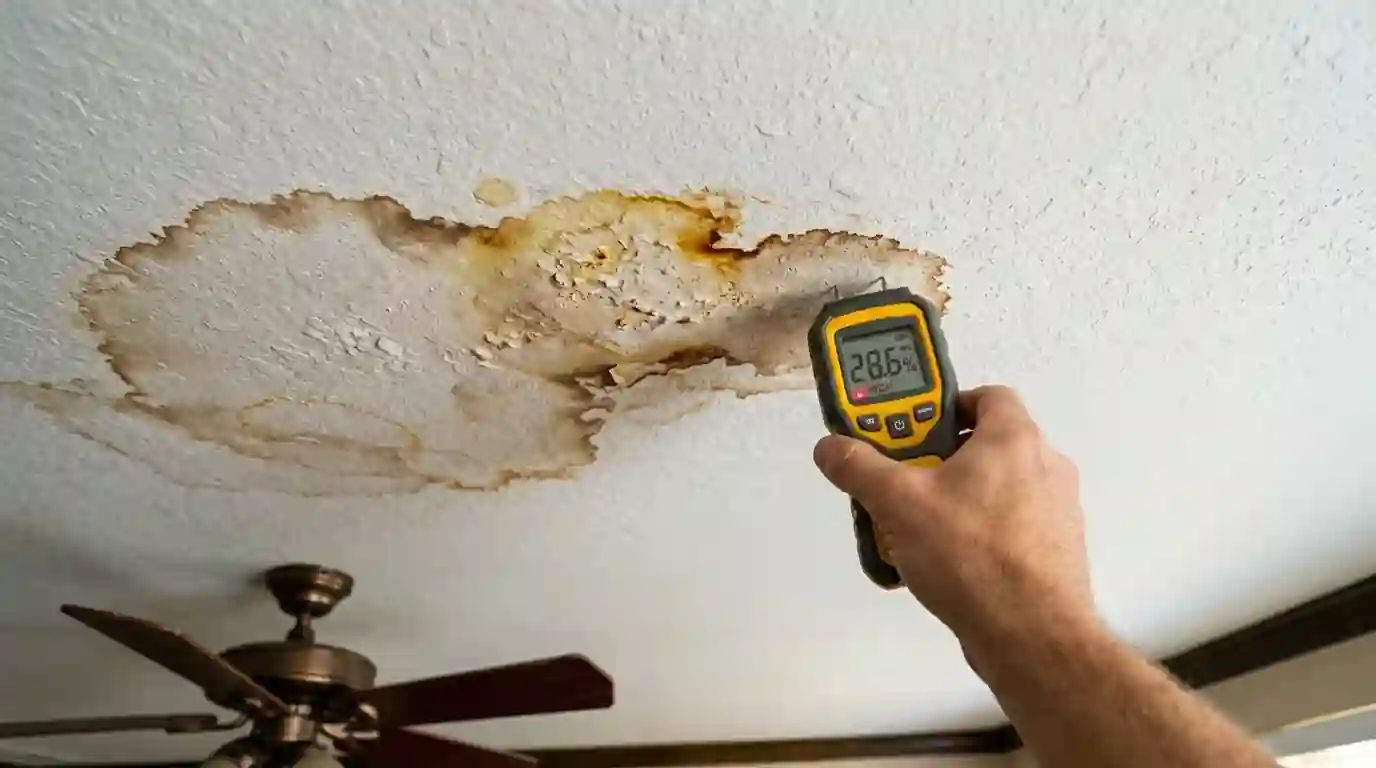
Brown water stain spreading across a white textured ceiling in a Texas living room, a moisture meter held up to the stain

Roof Leak Repair

We trace water from the ceiling stain back to its true entry point with attic checks and a moisture meter, then seal it for good.

Learn more
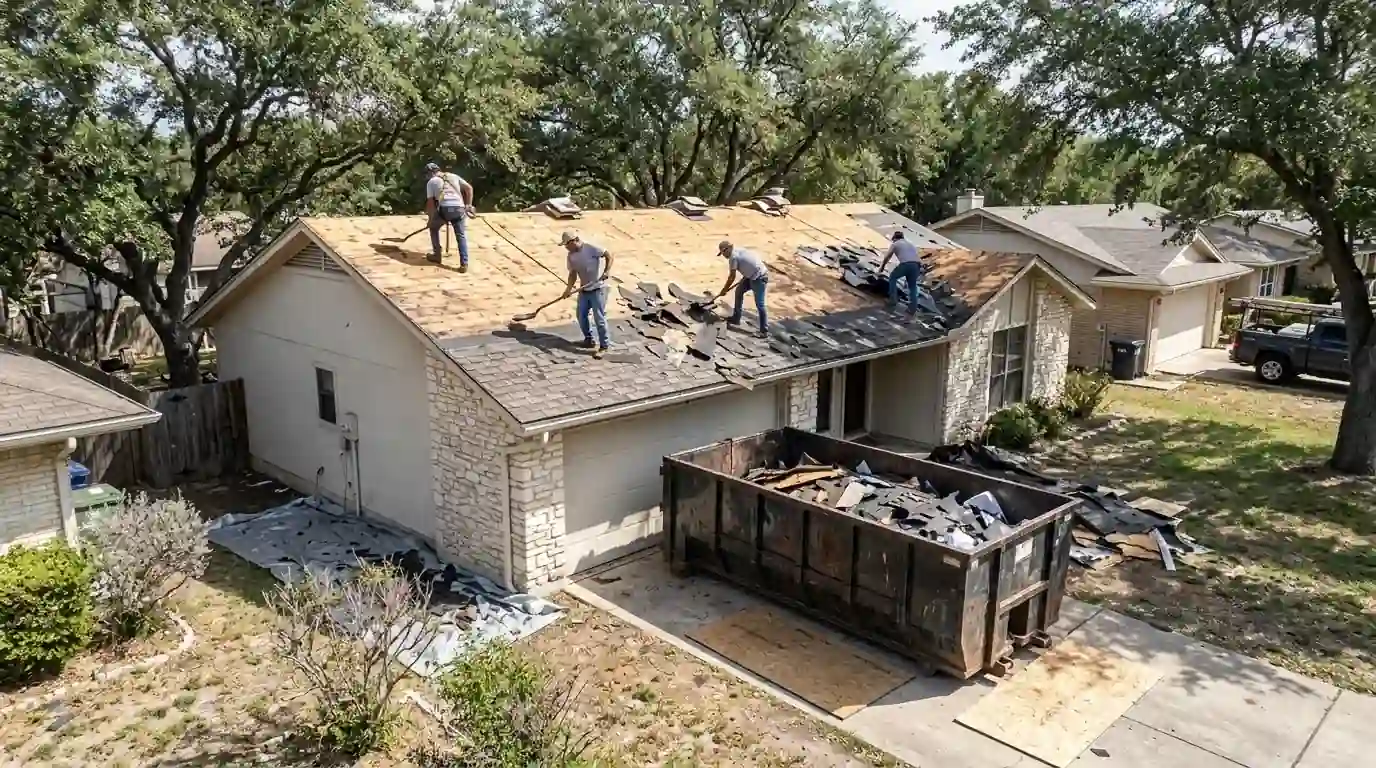
Crew tearing off old shingles down to the deck on a single-story San Antonio home, dumpster in the driveway

Roof Replacement

Full tear-off to the deck, new underlayment, drip edge, flashing and vents, then a magnet sweep of the yard before we leave.

Learn more
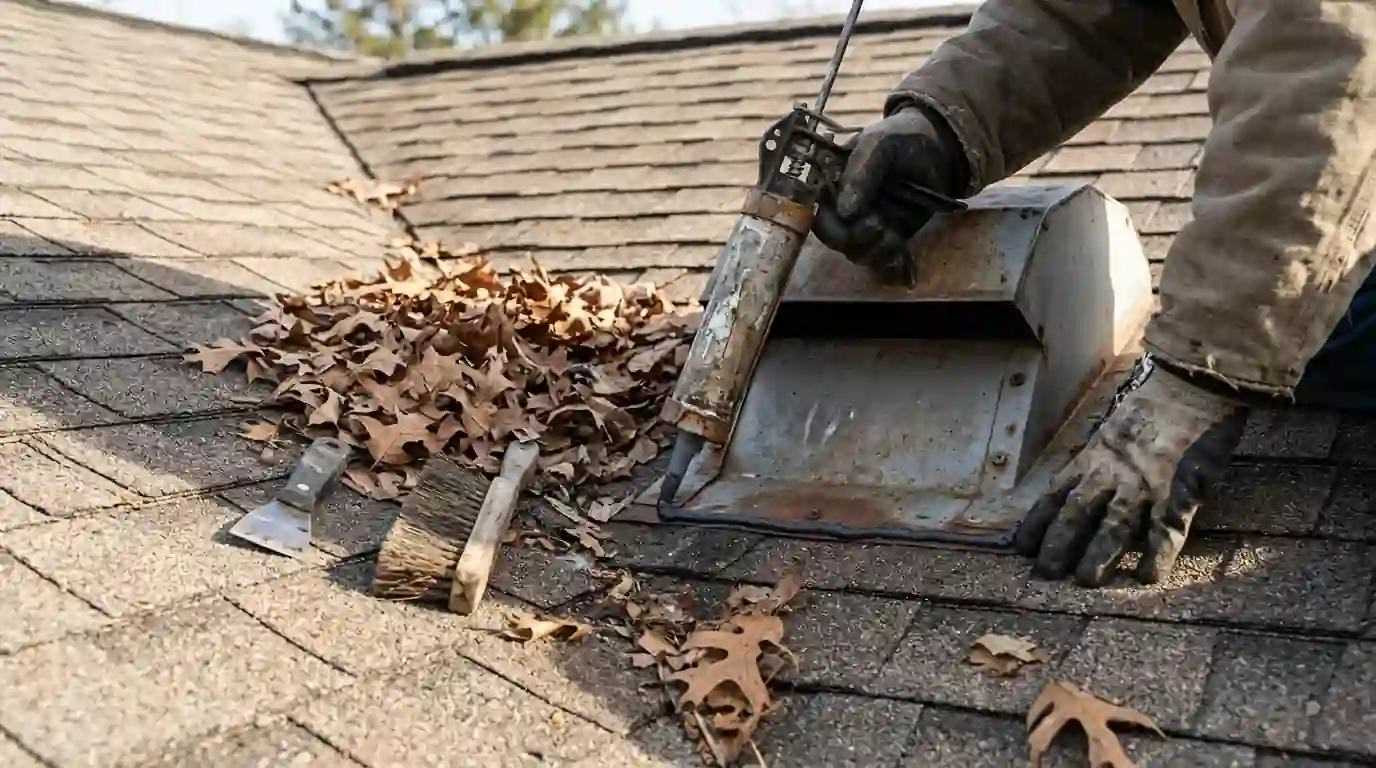
Roofer clearing oak leaves from a roof valley and resealing a vent flange with a caulk gun

Roof Maintenance

Twice-yearly roof tune-ups that clear debris, reseal penetrations, tighten fasteners and keep water moving off the roof.

Learn more

Roof trouble today? Talk to a roofer now.

Our phone line is answered 24/7. Tell us what you see and we will tell you the next step, even if that step is a tarp tonight and a full inspection tomorrow.

Call (210) 750-1898Answered 24 hours a day
Call (210) 750-189824/7