Is your 5V roof failing, or just its screws?
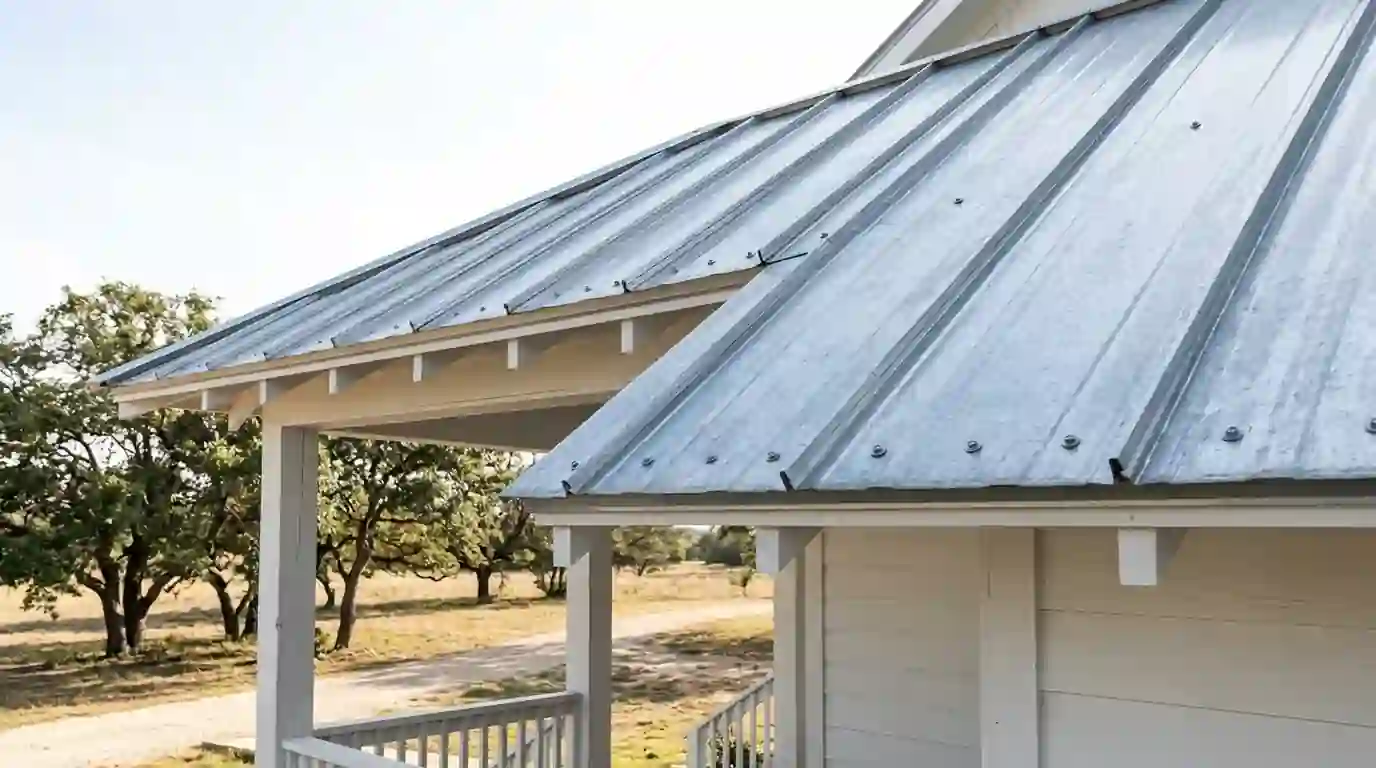
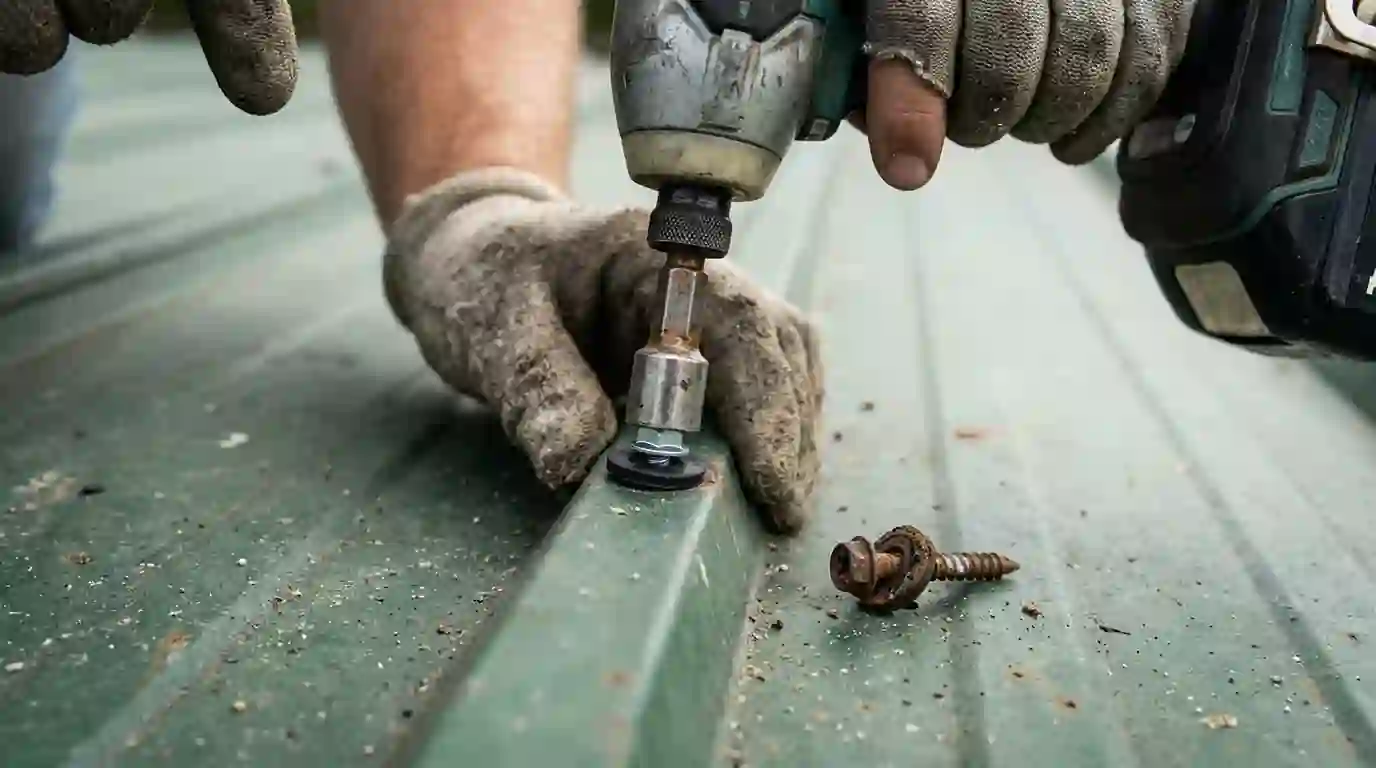
Most of the 5V roofs we see out here were screwed down with neoprene washers or, on older sheds, nailed with lead-head nails. Both loosen after years of heating and cooling. The panel moves a little each day, the hole wallows out, and water follows the screw shank into the decking or onto whatever is stored below.
We check a sample of fasteners on each slope. If the washers crumble but the holes are still round, new oversize screws fix it. Where holes are elongated or the sheet has rusted around them, that panel gets replaced. Our 5V crimp roofing work keeps the plain ranch look many owners want, with sheets cut to the old lengths.
Why barns and pole sheds need a different plan than the house
A barn with open sides doesn't need underlayment the way a house does, but it does need sound purlins and the right panel overlap. We often find purlins that sagged after years of hay dust and moisture, leaving low spots where water sits and rust starts. Replacing them before new metal goes on keeps the roof from ponding again.
Barns also catch wind differently. Open gable ends let gusts get under the eave, and that's how sheets peel off in a storm. We add fasteners at the eaves and rakes, where uplift is strongest, and replace bent trim so edges sit tight against the frame.
What changes when you want metal on the house itself?
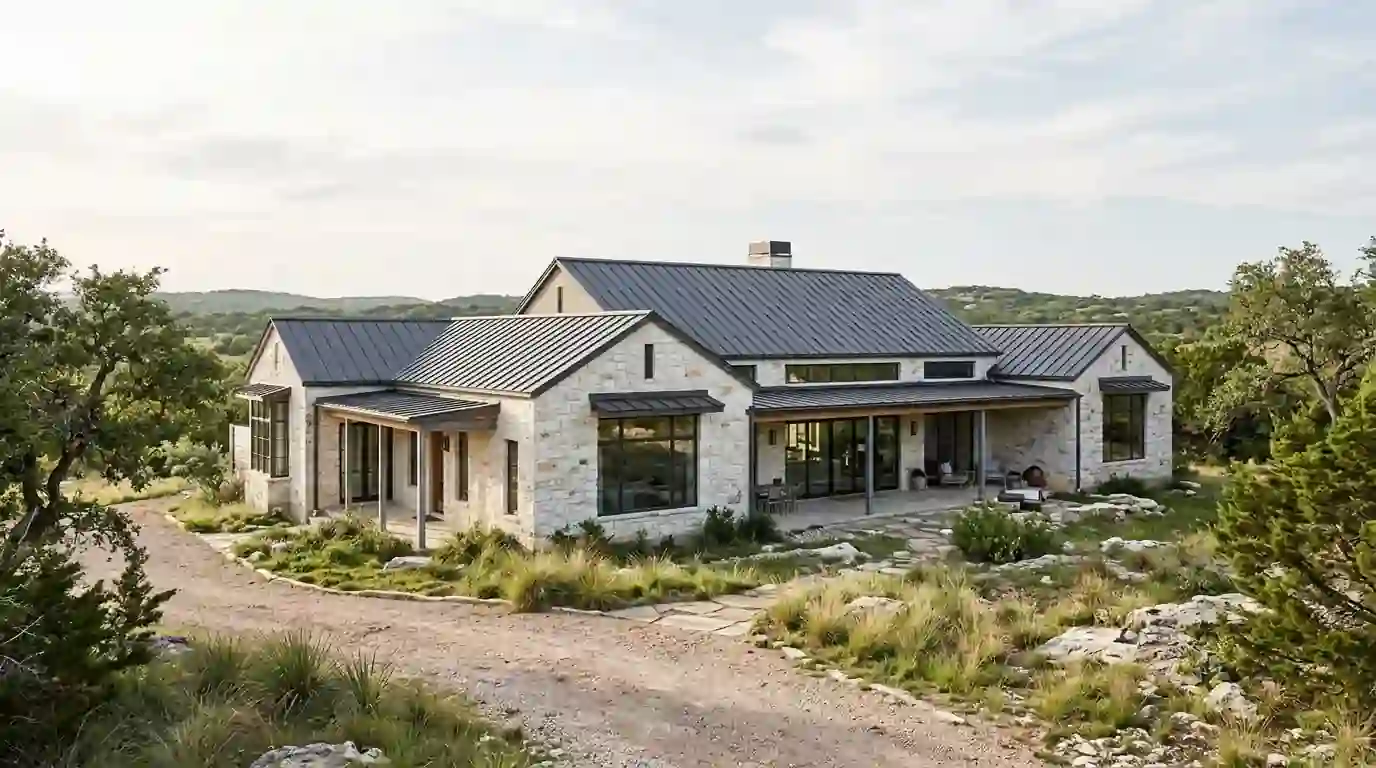
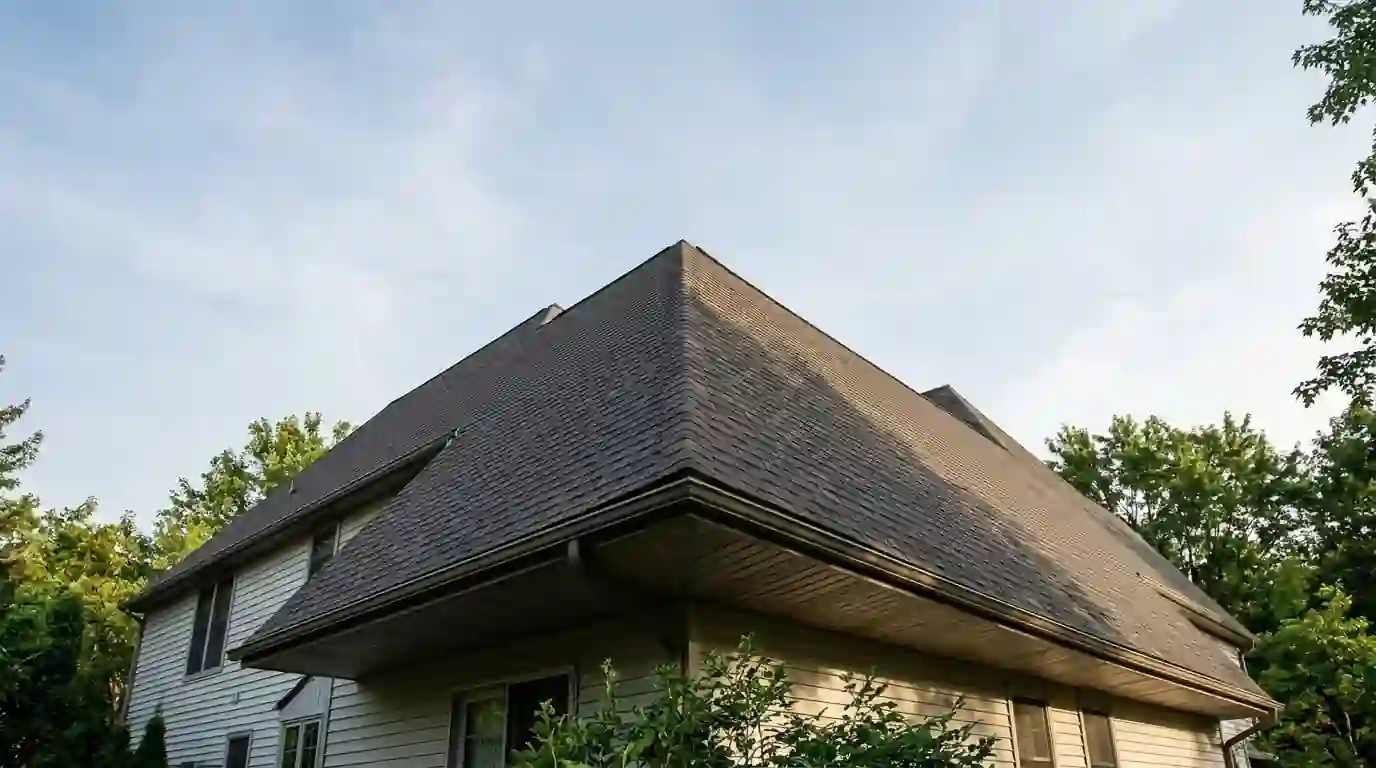
On a home, we lay synthetic underlayment over sound decking, then install 5V or concealed-fastener standing seam with proper flashing at chimneys, vents and walls. If you're torn between the two, our write-up on how 5V compares with standing seam lays out cost, upkeep and looks side by side.
Bare metal on a sunny slope gets very hot in July and August, so we look at the attic too. A ridge vent paired with soffit intake, or a radiant barrier under the deck, can take some of that heat off the rooms below.
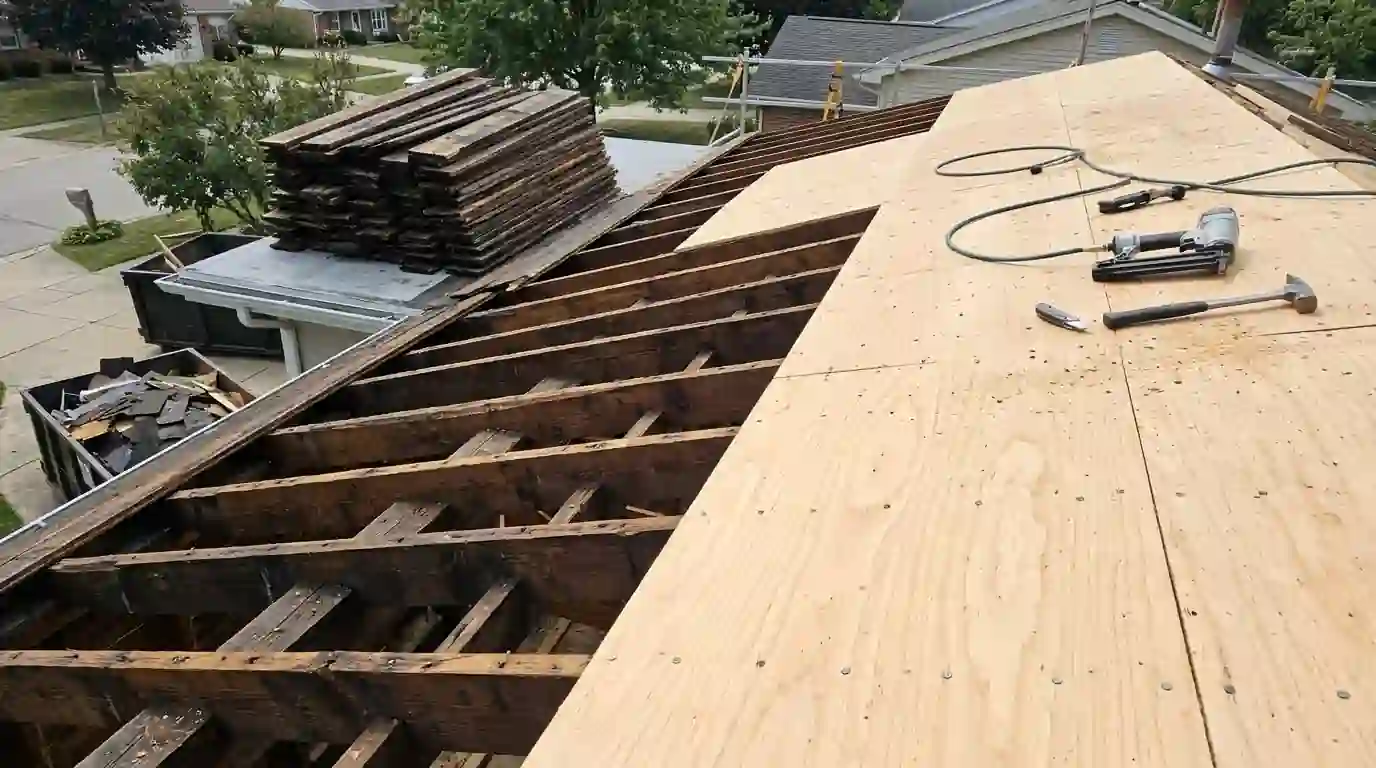
If the house still has composition shingles, metal can sometimes go over one layer, but we usually recommend tearing off so we can check the decking. Rot hidden under old shingles near the eaves is common on homes shaded by oaks, and it's far easier to fix before the metal goes down.