How to tell it's time to replace instead of patch
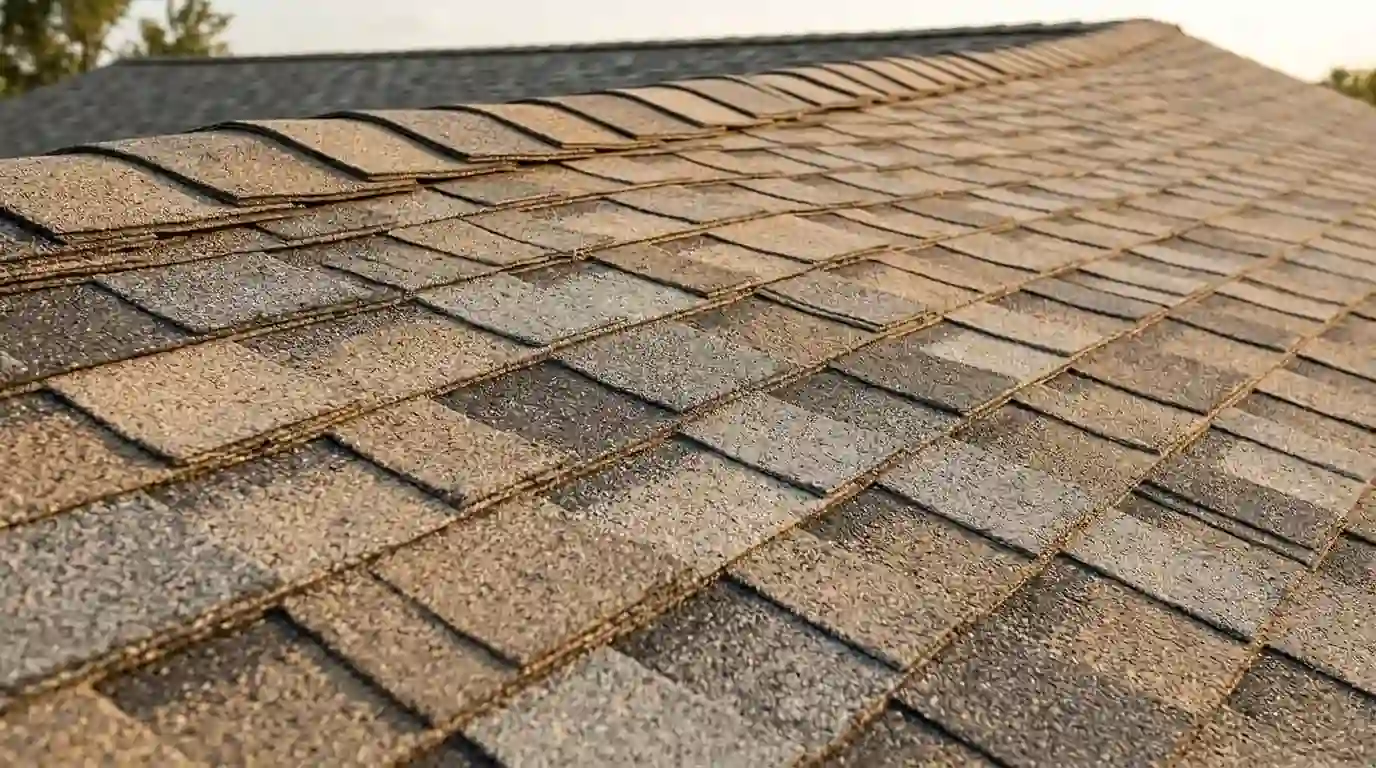
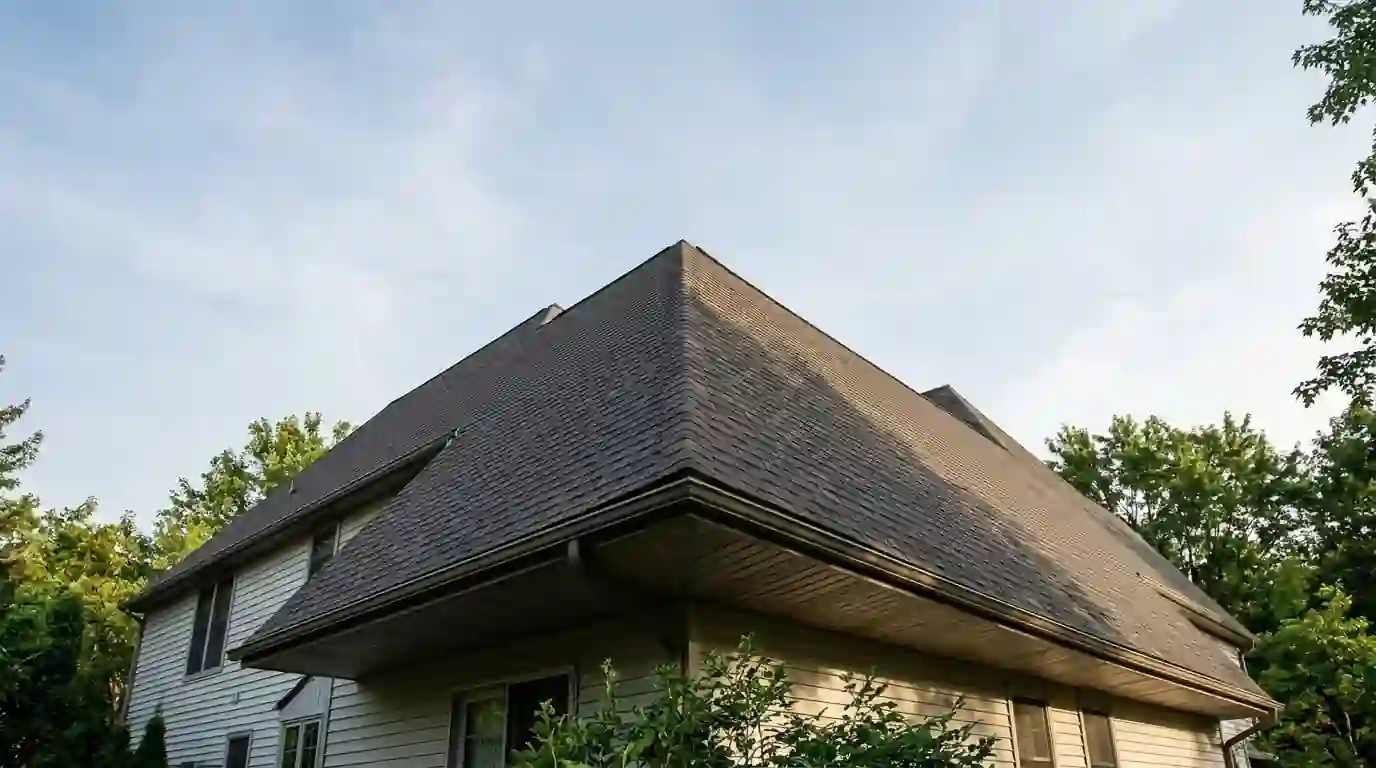
Age alone doesn't decide it. A shingle roof that's 18 years old with flat, granule-rich shingles may still have years left, while a 12-year-old roof hammered in a spring hailstorm may not. We look at how much of the surface is worn, how many repairs it's already had, and whether leaks are showing up in several places instead of one.
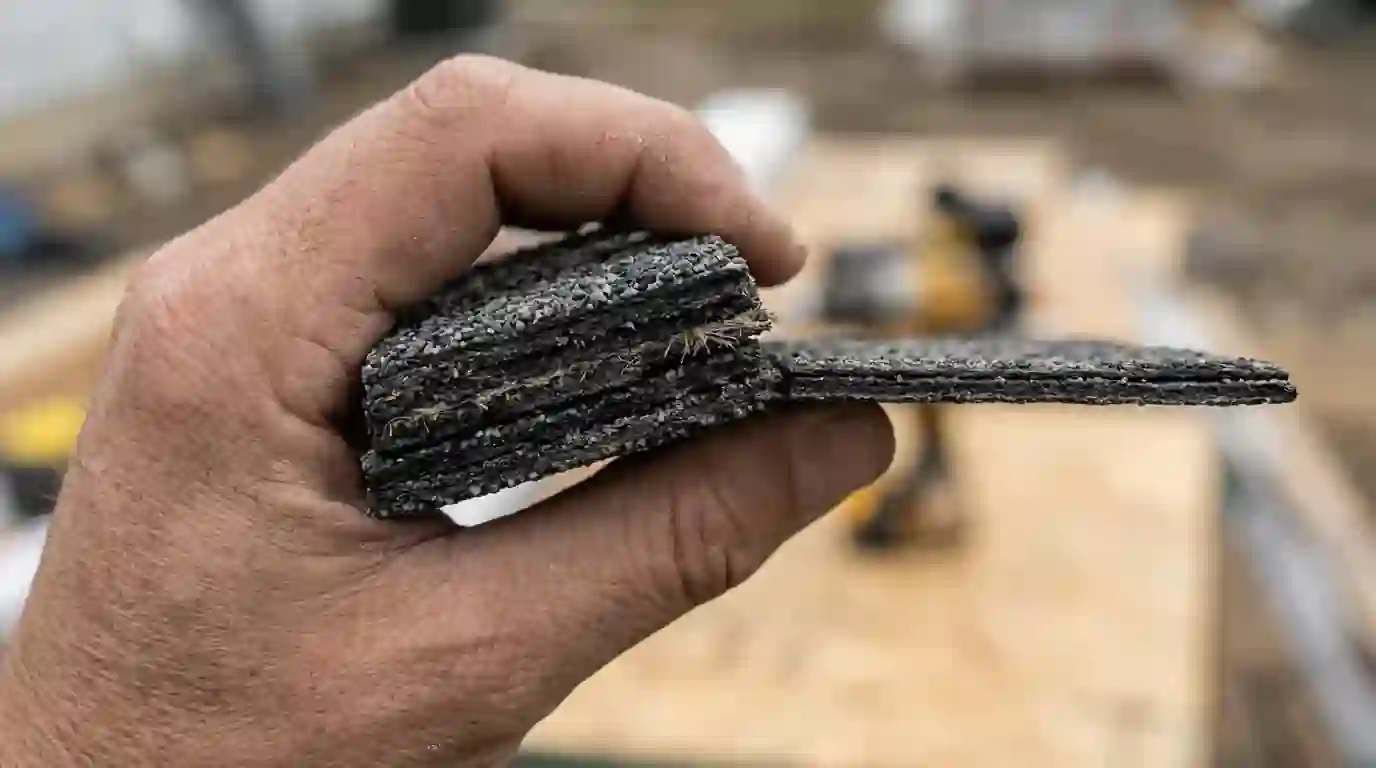
A good rule: if repairs would touch more than about a third of the roof, or if the shingles have gone brittle and crack when lifted, replacement is the better spend. Patching brittle shingles often breaks the ones around the repair. Our guide on deciding between repair and replacement walks through the same checklist we use on the roof.
What a full tear-off includes, layer by layer
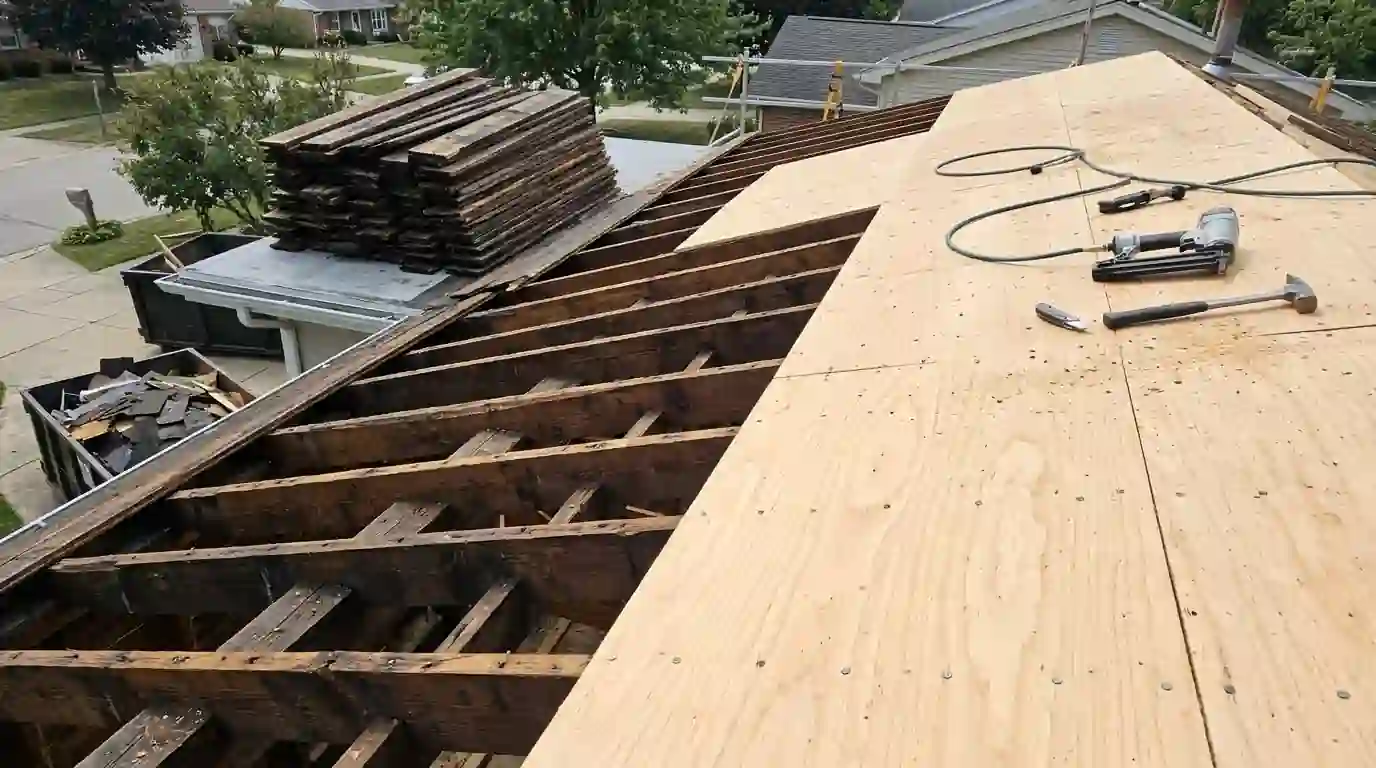
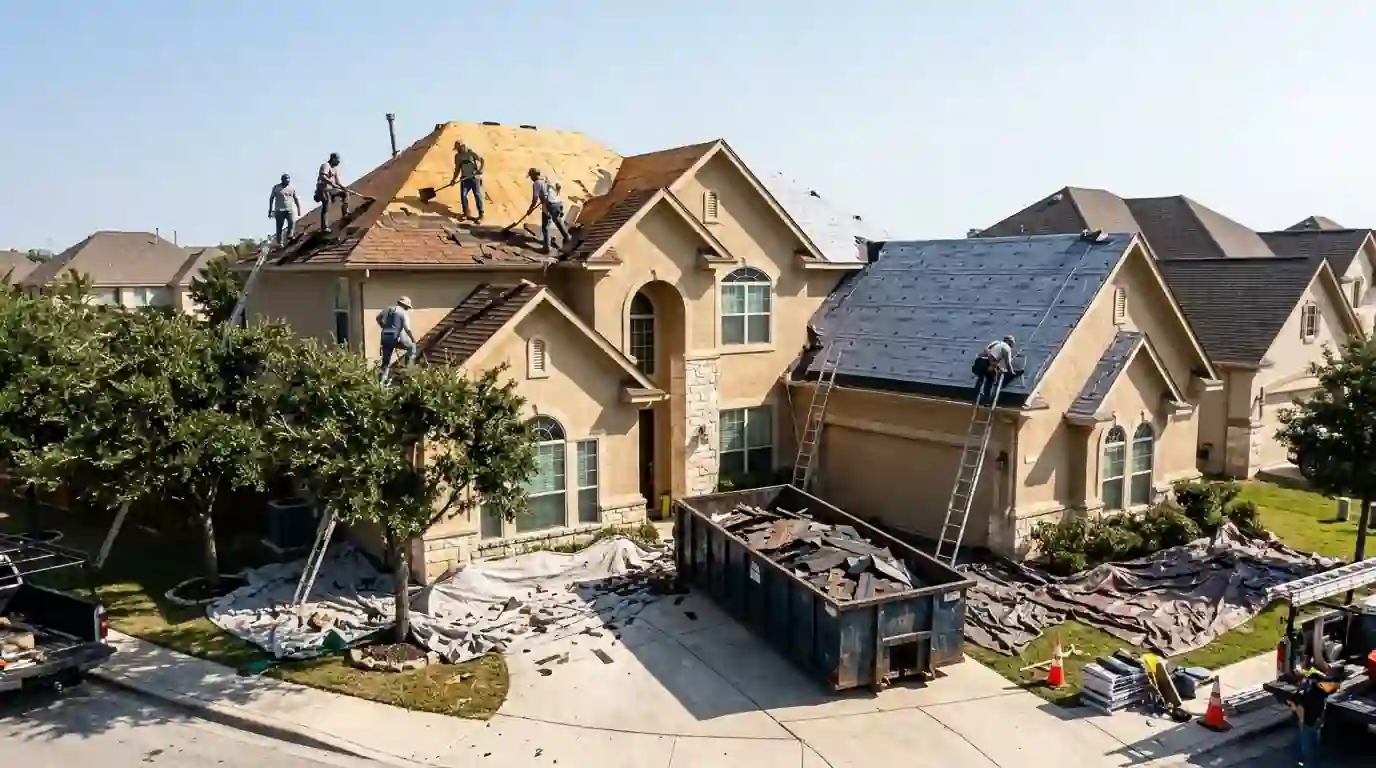
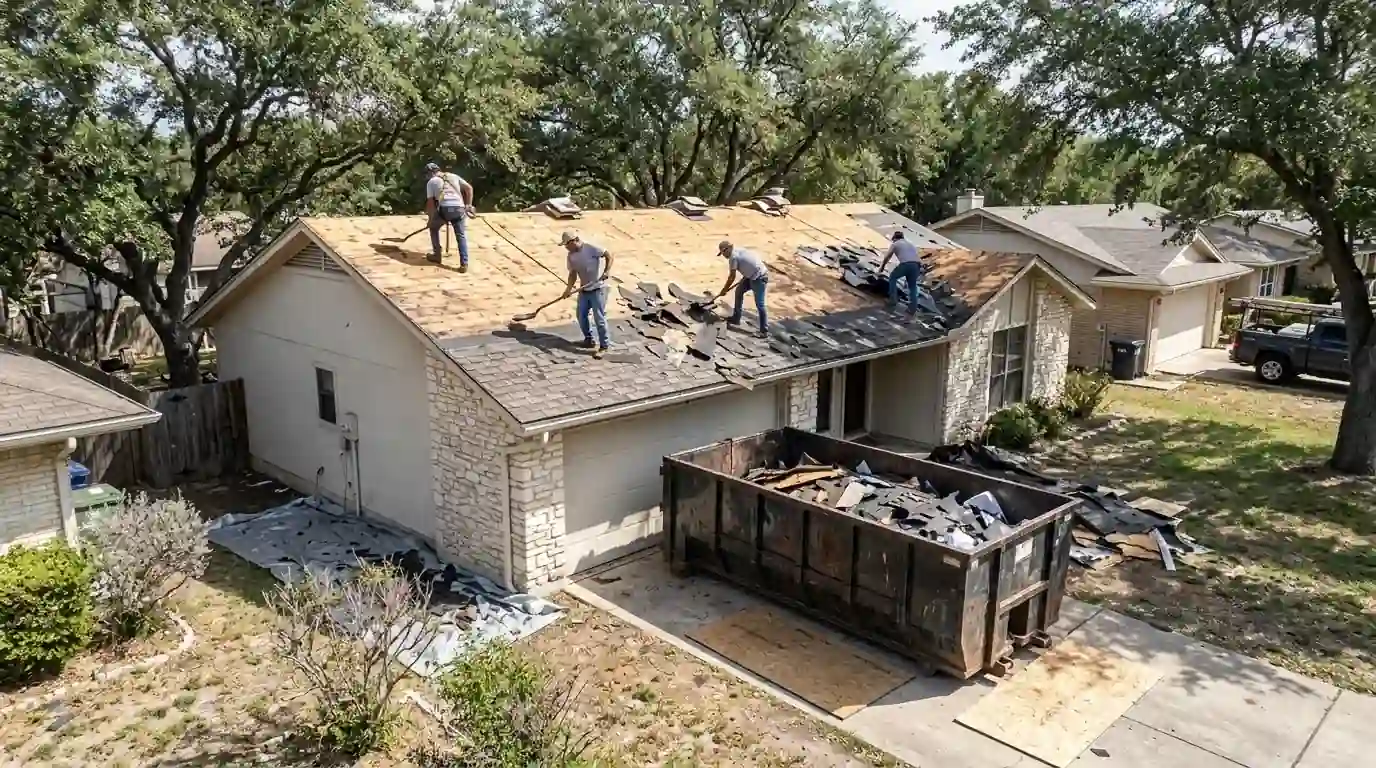
We remove everything down to the decking: shingles, old felt, rusted drip edge, worn pipe boots and tired flashing. Texas homes sometimes carry a second layer of shingles nailed over the first, and that extra layer comes off too. Once the deck is bare, we walk it for soft sheets and replace them at the per-sheet price written into your agreement.
Then the roof goes back together in order. Drip edge at the eaves, ice and water membrane in valleys and around penetrations, synthetic underlayment across the field, new flashing at walls and chimneys, and new pipe boots. The covering goes on last. For asphalt, our shingle roofing page covers starter strips, nailing and ridge caps in more detail.
- Old roofing and every nail removed down to the decking.
- Damaged decking replaced and photographed sheet by sheet.
- New drip edge, valley membrane and synthetic underlayment.
- New step, headwall and counter flashing where walls meet the roof.
- New pipe boots, vents and ridge ventilation sized to the attic.
- Magnet sweep of the yard, driveway and beds before we leave.
Why ventilation gets fixed during a replacement, not after
San Antonio attics commonly pass 140 to 150 degrees in summer, and that heat bakes shingles from below. A replacement is the cheapest moment to correct the balance between soffit intake and ridge exhaust, because the roof is already open. We count existing vents, check whether soffits are blocked by insulation, and size the ridge vent to match.
Mixed exhaust types, like a ridge vent next to old turbines, can short-circuit airflow and pull air from the wrong place. We usually remove the extras and close those holes with new decking. If you want to understand the airflow math, our ridge and soffit vent service goes deeper. Adding a radiant barrier at this stage is also simple.
Do you need a permit to replace a roof in San Antonio?
Requirements depend on where you live. The City of San Antonio, suburban cities like Schertz or Boerne, and unincorporated county land each set their own rules, and they change. We check the rules for your address and pull any required permit before work starts. Our article on reroof permits around the city explains what homeowners usually run into.
Two other approvals catch people off guard. Homes in local historic districts need exterior changes reviewed by the City of San Antonio Office of Historic Preservation. Many master-planned communities on the north side also require HOA approval of roof color and material before a single shingle comes off. We help gather the samples and spec sheets those committees ask for.
What replacement day looks like at your house
We start early to beat the afternoon heat. Tarps go over landscaping and against walls, and a dumpster or dump trailer is placed where it won't crack your driveway. Tear-off and dry-in happen slope by slope, so the house is never left open overnight. If the forecast turns, we stop tearing off and seal what's exposed.
Most single-story homes are done in one or two days. Larger two-story roofs, steep pitches, or heavy decking repairs can stretch to three. Before we leave, we run magnets across the yard and driveway for nails, clean gutters of debris, and walk the roof with you or send a full photo set showing each layer going on.