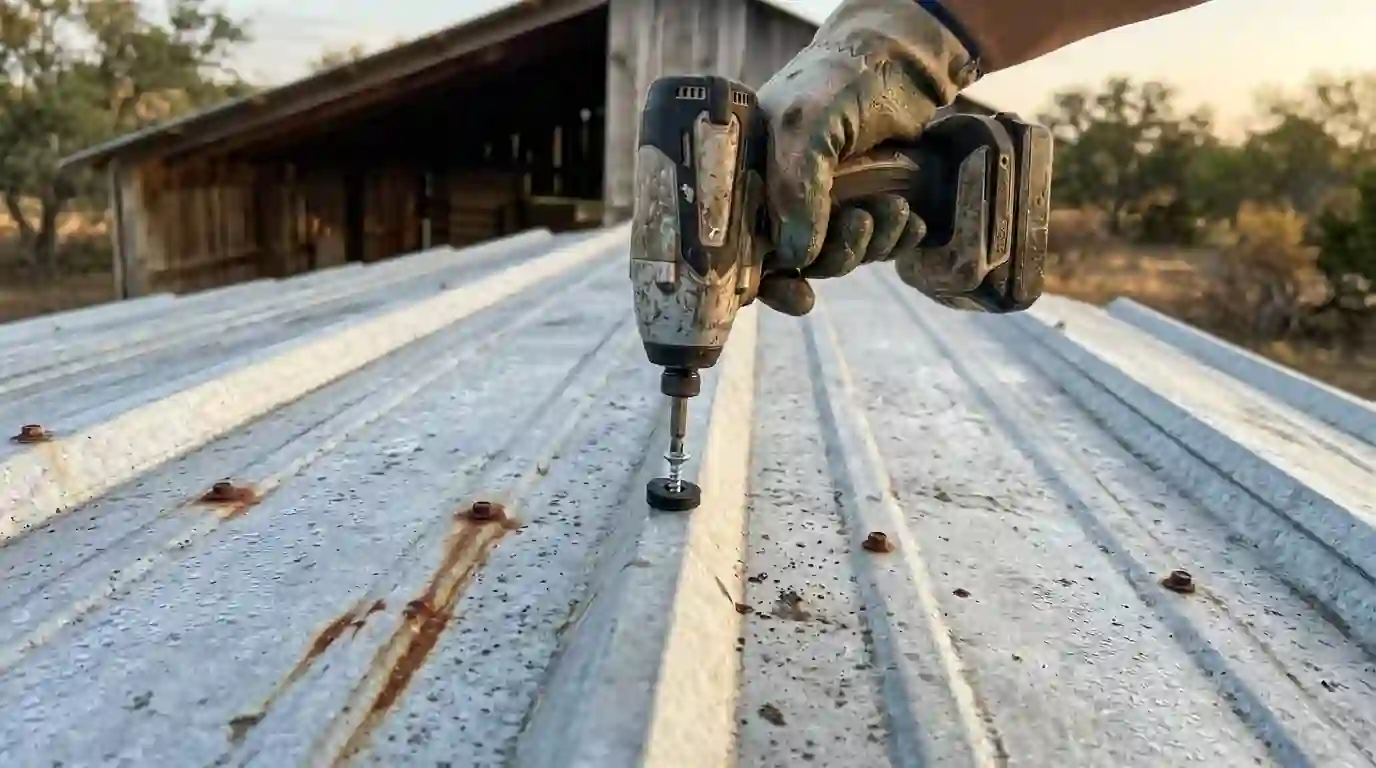
Why exposed screws are the most common metal roof leak
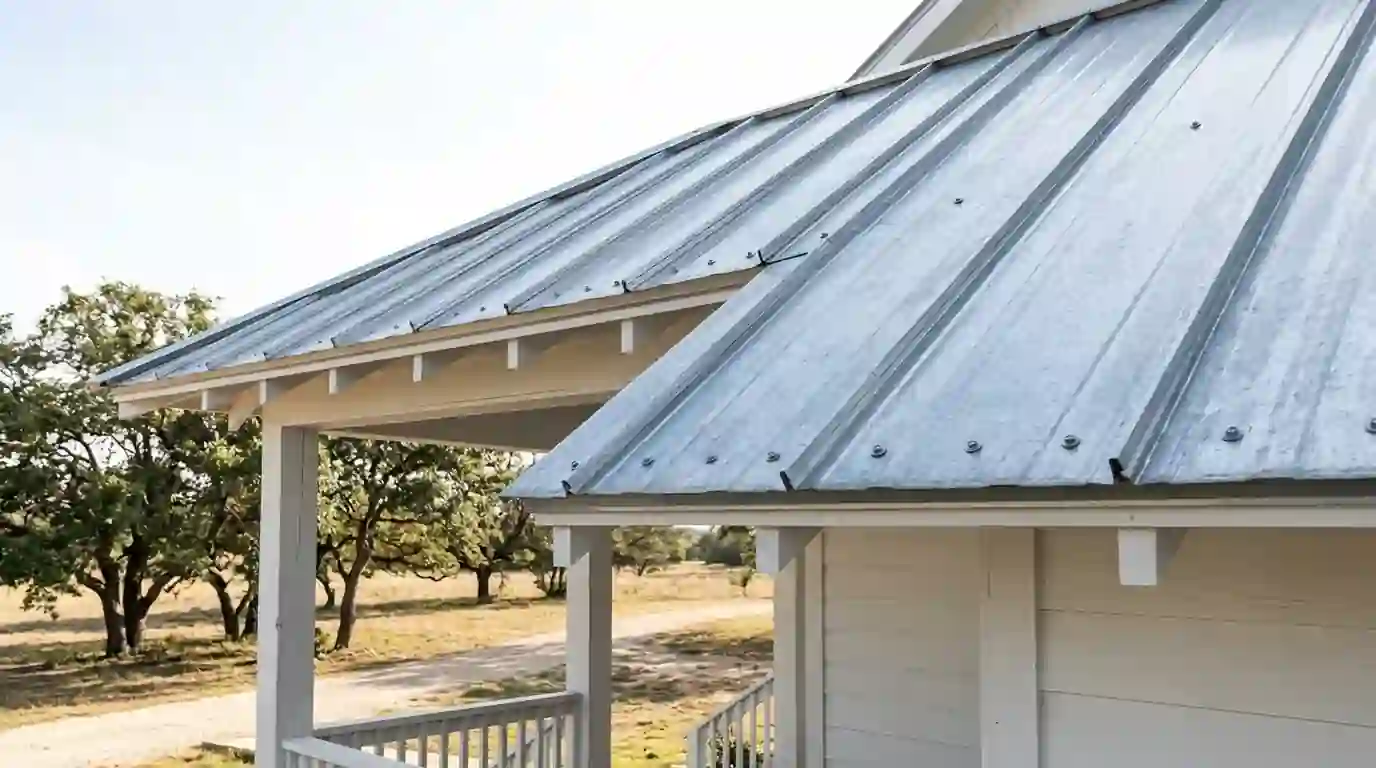
On 5V crimp and corrugated roofs, every screw is a potential hole. The rubber washer under each head seals it, and years of South Texas sun and heat dry that washer until it cracks or shrinks. Heat cycling also works screws loose, especially ones driven into purlins that have dried and shrunk. A loose screw rocks with every gust and slowly enlarges its hole.
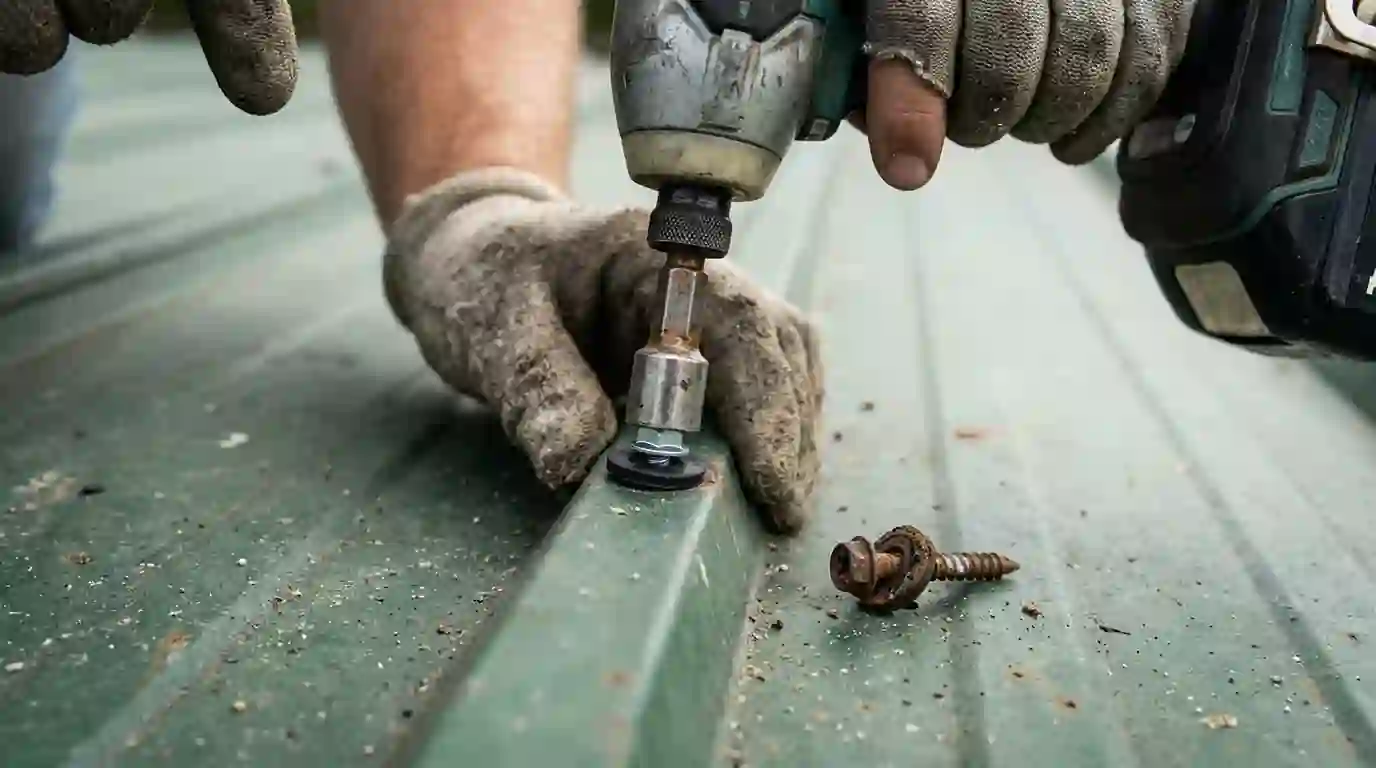
Our fix is to back out the bad screw and drive a slightly larger diameter screw with a fresh washer into new wood. Simply tightening an old screw usually crushes a dried washer and makes the leak worse. On roofs with dozens of failing fasteners, a full rescrew often costs less than chasing leaks one at a time. If you're weighing a new exposed-fastener roof, see our 5V crimp panel installs.
Seam, lap and trim leaks on standing seam roofs
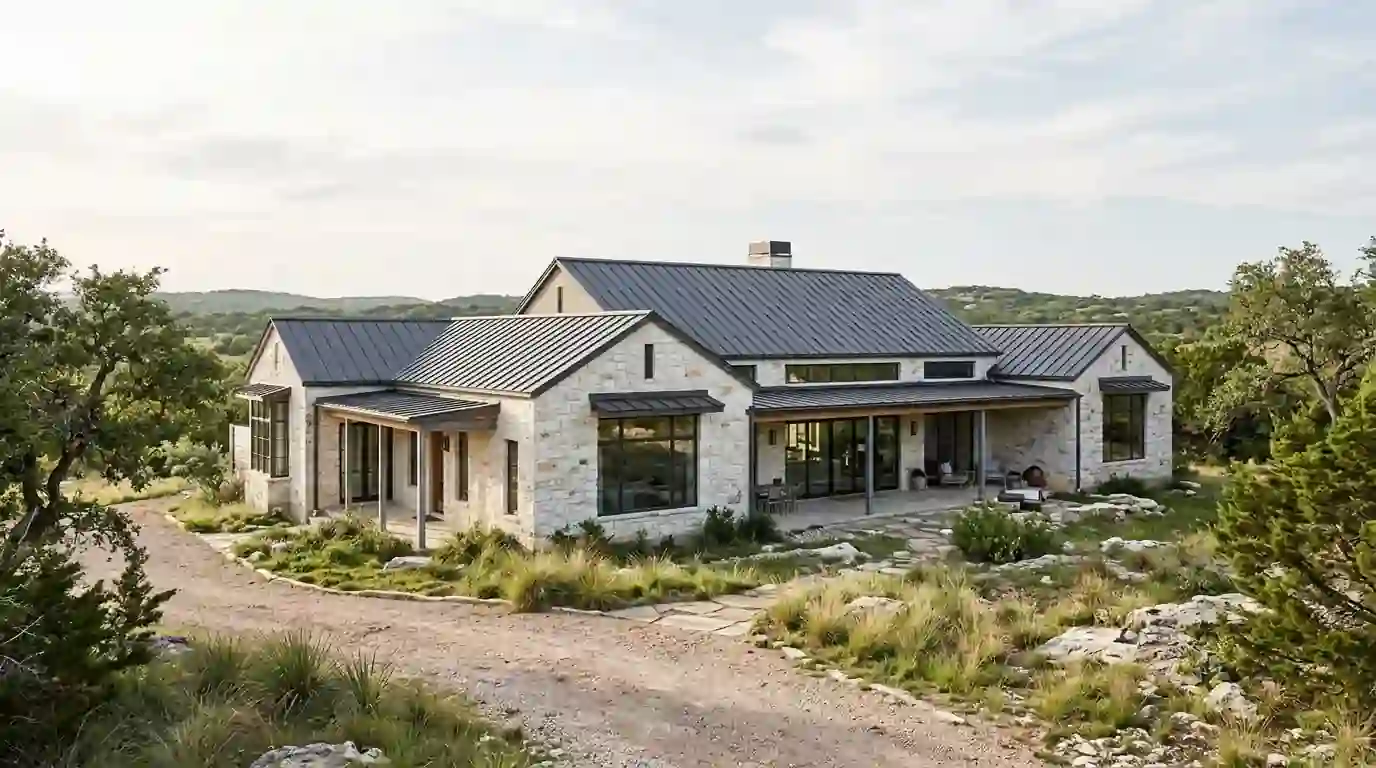
Standing seam roofs don't have exposed screws in the field, so leaks there tend to come from the edges and joints. Ridge caps lose their foam closures, panel ends lift at the eave, and sealant at end laps or around penetrations dries out. On low slopes, a snap-lock seam can let wind-driven water creep sideways during a heavy storm.
We repair seams with sealants and tapes made for metal, never plain silicone caulk smeared over the surface, which peels and traps water. Lifted trim gets refastened with matching screws and closures, and failed penetration boots get replaced with metal-rated ones. For the newer system's full details, our standing seam roofing page explains how panels and clips should be installed.
Are hail dents on a metal roof actually damage?
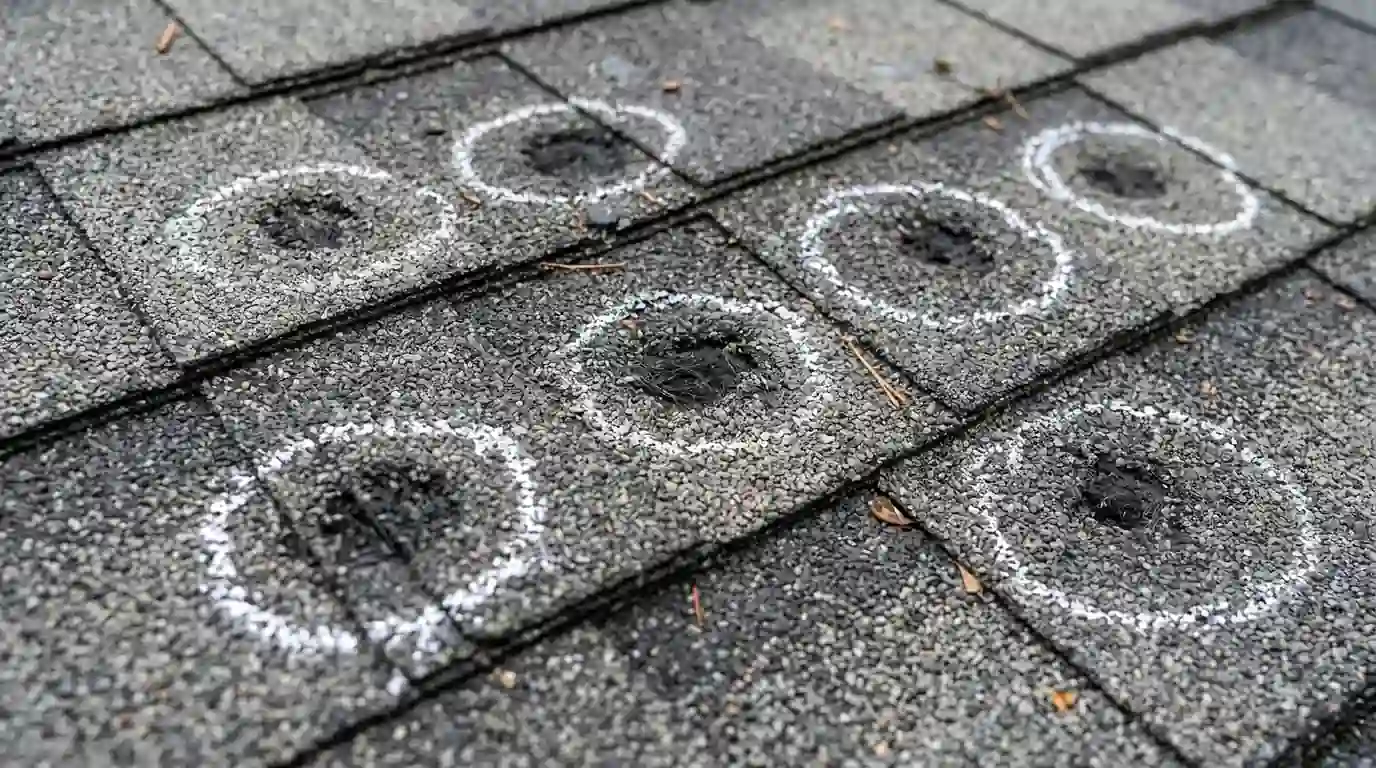
Not always. Small dimples in the panels are often cosmetic: the metal is dented, but the coating isn't broken and the panel still sheds water. Many insurance policies treat cosmetic dents differently from functional damage, and some exclude cosmetic damage on metal roofs entirely. Read your own policy before assuming a claim will cover dimples.
Functional damage is different. Cracked paint that lets rust start, punctures, split seams, crushed ribs that break side laps, and bent trim that lets water in all need repair. We photograph dents with a scale reference and note whether the coating is broken. Our post-storm inspection reports lay out the same evidence for your adjuster.
Treating rust before it eats through
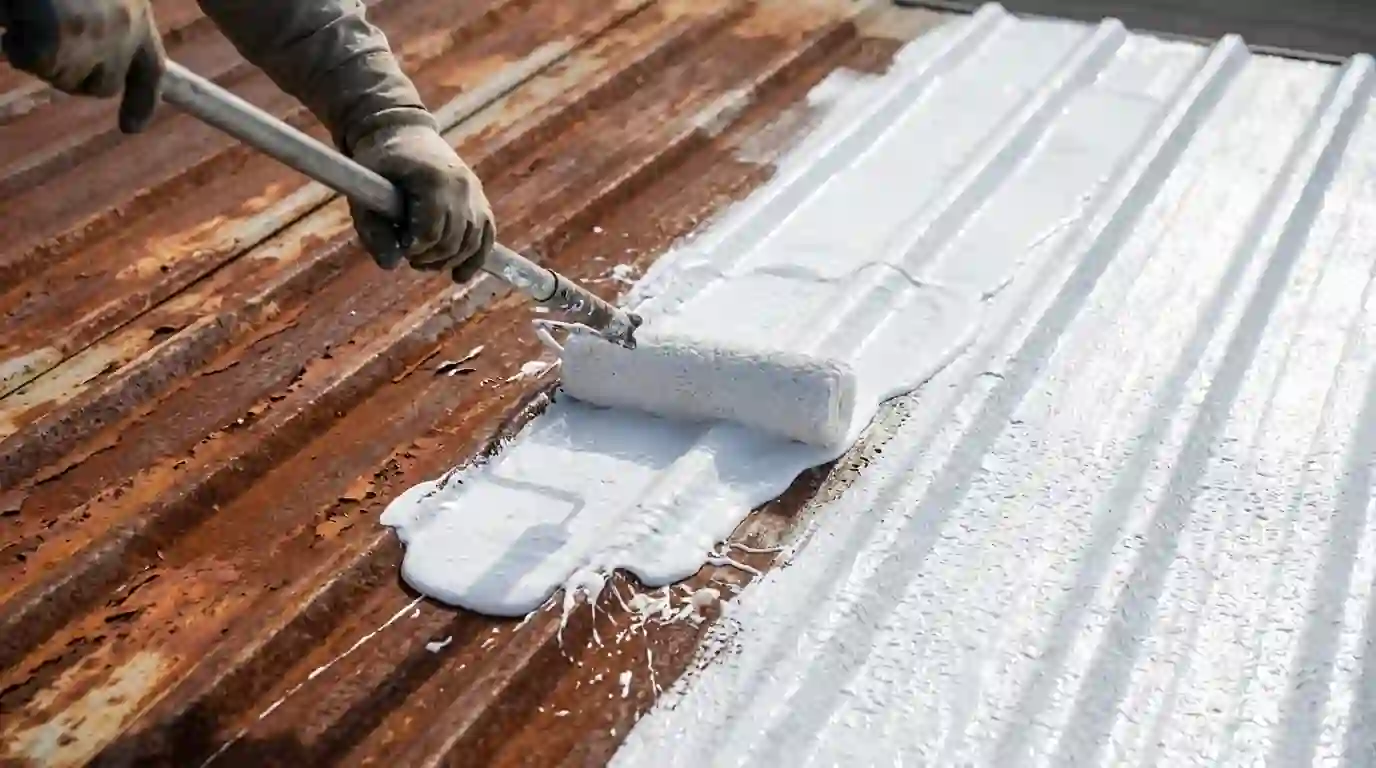
Rust on Galvalume and galvanized roofs usually starts where the coating is scratched, where screws have leaked, or where water sits against the metal. Common spots include valleys full of oak leaves, the bottom of panels that touch pressure-treated wood, and areas under copper lines or old satellite dishes. Surface rust is fixable. Rust that's eaten through needs a patch or a new panel.
We wire-brush the area, treat it with a rust-inhibiting primer made for metal roofs, and coat it with a compatible finish. For widespread surface rust on an older roof, a full silicone coating on metal can be a practical alternative to replacement. We'll be honest when a roof is too far gone for that.
Matching panels and parts on older metal roofs
Metal profiles vary more than people expect. Two 5V panels from different makers may have slightly different rib spacing, and older corrugated sizes aren't always stocked anymore. We measure rib pitch and panel width before ordering replacements so the new piece laps cleanly under its neighbors.
Color matching on painted roofs is harder because finishes fade in the sun. A new panel will usually look brighter for a while. When a replacement panel sits in a highly visible spot, we may suggest swapping it with a panel from a less visible slope and putting the new one there instead.
Mixed metals cause their own repairs. A steel panel fastened with the wrong screw, or a copper drip line resting on Galvalume, can corrode in a few years. We use coated fasteners rated for the panel and move anything that's reacting with the roof before patching the spot it damaged.