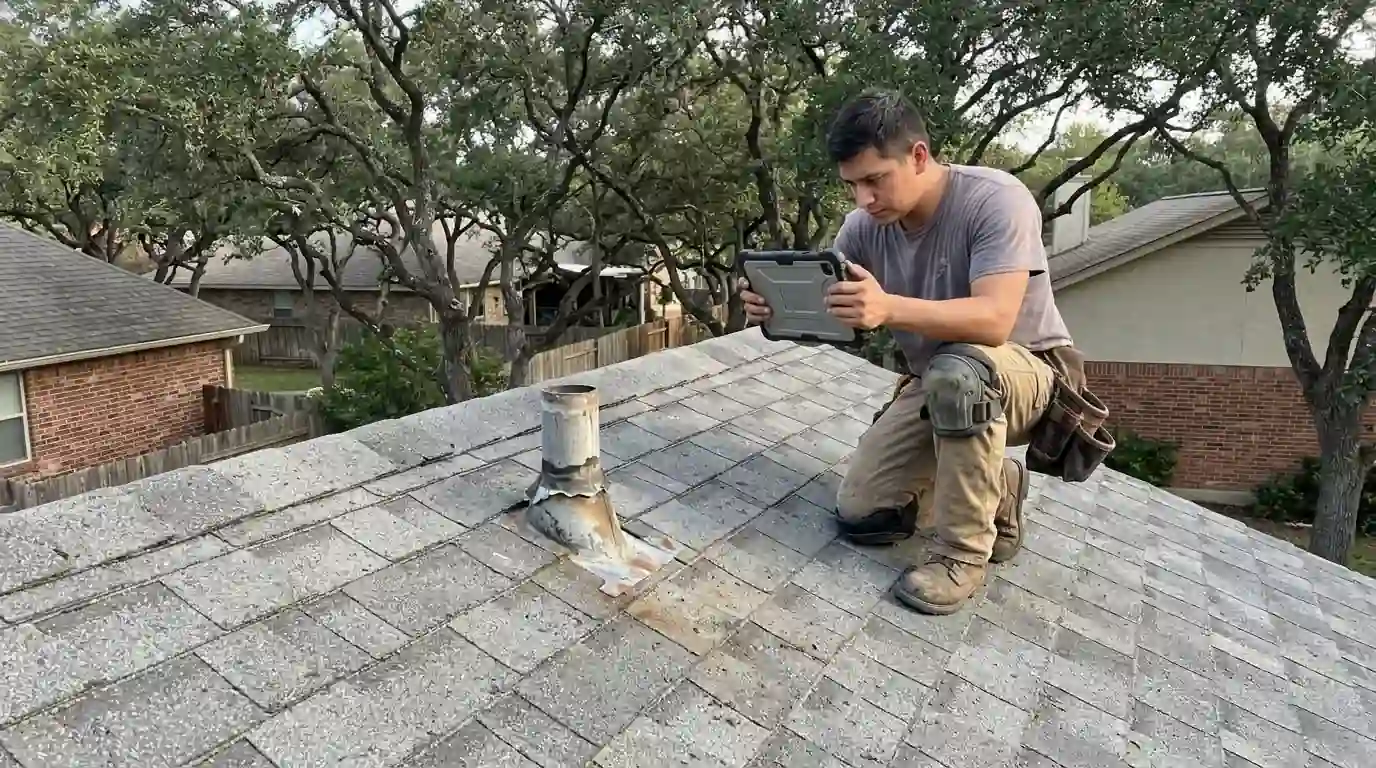
What does a routine roof inspection actually cover?
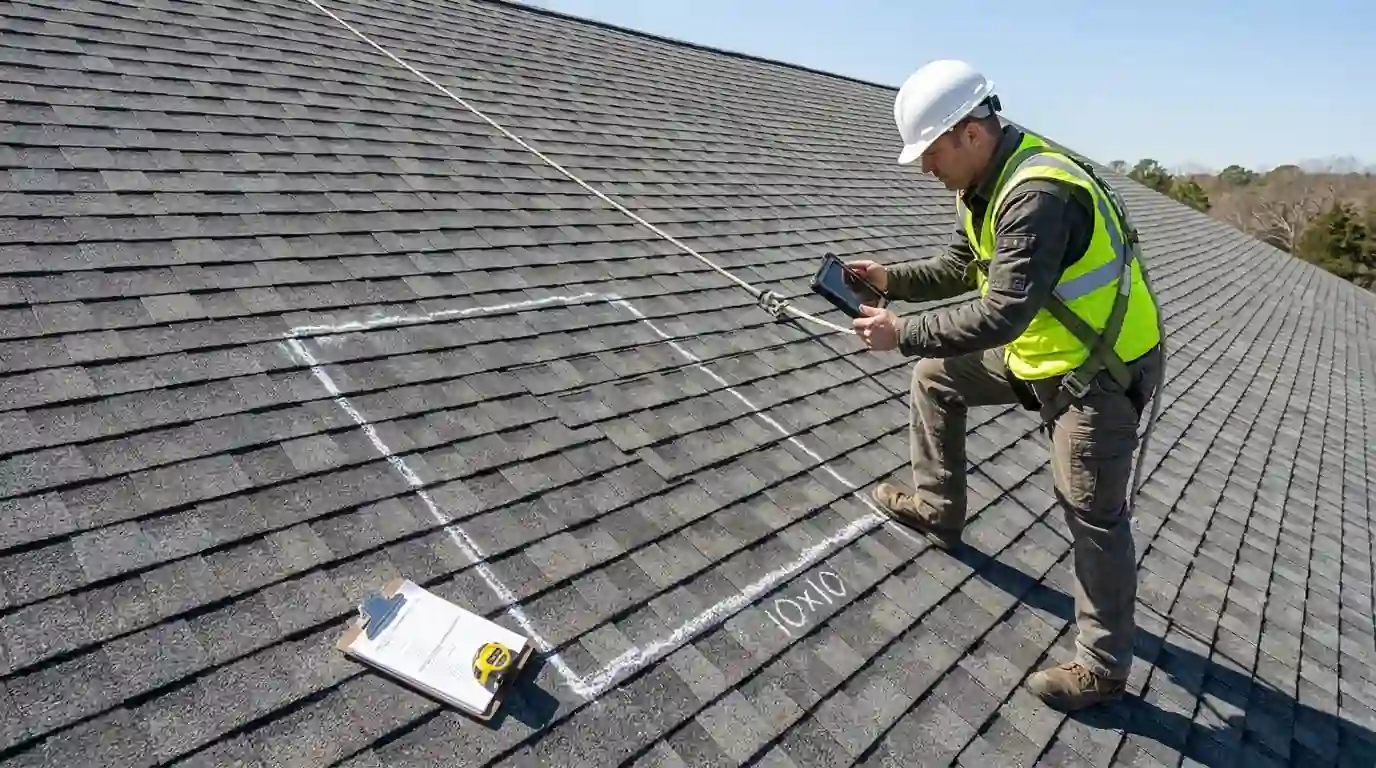
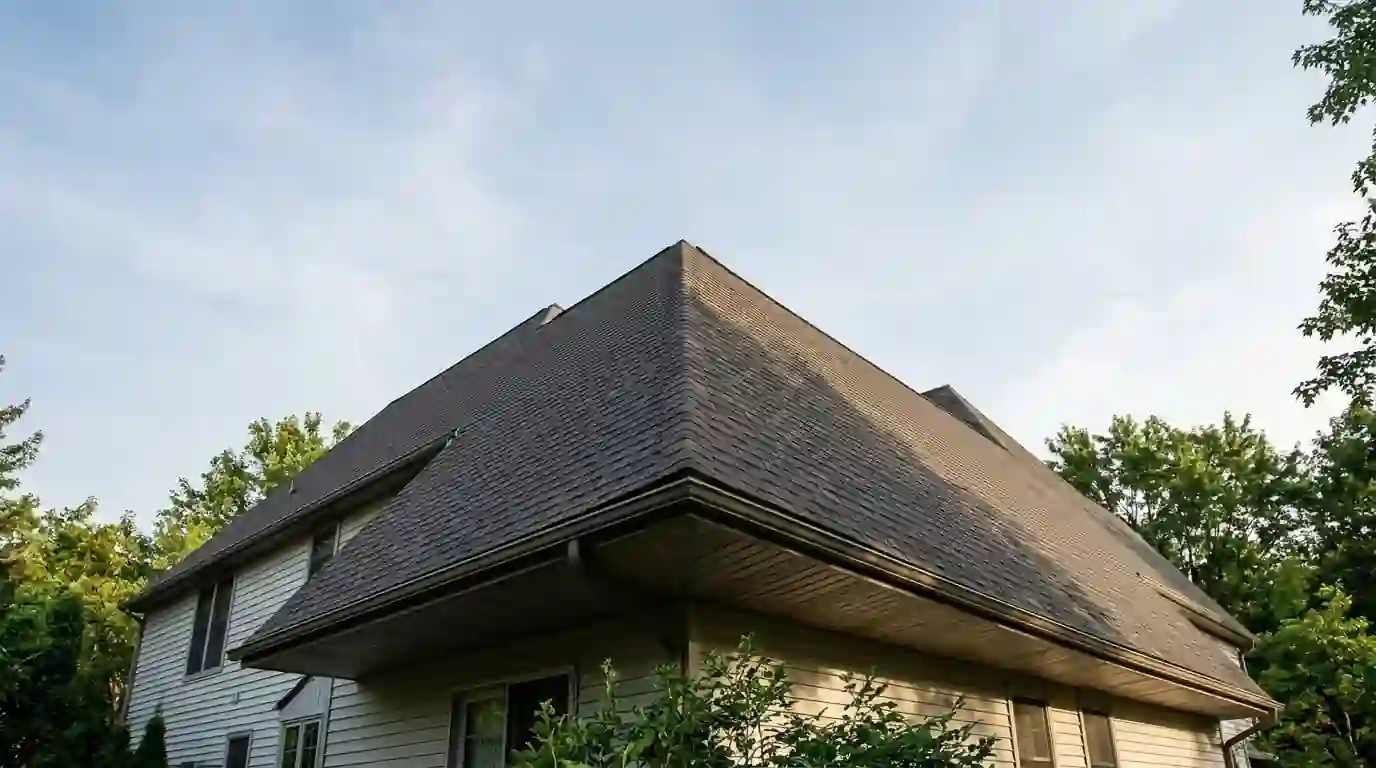
We start on the ground, looking along the roofline for sags, wavy decking and stained fascia, then go up and work one slope at a time. On shingle roofs we look for granule loss, lifted tabs, exposed nail heads and cracked ridge caps. On tile we check for slipped or broken pieces and loose hip tiles. Metal roofs get a screw, washer and seam check.
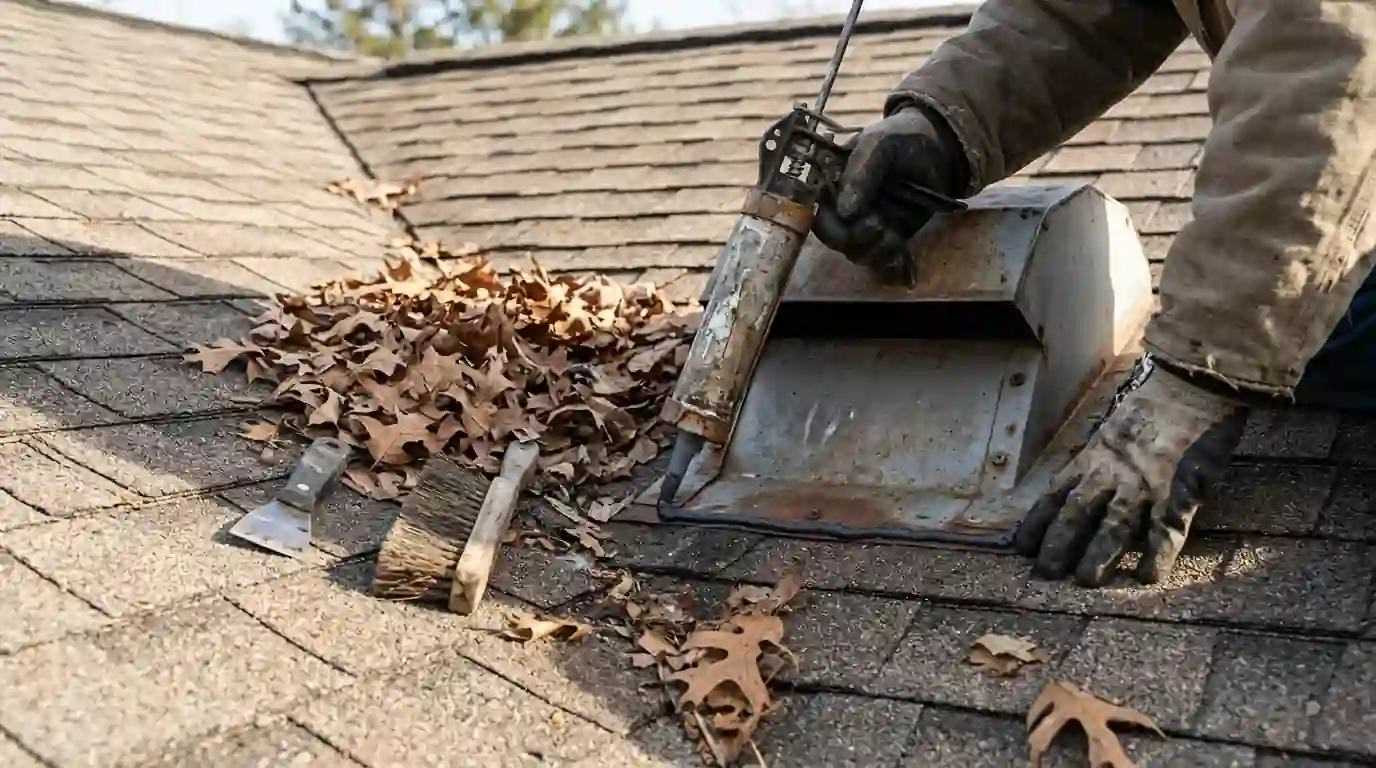
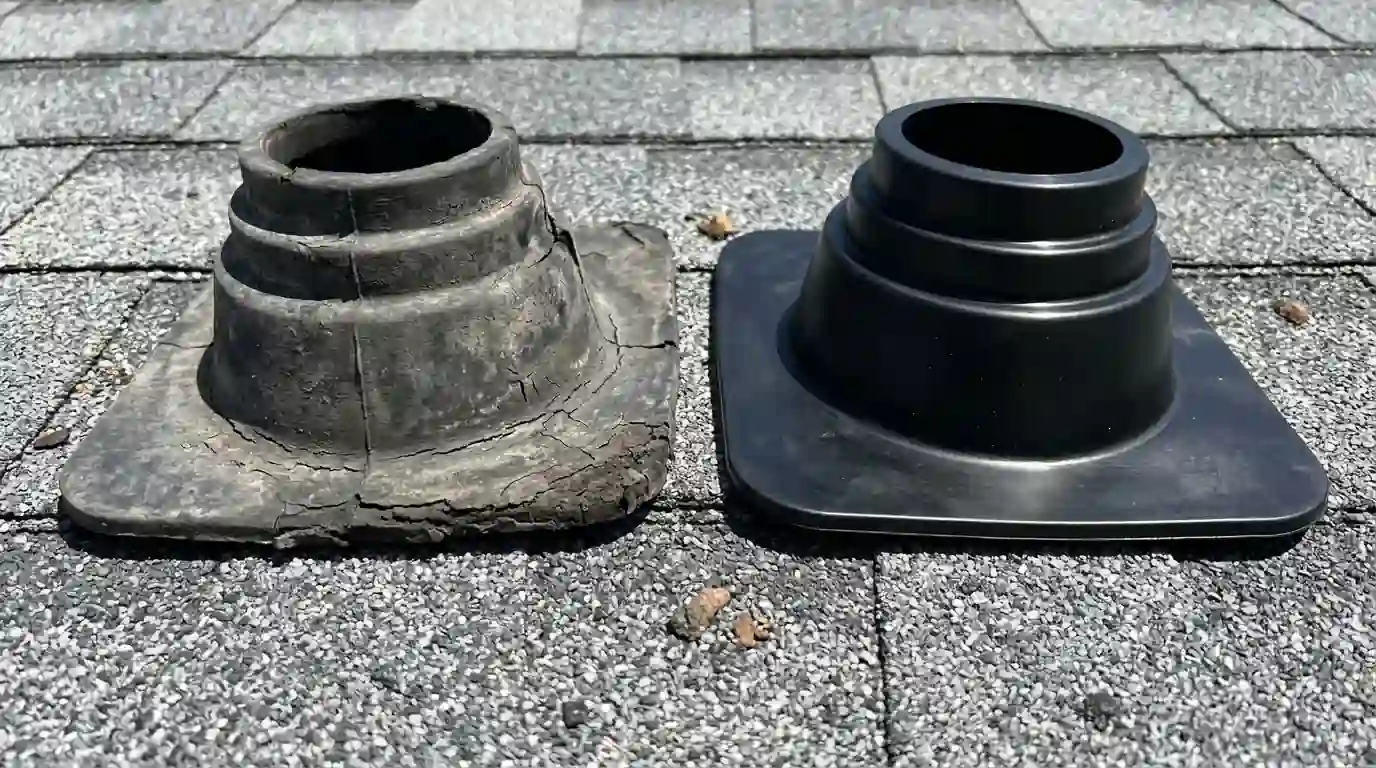
Penetrations get the closest look, because that's where most leaks begin. We check every pipe boot, exhaust cap, turbine and box vent, plus the flashing at walls, chimneys and skylights. Then we climb into the attic with a flashlight and a moisture meter to check decking, nail tips, insulation stains and any daylight showing around vents.
How is a routine inspection different from a storm damage inspection?
A routine inspection is about overall condition and age, not about one event. We're answering a broad question: how is this roof holding up, and what will it need over the next few years. The summary is written for you, in plain language, with priorities instead of claim terminology or adjuster codes.
After hail or a hard wind, the job changes. Insurance adjusters want test squares, dented soft metals and collateral damage notes, which is a different set of photos taken in a different order. If a storm just rolled through, book our post-storm documentation visit instead, so your photos match what the insurer will ask to see.
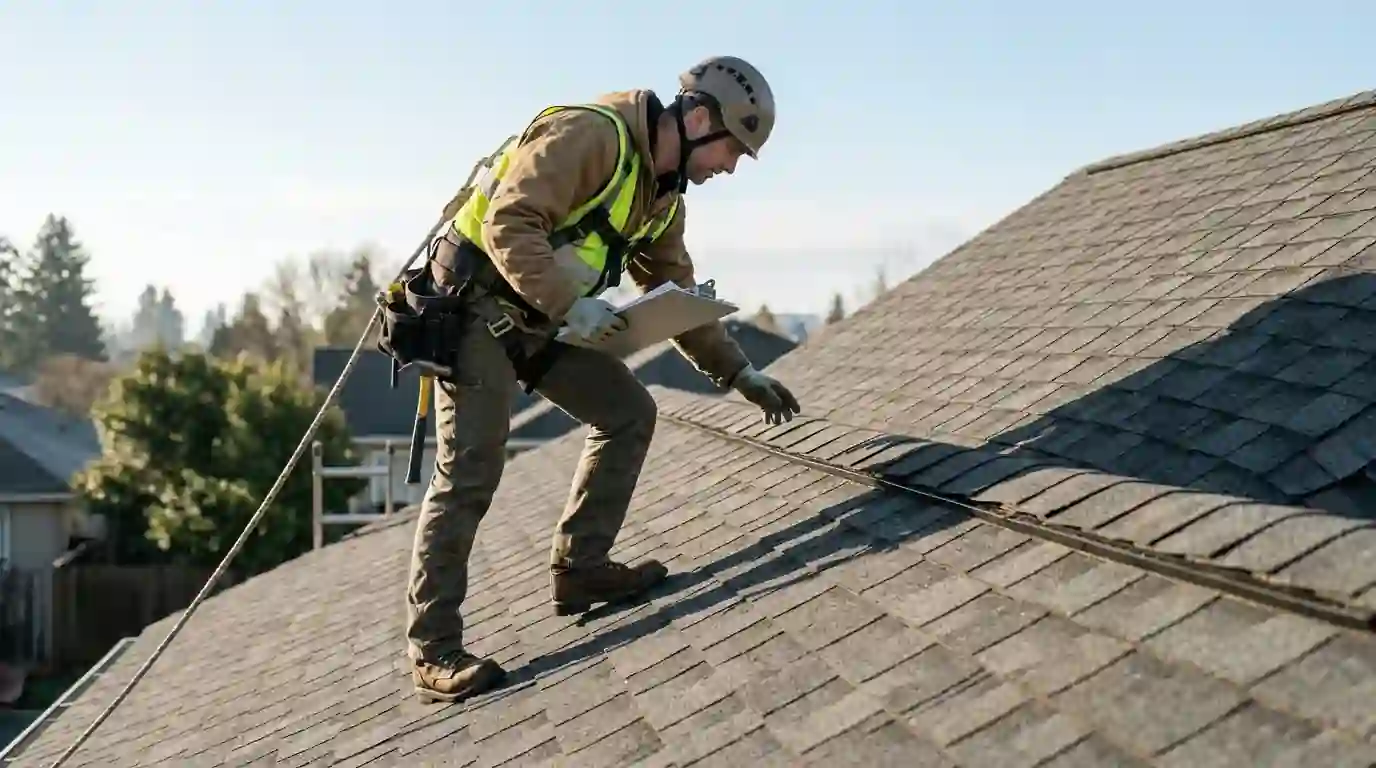
When is the right time to schedule a roof inspection in San Antonio?
Late winter is a smart window. You get a clean baseline before hail season runs from March into June, and any small fixes can happen while the weather is mild. A second look in the fall catches summer heat wear, which is real here: attic temperatures commonly pass 140 to 150 degrees and bake shingles from underneath.
Other good moments are right after you close on a house, when a roof passes the 12 to 15 year mark, or the week you notice a new ceiling stain. If you're selling and the buyer's lender wants a signed condition letter, that's a roof certification for home sales, which builds on this same inspection with extra paperwork.
What can the attic tell us that the roof surface hides?
Plenty of roofs look fine from the street and still have trouble underneath. In the attic we look for dark rings on the decking around nails, which point to condensation or slow leaks. We check whether insulation is matted or stained under valleys and penetrations, and whether light shows through anywhere it shouldn't.
We also check how the attic breathes. Painted-over soffit vents, a single turbine trying to exhaust a large attic, or bath fans dumping moist air into the insulation all shorten roof life. When airflow looks undersized, we note it and explain whether balancing intake and exhaust would help, without turning your inspection into a sales pitch.
What you get in hand once the inspection is done
You get dated photos from every slope and the attic, labeled by location so you can see exactly where each issue sits. The written summary sorts findings into three groups: fix soon, watch, and fine for now. We also give a remaining life range based on material, age and wear, with an honest margin on either side.
If repairs are needed, we price them as separate lines so you can compare and decide. Many findings are small, like a cracked pipe boot, a few exposed nails, or dried sealant where the roof meets a wall. Those usually take one short visit, and some homeowners fold them into a twice-yearly tune-up plan so they never pile up.
Which local conditions wear San Antonio roofs out fastest?
Sun and heat do steady damage. South and west slopes usually age first, shedding granules and curling sooner than the north slope of the same house. Live oaks drop leaves and spring tassels that pack into valleys and behind chimneys, holding moisture against the roofing and feeding algae on shaded sections.
Sudden downpours test every weak spot at once, especially missing kick-out flashing where a roof edge meets stucco. Squirrels chew vent boots and soffit corners, and raccoons pry at roof returns looking for a way in. We check for each of these by name, because they're the patterns that show up again and again on homes across the city.