Skip to content
Ortiz RoofingSan Antonio, Texas 24/7(210) 750-1898

Exposed-fastener metal

5V crimp metal roofing in San Antonio for farmhouses, barns and ranch homes

The 5V crimp panel is the old-school Texas metal roof, with five V-shaped ribs across each sheet and screws you can see from the ground. It costs less than standing seam, goes up fast, and fits farmhouses, barns and ranch homes around San Antonio.

  • Phones answered 24/7
  • Roof Replacement & Materials
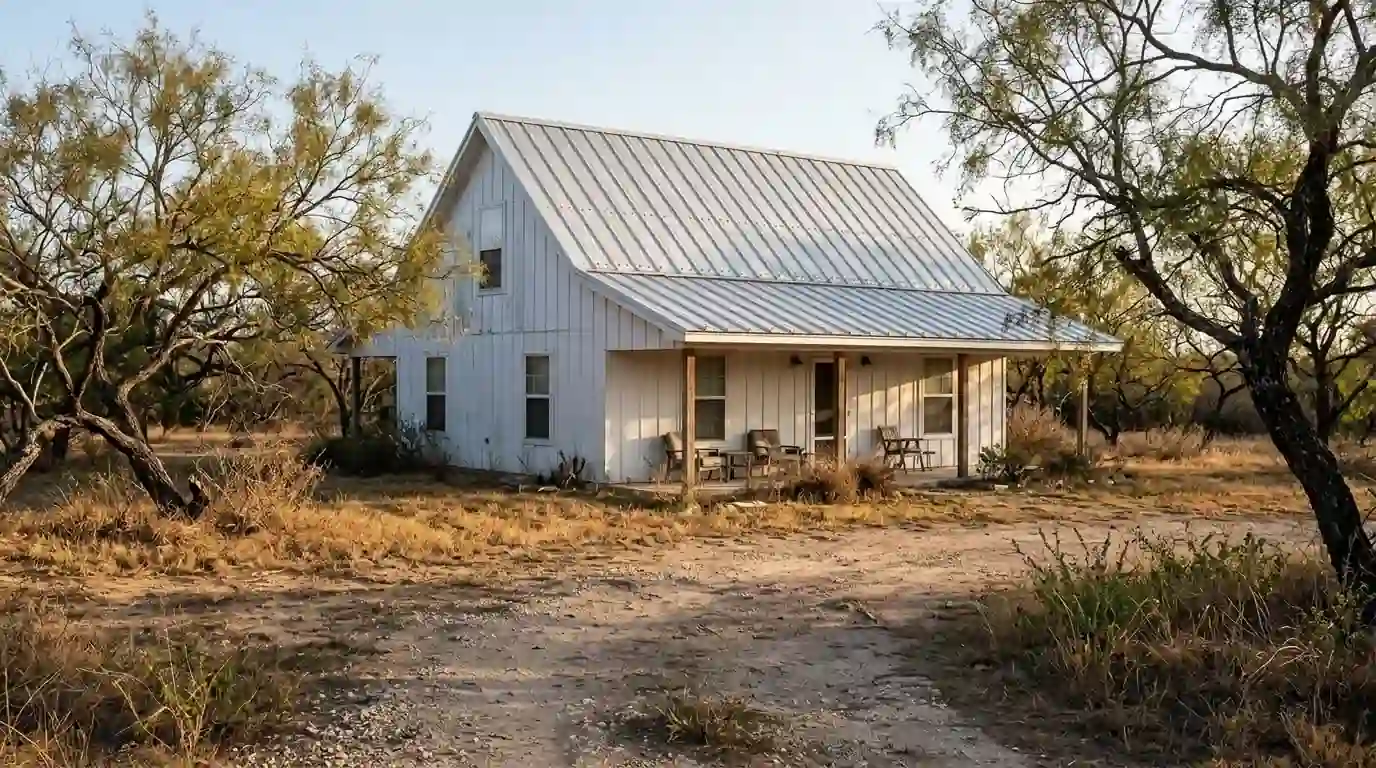
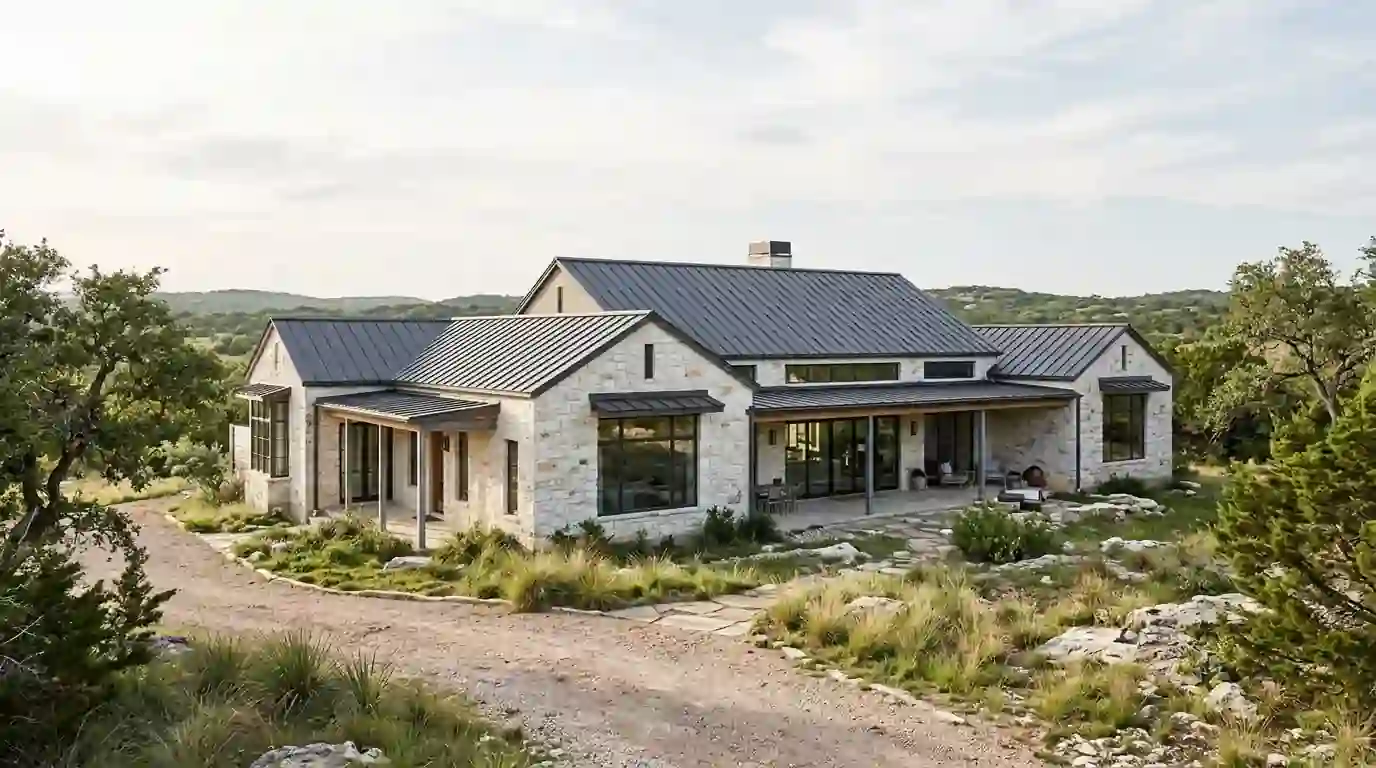
White board-and-batten farmhouse outside San Antonio with a bare silver 5V crimp metal roof, screw rows visible along the panels, mesquite trees and dry grass in late afternoon light
Typical San Antonio range$585 to $945 per square
Short answer

5V crimp metal roofing uses steel panels with five V-shaped ribs, fastened through the face with screws and rubber washers. It's a classic look for Texas farmhouses and outbuildings and costs less than standing seam. The tradeoff is fastener upkeep, since washers age in the sun. In San Antonio it typically runs $585 to $945 per square, depending on gauge, finish and roof after inspection.

Why 5V crimp still looks right on a Texas farmhouse

The 5V profile goes back generations in the South. It shows up on old ranch houses outside Castroville, porches on century-old farmhouses, and new builds that want the same feel. The ribs are shallow, so the roof reads as clean lines rather than heavy corrugation. In Galvalume, it weathers to a soft matte silver.

It also fits modern farmhouse designs that pair white board-and-batten siding with metal roofs. For homes on acreage around Helotes or out toward Boerne, 5V on the home and the barn ties the whole property together. Painted finishes in charcoal, bronze or classic red are available too.

How exposed fasteners work and why washers matter

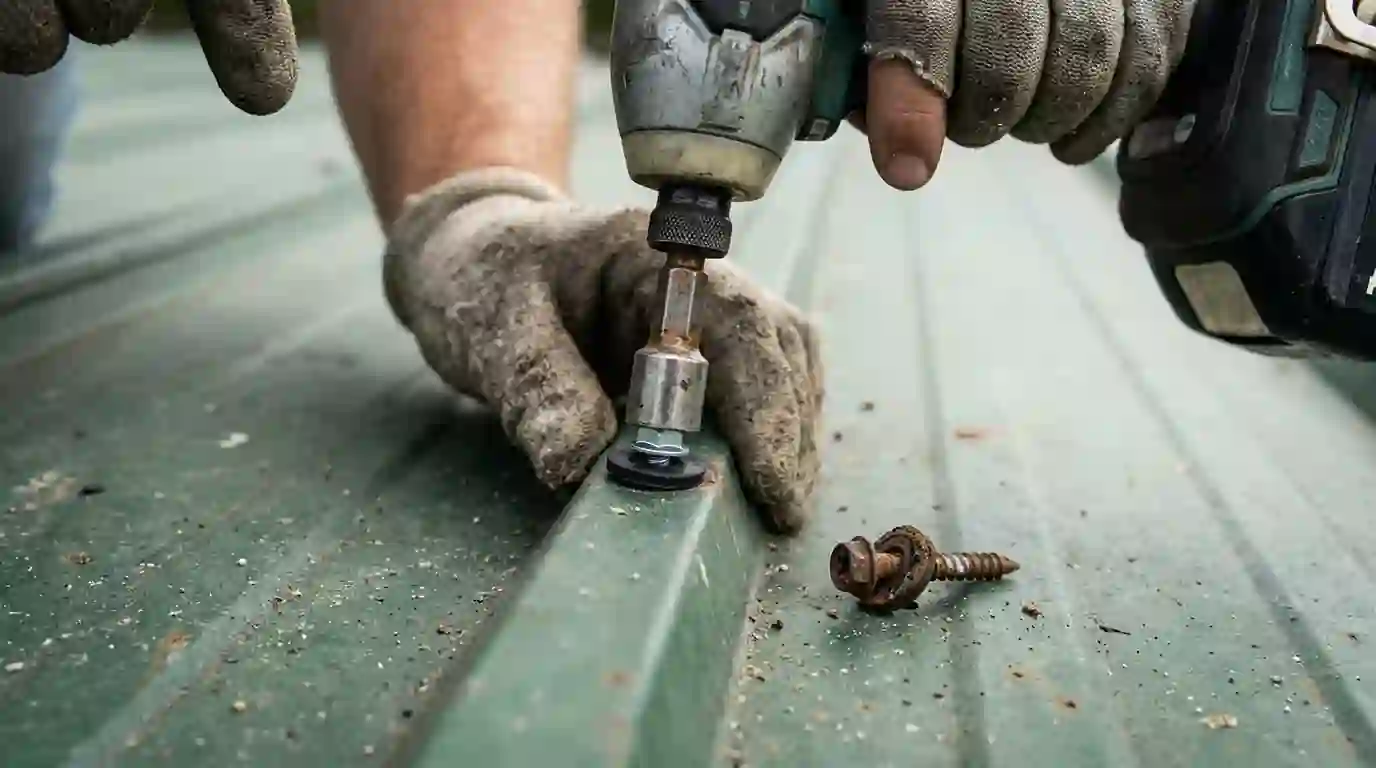
Every 5V panel is screwed through its flat areas or rib tops into wood purlins or solid decking below. Each screw carries a neoprene or EPDM washer that compresses against the metal to seal the hole. Those washers are what keep water out, and they're also what wears first. South Texas UV and heat slowly harden the rubber until it cracks.

A screw driven too tight crushes the washer and splits it early. One driven too loose never seals. We set every screw so the washer just bulges at the edge, snug but not squashed. When an older 5V roof starts leaking at a dozen screws, our screw and seam repairs on metal explain how we refasten without enlarging holes.
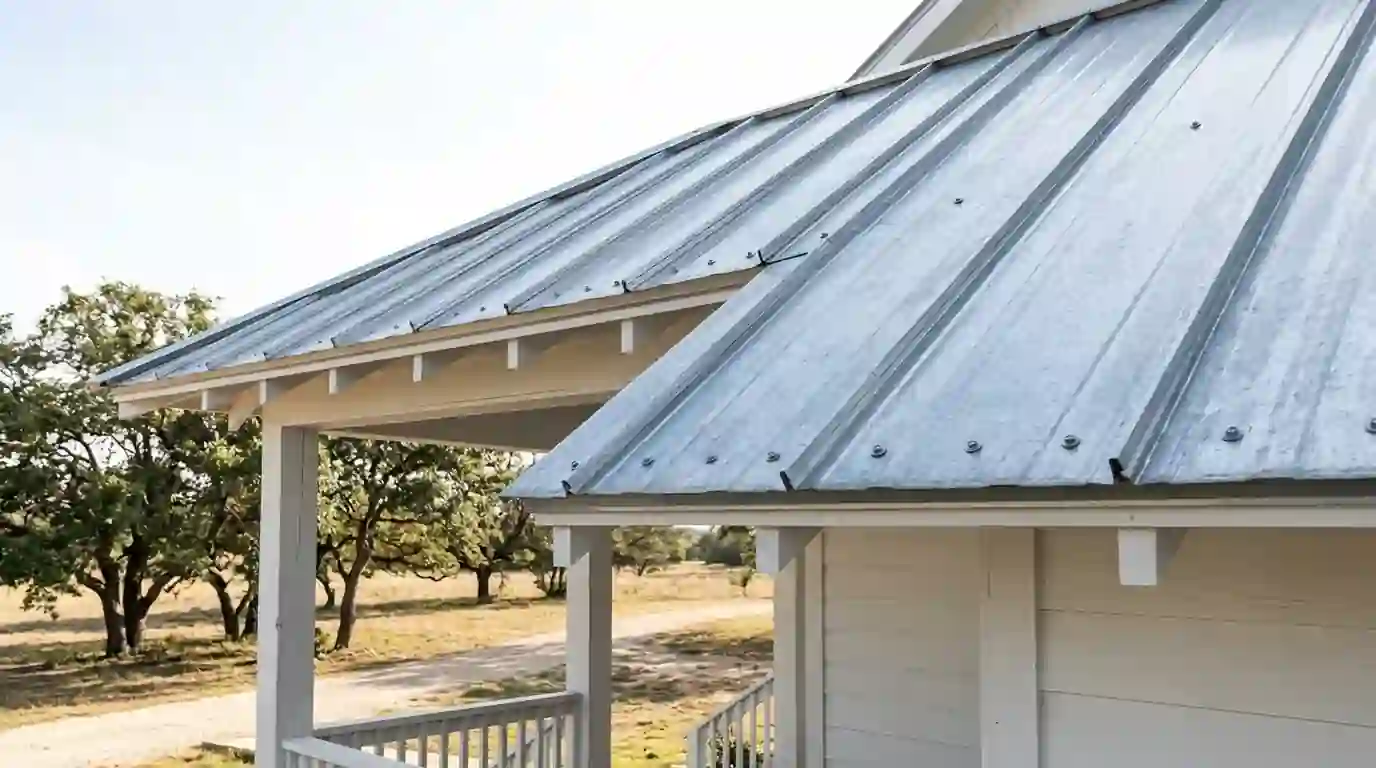
Galvalume 5V crimp metal panels with rows of screws on a white farmhouse porch roof in rural Texas
5V Crimp Metal Roofing on a San Antonio area home.

Is 5V crimp the right choice for your house or just the barn?

On barns, shops and carports, 5V is almost always the practical pick. It's affordable, it spans purlins, and a few drips at a screw rarely matter over a tractor. On a house, the math changes. Exposed fasteners need checking every few years, and a missed washer leak can stain a ceiling before you notice.

If you want a metal roof on your home with less upkeep, hidden-fastener panels cost more upfront but hide the screws entirely. Our guide comparing 5V crimp and standing seam walks through how most Hill Country owners decide between the two.

Porches are the middle ground. A 5V porch roof over a shingled house adds the farmhouse look without committing the whole roof to exposed screws. We tie the porch panels under the house roof with a headwall flashing and closures, so the joint where the two roofs meet stays dry when rain blows in from the south.

Decking or purlins under a 5V crimp roof

On houses, we install 5V over solid decking with a high-temperature underlayment underneath. That gives the roof a second line of defense against condensation and wind-driven rain. It also deadens sound, so rain doesn't drum the way it does on an open barn roof. On many existing homes, we install it right over repaired plywood after tear-off.

Barns and pole buildings often use horizontal purlins with no decking, which is cheaper and fine for unconditioned space. The catch is condensation. Bare metal over a humid space can drip on cool mornings, so we often suggest a vapor retarder or a closed-cell insulation layer under the panels in shops where you store tools or vehicles.

Keeping a 5V roof tight for decades

Plan on a fastener check every few years. We walk the roof, look for backed-out screws, cracked washers and rust trails, and replace suspect screws with the next size up so they bite fresh wood. A full rescrew of an older 5V roof is common work and costs far less than new panels.

Keep dissimilar metals apart, too. Copper lines, pressure-treated lumber and some sealants can corrode Galvalume where they touch it. Clean off leaves and oak tassels from valleys and ridges so they don't hold moisture against the steel. With that care, 5V can serve for decades.

Walk the roof only on the purlin or rafter lines, where the panel is supported, and step in the flat areas between ribs. Stepping on the ribs themselves can crush them, which breaks the seal at the side lap. If you need to get up there often for gutters or antennas, ask us to mark the walk lines.
Warning signs

Signs your roof needs 5v crimp metal roofing

Rust trails below screws

Streaks running down from fasteners mean washers have failed and water is reaching the steel.

Backed-out screws

Screws that stand proud of the panel have loosened with heat cycles and no longer seal.

Drips during heavy rain

Leaks in a barn or porch along screw lines point to worn washers or missed purlins.

Old corrugated roof wearing out

A rusted or patched corrugated roof is a good candidate for replacement with 5V panels.

Want a farmhouse look

New builds and remodels after a classic Texas look often choose 5V for the whole home.

From first call to finished roof

How we handle 5v crimp metal roofing from start to finish

  1. Step 1

    Measure and plan the layout

    We measure each slope and plan panel lengths so most runs need no end laps.

  2. Step 2

    Prepare deck or purlins

    Houses get repaired decking and underlayment, and barns get purlins checked for spacing.

  3. Step 3

    Install eave and rake trim

    Drip edge, eave closures and rake trim go in before panels are laid.

  4. Step 4

    Lay and fasten panels

    Panels overlap one rib and are screwed on a set pattern into solid wood.

  5. Step 5

    Flash ridges and penetrations

    Ridge caps, vented closures and metal-rated pipe boots seal the top and every opening.

  6. Step 6

    Check every fastener

    We walk the roof to confirm each screw is set and each washer is properly compressed.

What 5v crimp metal roofing usually costs in San Antonio

5V crimp metal roofing in San Antonio typically costs $585 to $945 per square installed. Your price depends on the roof after inspection, and here's a typical breakdown.

Line itemTypical range
26 or 29 gauge 5V panels, per square installed$385 to $615
Underlayment over decking, per square$47 to $79
Trim, closures and ridge cap, per square equivalent$88 to $155
Tear-off and deck prep on homes, per square$65 to $96

What moves the price

  • Gauge, since 26 gauge panels cost more than lighter 29 gauge.
  • Finish, with painted panels costing more than bare Galvalume.
  • Whether the building needs solid decking or uses open purlins.
  • Roof shape, including hips, valleys and porch tie-ins.
  • Removal of an existing roof and decking repairs.

Ranges are typical, not quotes. Your price depends on the roof we see at the inspection. See every service side by side in the roofing cost guide.

Materials we install and repair

  • GAF
  • Owens Corning
  • CertainTeed
  • Malarkey
  • TAMKO
  • Atlas Roofing
  • IKO
  • Eagle Roofing
  • Westlake Royal
  • DaVinci Roofscapes
  • Englert
  • Carlisle
  • Velux
  • Solatube
  • GAF
  • Owens Corning
  • CertainTeed
  • Malarkey
  • TAMKO
  • Atlas Roofing
  • IKO
  • Eagle Roofing
  • Westlake Royal
  • DaVinci Roofscapes
  • Englert
  • Carlisle
  • Velux
  • Solatube
  • GAF
  • Owens Corning
  • CertainTeed
  • Malarkey
  • TAMKO
  • Atlas Roofing
  • IKO
  • Eagle Roofing
  • Westlake Royal
  • DaVinci Roofscapes
  • Englert
  • Carlisle
  • Velux
  • Solatube

Answers

5V Crimp Metal Roofing questions from San Antonio homeowners

How often do 5V crimp metal roof screws need to be replaced?

Check them every three to five years and expect to replace a portion of them over time. Many 5V roofs need a fuller rescrew somewhere around the 15 to 25 year mark, depending on the washer quality and sun exposure. Replacing screws with oversized ones that bite fresh wood is far cheaper than replacing panels.

Is 5V crimp metal roofing good for a house or only barns?

It works on houses and looks right on farmhouse and ranch designs. Installed over solid decking and underlayment, it's quiet and dry. The difference from standing seam is upkeep: exposed screws need periodic checks. If you're fine with that, 5V gives you a metal roof for less money.

Can a 5V crimp roof be installed over old shingles?

Some jurisdictions allow it, often over furring strips, but we generally recommend tearing off first. Removing the shingles lets us repair the decking and avoids trapping heat between layers. On a house, a clean deck also gives every screw solid wood to bite into, which helps the washers seal.

What gauge of 5V crimp panel should I choose?

For homes, 26 gauge is a good balance of stiffness, dent resistance and cost. Lighter 29 gauge is common on barns and sheds where budget matters more than hail resistance. Thicker panels dent less and flex less underfoot during maintenance, so we usually steer homeowners toward 26 gauge.

Related work

Other roof work that often goes with this job

Roofer replacing a backed-out screw and worn washer on an exposed fastener metal roof panel

Metal Roof Repair

Backed-out screws, dried washers, leaking seams, loose trim and rust spots fixed on standing seam, 5V and corrugated roofs.

Learn more
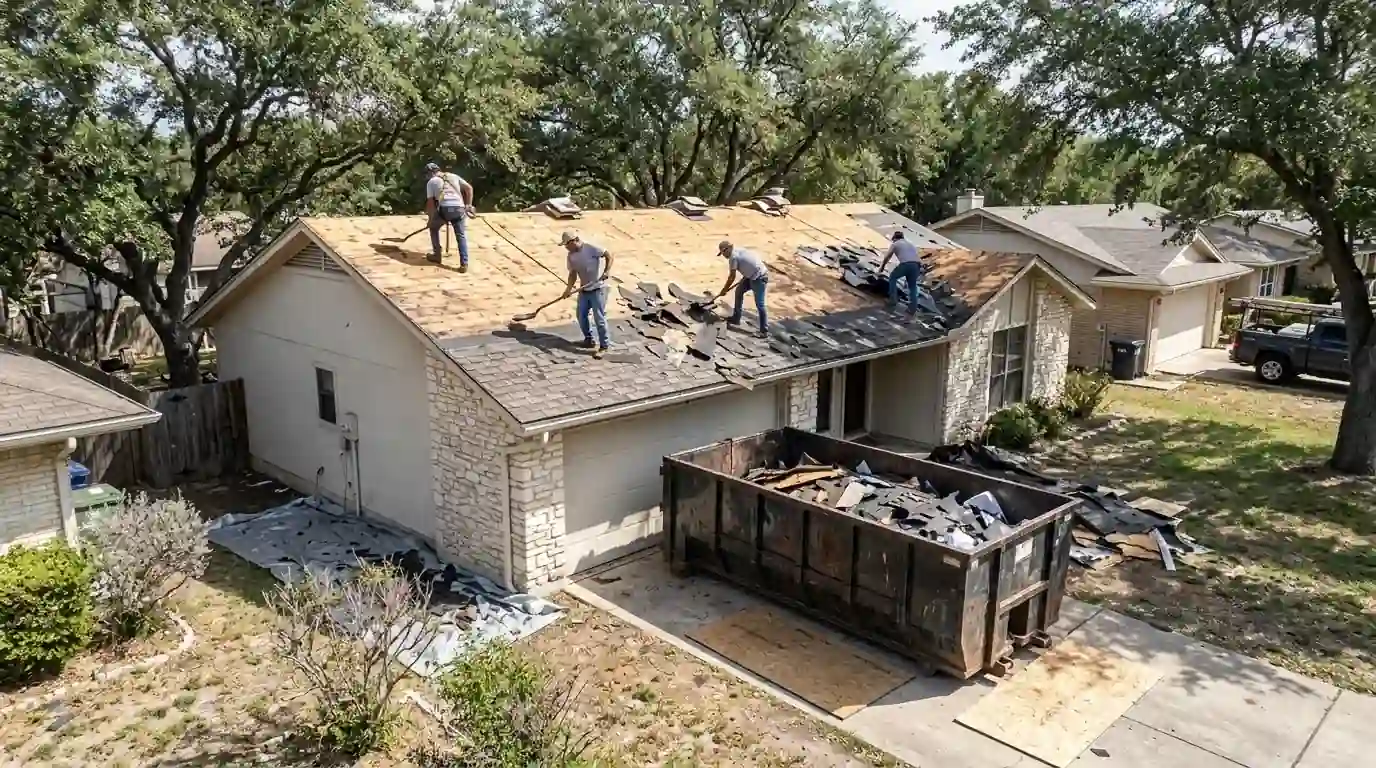
Crew tearing off old shingles down to the deck on a single-story San Antonio home, dumpster in the driveway

Roof Replacement

Full tear-off to the deck, new underlayment, drip edge, flashing and vents, then a magnet sweep of the yard before we leave.

Learn more

Roof trouble today? Talk to a roofer now.

Our phone line is answered 24/7. Tell us what you see and we will tell you the next step, even if that step is a tarp tonight and a full inspection tomorrow.

Call (210) 750-1898Answered 24 hours a day
Call (210) 750-189824/7