Why are pipe boots and vents the weak spots on a Shearer Hills roof?
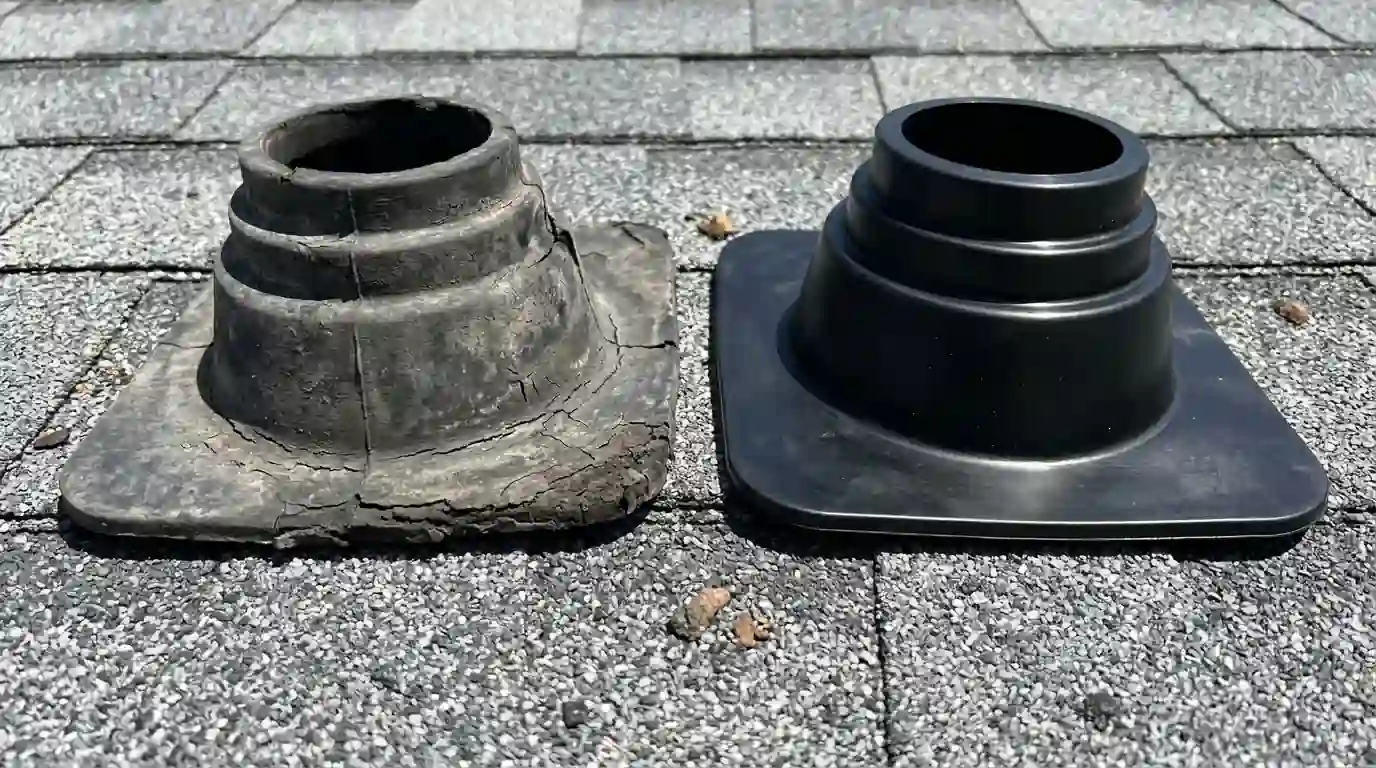
Every plumbing vent, furnace flue and exhaust fan that passes through the roof is sealed with a boot or flashing collar. The rubber collars on most boots crack after years of direct sun, and the cracks open wider every afternoon as the roof heats. On an older ranch house with bathrooms added over time, that can mean five or six penetrations to watch.
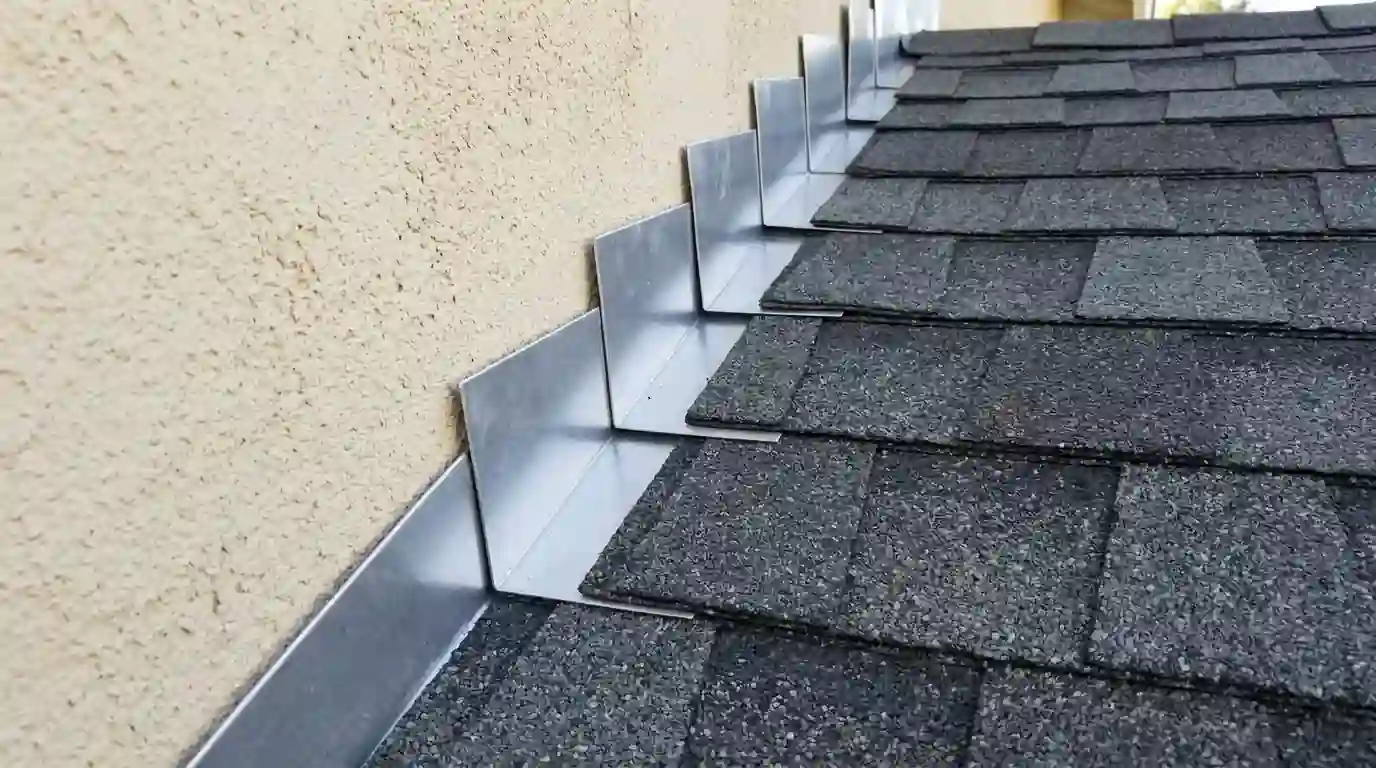
Box vents on these hip roofs are usually galvanized steel, and after decades the base flange rusts where water sits. We replace failing boots with longer-lasting designs, swap rusted vents, and reseal storm collars on flues. Our pipe boot and vent repairs page shows what each part looks like when it's failing.
Do hip roofs here get enough attic ventilation?
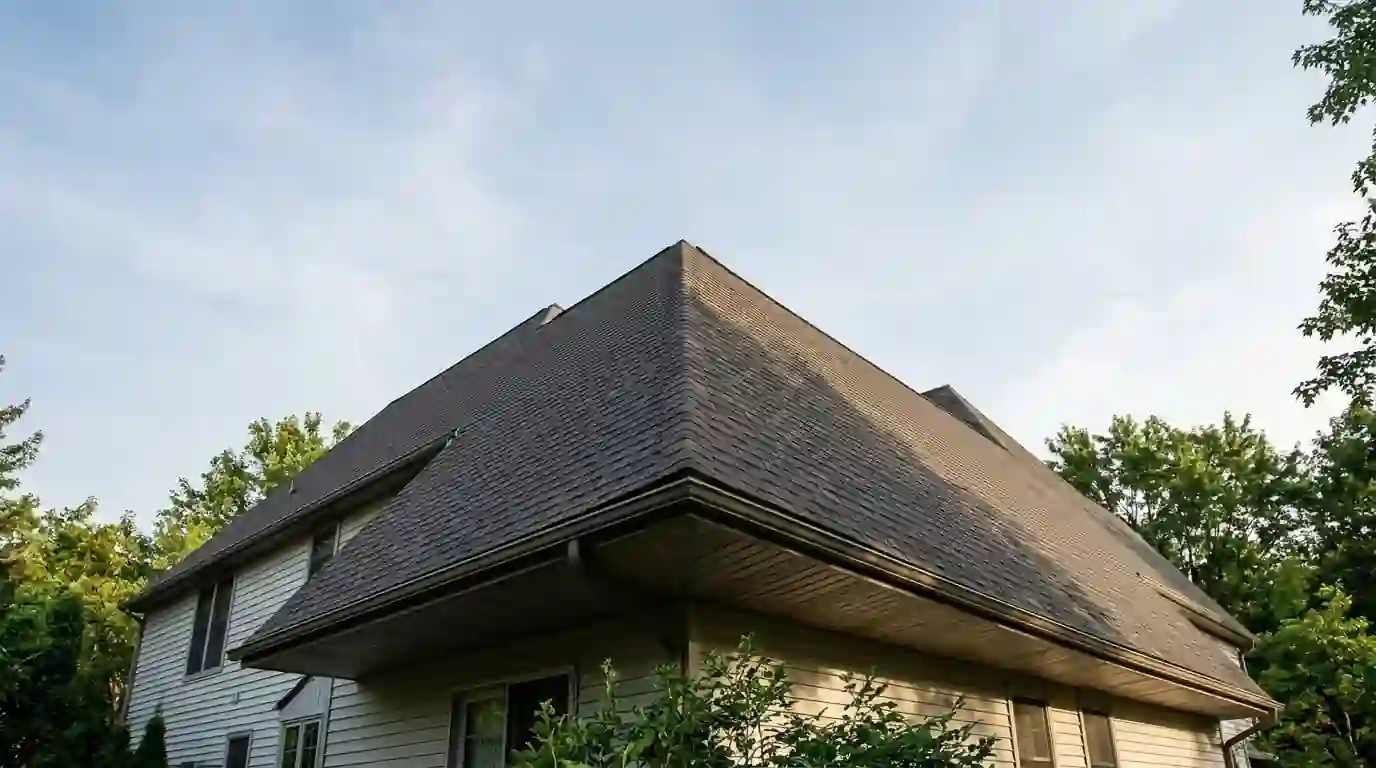
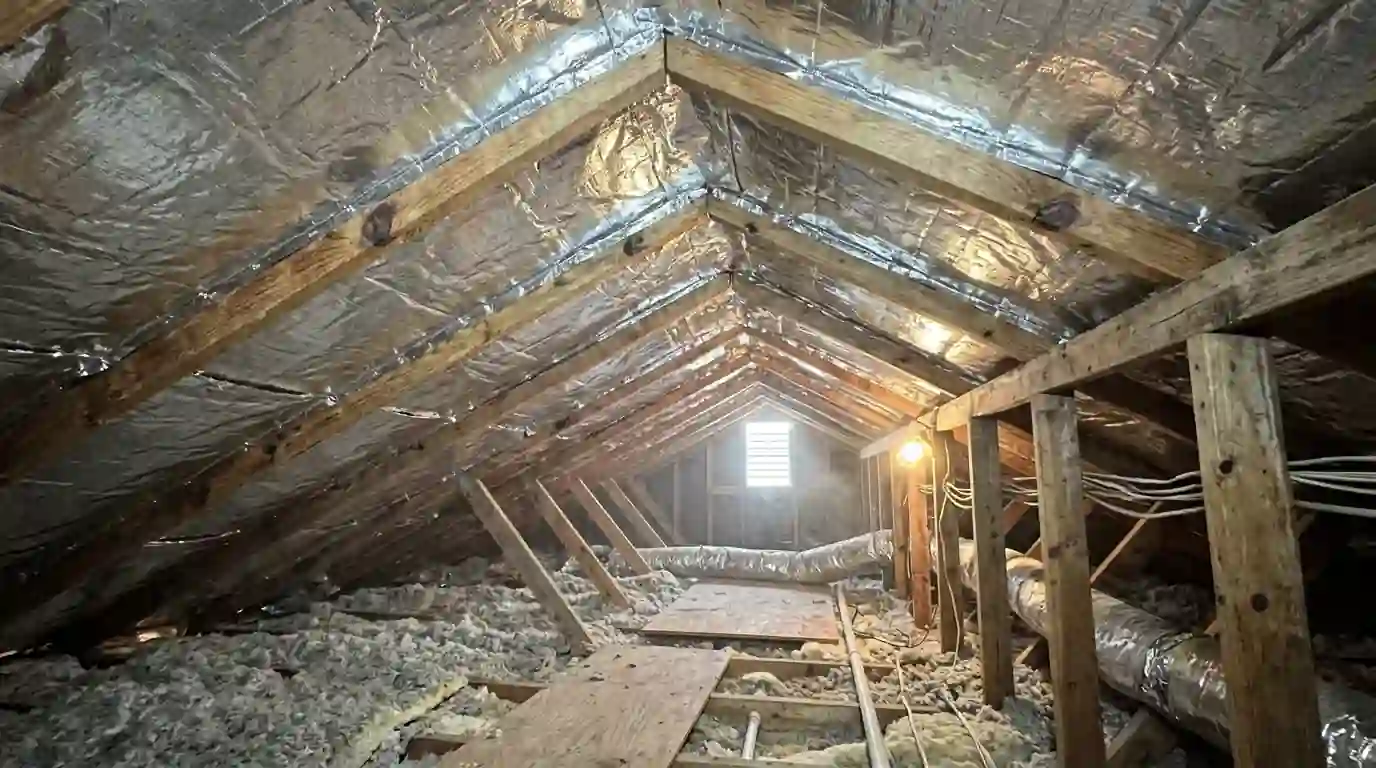
Hip roofs have short ridges, which limits how much ridge vent you can fit. Many homes of this era relied on a few box vents and soffits that were later painted shut or blocked by blown-in insulation. The result is an attic that holds heat well into the evening and shingles that age faster from below.
We count the intake and exhaust area and check the soffits from outside and from the attic. Sometimes the fix is as simple as clearing blocked soffit vents and adding baffles. Other times we add low-profile exhaust vents or a radiant barrier under the decking to cut heat load. Balancing attic airflow is cheapest during a reroof, but it can be done on its own.
When should you stop patching a 1960s roof in Shearer Hills?
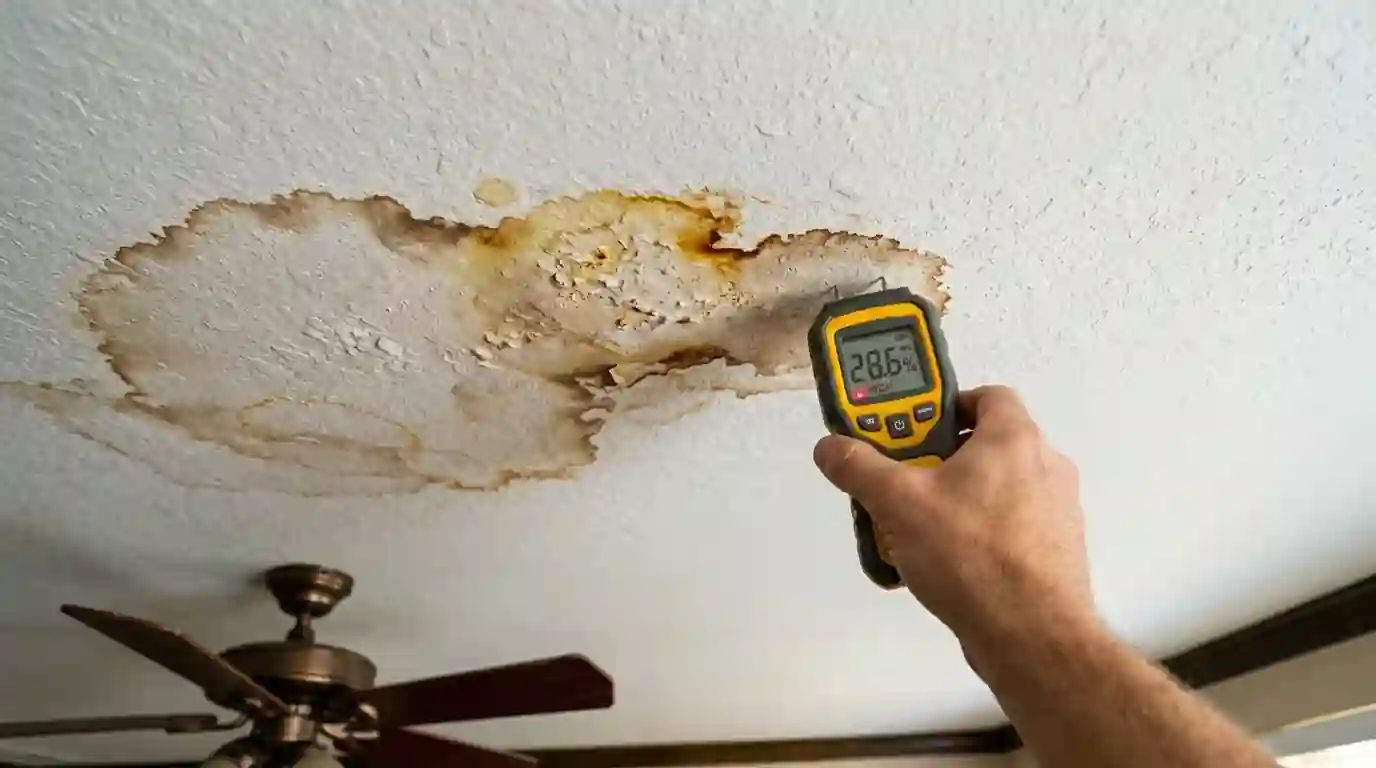
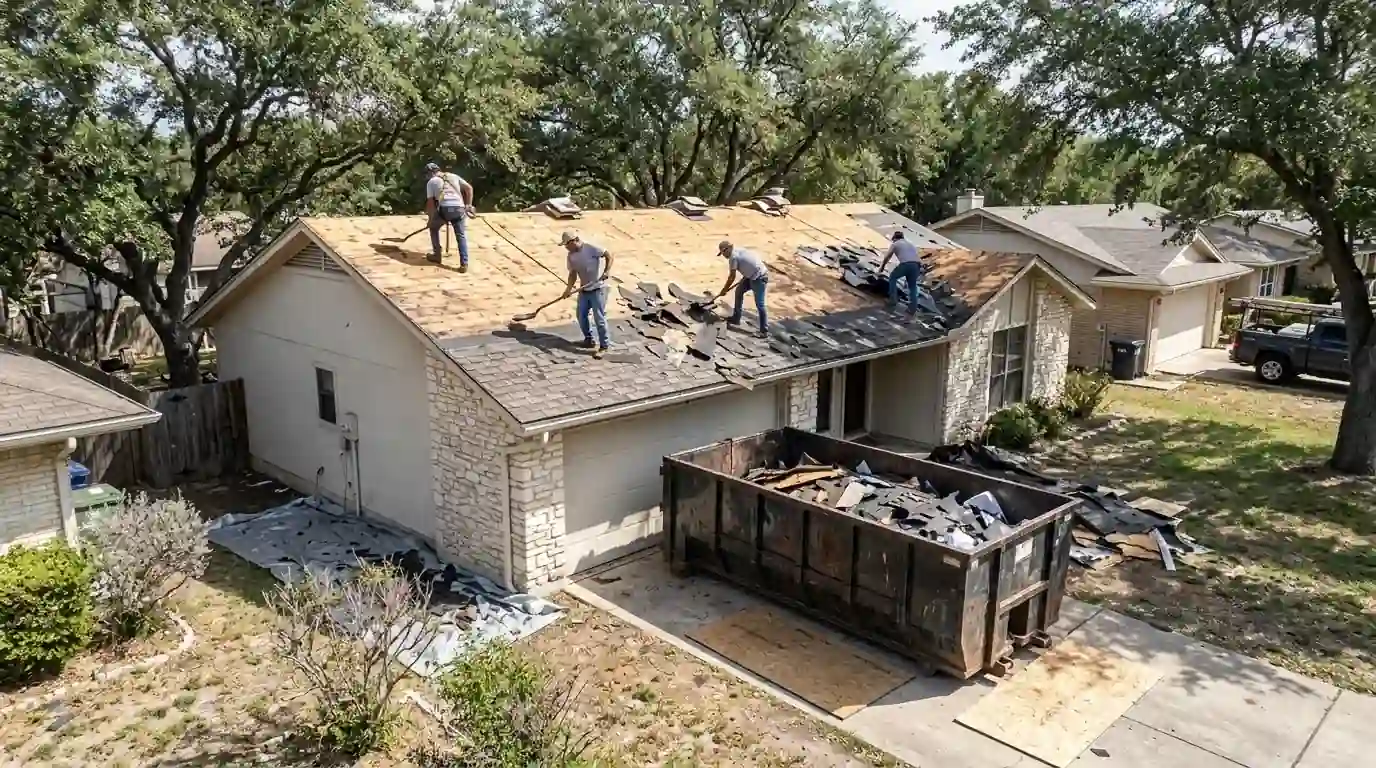
If your roof needs new boots, a couple of vents and some flashing work, a repair makes sense. When leaks appear in several spots in one season, shingles crack when bent, or the roof is clearly a second layer, patching turns into a recurring bill. At that point a full tear-off and new roof is the better value.
Low pitch is the other factor. Some ranch roofs here sit near the lower limit of what shingles tolerate, and wind-driven rain backs up under the laps. On those slopes we may suggest a stronger underlayment across the whole roof during replacement. Phone (210) 750-1898 and we'll measure your pitch and tell you whether repair or replacement fits.