Skip to content
Ortiz RoofingSan Antonio, Texas 24/7(210) 750-1898

Post-storm documentation

Storm damage roof inspection in San Antonio, documented slope by slope

After a hailstorm or high wind, the question isn't just whether your roof was damaged. It's whether that damage is documented clearly enough for anyone to understand it. We photograph every slope, mark test squares, record soft metal hits and hand you a report organized the way adjusters review a roof.

  • Phones answered 24/7
  • Roof Repair & Storm Damage
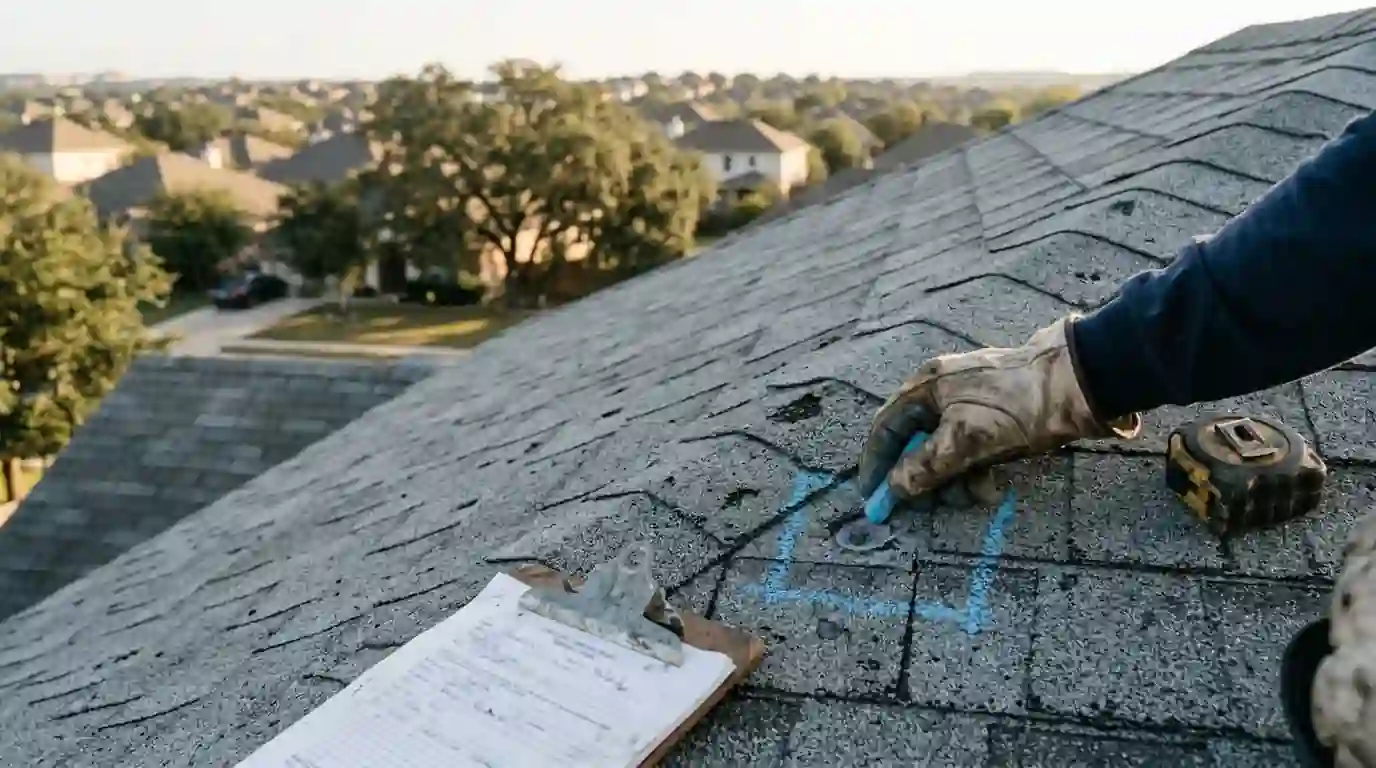
Roofer's gloved hand drawing a chalk square on a hail-marked gray shingle slope, a clipboard and tape measure resting nearby, rooftops of a San Antonio neighborhood in soft morning light.
Typical San Antonio range$185 to $365
Short answer

A storm damage roof inspection in San Antonio usually costs $185 to $365. We photograph each slope, mark 10 by 10 foot test squares, check vents, gutters and other soft metals for hail size and direction, and note collateral damage around the property. You get an organized photo report you can keep, share with your insurer, or use to plan repairs.

How a storm inspection differs from a routine roof check

A routine inspection looks at overall condition: age, wear, ventilation and small maintenance items. Our routine condition inspection covers that. A storm inspection asks a narrower question: what did one specific storm do to this roof, and can that be shown clearly to someone who wasn't there?

That changes how we work. We separate fresh storm damage from older wear, because an adjuster will make that distinction too. We record the storm date, look for evidence of hail size and wind direction, and document each slope separately so the report can be compared line by line with an adjuster's own findings.

What is a test square, and why does it matter?

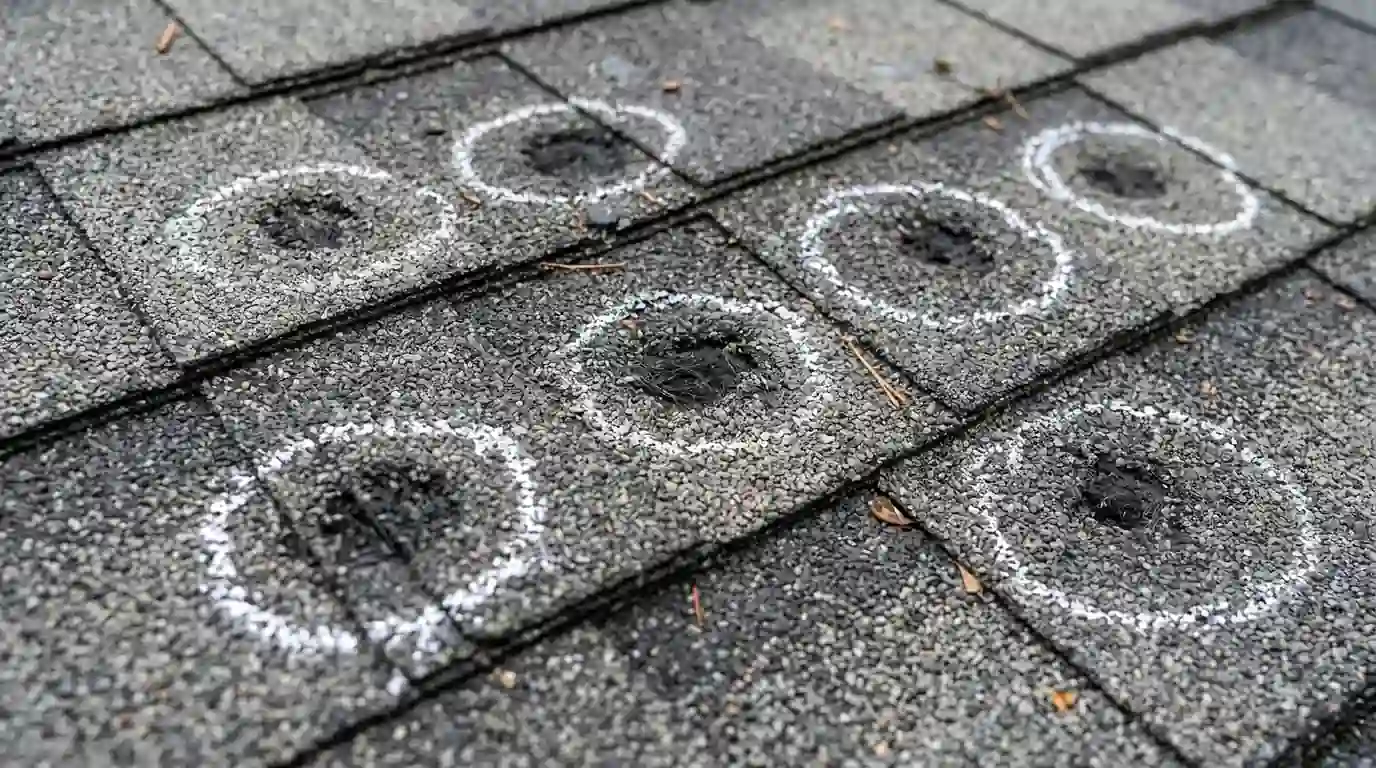
A test square is a 10 by 10 foot area, one roofing square, marked in chalk on each slope. We count and circle every hail hit inside it and photograph it from above with the count written beside it. Many adjusters use test squares to decide whether a slope needs repair or replacement, so having our own count gives you a fair point of comparison.

We place squares on representative areas of each slope, not on the worst spot we can find. Slopes facing the storm usually show more hits than sheltered ones, and the report should reflect that honestly. Overstating damage helps nobody and tends to weaken a claim rather than strengthen it.
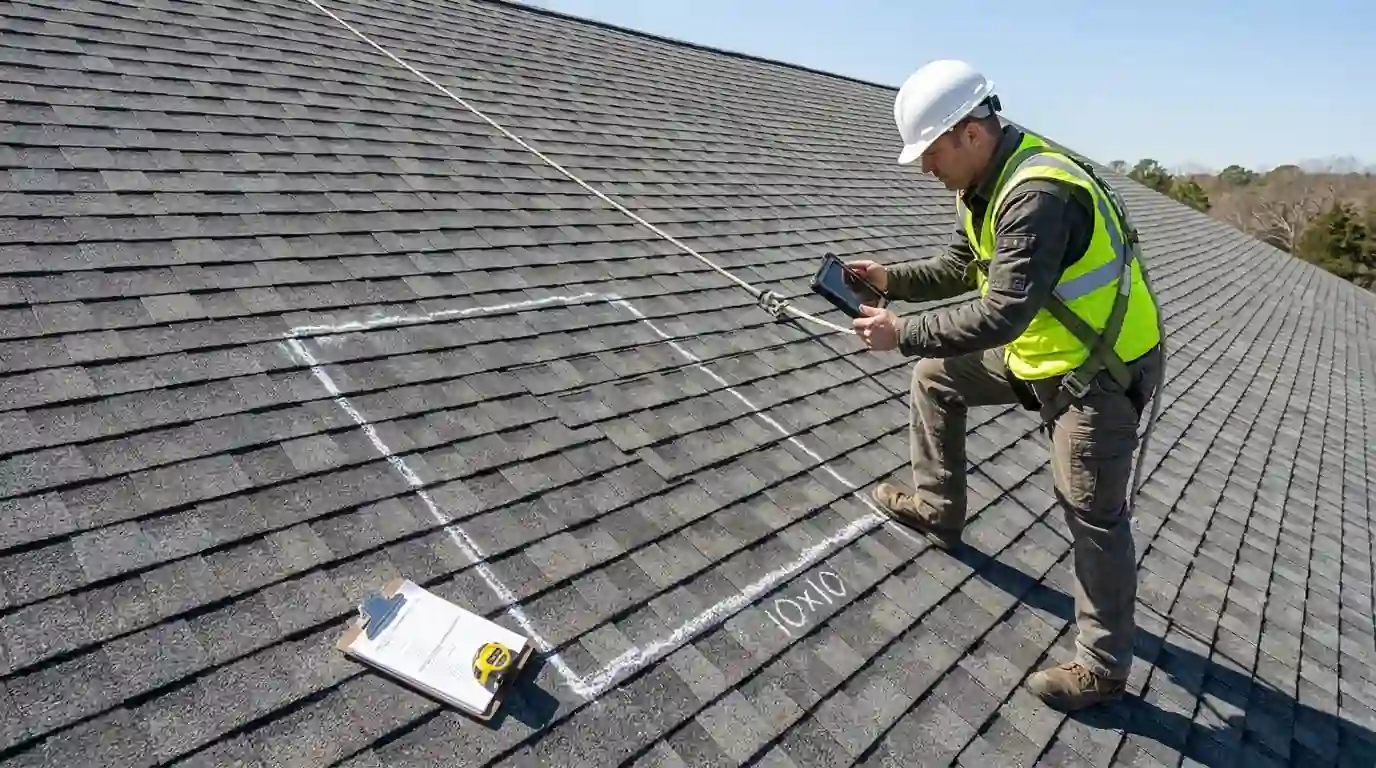
Inspector photographing a chalked test square on a shingle roof slope with a tablet, clipboard and measuring tape nearby
Storm Damage Roof Inspection on a San Antonio area home.

Soft metals tell the story of the storm

Soft metals dent more easily than roofing and keep a clear record of what fell. Box vents, turbine vents, gutters, downspouts, valley metal and window wraps all show hail size, how dense it was and which way it came from. A row of dents on the west face of every vent tells us the storm's direction.

We photograph these with a ruler or coin for scale. They help confirm that marks on shingles or tile came from hail and not from foot traffic, blistering or manufacturing flaws. Dents on the house's soft metals are often the easiest proof to understand at a glance.

Wind leaves its own evidence too: creased tabs on the windward side, missing ridge caps and debris lodged on the roof. We note those separately from hail, since policies and adjusters often handle the two differently. A roof can show wind damage on one side and hail on another from the same storm, and the report keeps them apart.

  • Roof vents and turbine caps.
  • Gutters, downspouts and splash guards.
  • Valley metal and drip edge.
  • Window wraps, screens and AC fin coils.
  • Painted metal like mailboxes and light fixtures.

Collateral damage notes for the adjuster

Collateral damage is storm damage around the property that isn't on the roof. Dented AC condenser fins, chipped paint on fences, cracked window screens and broken patio covers all support the case that a storm hit hard enough to damage the roof as well. We photograph and list what we see at ground level.

These notes aren't a claim of what your policy covers. They're observations, kept factual and dated. If you decide to file, our claim documentation help page explains how we can walk through the report with you and your adjuster. Everything in it stays factual, so it holds up whether or not a claim is filed.

When should you schedule a storm inspection?

Within a few weeks of the storm is best. Fresh hail marks are easier to read before sun and rain wear them down, and later storms can blur which damage came from which event. Most policies also have reporting deadlines, so check yours. Waiting until a leak shows up months later makes it harder to tie the damage to one storm.

San Antonio's main hail season runs from March through June, and several storms in one spring is common. If you've had more than one storm, tell us the dates you remember. Our guide to the first day after hail lists what to photograph yourself before we arrive.

Not sure the storm hit your street? Hail falls in narrow bands, and one neighborhood can be untouched while another a mile away is damaged. A quick look at your own vents, cars and outdoor furniture usually answers that. If you see fresh dents on any of them, the roof is worth a closer look even when nothing looks wrong from the yard.

What you receive after the inspection

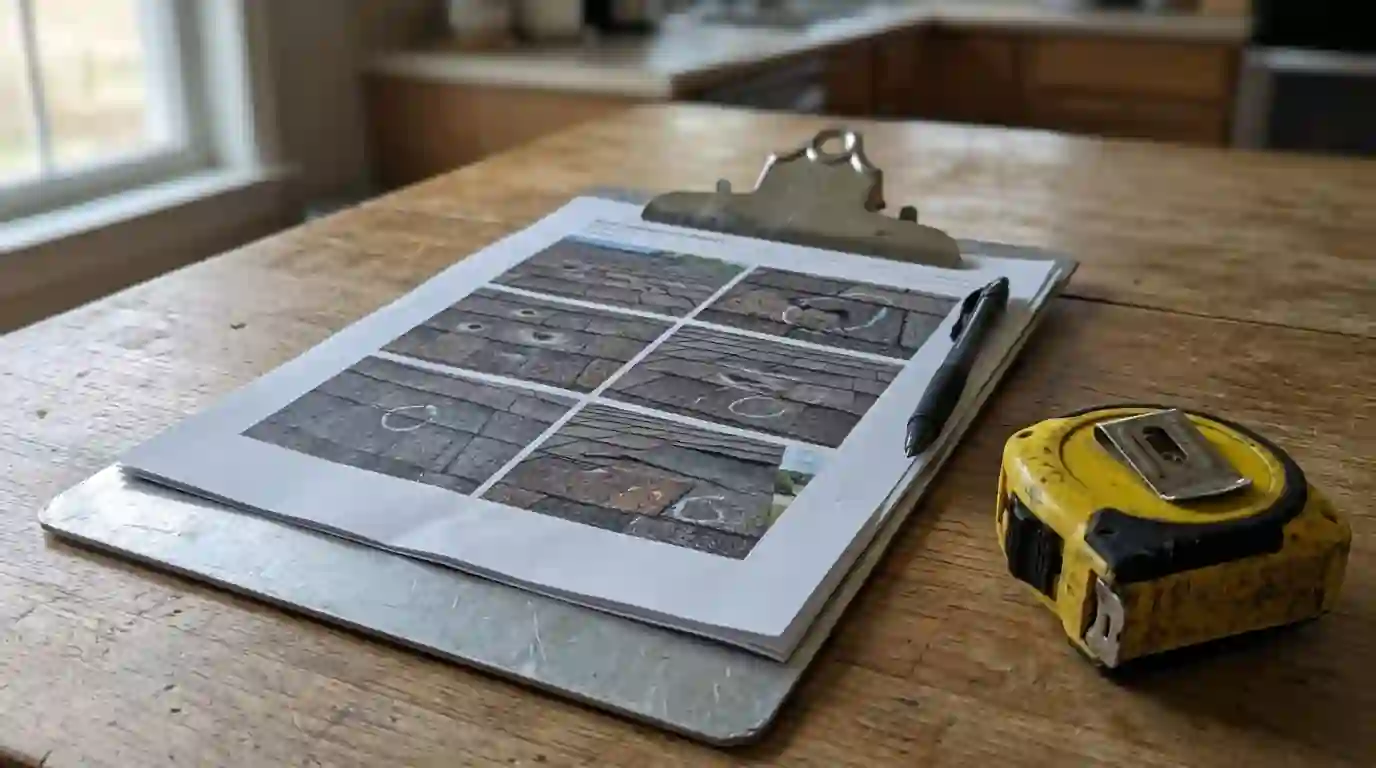
You get a photo report organized by slope, with overview shots, close ups of damage, test square counts, soft metal photos and collateral notes. Each photo is labeled with what it shows and where on the roof it was taken. The report comes as a file you can forward, print or keep with your home records, and nothing in it is written to push you toward a claim.

We also tell you plainly what we found: no meaningful storm damage, damage that can be repaired, or damage widespread enough that a claim is worth discussing. If repair is the answer, our hail repair service picks up from there with the same photo record.
Warning signs

Signs your roof needs storm damage roof inspection

A recent hail or wind storm

Any storm with hail the size of a pea or larger, or wind that downed limbs, is worth an inspection.

Fresh dents on vents

New dings on roof vents or turbines mean the roof surface took hits too.

Dented gutters or downspouts

Soft metal around the eaves shows hail size even when the roof looks fine from the yard.

Neighbors getting claims

Insurance inspectors or roofers working on your street suggest the storm band crossed your area.

Damaged AC fins or screens

Flattened condenser fins and torn screens point to hail strong enough to mark a roof.

Granules or debris after a storm

Fresh granules in gutters or debris on the roof signal impact or wind damage.

From first call to finished roof

How we handle storm damage roof inspection from start to finish

  1. Step 1

    Storm date and history

    We record the storm date, the hail size you saw and any earlier storms or repairs.

  2. Step 2

    Ground and collateral survey

    We walk the property and photograph damage to AC units, fences, screens and other items.

  3. Step 3

    Soft metal documentation

    Vents, gutters, valley metal and flashing are photographed with a scale reference.

  4. Step 4

    Test squares on each slope

    We mark a 10 by 10 foot square per slope, circle every hit and photograph the count.

  5. Step 5

    Wind and wear separation

    Wind damage and older wear are noted separately so the report stays accurate.

  6. Step 6

    Organized report

    You receive labeled photos by slope plus a plain summary of what we found.

What storm damage roof inspection usually costs in San Antonio

Storm report inspections in San Antonio usually cost $185 to $365. The price depends on the roof after inspection, mainly its size, pitch and material.

Line itemTypical range
Single-story shingle roof storm report$185 to $265
Two-story or steep shingle roof report$235 to $335
Tile or metal roof storm report$245 to $365
Detached garage, casita or barn added$65 to $145

What moves the price

  • Larger roofs with many slopes need more test squares and photos.
  • Steep pitches require harness setup before walking.
  • Tile roofs take longer because we step only on supported areas.
  • Multiple storms in one season need extra care separating damage by date.
  • Outbuildings on the same property can be added to the same visit.

Ranges are typical, not quotes. Your price depends on the roof we see at the inspection. See every service side by side in the roofing cost guide.

Materials we install and repair

  • GAF
  • Owens Corning
  • CertainTeed
  • Malarkey
  • TAMKO
  • Atlas Roofing
  • IKO
  • Eagle Roofing
  • Westlake Royal
  • DaVinci Roofscapes
  • Englert
  • Carlisle
  • Velux
  • Solatube
  • GAF
  • Owens Corning
  • CertainTeed
  • Malarkey
  • TAMKO
  • Atlas Roofing
  • IKO
  • Eagle Roofing
  • Westlake Royal
  • DaVinci Roofscapes
  • Englert
  • Carlisle
  • Velux
  • Solatube
  • GAF
  • Owens Corning
  • CertainTeed
  • Malarkey
  • TAMKO
  • Atlas Roofing
  • IKO
  • Eagle Roofing
  • Westlake Royal
  • DaVinci Roofscapes
  • Englert
  • Carlisle
  • Velux
  • Solatube

Where we do this work

Storm Damage Roof Inspection across San Antonio and nearby cities

We handle storm damage roof inspection from downtown San Antonio out to the Hill Country and the I-35 corridor. Here are the places we cover most, with their main ZIP codes. The full service area lists all 62 neighborhoods, cities and counties.

Answers

Storm Damage Roof Inspection questions from San Antonio homeowners

Does a storm damage roof inspection mean I have to file a claim?

No. The inspection tells you what the storm did. Many homeowners learn the damage is minor and choose to repair it directly or do nothing. If the damage is widespread, you can decide whether to file. The report is yours either way, and the coverage decision stays between you and your insurer.

How is a storm inspection report used by an insurance adjuster?

Adjusters do their own inspection, but a clear, organized report helps them see what you see. Test square counts, soft metal photos and collateral notes give a point of comparison. If their findings differ from ours, the photos make it easier to discuss specific slopes rather than general impressions.

Can a storm inspection tell old hail damage from new damage?

Usually, yes. Fresh hail marks show bright exposed asphalt or clean breaks, while older hits look weathered, darker and often have algae or dirt in them. Soft metal dents tell a similar story through paint wear and oxidation. When it's unclear, we say so in the report rather than guessing.

Is a storm damage roof inspection useful if I'm selling soon?

It can be, especially after a known storm. Buyers and their inspectors will often ask about recent hail. A dated report showing either no damage or damage that was repaired answers that question directly. For a general condition letter, our roof certification service is the better fit.

Related work

Other roof work that often goes with this job

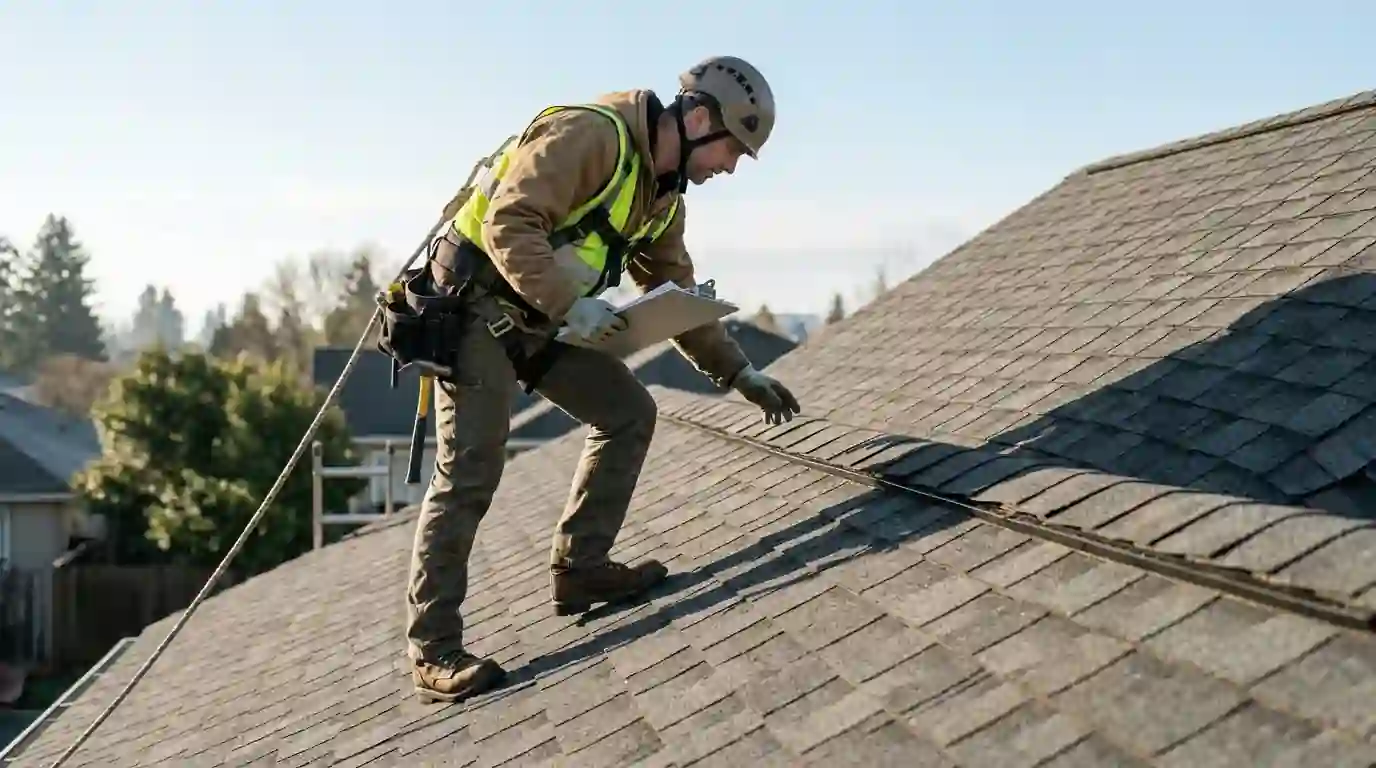
Roofer walking a shingle roof with a clipboard checking ridge caps and vents on a clear morning

Roof Inspection

A slope-by-slope condition check of your roof, flashing, vents and attic, with labeled photos and a plain priority list.

Learn more

Roof trouble today? Talk to a roofer now.

Our phone line is answered 24/7. Tell us what you see and we will tell you the next step, even if that step is a tarp tonight and a full inspection tomorrow.

Call (210) 750-1898Answered 24 hours a day
Call (210) 750-189824/7