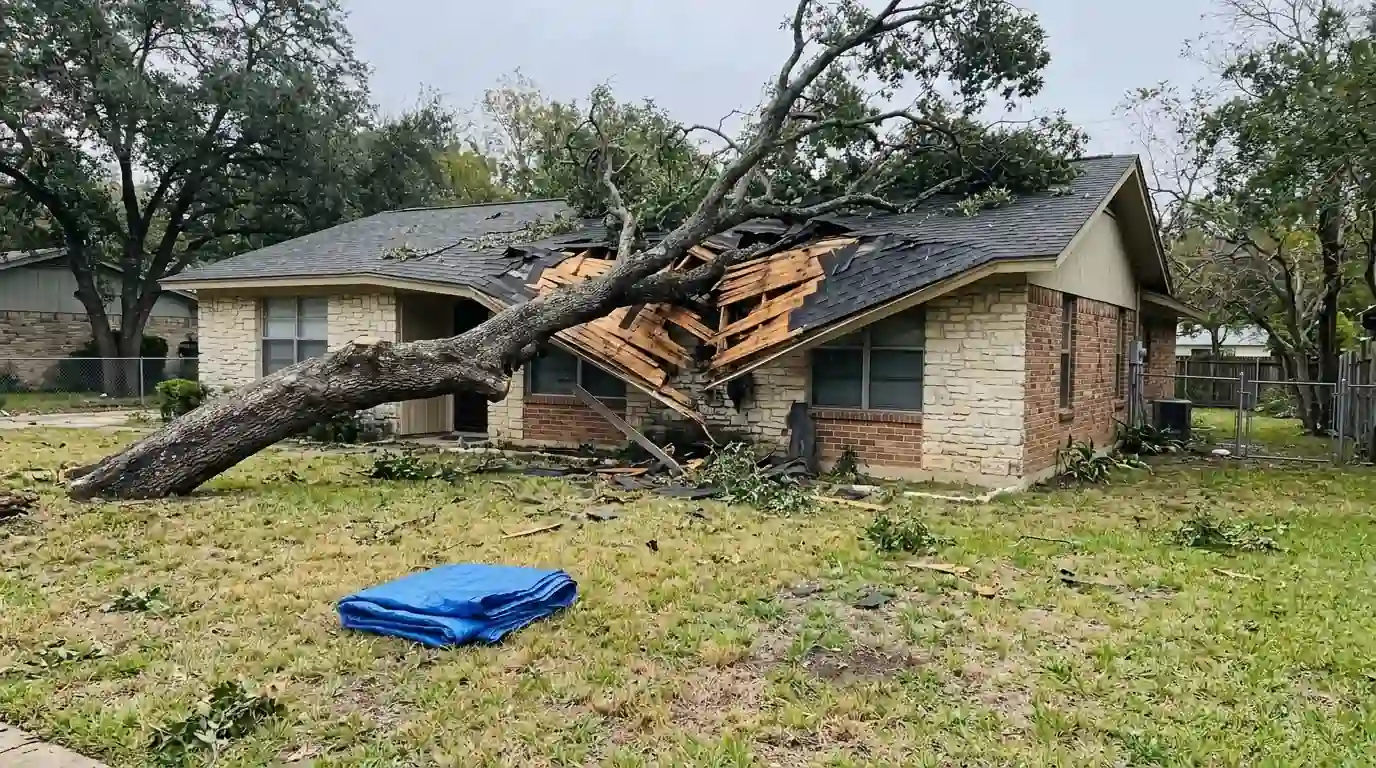
Why a limb strike is a framing problem before it's a shingle problem
A large live oak limb can weigh hundreds of pounds, and it rarely lands gently. The impact point usually shows a hole or a dent, but the force travels down into the rafters or truss chords underneath. We've opened roofs where the shingles looked almost normal and the board below was cracked along its grain. That's why we never price a tree repair from the driveway.
Pecan limbs are brittle and tend to snap off in sections, so they often leave several smaller punctures across one slope. Live oaks drop heavier, slower limbs that crush rather than pierce. Both can split the decking between rafters, break the ridge board, or push a gable end out of line. Each of those needs a carpenter's fix, not just new shingles and a bead of sealant.
What should happen in the first few hours after a tree hits your roof?
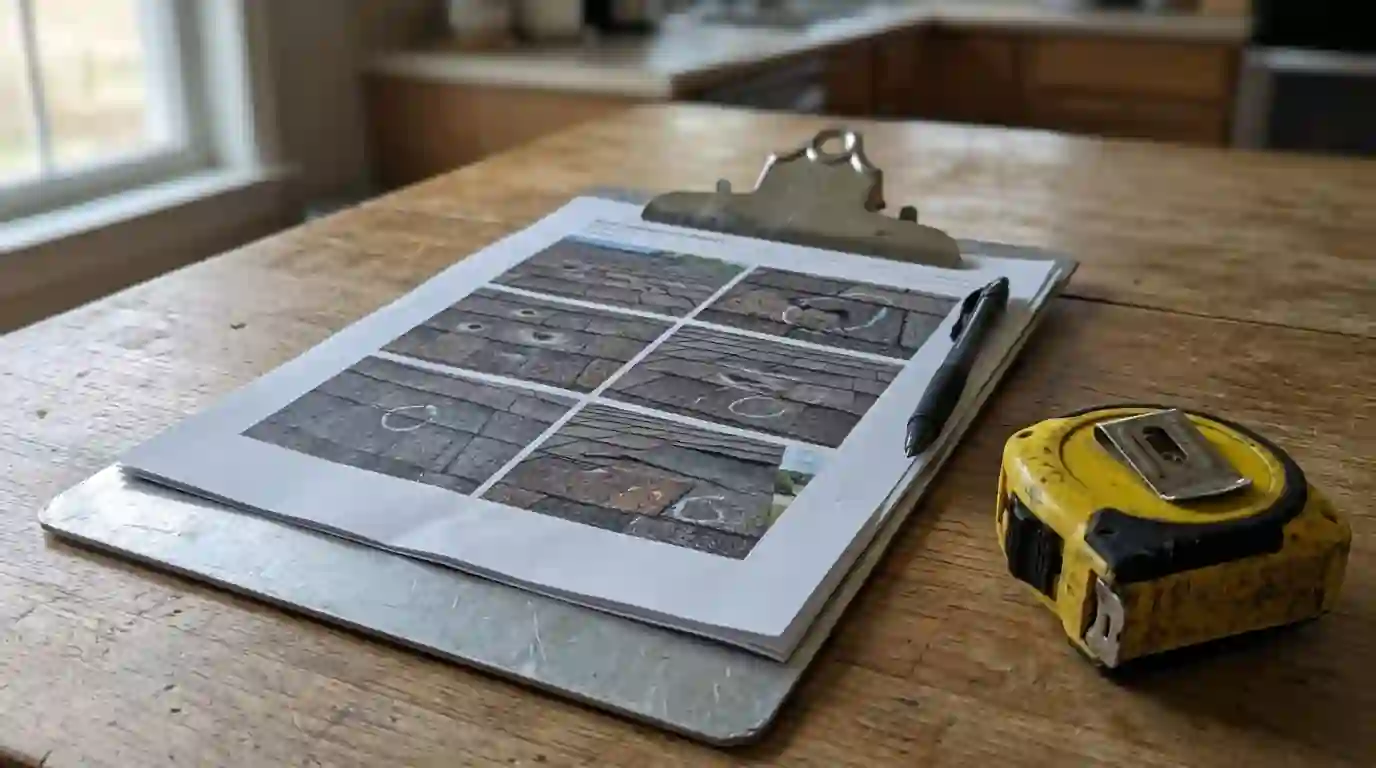
Get everyone out of the rooms under the impact, and stay clear of any sagging ceiling drywall, which can drop suddenly once it soaks through. Shut off power to those rooms at the breaker if water is near light fixtures. Then take photos from the ground and inside before anything is moved, because your insurer will want to see the limb in place.
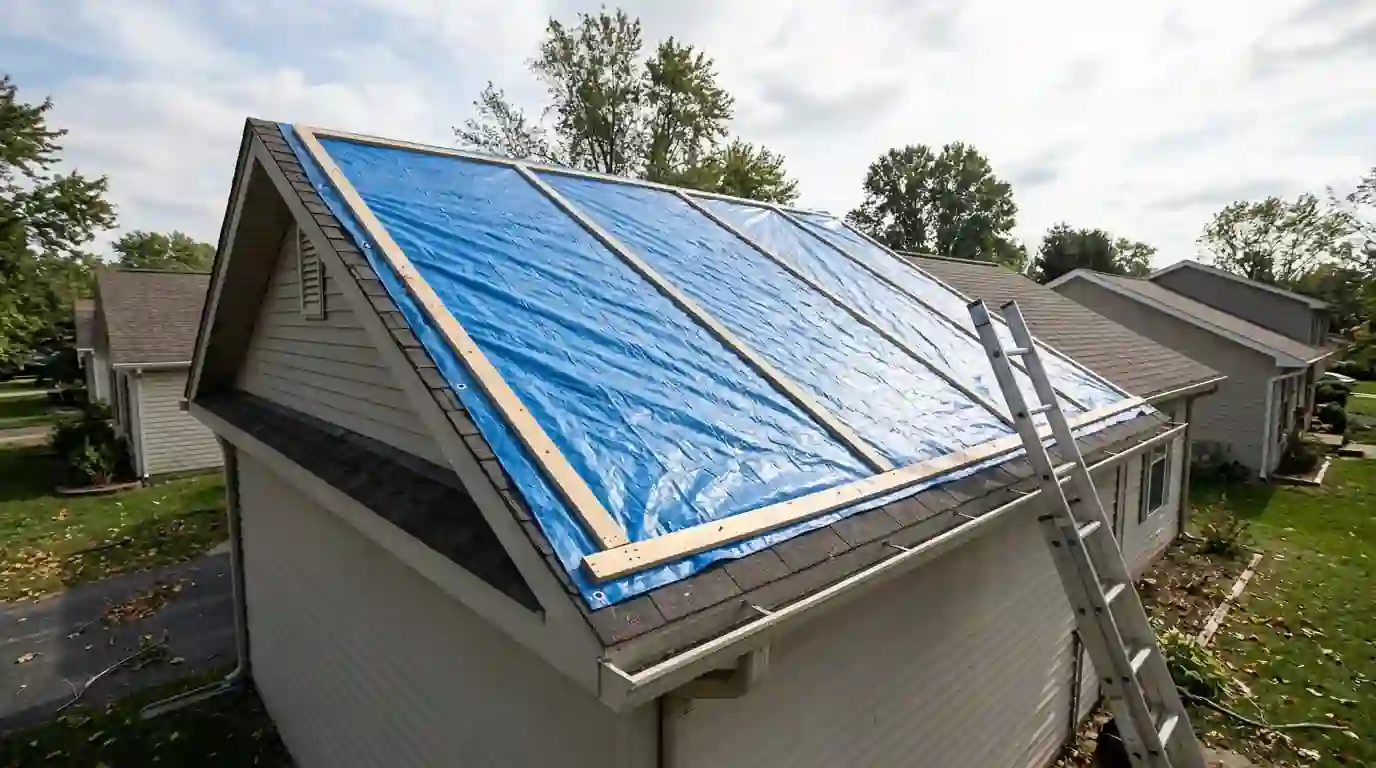
Our phone line is answered 24/7, and we can usually get a cover on the opening while it's still dark. If the limb is too big to lift by hand, it stays put until a tree crew cuts it down in sections. Pulling a heavy limb off with a rope often tears out more decking than the fall did. For larger openings, our storm tarping service explains how a batten tarp is fastened so it survives wind.
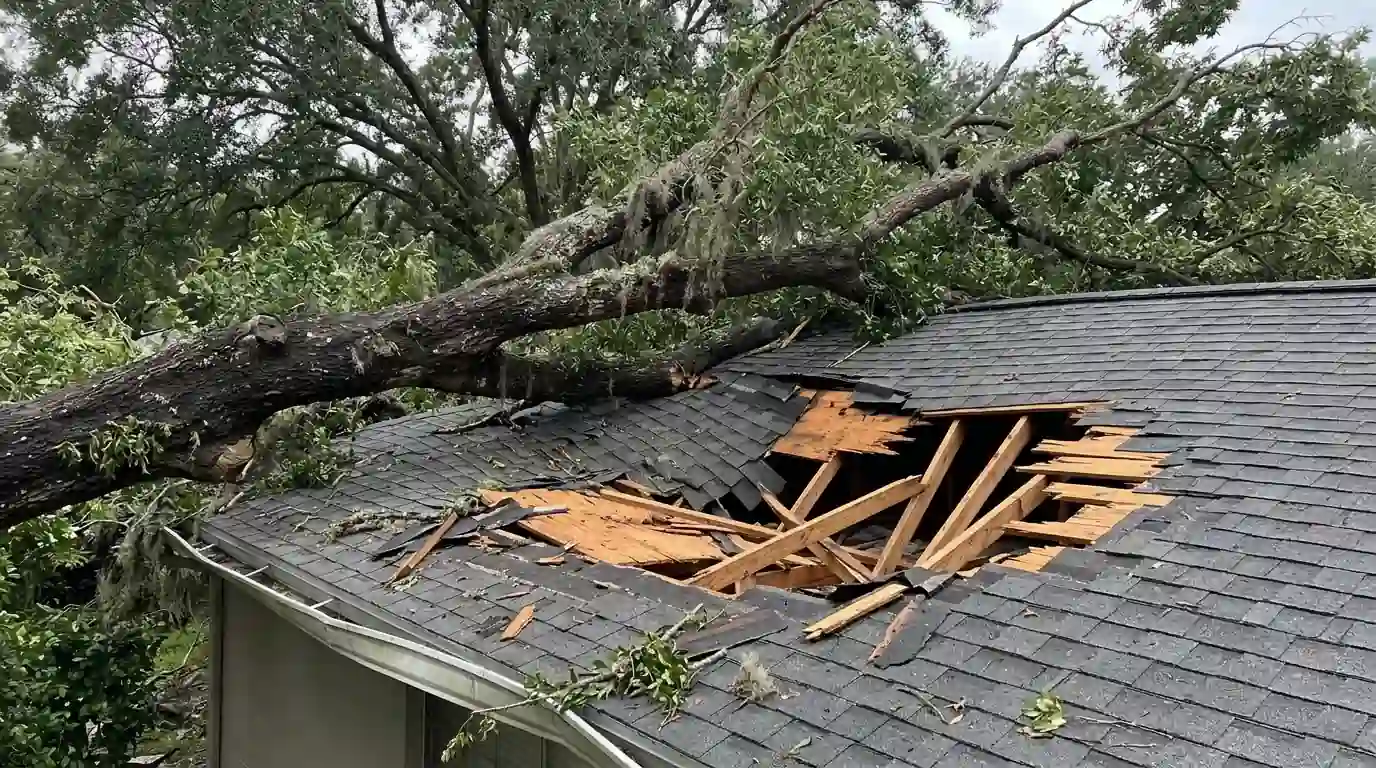
How we work alongside the tree crew without adding damage
We don't cut trees, so you'll want an arborist or tree service for the removal. What we do is plan that removal with them. We mark which rafters are already broken so riggers don't anchor to them, and we ask that cut sections be lowered with ropes instead of rolled down the slope. Rolling chunks of trunk across shingles strips granules and cracks tabs that weren't hurt in the first place.
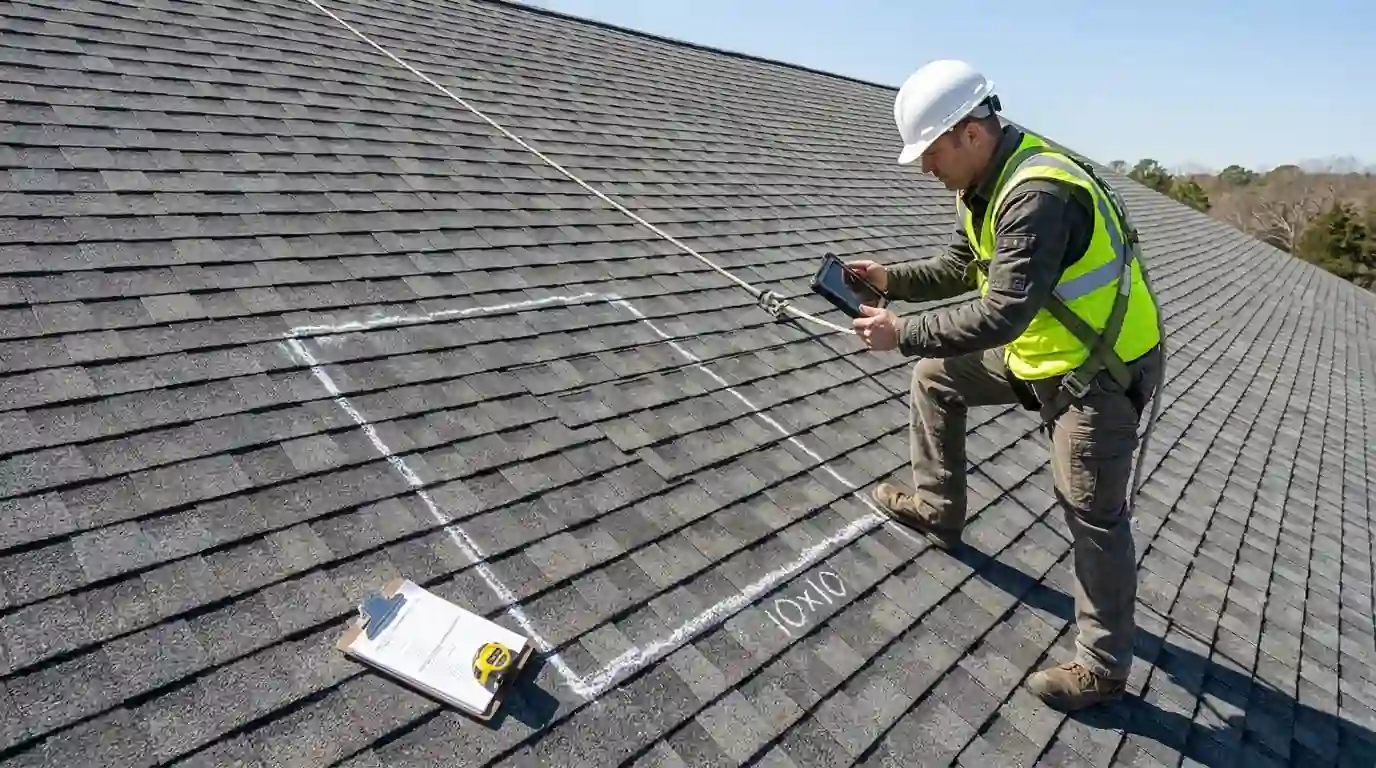
Once the wood is off, we walk the rest of the roof. Smaller branches often scrape a second slope, break a ridge cap, or crush a gutter run on the way down. Those secondary spots go into the same photo set so your claim covers everything in one visit. When the eave boards split under the limb, we handle them with our fascia board repairs during the same job.
Rebuilding the framing and decking so the roof sits flat again
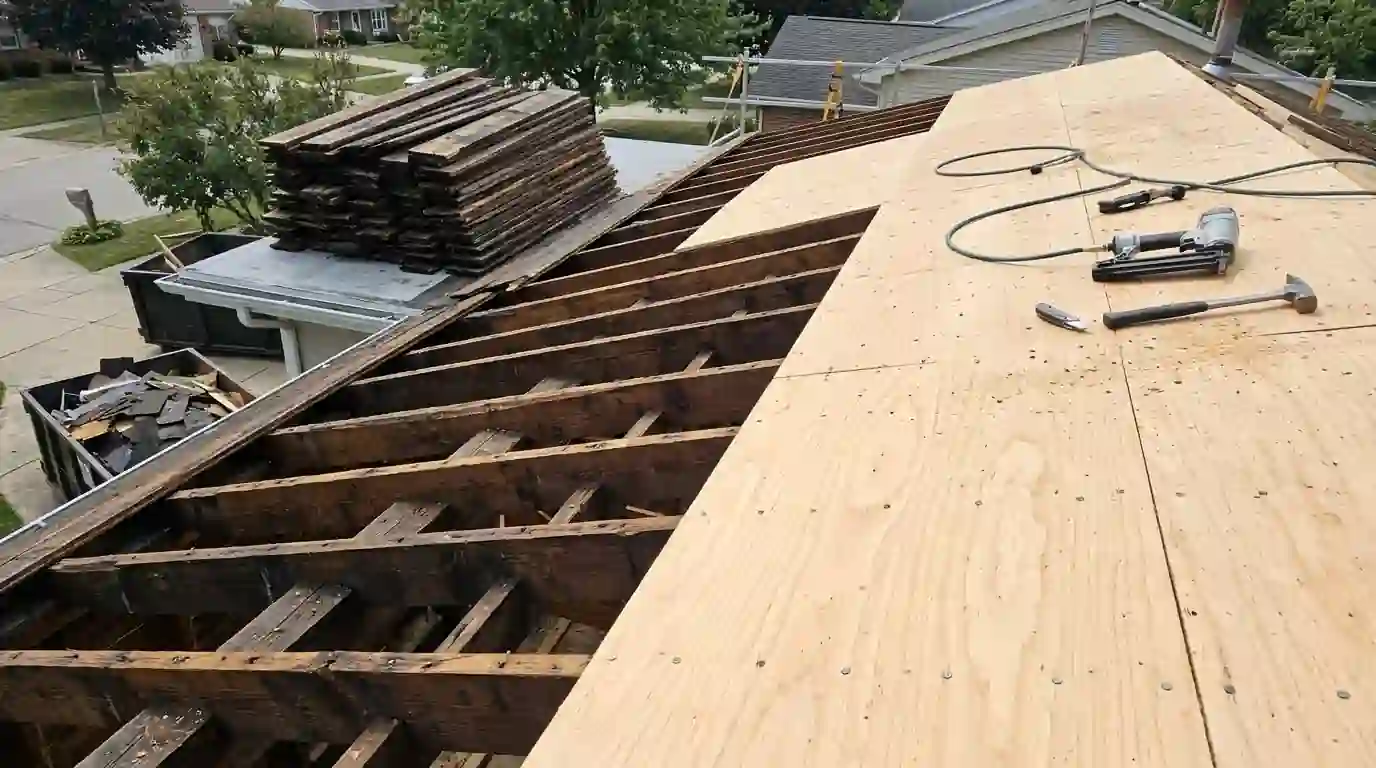
Cracked rafters are usually sistered, which means a new full-length board is fastened alongside the damaged one with structural screws or bolts. A rafter that's broken clean through, or a truss with a split web, may need a section replaced and, for trusses, a repair detail from an engineer. We tell you which situation you're in before any work starts, because the price difference is real.
Decking around the impact gets cut back to the nearest rafters and replaced with new sheets. Then the underlayment and roofing are woven back into the surrounding roof so the patch sheds water like the rest. On older homes with 1x plank decking, we patch with plywood shimmed to the same height. If soft wood spreads past the impact zone, our per-sheet decking work covers how we price it.
Will the repaired section match the rest of your roof?
Matching is the hardest part of a tree repair on a roof that's ten or fifteen years old. Shingle colors shift between production runs, and South Texas sun fades the existing roof unevenly. We bring sample pieces to the house and compare them in daylight before ordering. When a close match isn't possible, we'll show you, and our claim documentation help explains how to raise matching with your adjuster.
Tile and metal roofs raise their own issues. Concrete tile profiles change between manufacturers, so we look for salvage tiles from the same line, and a dented standing seam panel usually has to be replaced from eave to ridge. If the strike also cracked tiles elsewhere on the slope, our tile repair crew can reset those during the same visit.
Can trimming now keep the next limb off your roof?
Most of the tree strikes we see come from limbs that were already hanging over the house. Live oaks grow wide rather than tall, and their lower limbs stretch across rooflines in older neighborhoods. Branches that rest on shingles also grind away granules every time the wind blows, which creates a worn patch long before anything falls.
An arborist can tell you which limbs are weak, hollow or dead. As a rule of thumb, keep branches several feet clear of the roof surface. Live oak pruning should wait until after the February to June window when oak wilt spreads most easily, so plan trimming for midsummer or winter and ask your arborist about painting the cuts.