Why choose seamless gutters over sectional runs?
Sectional gutters come in short lengths joined every 10 feet or so, and every joint is a seam held by sealant. In our heat, that sealant dries and cracks, and the seams start dripping. Seamless gutters are rolled to the full length of each roof edge, so the only joints are at the corners and end caps.
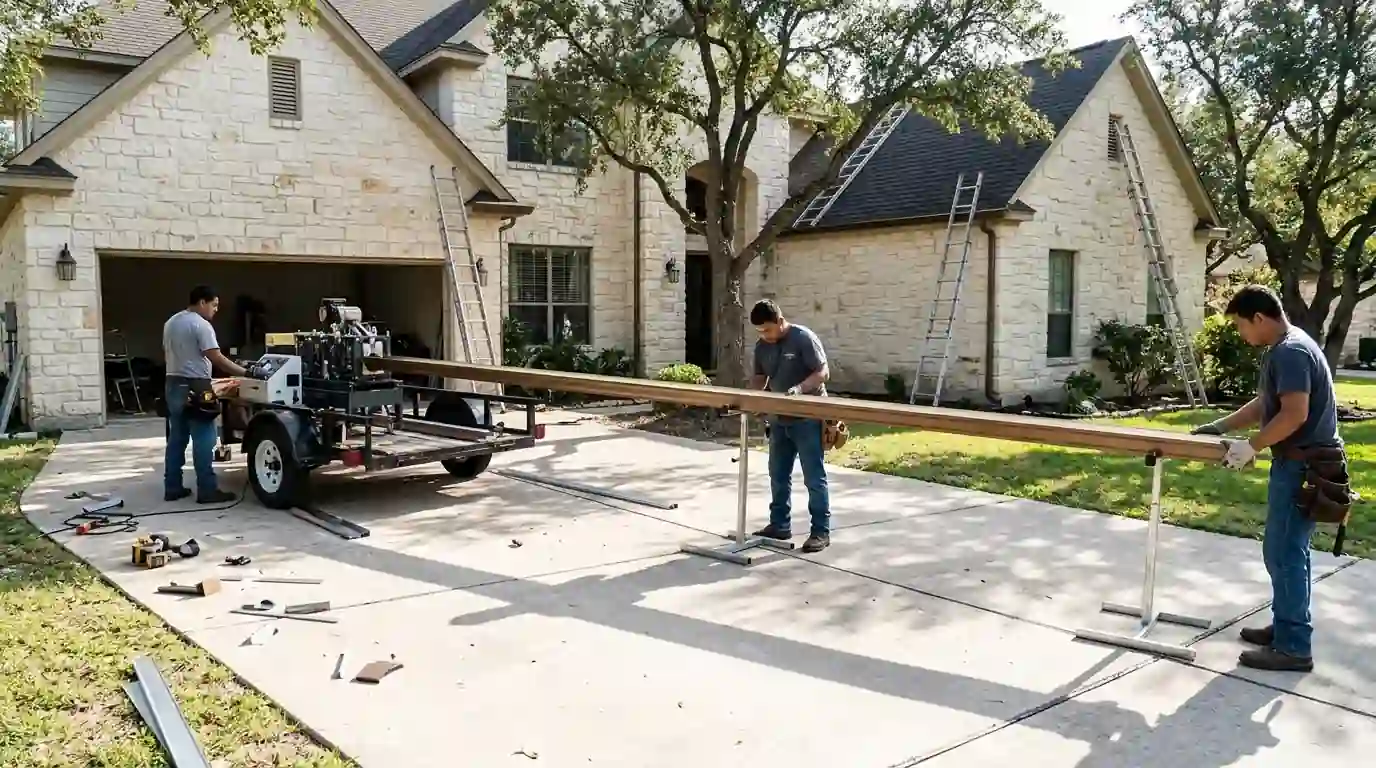
Fewer joints means fewer leaks and less maintenance. It also looks cleaner from the street, since you don't see a line of seams along the fascia. We roll each run in your driveway on a portable machine, measured to the exact length of that roof edge, so nothing gets pieced together from leftover sections.
Should your home get 5 inch or 6 inch gutters?
Five inch K-style gutters handle most single-story homes with moderate roof areas. Six inch gutters carry noticeably more water, and they're the better pick for large roof planes, steep pitches, two-story homes and runs that collect from valleys. Steep metal roofs shed water fast enough that 6 inch is usually worth it.
We decide by looking at how much roof drains to each run, how steep it is, and where valleys dump water. A single home can mix sizes, with 6 inch on the back where two slopes meet and 5 inch on smaller front sections. Getting the size right at install is cheaper than chasing overflow later.
How do we size and place downspouts for Texas downpours?
Downspouts are often the real bottleneck. A gutter can hold a lot of water, but if it drains through a single small downspout at the far end, it overflows in a hard rain. We use larger 3 by 4 inch downspouts on 6 inch gutters and add outlets so no run is too long to drain quickly.
Placement matters as much as size. We put downspouts where they can discharge away from the foundation, away from walkways and away from AC pads. Extensions, splash blocks or underground drain connections carry water further out. If you have a flower bed or patio that floods every storm, tell us, and we'll plan the outlets around it.
What holds the gutters up, and why does it matter?
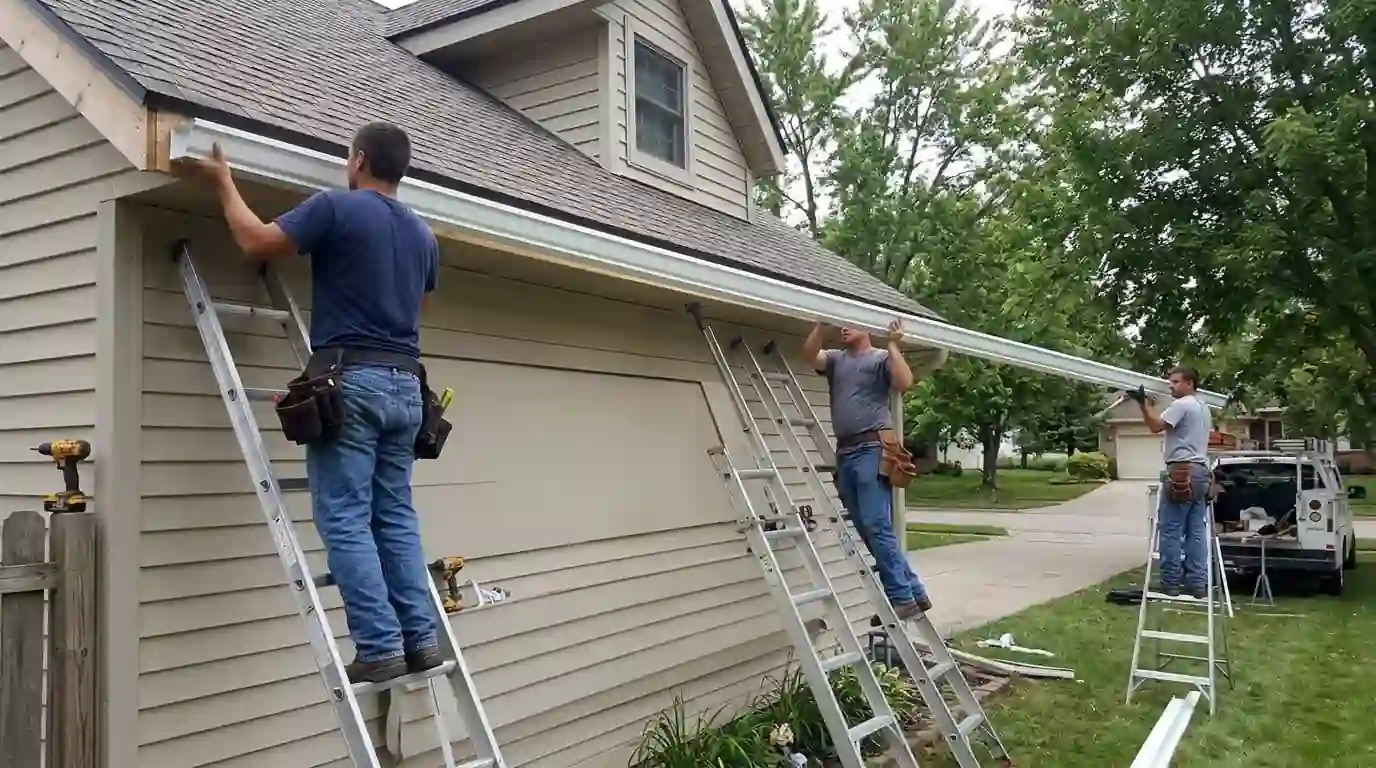
We use hidden hangers screwed into the fascia about every two feet, closer at corners and outlets. Older spike and ferrule systems loosen as wood expands and shrinks with heat, and gutters then sag and pull away. Screwed hangers hold tighter and don't show from below.
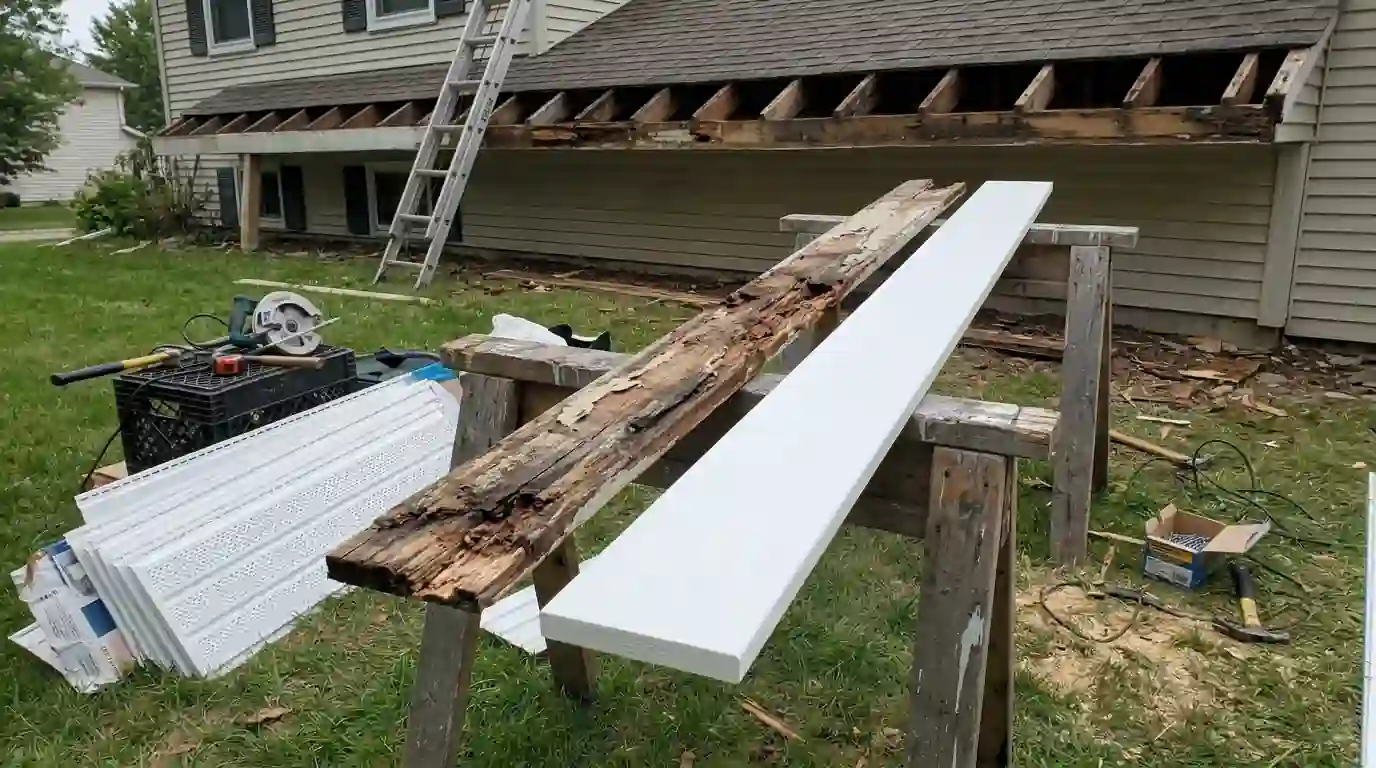
The fascia has to be sound for any hanger to hold. Before installing, we check the boards along each run. Soft or rotted fascia gets replaced first under our fascia and soffit repair service, since hanging new gutters on rotten wood only shifts the failure a few years down the road.
How do new gutters tie into the roof edge?
A gutter only works if water from the roof lands inside it. We check that drip edge is in place and extends over the back of the gutter, so water can't run behind it and soak the fascia. Where drip edge is missing or bent, we add it as part of the install.
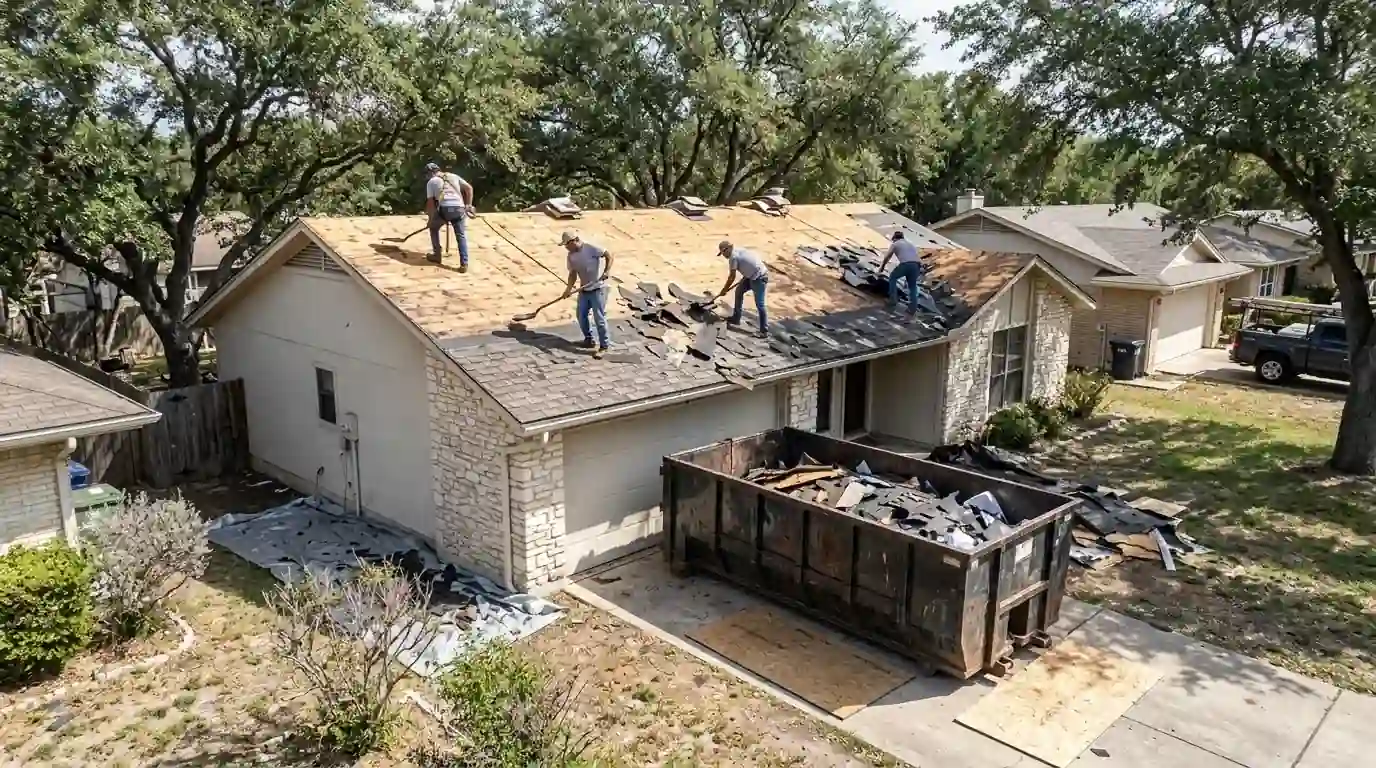
Kick-out flashing matters too, wherever a roof edge meets a wall. Without it, water runs down the wall instead of into the gutter, which is a common cause of stucco stains. If your roof is due for replacement, it's smart to time gutters right after the new roof goes on, so the drip edge and gutter line up.
Which colors and finishes hold up in South Texas sun?
We roll gutters from pre-painted aluminum coil with a baked enamel finish that resists fading and chalking. White, almond, brown, bronze and several grays cover most San Antonio homes, and we can match trim, fascia or roof color. Downspouts come in the same coil color so the whole system reads as one piece.
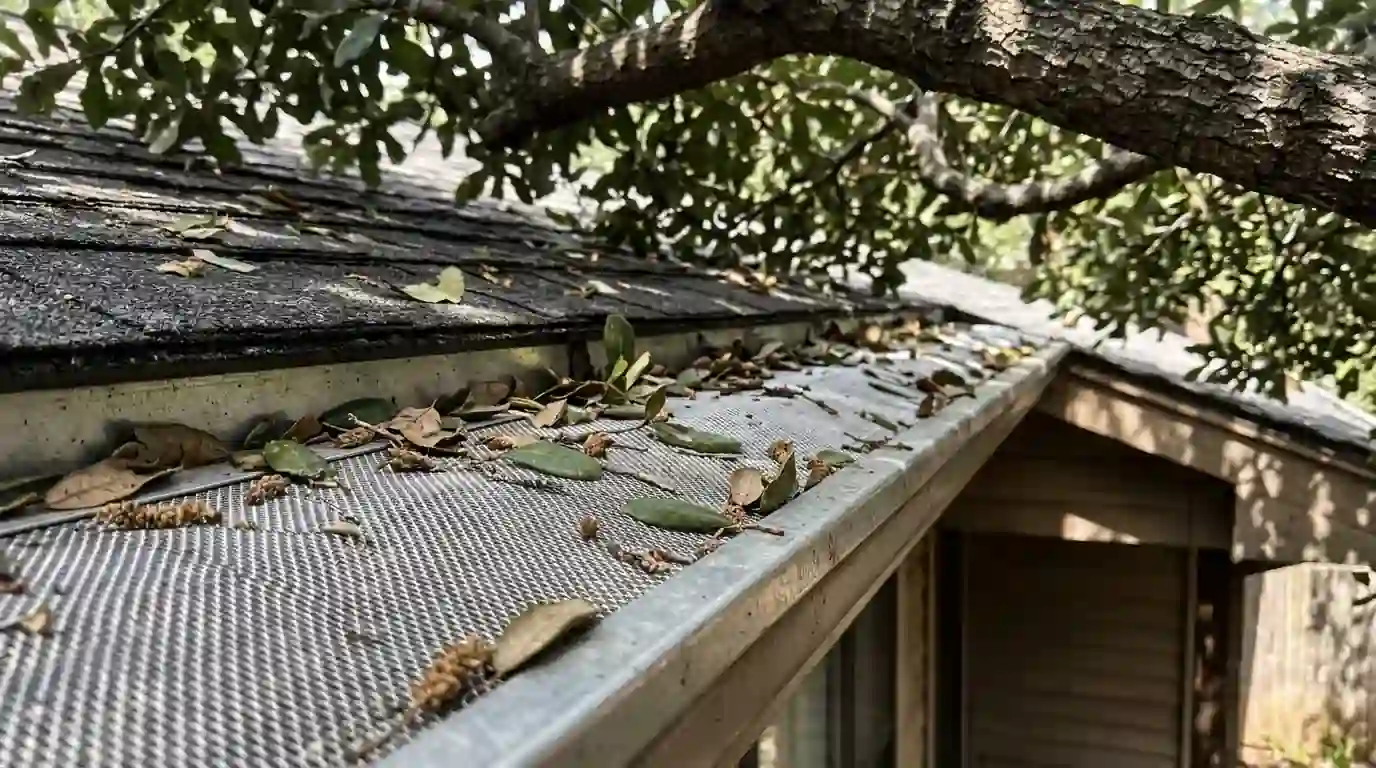
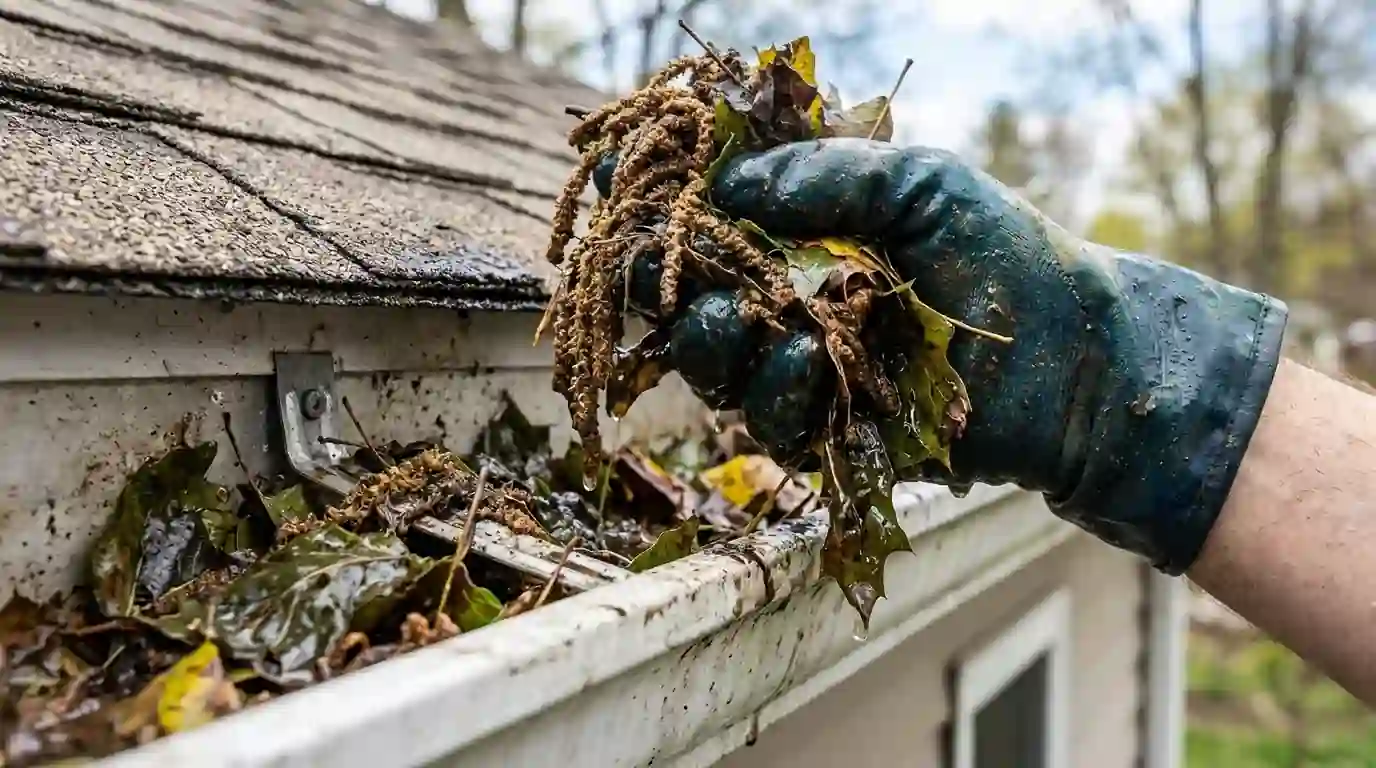
If live oaks hang over your roofline, plan for debris from day one. Guards can be added at install or later, and we explain which types handle oak tassels on our gutter guards and repair page. Give us a call at (210) 750-1898 to get your runs measured.