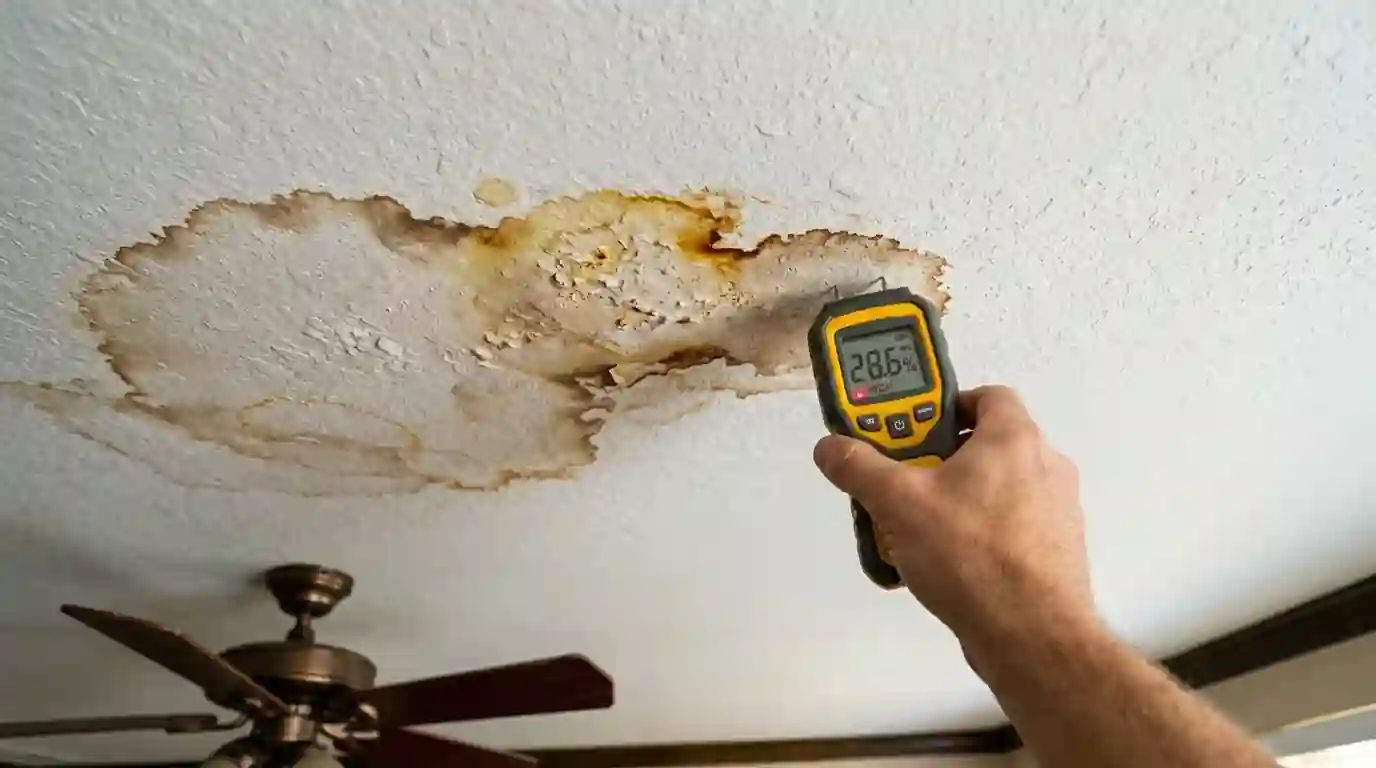
Why rooftop HVAC units cause so many leaks
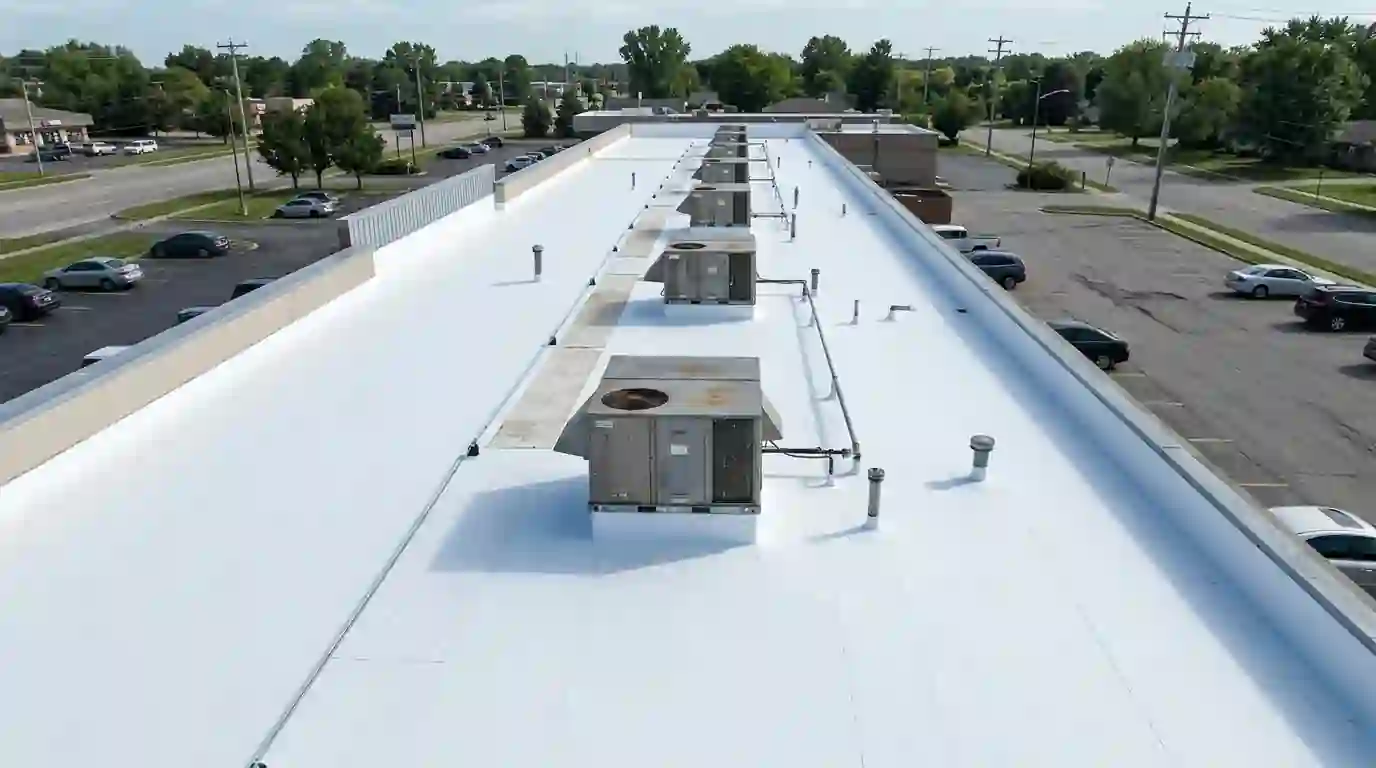
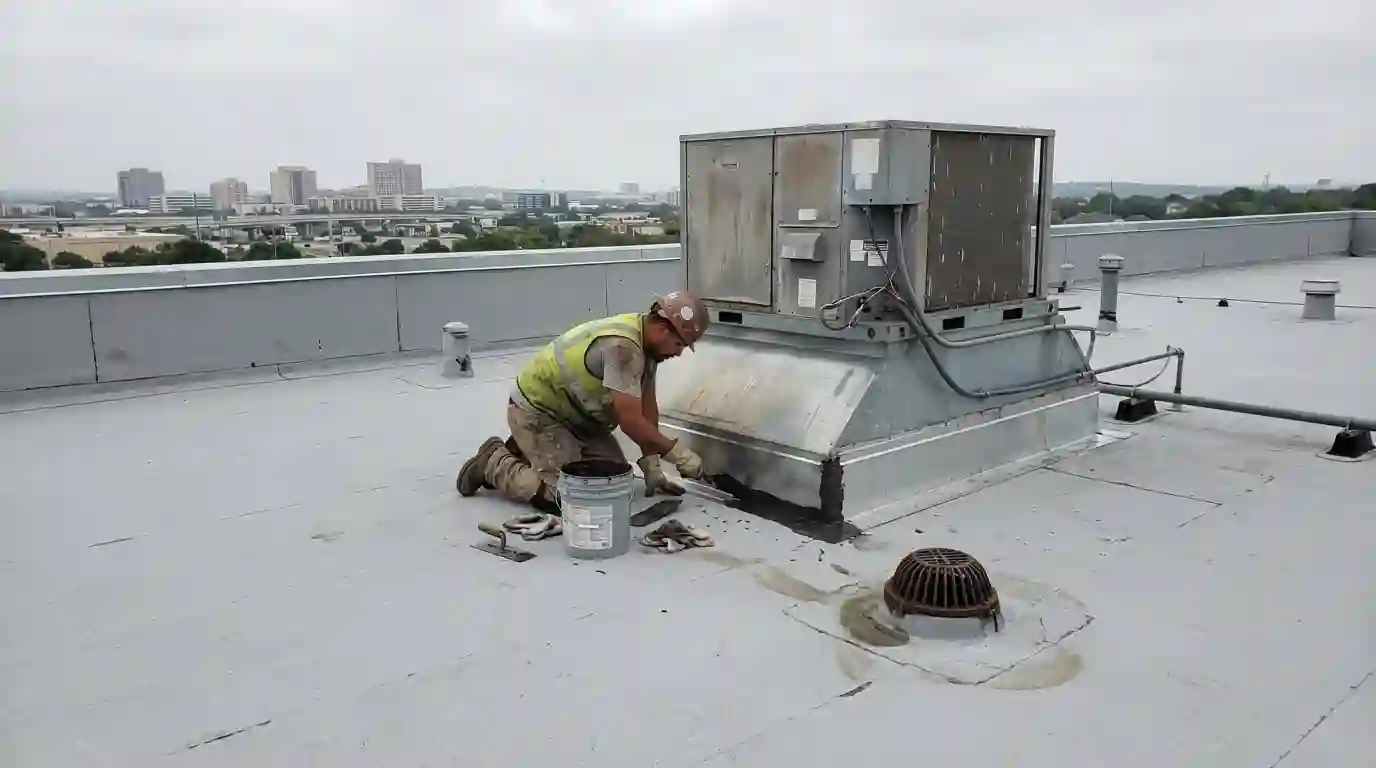
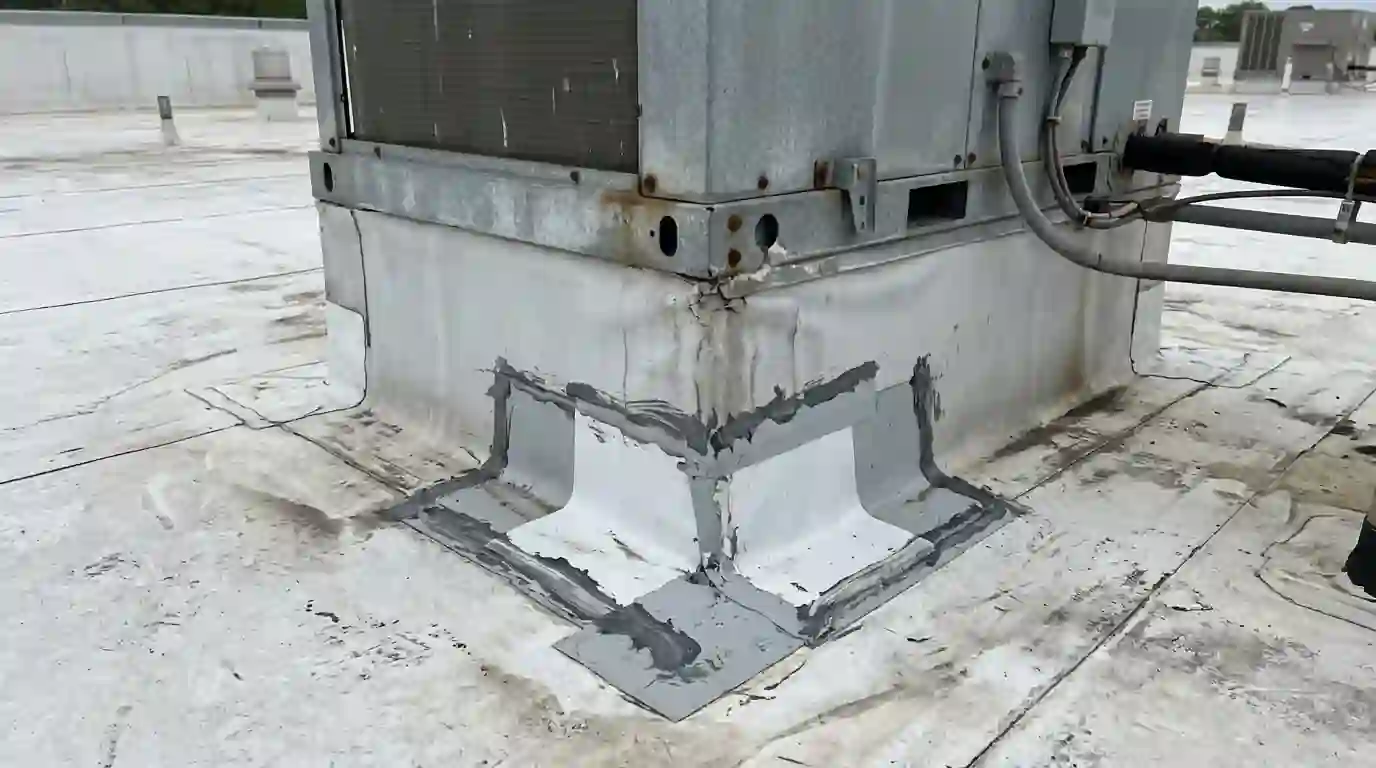
Every rooftop unit sits on a curb that cuts through the roof. The flashing around that curb is where we find many commercial leaks, especially after units have been swapped and the curb flashing was patched instead of rebuilt. Condensate lines that drain onto the roof can also wear the membrane, and service techs walking across without pads damage it over time.
We check curb flashing height, membrane laps at corners, sheet metal caps and the seal between unit and curb. Inside the unit, a clogged condensate pan can mimic a roof leak by dripping down the duct, so we look there too. Repairs may include new corner patches, rebuilt curb wraps, walkway pads or rerouted condensate lines.
Drains, scuppers and the water that won't leave
Roof drains clogged with leaves, debris or bird nests back water across the roof until it finds a weak seam. In San Antonio, oak leaves and seed pods are common culprits, and a single blocked drain can flood a large section during a spring downpour. Drain clamping rings can also loosen, letting water run around the drain body instead of into it.
Scuppers through parapet walls often leak where the metal box meets the membrane or the wall. We clean drains and test them, reset or replace clamping rings and strainers, reflash scupper boxes and check the downspouts and conductor heads below. If drainage issues are widespread, it may be time to look at a larger fix through a full commercial reroof with tapered insulation.
Parapet walls: leaks that start above the roof
Parapets catch wind-driven rain from every side. Water enters through cracked coping joints, open mortar on masonry walls or stucco cracks, then runs down inside the wall and appears as a roof leak. Repairing the membrane alone won't stop it if the water's entering higher up.
We inspect coping caps, joints, sealant, wall flashing height and termination bars. Fixes range from resealing coping joints and installing cover plates to replacing coping entirely or adding counter-flashing. On older buildings, we may recommend masonry repairs for a mason to complete alongside our roofing work.
Repairs matched to TPO, mod bit, built-up and metal roofs
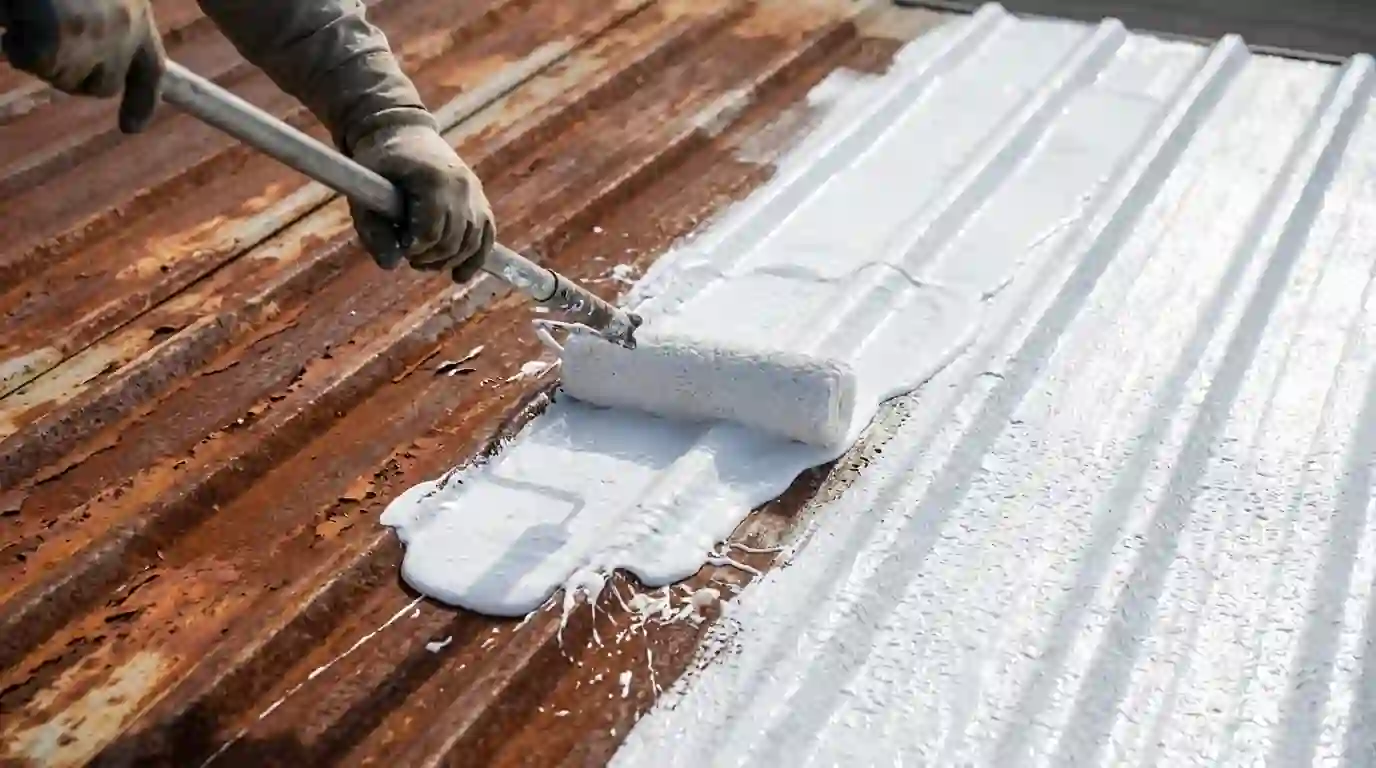
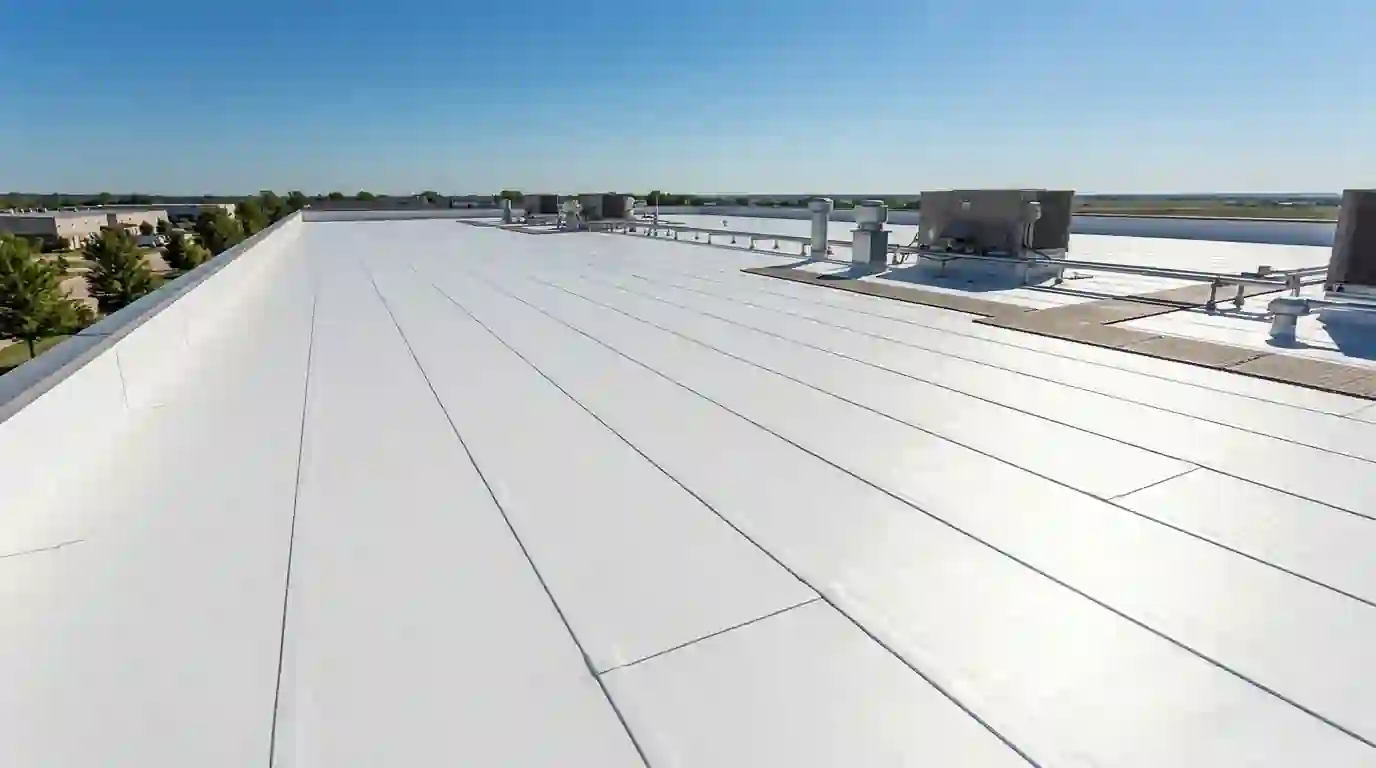
A patch has to match the roof system. On TPO we clean and weld patches, on modified bitumen we bond matching cap sheet, on built-up roofs we rebuild plies with compatible materials, and on metal we replace fasteners and seal seams. Mixing incompatible products causes patches that peel or crack within a season.
If the roof is aging but mostly dry, a restoration coating after repairs can extend its life. For problems on a home's flat section rather than a commercial building, see our residential flat roof repair service.
When repeated repairs signal a bigger problem
One leak at a curb is a repair. Leaks at several curbs, drains and seams in the same year usually mean the membrane or insulation is near the end of its service life. We track repair history on each building, so the pattern becomes clear instead of feeling like one emergency after another.
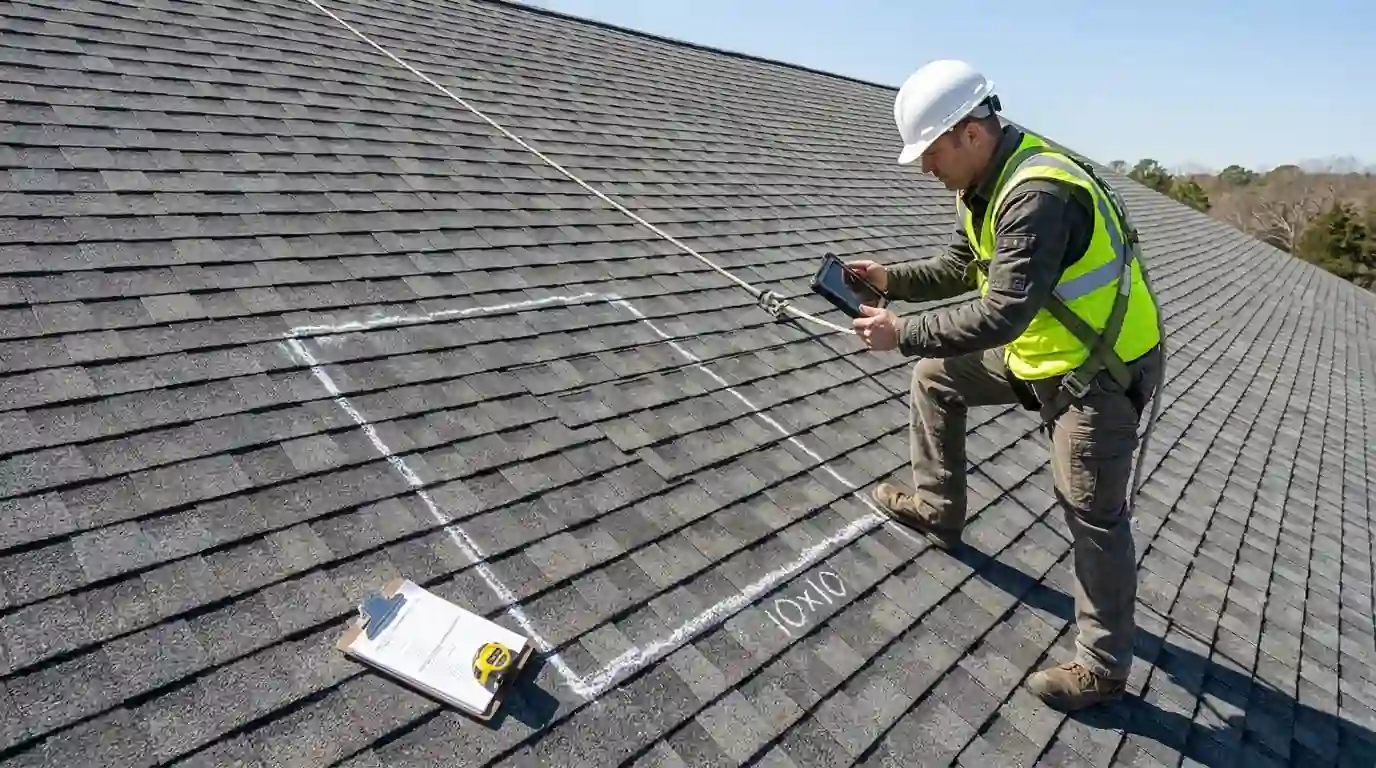
Core cuts near repeat leak areas show whether the insulation is wet. If it is, patching the surface won't stop rot in the deck below, and money spent on repairs is better put toward replacement. When the roof is mostly dry, targeted repairs plus routine drain cleaning twice a year often carry a building several more seasons at a much lower cost.
Photo reports that property managers can use
Property managers and owners need to know what happened, what was done and what's coming. After each repair, we send a report with roof plan notes, before and after photos, the cause of the leak and any other issues noticed. That record helps with budgeting, tenant communication and future decisions.
For multi-building portfolios, we can set up a list of roof conditions by building, so you see which roofs are near replacement and which need only routine attention. If storm damage is suspected, our storm documentation inspection provides a more detailed report for insurance purposes.