Why do low-slope sections fail sooner in San Antonio?
A flat roof doesn't shed water the way a pitched roof does, so any dip, clogged scupper or warped deck lets water sit. Here, that standing water gets heated by sun on a dark surface, which speeds the aging of asphalt-based materials. A blazing afternoon followed by a cold front or a hailstorm then strains seams that are already brittle.
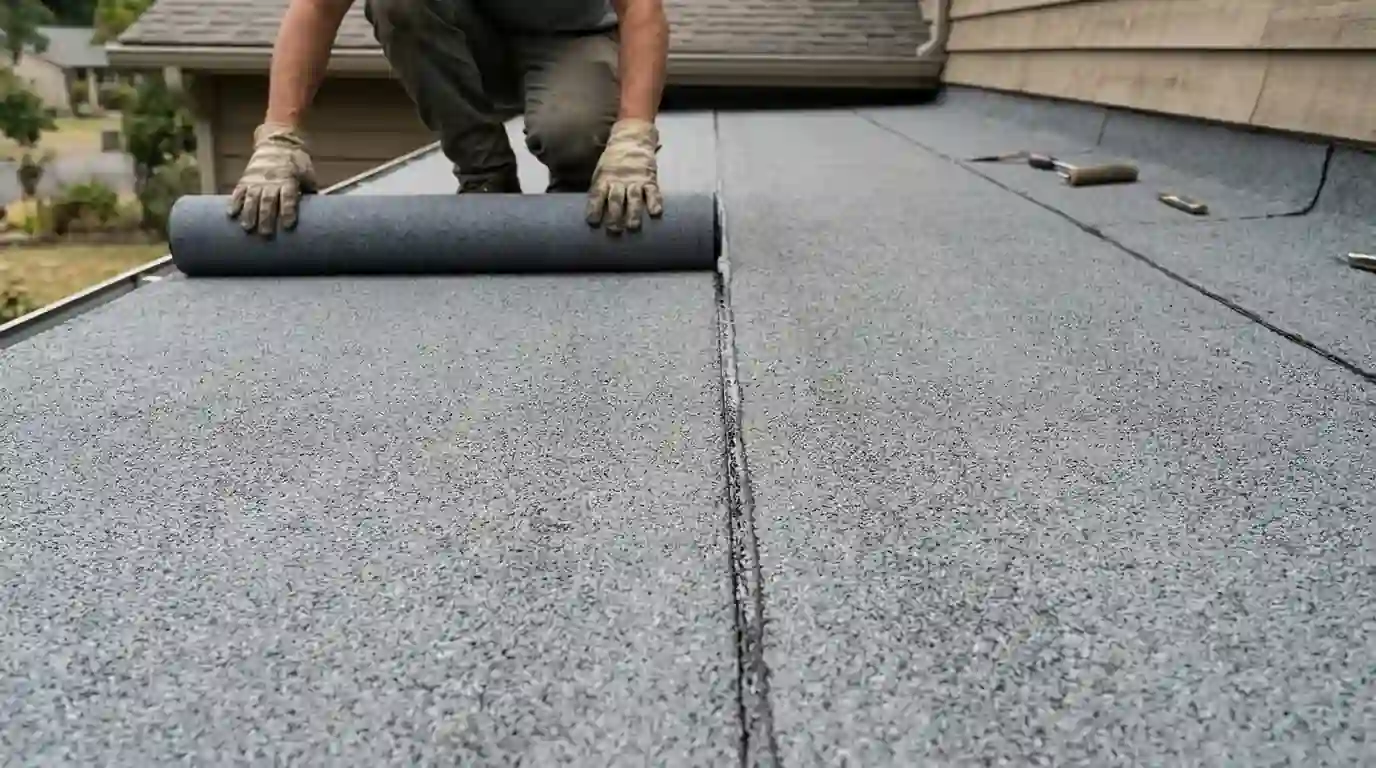
Older homes in neighborhoods like Castle Hills and Oak Hills often have additions built with minimal slope and rolled roofing that was never meant to last as long as the main roof. The joints between new and old roofing, along with parapets and scuppers, are where we find most of the leaks on these houses.
Ponding, blisters and open seams: what each one means
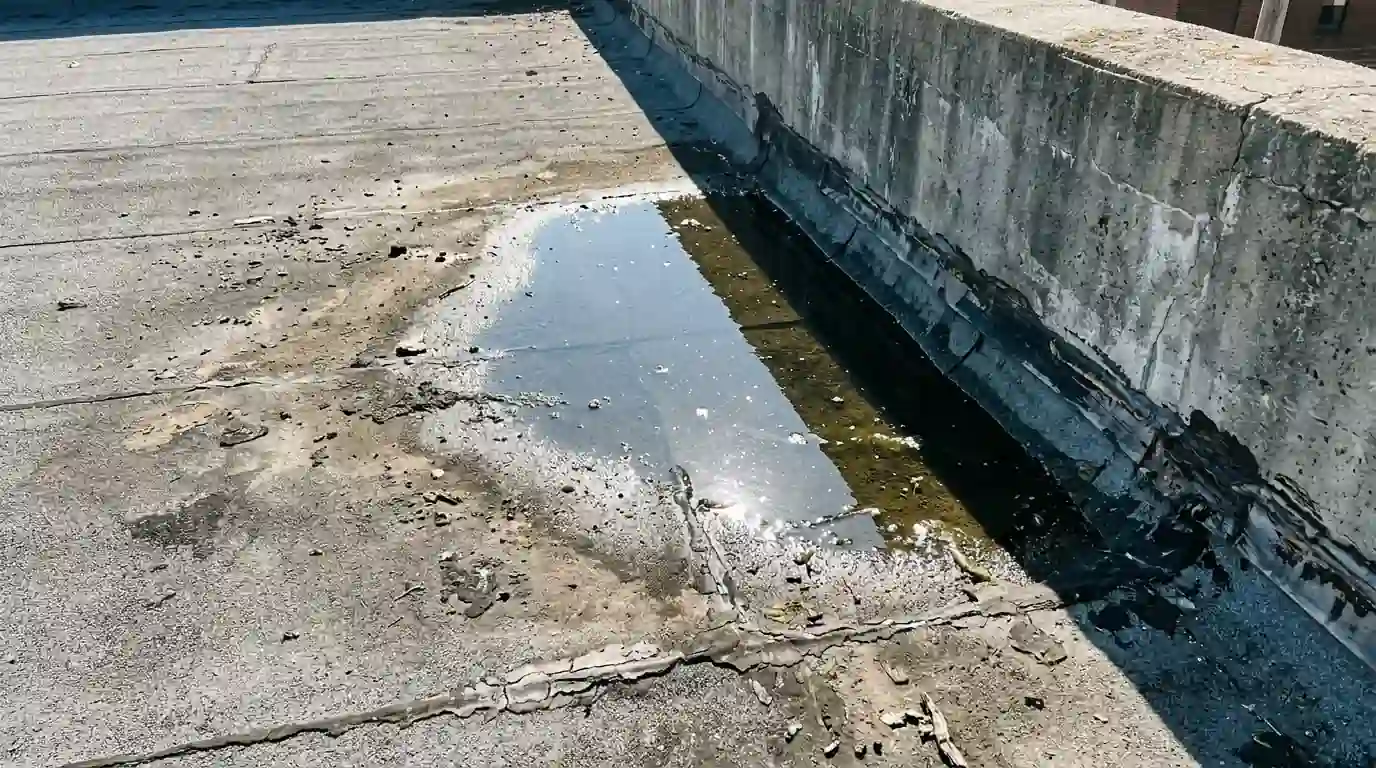
Ponding is water still sitting 48 hours after rain stops. It's common and not always urgent, but it shortens membrane life and adds weight to the deck. Fixes range from clearing a drain to adding tapered insulation or a small cricket that steers water to an edge.
Blisters are bubbles where moisture or air got trapped between layers. Small, firm blisters are often left alone and watched. Large or broken ones get cut open, dried and patched with matching material so water can't follow the opening into the plies below.
Split seams and open laps are the most direct leak path. On modified bitumen, we bond new cap material across the seam. On TPO, we clean the area and weld a cover strip. On built-up roofs, we cut back damaged plies and rebuild them layer by layer.
Finding the wet areas before any patch goes down
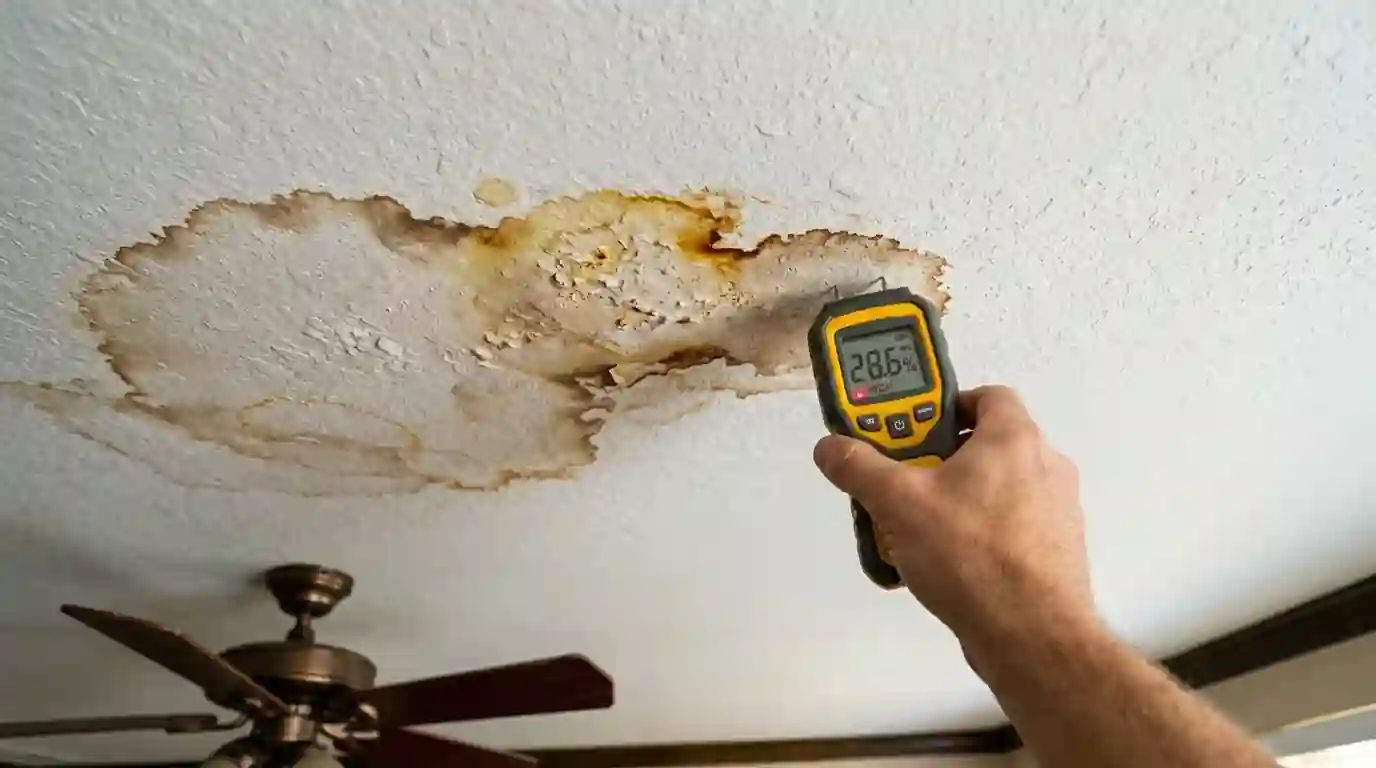
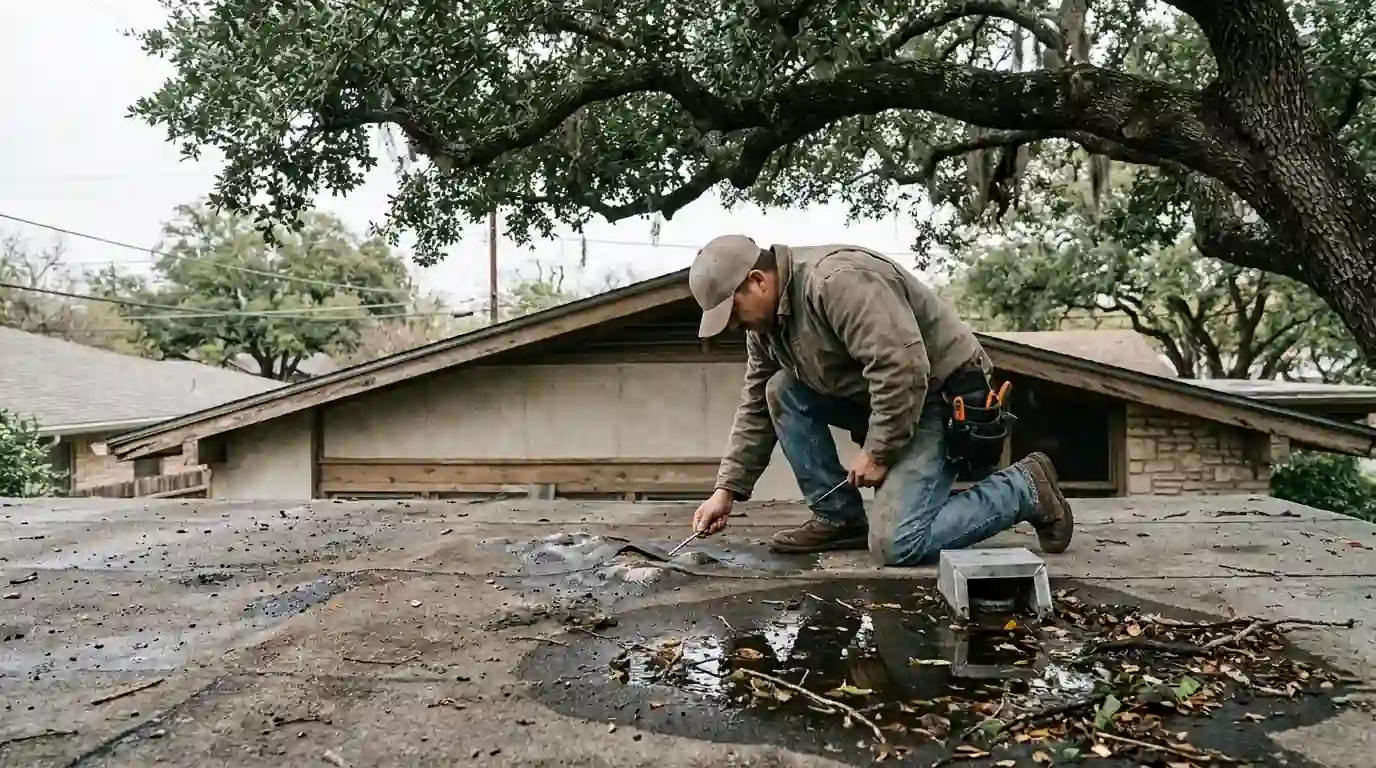
Water on a flat roof can travel well away from the opening before it drips into a room. We start at the ceiling stain, then work outward on the roof, probing for soft spots, checking around vents and edges, and running a moisture meter over suspect areas. On larger sections, a small test cut shows whether the insulation below is soaked.
Patching over wet insulation or rotten decking traps water and brings the same leak back. When we find saturated material, we remove and replace that area before covering it. Our leak tracing page explains how water moves through pitched roofs, and the same patience applies on a flat one.
When does repair stop making sense?
A flat roof with a few local problems is usually worth repairing. One with blisters across most of the surface, several patched seams or soft decking in multiple spots usually isn't. At that point, a new membrane often costs less than the next two rounds of patches combined.
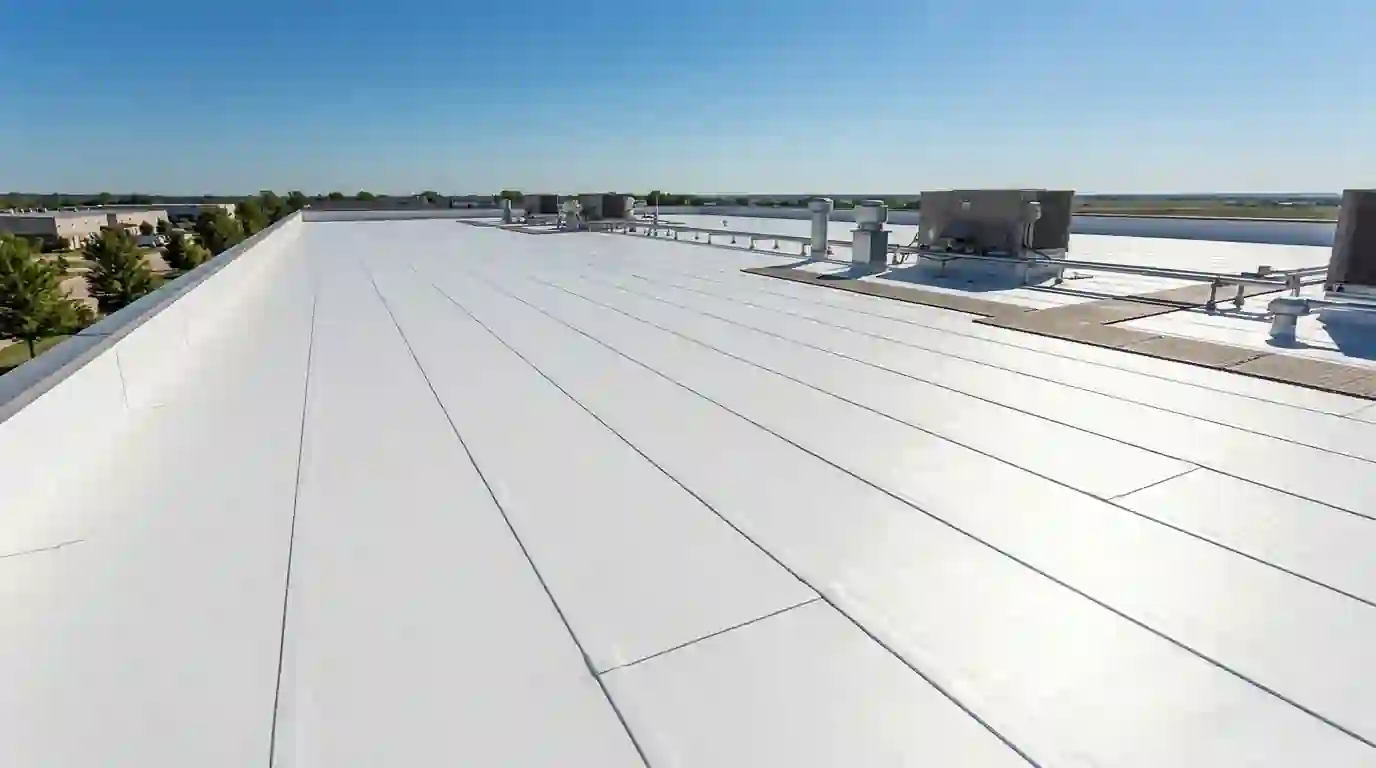
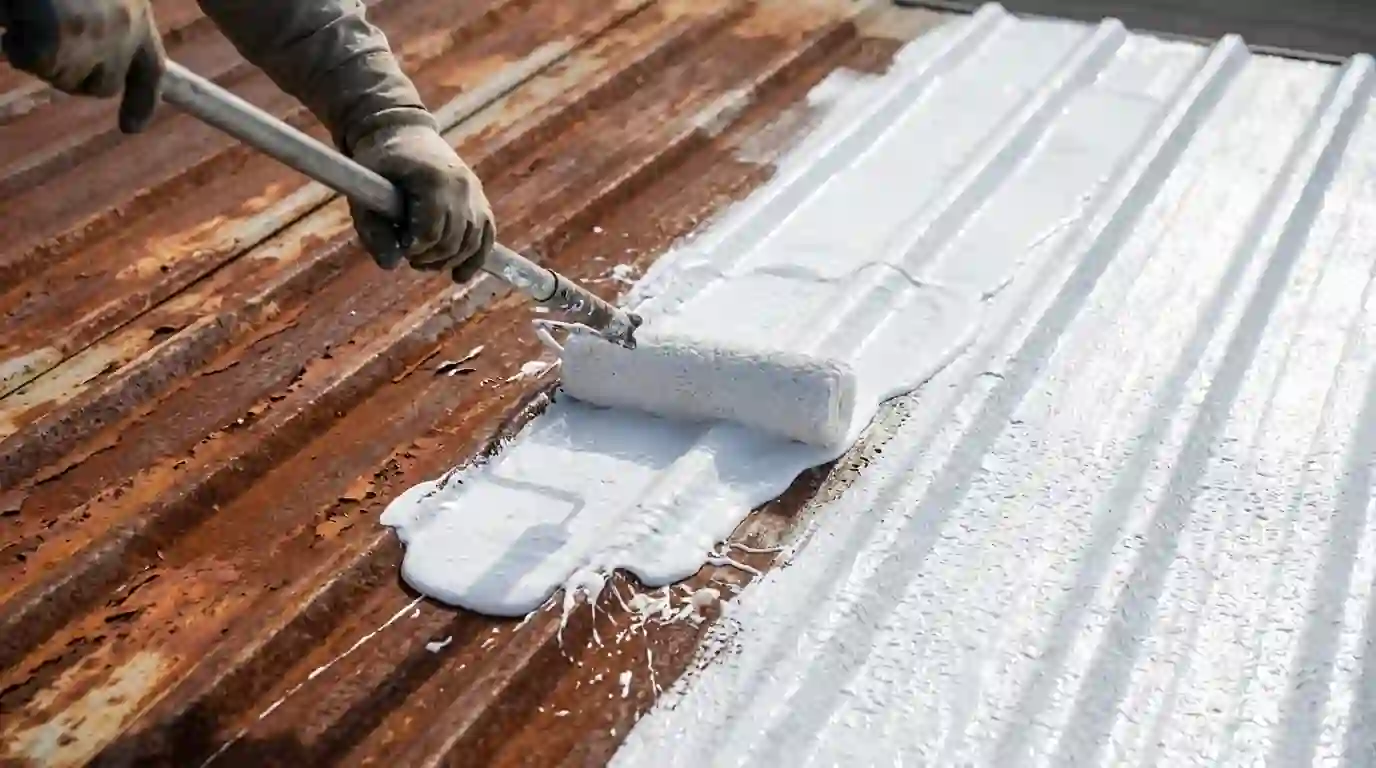
Replacement options depend on the building. Our guide to flat roof choices for older homes compares them, and we install white TPO membrane or modified bitumen when a section needs a full replacement. If the membrane is sound but worn, a coating can extend its life once repairs are done.
- Repair: one or two leaks with a clear source and dry surrounding material.
- Repair: isolated blisters or a single split seam on an otherwise flexible membrane.
- Replace: cracking or alligatoring across most of the roof surface.
- Replace: wet insulation or soft decking in several separate areas.
Edges, tie-ins and drainage details we check every time
Where a flat section meets a shingle roof or a wall, the transition flashing has to run up under the shingles or behind the wall surface. Many leaks come from these tie-ins rather than the open field of the membrane. We check edge metal, scuppers, gutters and any parapet cap for gaps, rust and failed sealant.
Drainage gets equal attention. A scupper packed with oak leaves can back water up across the whole section during a Texas downpour. We clear and test the drains, then talk through whether a larger scupper, a new downspout or a small cricket would keep water moving off the roof.