Why reflectivity matters on a South Texas flat roof
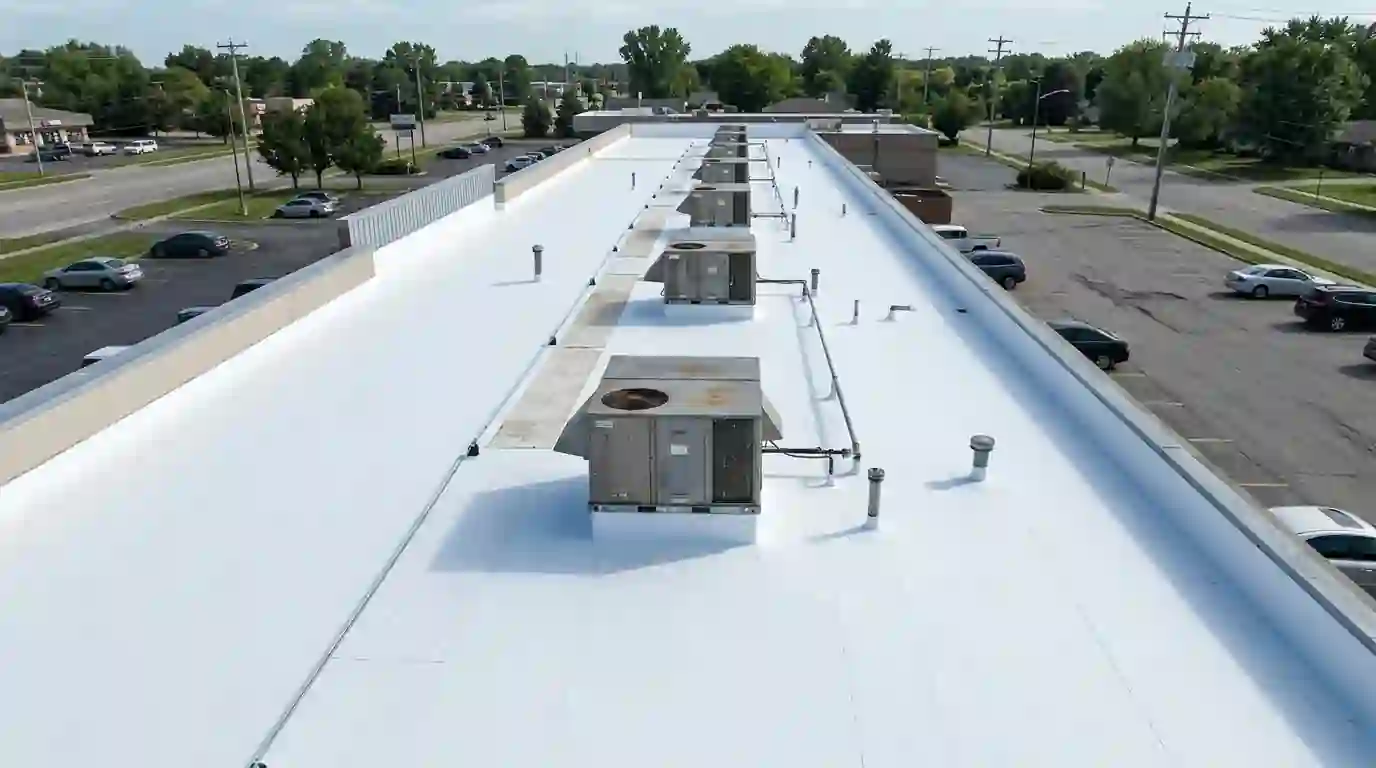
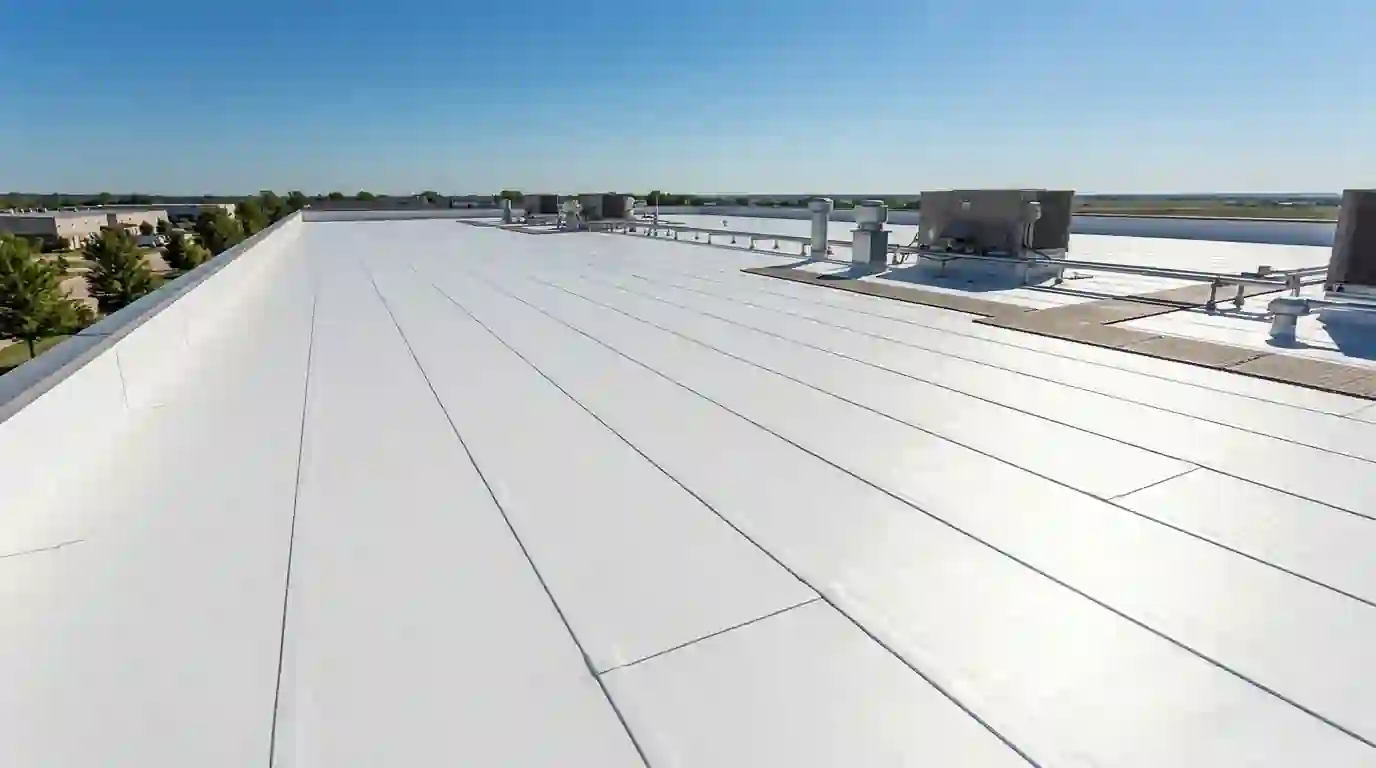
A dark flat roof in July soaks up sun all day, and that heat moves straight into the room below. White TPO reflects a large share of sunlight, so the membrane surface and the space under it stay noticeably cooler. That helps most on additions and converted garages that never seem to cool down as well as the rest of the house.
Cooler surfaces also slow material aging. Asphalt-based roofs harden and crack as they cycle between hot afternoons and mild nights. TPO is made to stay flexible through that cycling, though it still needs the right thickness and well-made seams to last. Pairing it with proper insulation does more for comfort than the membrane color alone.
Heat-welded seams are the big advantage
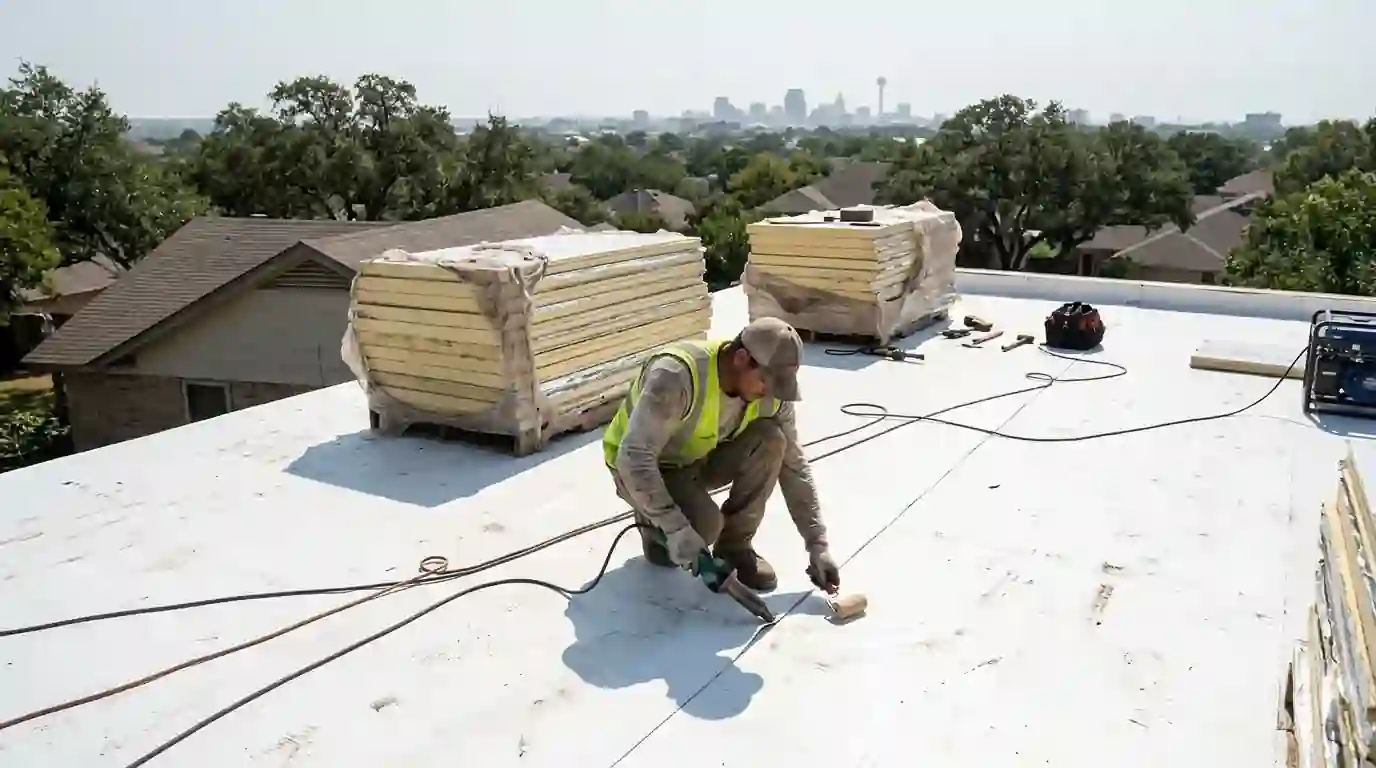
TPO seams are joined with a hot-air welder that melts the two sheets together into one continuous layer. Done right, the seam is as strong as the membrane itself. There's no adhesive to dry out and no tape to peel back after a few summers.
Seam quality is everything. We set welder temperature and speed for the day's conditions, which change a lot between a cool spring morning and a 100 degree afternoon. Every seam gets probed with a seam tool after welding, and any cold spots are rewelded before we leave. Corners, pipes and curbs use prefabricated or field-cut pieces welded in place.
What goes under the membrane: insulation and tapered systems
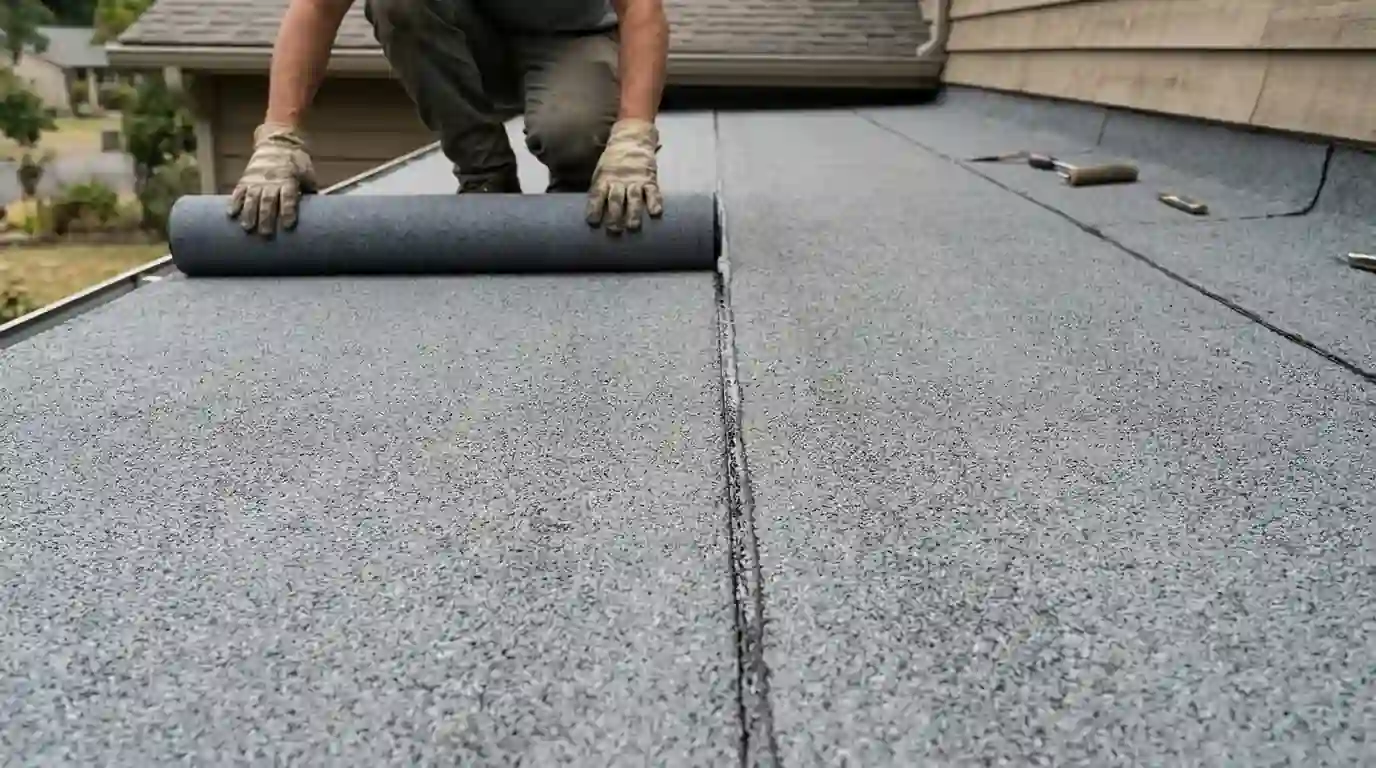
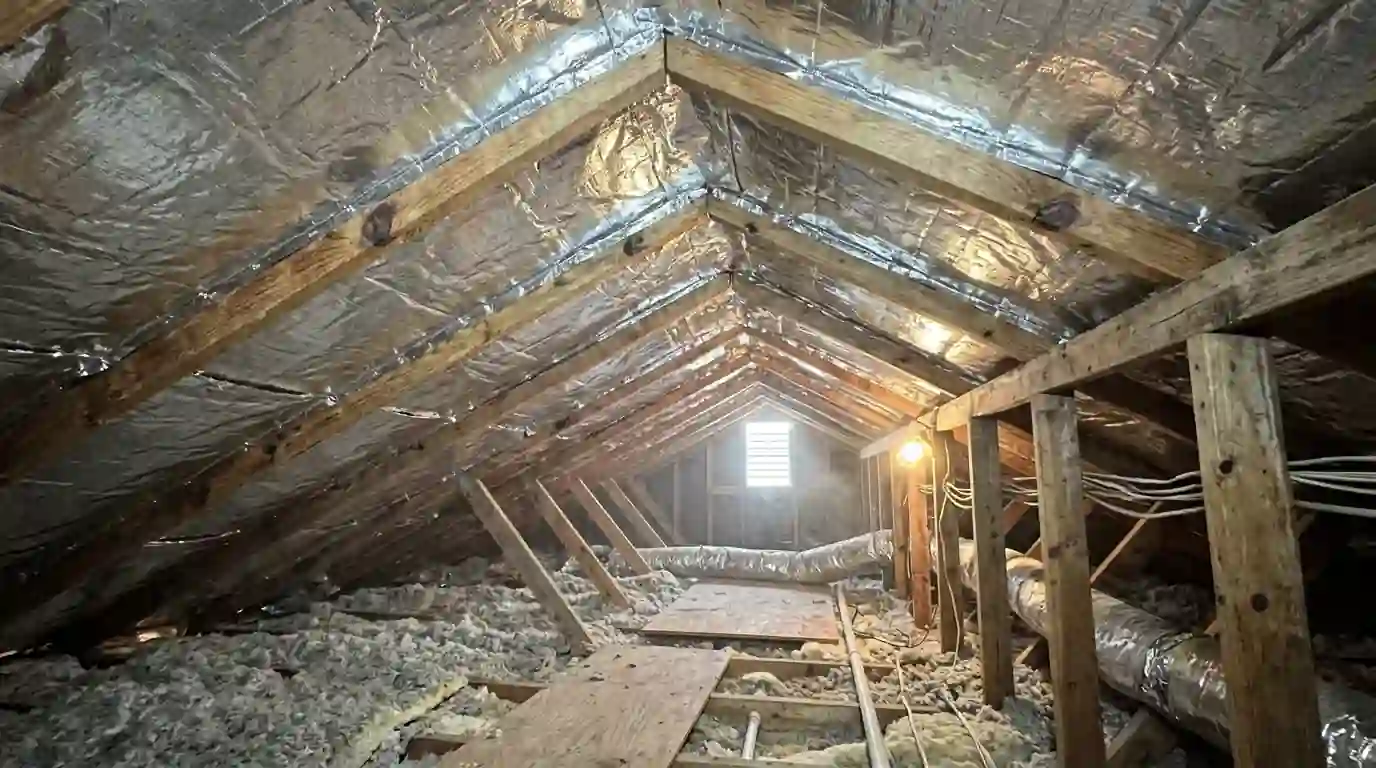
The membrane is only the top layer. Under it, we typically install polyiso insulation board and a cover board, fastened through to the deck. That gives the membrane a smooth, firm base and adds insulation that many older flat roofs lack entirely.
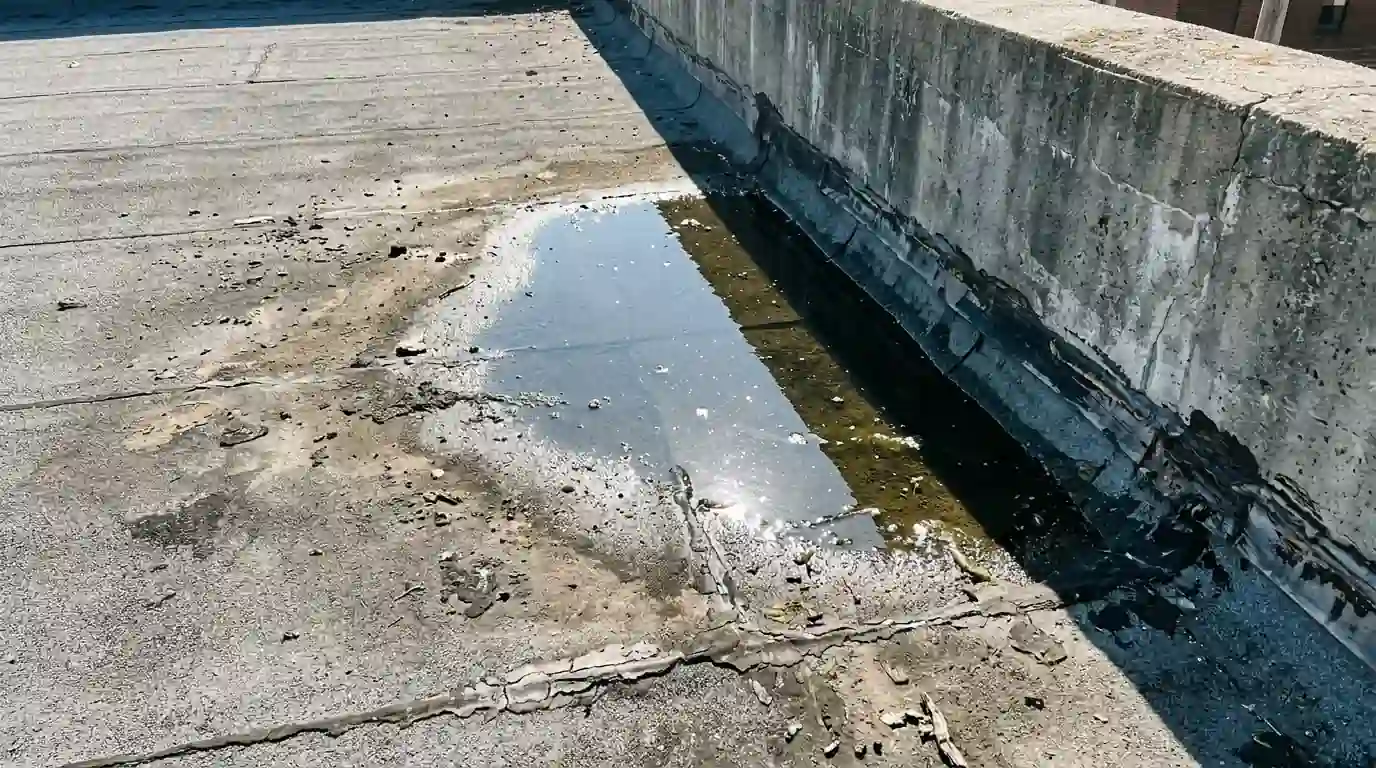
Where a roof holds water, tapered insulation can create slope toward drains or scuppers without rebuilding the framing. Crickets behind chimneys and curbs steer water around obstacles. Fixing drainage at this stage costs far less than chasing ponding after the new roof is on, and it's the single change that most extends membrane life.
Which TPO thickness and attachment fit your roof?
TPO comes in several thicknesses, most commonly 45, 60 and 80 mil. Thicker sheets resist punctures and UV wear better, which matters on roofs with foot traffic or regular HVAC service. For most San Antonio homes and small buildings, we recommend 60 mil as a sensible middle ground and explain when 80 mil earns its extra cost.
The membrane can be mechanically fastened with plates along the seams or fully adhered with bonding adhesive. Fully adhered systems resist wind flutter and look cleaner, while mechanically fastened systems often cost less on larger roofs. Your deck type, wind exposure and budget guide that choice, and we'll walk you through it on site.
Where TPO fits and where another membrane may be smarter
TPO is a strong choice for porches, additions, flat-roof homes and small offices or shops. Larger buildings such as retail strips and churches are covered on our commercial roofing page. For homes, our guide to low-slope roofing for older houses compares TPO with the other common choices.
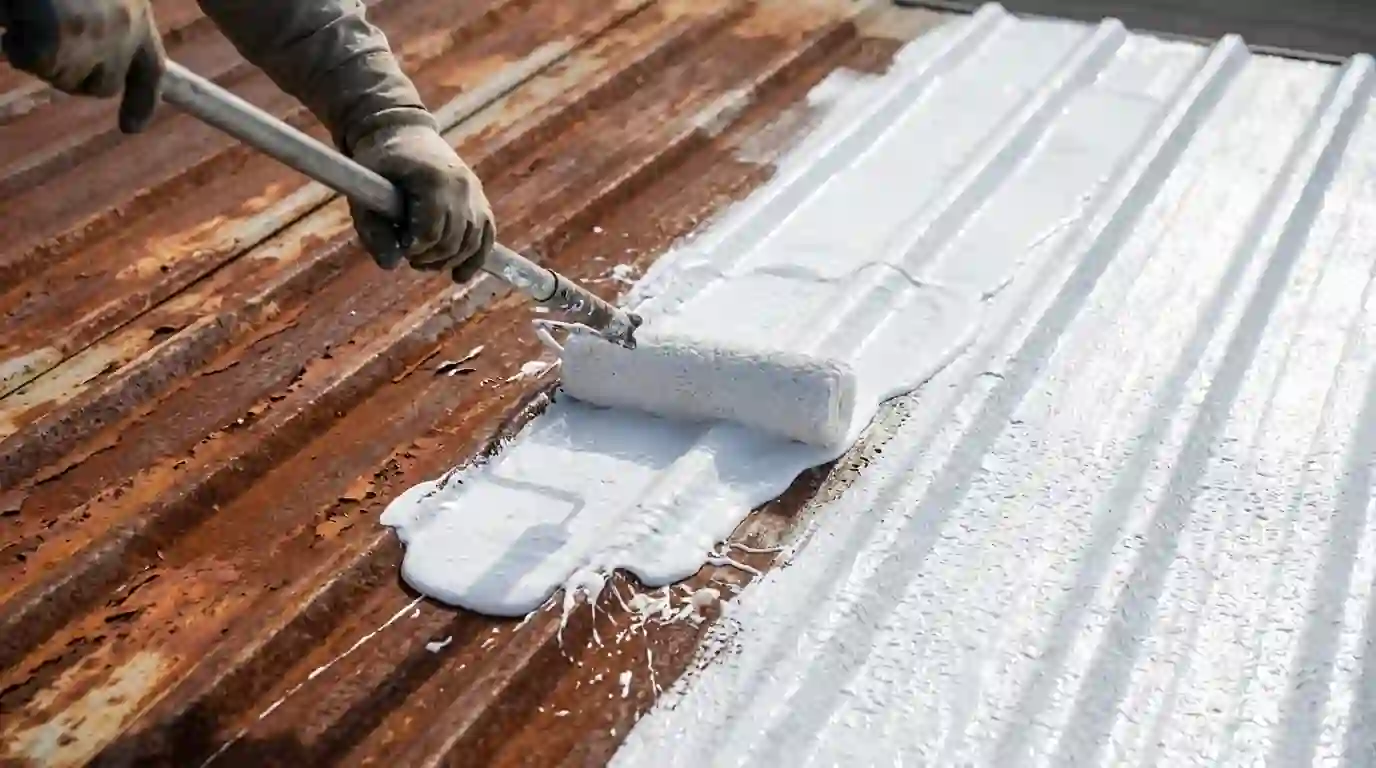
Modified bitumen can be the better call on small, cut-up sections with lots of tie-ins, or where heavy foot traffic is expected, and torch-down and self-adhered mod bit each have strengths TPO doesn't. If your current roof is sound but aging, a silicone restoration coating may buy time before a full replacement.