Why do gutters sag and pull away from the house?
Older gutters are often held up with long spikes driven through the gutter into the fascia. As the wood swells and shrinks through hot summers and wet spells, those spikes slowly back out. A gutter full of wet leaves and water is heavy, and the loosest spikes give way first, leaving a dip where water pools.
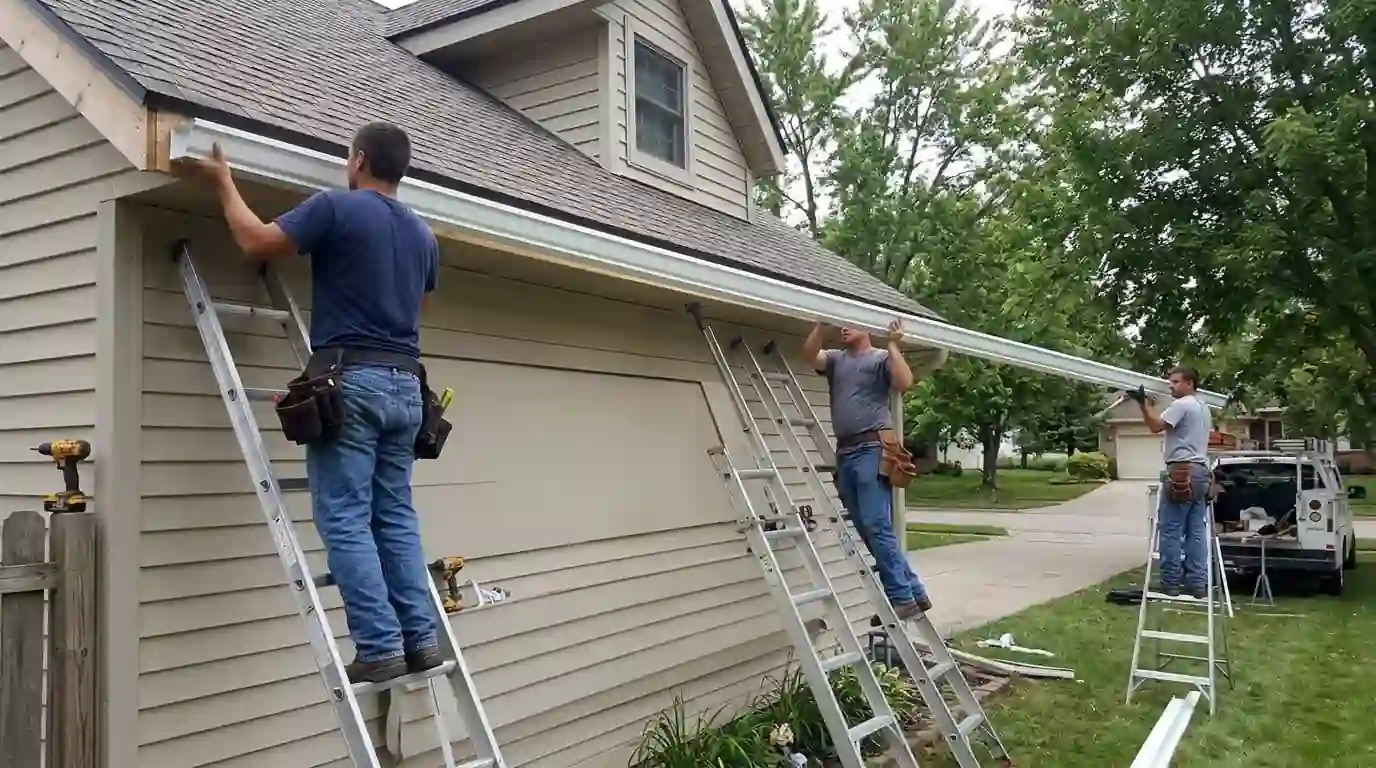
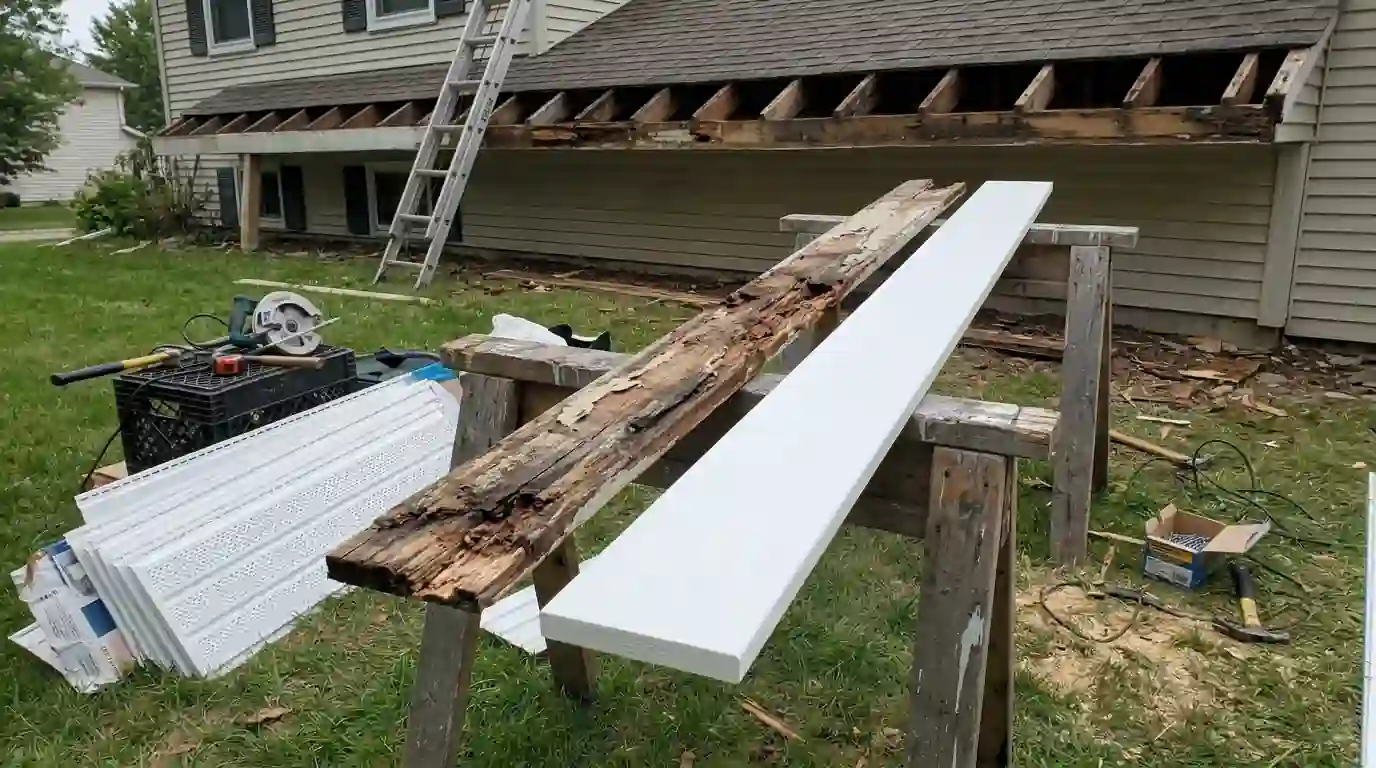
We replace failed spikes with hidden screw-in hangers and add extra ones at corners and downspout outlets, where the load is highest. If the fascia behind the gutter is soft, the hanger has nothing to bite into, so that board gets replaced first through our rotted fascia and soffit repair work before the gutter goes back up.
How do we stop corners, seams and end caps from leaking?
On seamless systems, nearly all leaks happen at mitered corners, end caps and downspout outlets. The original sealant dries out in our heat and lets go. Simply smearing more sealant on top rarely lasts, because it doesn't bond well to old, dirty sealant and oxidized aluminum.
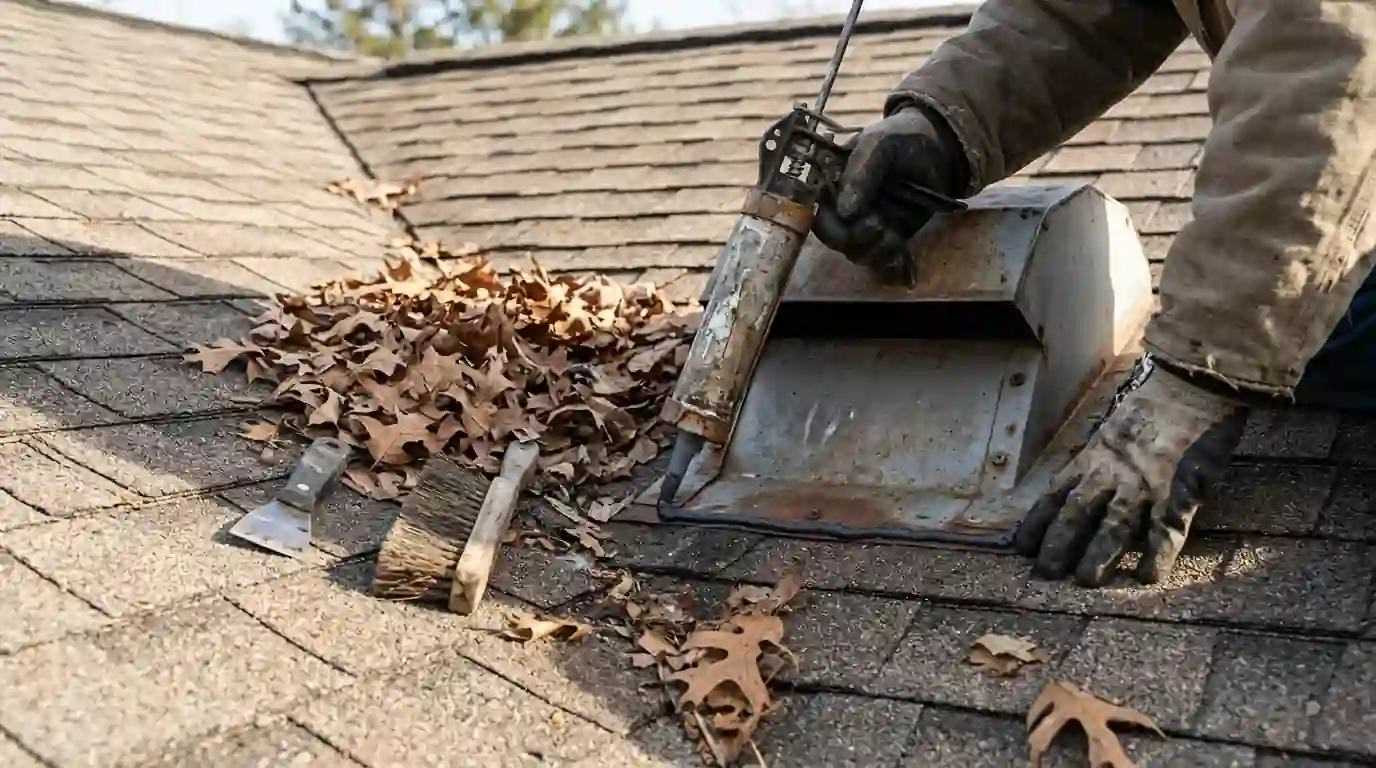
We clean the joint down to bare metal, remove the old sealant, re-rivet any loose pieces and apply a gutter sealant made for aluminum. Badly bent or corroded corners get replaced with new miters. On older sectional gutters with leaks at every joint, we'll tell you honestly when new seamless runs make more sense than resealing ten seams.
What if water stands in the gutter after a storm?
Standing water usually means the run has lost its slope. Gutters should fall slightly toward each downspout, and a sagging middle or a settled end reverses that. Standing water breeds mosquitoes, adds weight that pulls hangers further loose, and speeds up corrosion at the low point, where leaves and grit settle and stay wet between rains.
We check the pitch with a level, reset hangers to restore a steady fall and confirm water drains by running a hose through it. Sometimes the fix is an extra downspout in the middle of a long run so water has two ways out. That's especially useful on long back runs that collect from a valley during sudden San Antonio downpours.
Which gutter guards actually work under live oaks?
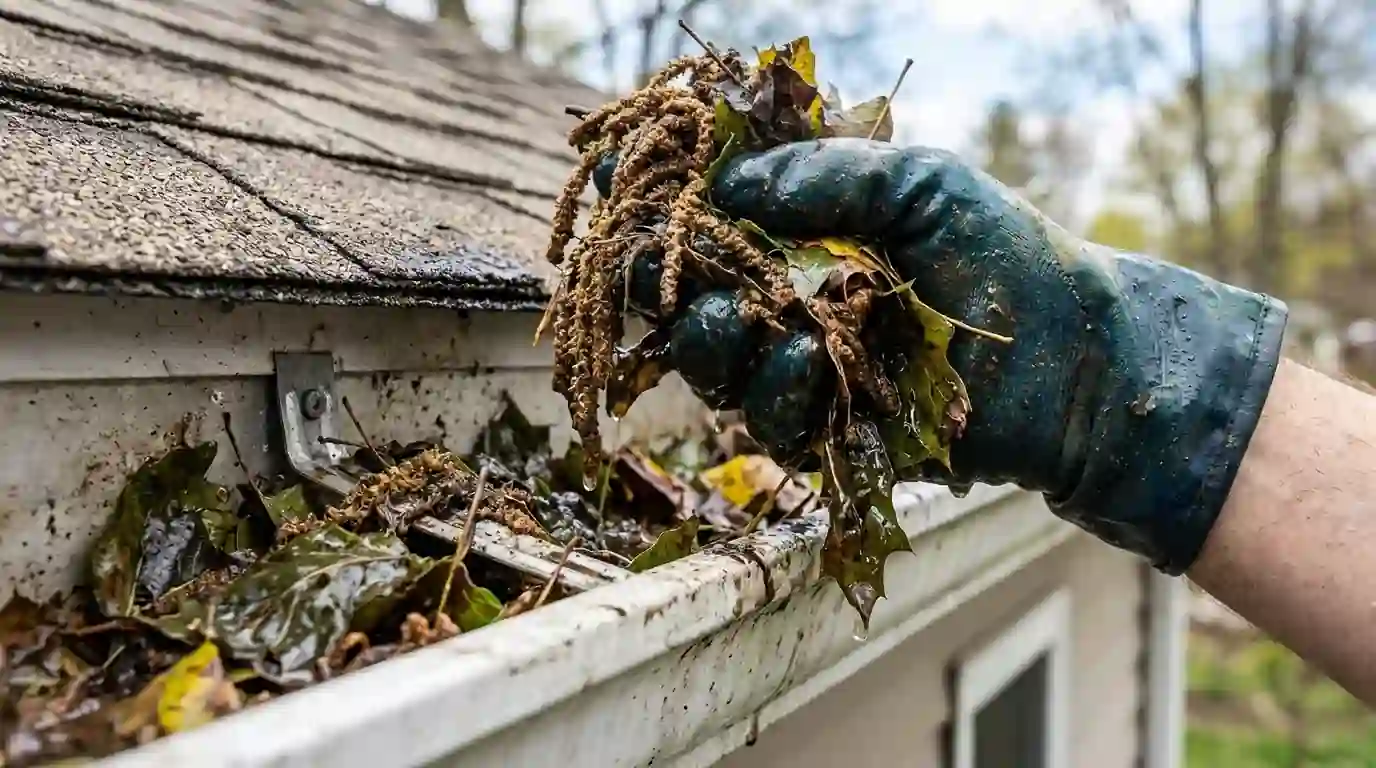
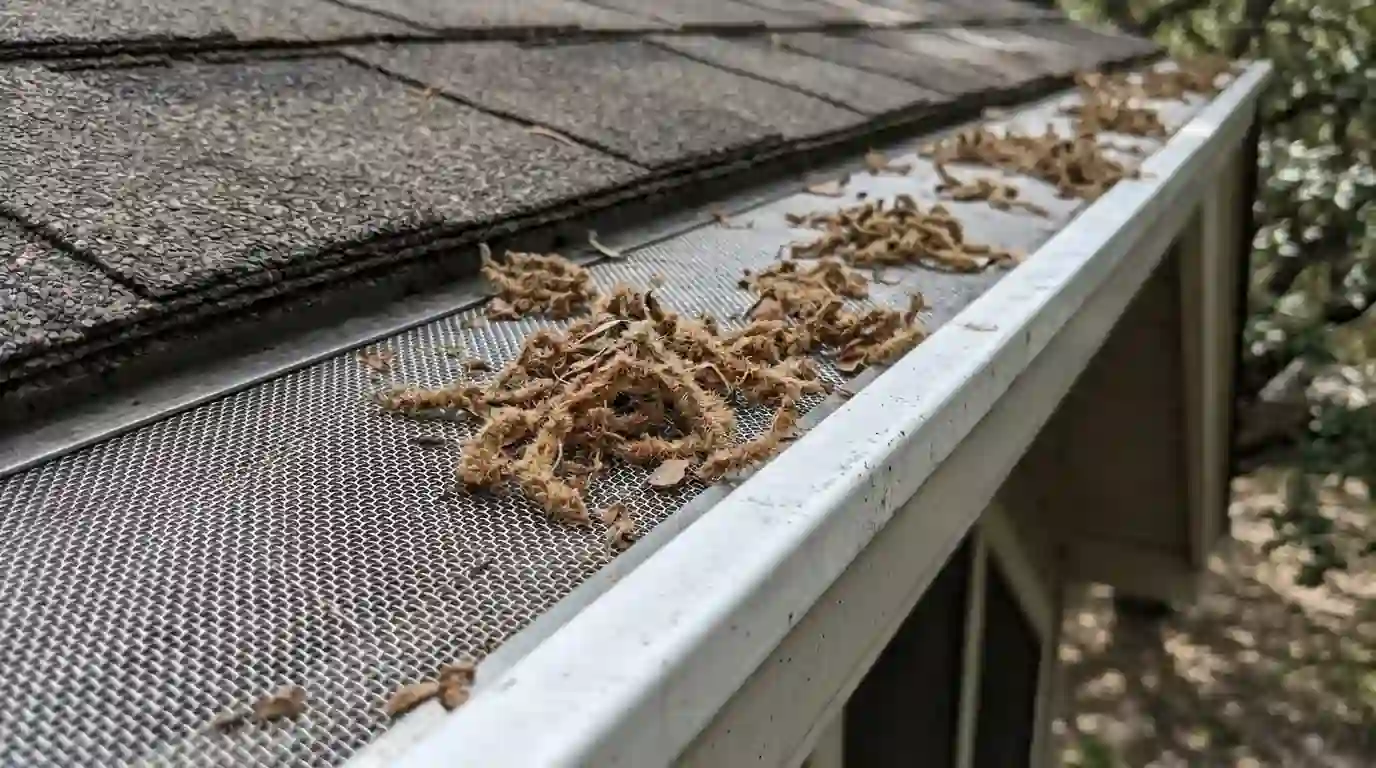
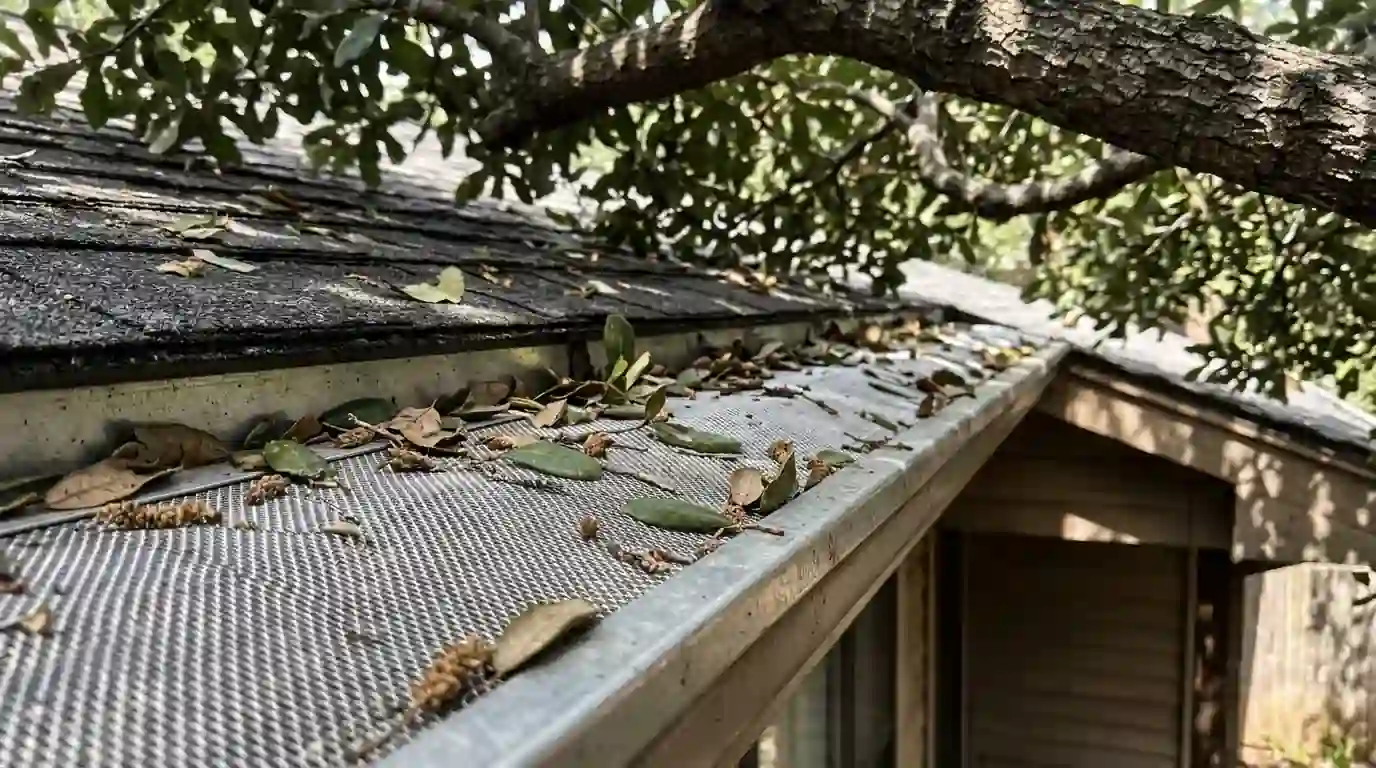
Live oaks are the main reason homeowners here want guards. They drop small leaves through spring and a heavy load of tassels in March and April, along with fine pollen. Simple plastic screens and coarse metal grates let tassels slip through and clog the gutter underneath, while foam inserts trap debris and grow mold.
Stainless steel micro-mesh guards handle oak debris most reliably. The fine mesh blocks tassels and small leaves while letting water pass, and the debris dries on top and blows off. Reverse-curve or surface-tension hoods work on larger leaves but can overshoot water in a heavy downpour on steep roofs, so we use them less often here.
- Micro-mesh guards handle tassels, small leaves and pollen better than any other type we install.
- Perforated aluminum covers suit homes with larger leaves, like pecan or sycamore, and fewer tassels.
- Plastic snap-in screens are inexpensive but sag in summer heat and let tassels through.
- Foam inserts hold wet debris and tend to grow mold, so we don't recommend them under oaks.
- Every guard still needs an occasional rinse on top, especially after heavy pollen weeks.
Can guards go on gutters that already have problems?
Guards protect a working gutter; they don't fix a broken one. Before we install, we clean out the gutter, rehang sagging spots and reseal leaking joints. Installing guards on top of a sagging, leaking run just hides the problem until it shows up as a stained wall or a puddle by the foundation.
If the gutter is full of compacted debris, a cleaning comes first, which is covered under our gutter and downspout cleaning visit. We also check that guards won't slide under the first row of shingles in a way that lifts them or voids the roof manufacturer's instructions. Call (210) 750-1898 if you'd like us to look at your gutters and trees together.