Which roof system fits a small San Antonio building?
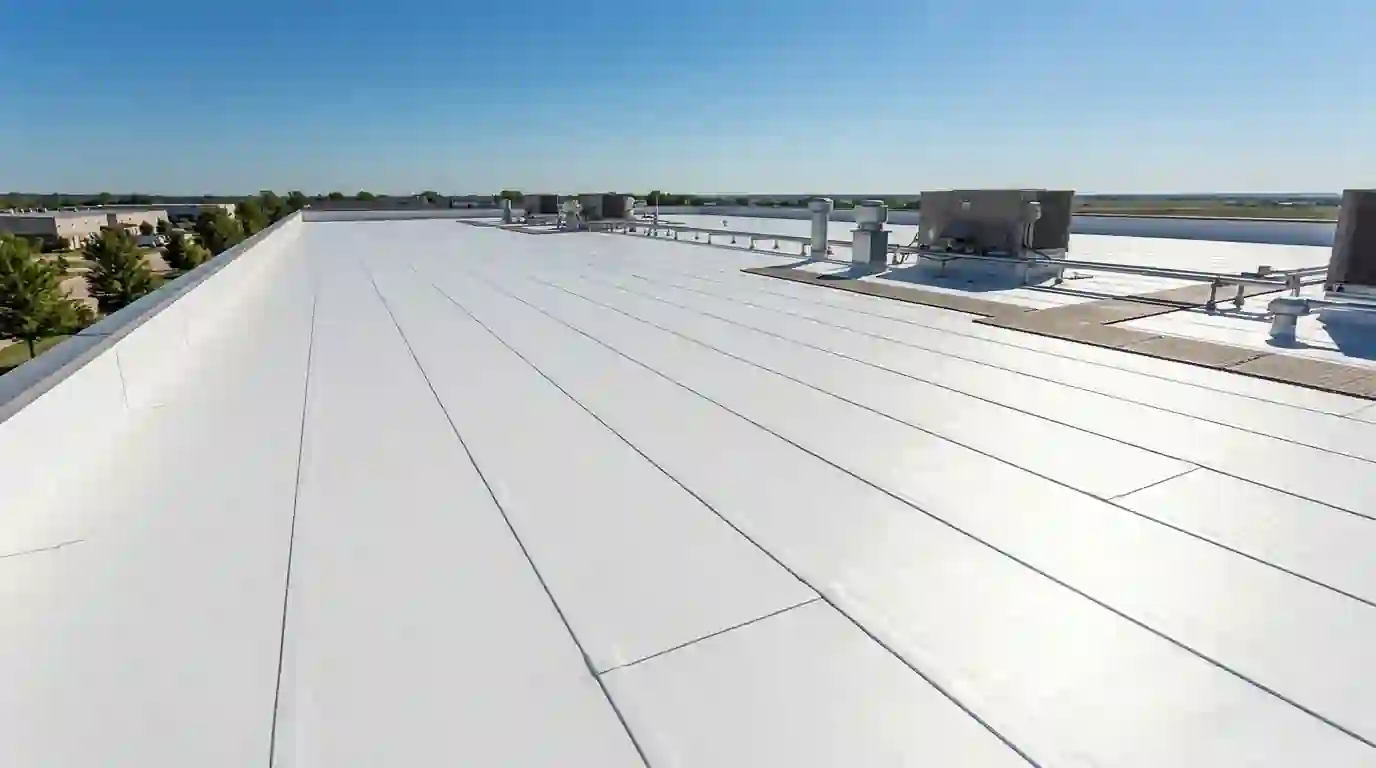
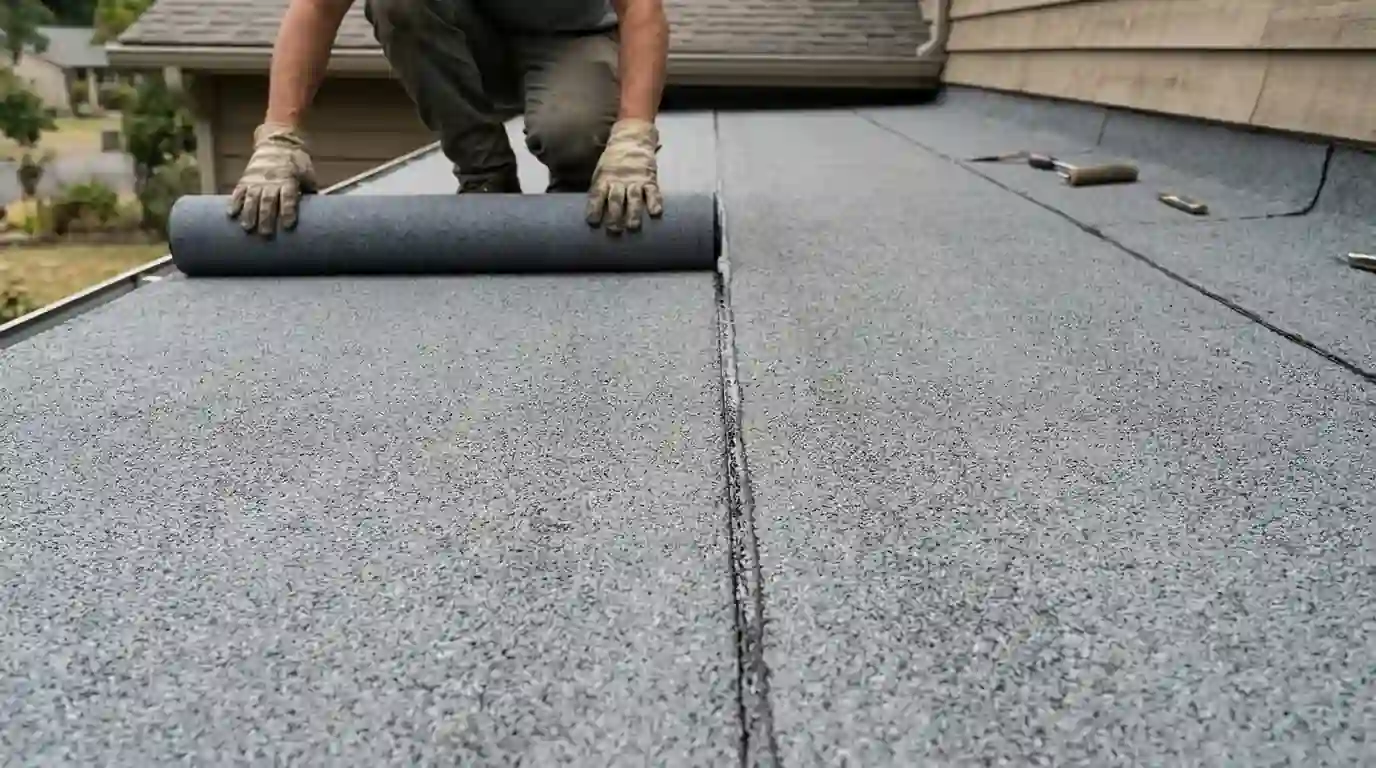
For flat retail and office roofs, white TPO is the most common choice because it reflects heat, welds into continuous seams and costs less per square foot than many alternatives. Modified bitumen works well on smaller roofs with lots of foot traffic or tight details. Standing seam or R-panel metal suits pitched sections on churches, warehouses and newer office buildings.
The right pick also depends on what's under the roof. Restaurants with grease exhaust need membranes that resist grease. Buildings with lots of rooftop HVAC need walkway pads and thicker membrane. Metal is often favored where hail exposure is high, provided the panels and fasteners are specified properly. Our TPO membrane page covers that system in more depth.
Phasing work around tenants and business hours
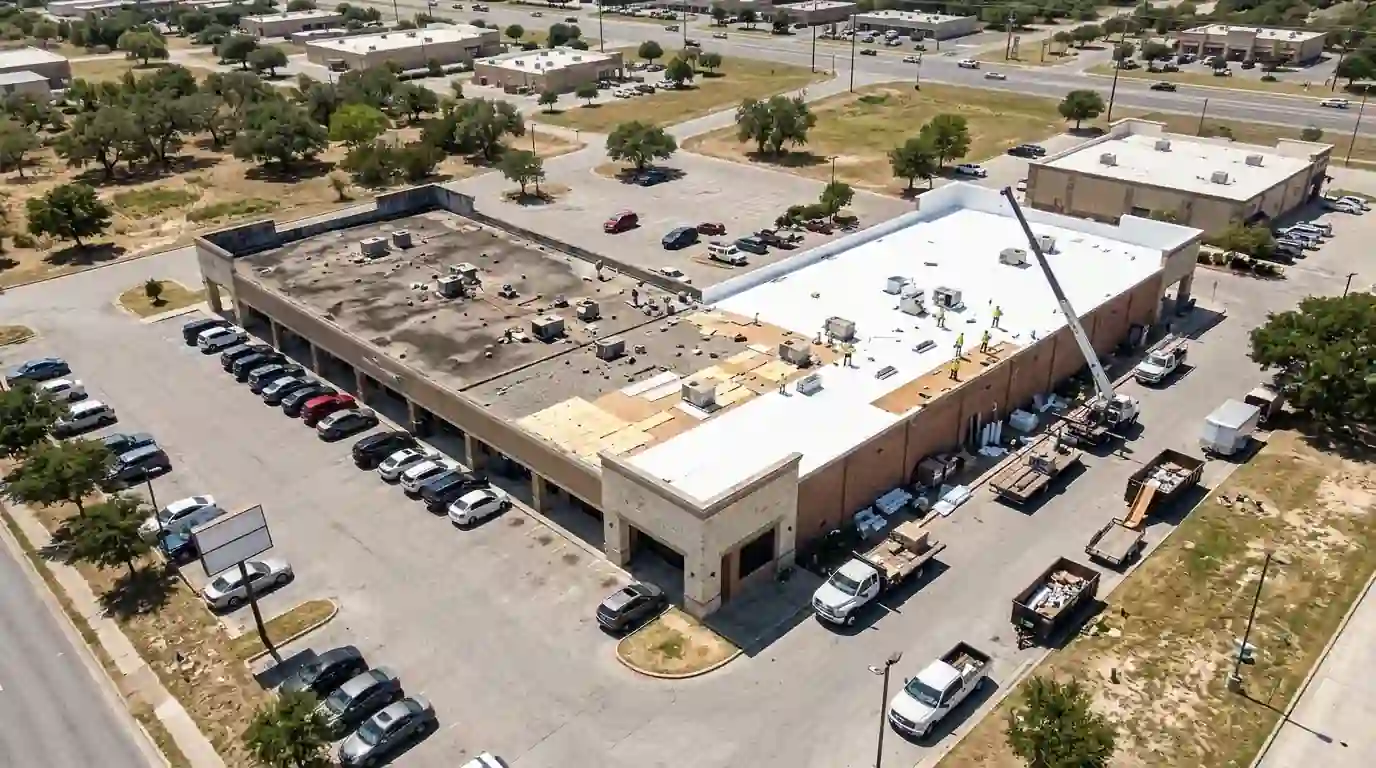
Most small commercial owners can't close a building for a roof. We break the job into sections that can be torn off and dried in on the same day, so no area is left open overnight. Noisy tear-off can be scheduled for early mornings or weekends near offices and medical suites.
Before work begins, we walk the building with you or your property manager to identify sensitive spaces such as server rooms, inventory storage, kitchens and patient areas. Tenants get advance notice of dates and which entrances may be affected. Dumpsters and material staging are placed to keep parking and storefronts usable.
Drainage, parapets and rooftop equipment
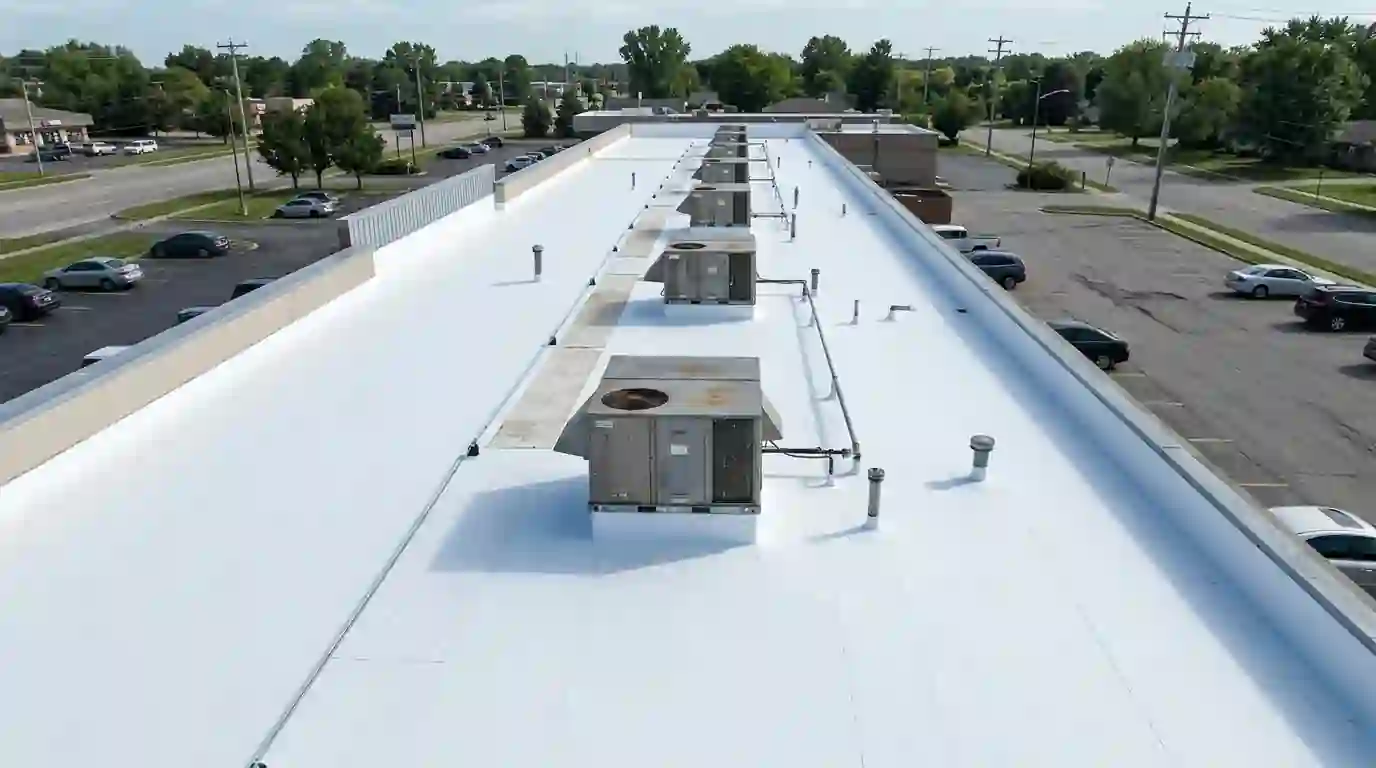
Many commercial leaks trace back to drainage. A new roof is the time to correct low areas with tapered insulation, add crickets behind rooftop units and confirm that drains, scuppers and overflow outlets are sized for heavy Texas rain. Parapet walls get new coping or cap flashing, and wall membranes run high enough to stop wind-driven water.
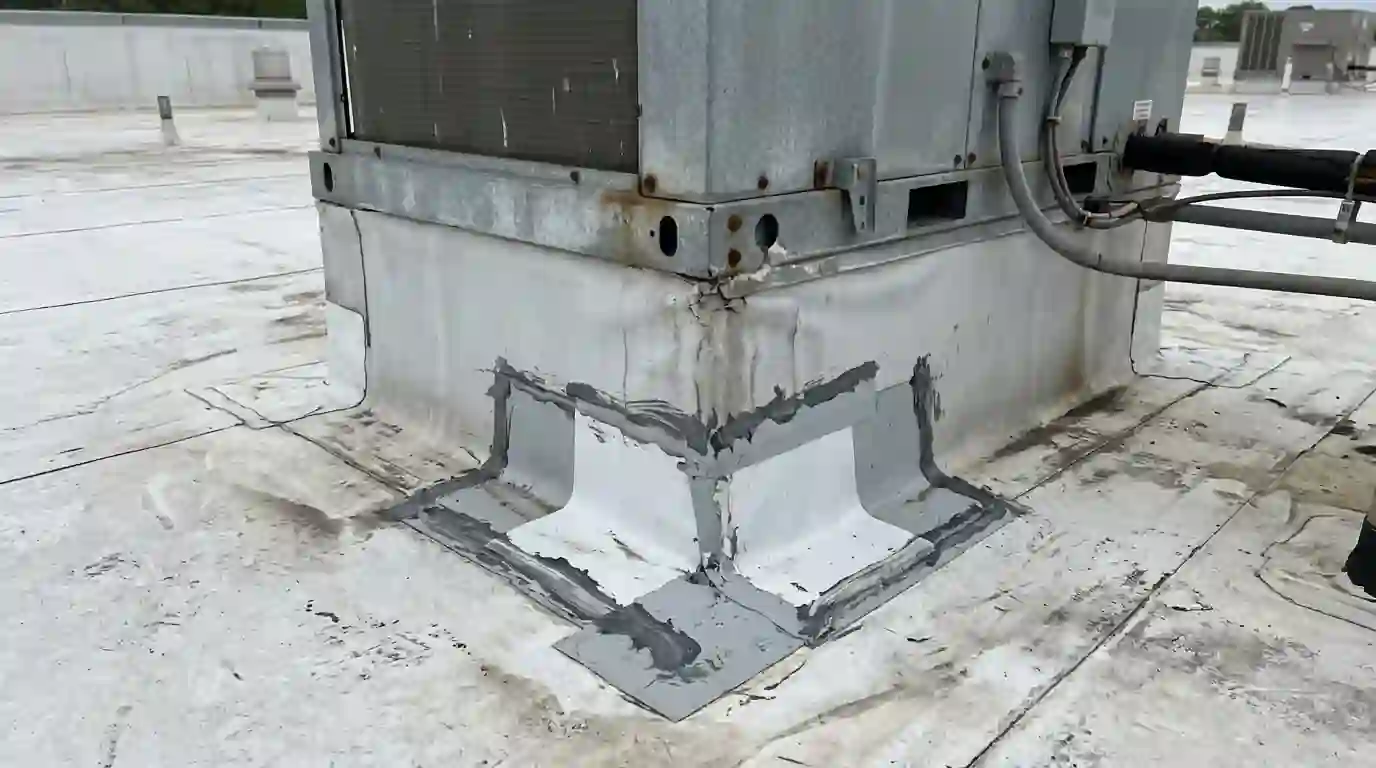
Rooftop units, exhaust fans and gas lines need curbs and flashings built to the new system. We coordinate with your HVAC contractor when units must be lifted or disconnected. For issues on an existing roof, such as leaks at units or drains, our commercial repair service is usually the faster starting point.
Recover, restore or tear off?
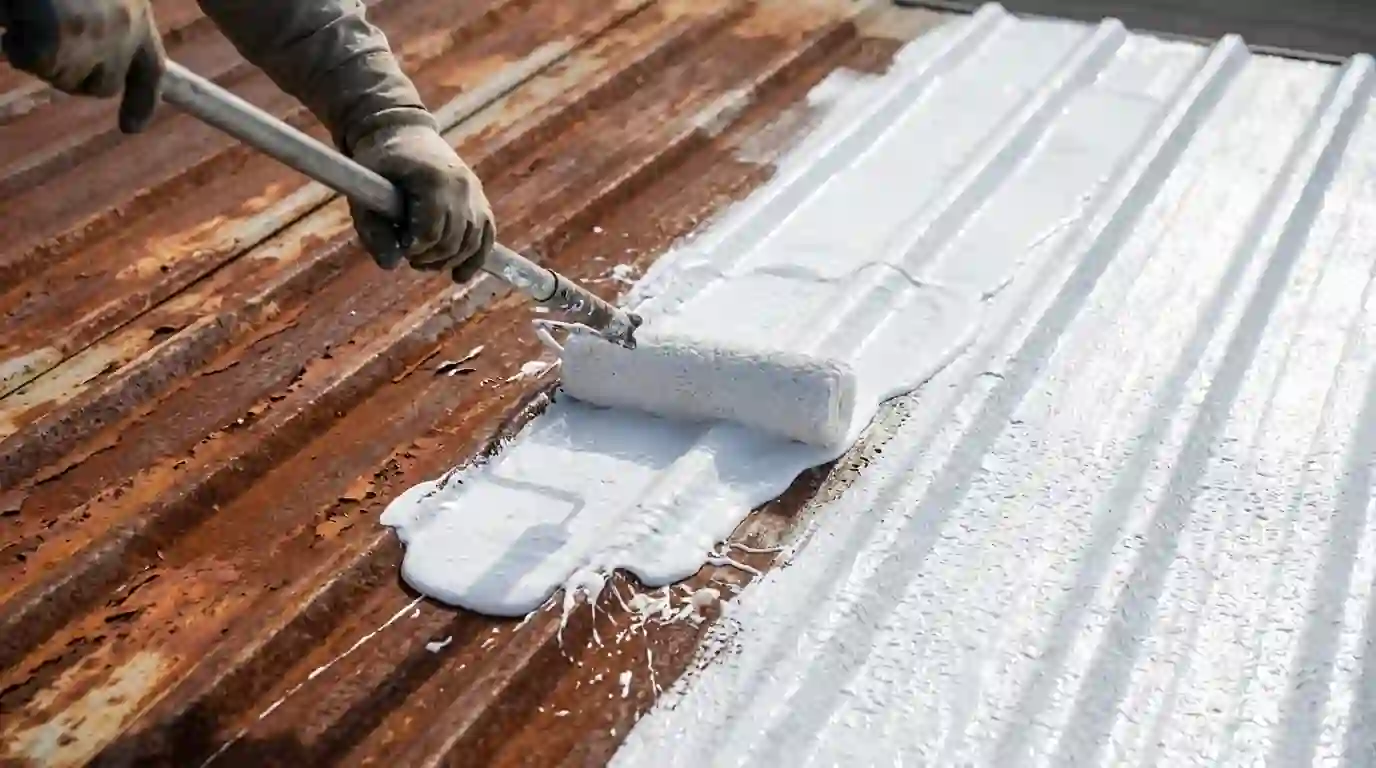
Not every commercial roof needs a full tear-off. If there's only one existing roof layer and the insulation is dry, a recover over the existing roof may be allowed and can cost less. If the membrane is sound but aged, a silicone restoration can extend its life for several years at a fraction of replacement cost.
A tear-off is the right call when insulation is wet, the deck is damaged, or the roof already has two layers. We confirm with a moisture survey and core cuts, then give you a side-by-side comparison of options so budgeting and planning make sense across your property.
How should you plan a commercial reroof around San Antonio weather?
Spring is hail season here, roughly March through June, and it's also when many owners discover leaks. If your roof is near the end of its life, scheduling replacement for late summer or fall avoids racing storms with half the building open. When timing can't wait, we limit each day's tear-off to what can be fully dried in before evening.
Summer heat changes the work as well. Membrane adhesives and seam welders behave differently on a 100 degree afternoon than on a cool morning, so we start early, adjust equipment settings through the day and keep crews hydrated. Budget planning matters too: many boards and owners set aside roof funds a year ahead, so an early assessment gives you numbers in time for the next budget cycle.
Documentation for owners, managers and boards
Church boards, apartment owners and property managers usually need more than a single price. We provide a written scope, roof plan sketch, core findings, photos of existing conditions and a phasing schedule. During the job, you get progress photos of each section, including details that will be covered, such as insulation and flashing.
At the end, we hand over product data, a roof plan showing drains and equipment, and maintenance recommendations. If storm damage is involved, our insurance claim support explains how we document conditions for adjusters while staying within Texas rules for contractors.