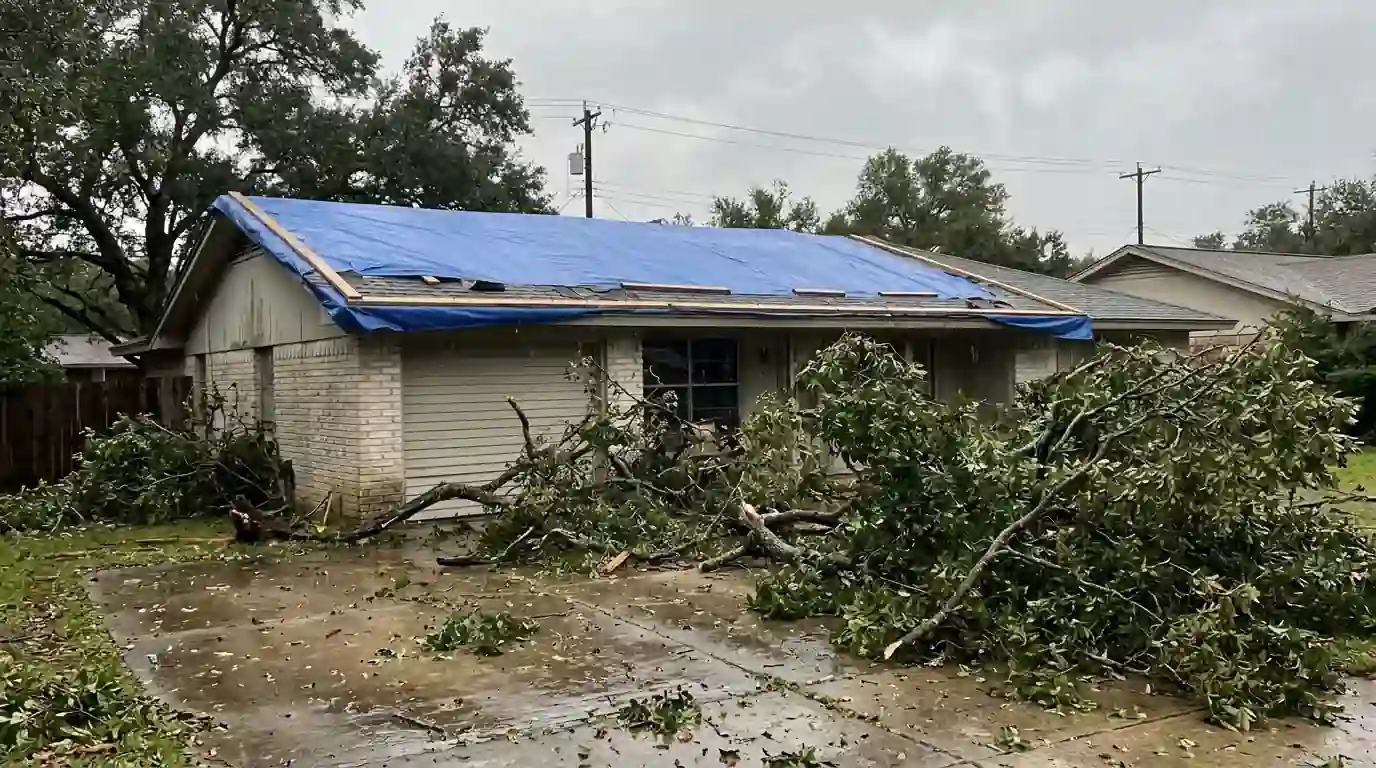
When does a roof need a tarp instead of a quick patch?
Small openings, like a few missing shingles or a torn pipe boot, can often be closed with a temporary patch or even a permanent repair on the spot. A tarp is the right call when the damaged area is too large to patch, when more rain is coming before materials are available, or when the decking itself is broken.
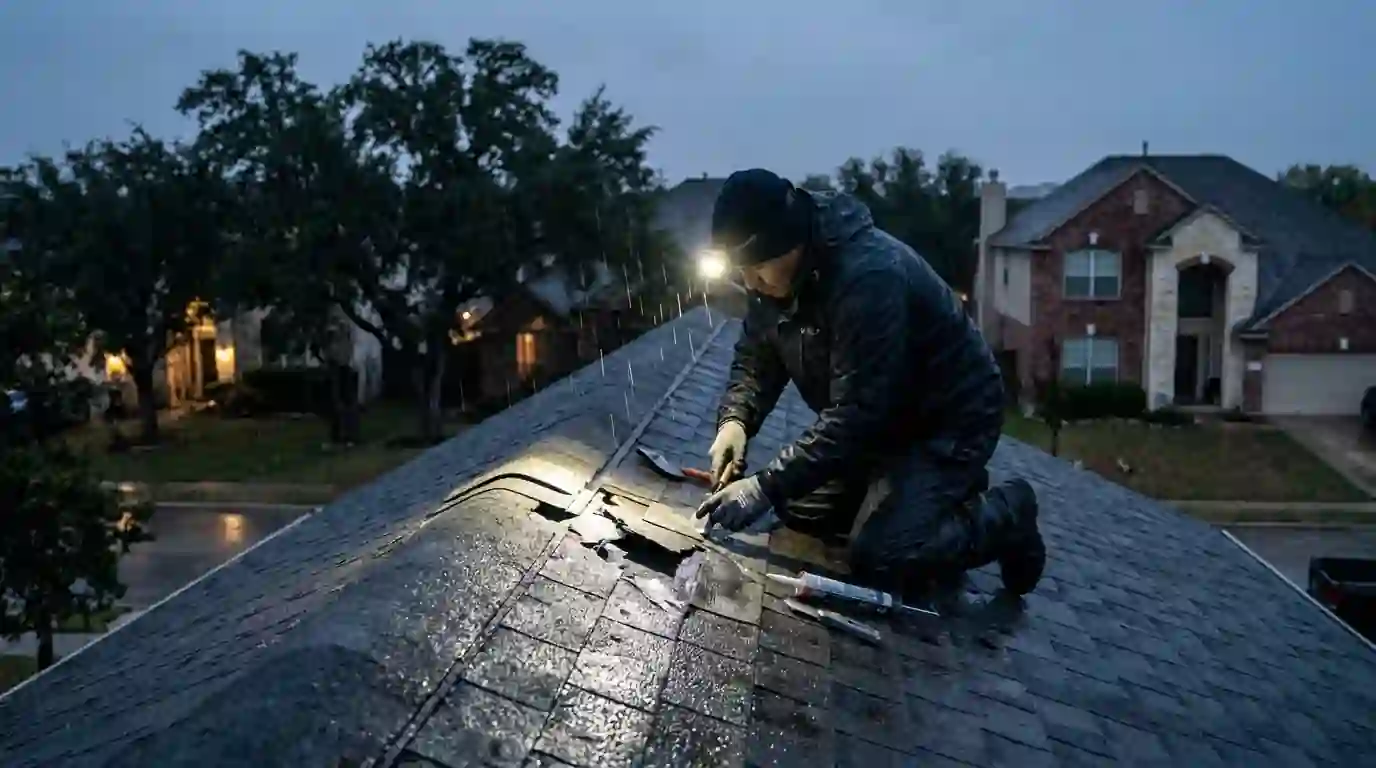
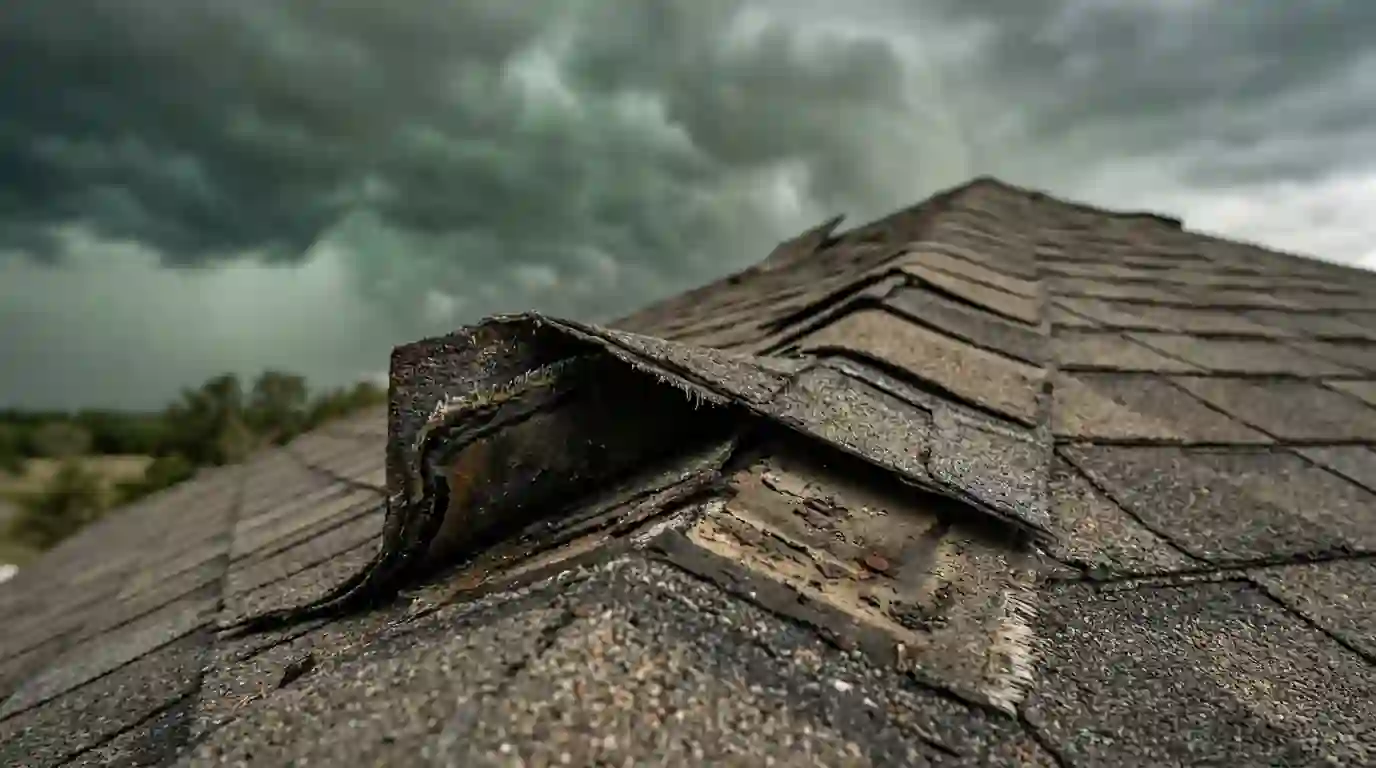
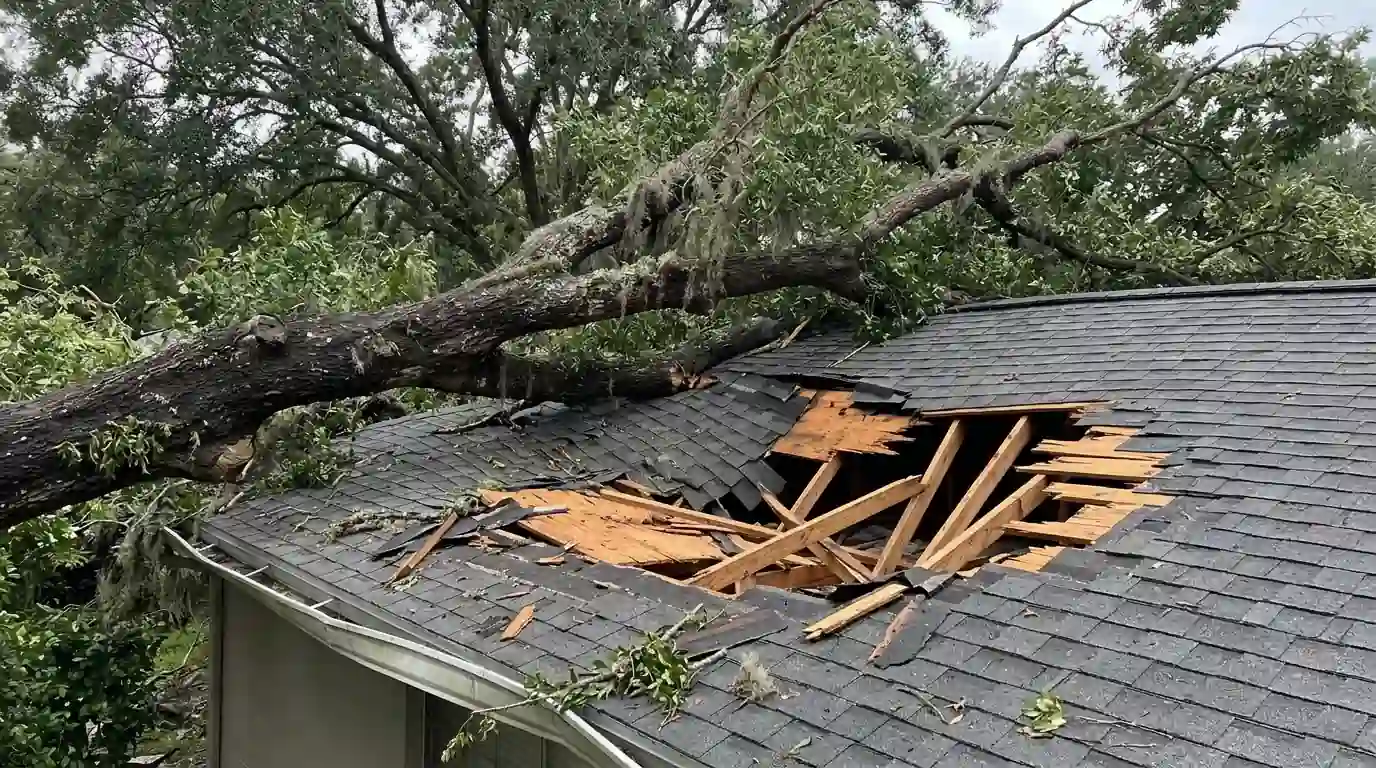
Common tarp situations in San Antonio include sections of shingles stripped by straight-line winds, a limb hole through the decking, large hail breakage on a tile roof, and roofs waiting on an adjuster's visit. If you're not sure whether you need a tarp or a fix, our after-hours emergency repair team will decide on site.
How do battens and sandbags compare for holding a tarp down?
Sandbags are quick and don't put new holes in the roof, so some crews use them for very short-term cover. In practice, they shift in wind, slide on steep pitches and let the tarp edges flap. Every flap rubs the shingles below and lets wind-driven rain blow underneath.
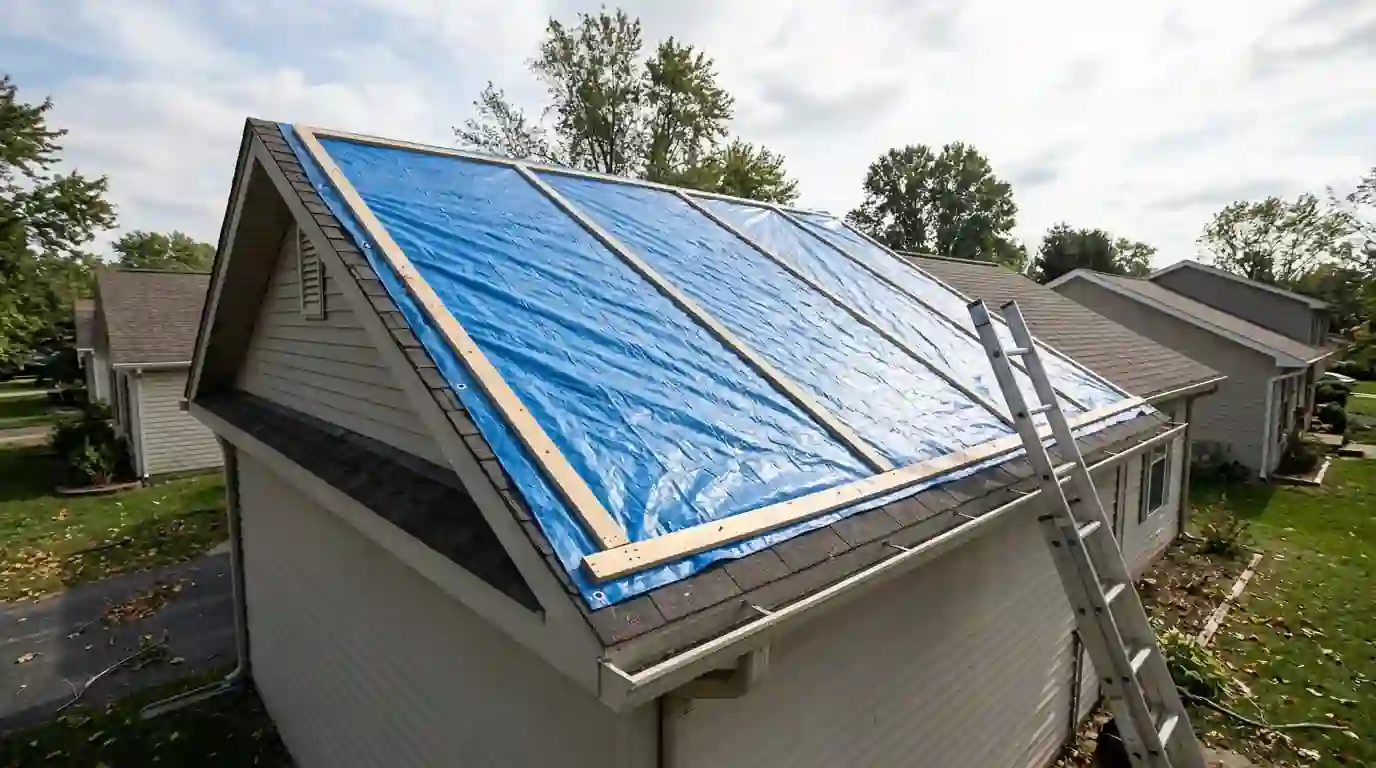
We use wood battens, usually 2x4 or 1x4 lumber, wrapped in the tarp edge and screwed through into the decking. The tarp runs up and over the ridge onto the other slope, so its top edge sits on the downhill side and water can't run under it. That holds through the gusty storms that follow each other in spring.
Batten screws do leave small holes, but they go into areas that will be repaired or replaced anyway, and we seal each one when the tarp comes off. On tile roofs, we use a different approach that avoids cracking more tile, described below. Metal roofs get their own fastening method as well.
- Battens screwed into decking, not just into shingles.
- Tarp carried over the ridge so the top edge faces downhill.
- Edges rolled around battens so wind can't catch the fabric.
- Heavy-duty tarp sized with extra overlap past the damage.
How long a tarp lasts in South Texas sun and wind
Most blue and silver poly tarps are woven plastic that breaks down under UV. In a San Antonio summer, with long days of direct sun and roof surfaces that get very hot, a tarp can start to fade and fray within a month. Heavier tarps and better fastening extend that, often to 60 or 90 days.
Wind is the other limit. Each storm tugs at the edges, and any loose spot grows. We recommend checking the tarp from the ground after every windy day. If you see a corner lifting or fabric ballooning, give us a call and we'll resecure it before it tears free.
A tarp should be a bridge to the permanent repair, not a long-term fix. Plan for the real repair as soon as weather and, if needed, your claim allow it. The longer a tarp stays up, the more likely it is to need resecuring, and every extra week adds risk of water getting under a loosened edge.
Why we photograph damage before covering it
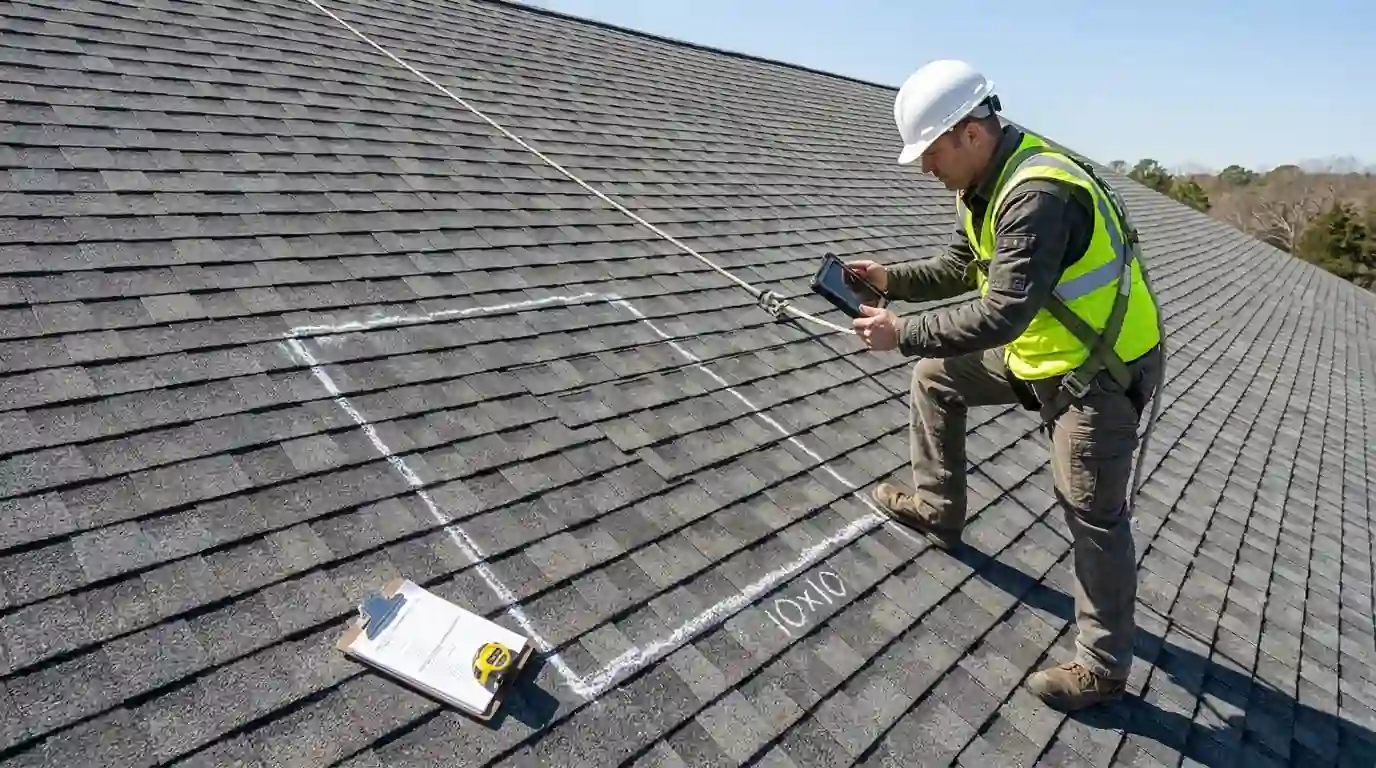
Once a tarp is down, the damage beneath it is hidden from view. Adjusters need to see what the storm did, and lifting a tarp to show them can loosen it. So before we cover anything, we photograph each damaged area from several angles with size references, plus wider shots that show where on the roof it sits.
You get copies of those photos the same day. They pair well with a full slope-by-slope storm report if the rest of the roof needs checking, and with your own photos from inside the house. If you're filing a claim, our step-by-step Texas claim guide explains where these photos fit.
Tarping tile, metal and steep roofs safely
Clay and concrete tile crack under careless footsteps, so we walk only where tiles are supported and lay padding or roof ladders to spread our weight. Battens on tile roofs are fastened through gaps or replaced tile positions rather than through the tile faces. Broken tiles we remove to make room are saved, so they can be matched during the repair.
Metal roofs are slippery and sharp at the edges. Tarps there are secured to the purlins or decking at seams, with care not to scratch the finish. On steep shingle roofs, we use harnesses and roof jacks before stepping onto wet surfaces, even if it adds a few minutes to the visit.
What happens after the tarp goes on?
Inside, open the attic hatch if it's safe and let the space air out. Wet insulation should come out once the roof is dry-in, since it holds moisture against the ceiling for weeks. Run fans and a dehumidifier in rooms that took on water. Keep an eye on ceilings below the damage for new stains, which would mean the tarp needs adjusting.
When the weather clears and any claim inspection is done, we remove the tarp, replace damaged decking and underlayment, and install new roofing to match. Batten holes get sealed or replaced with the new material, so nothing from the temporary cover is left behind. We send closing photos so you can see the finished roof without climbing up.