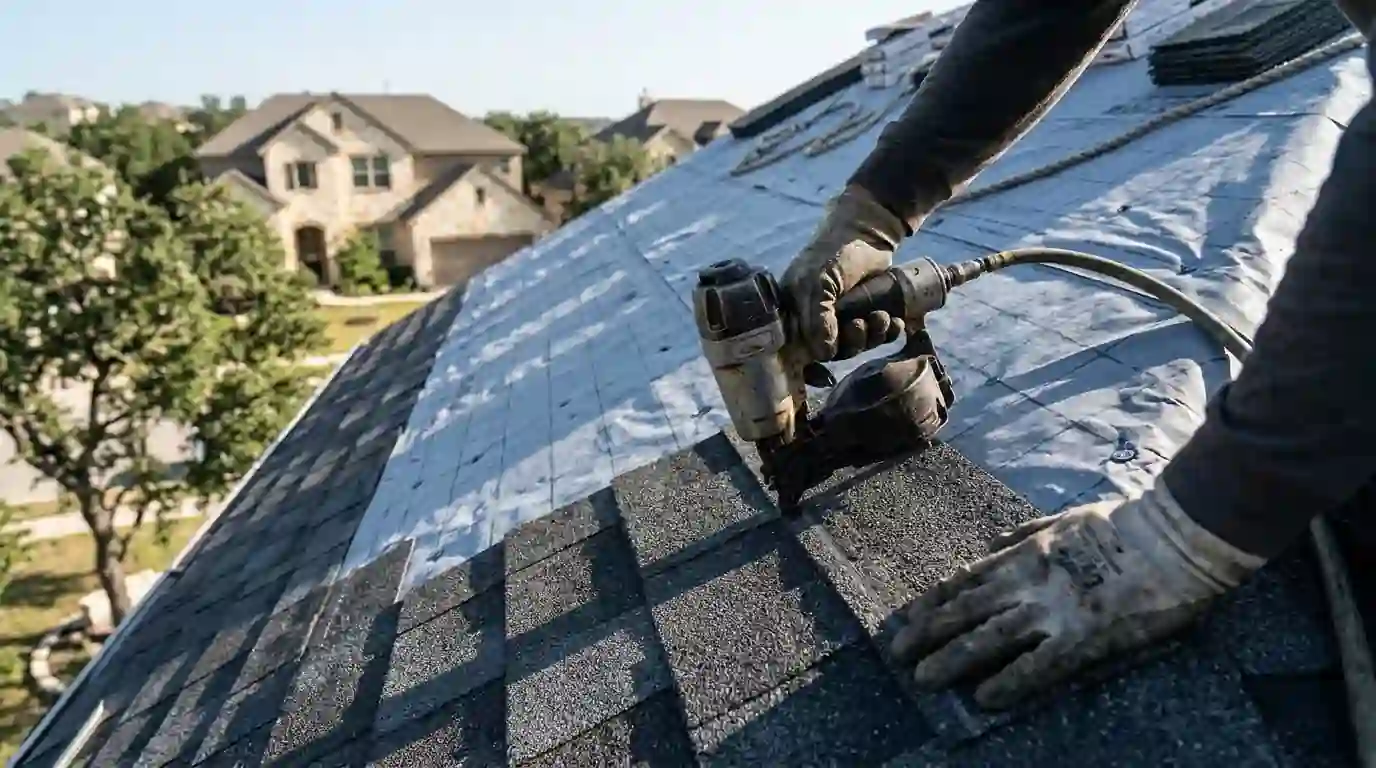
Step one: protect the house and write down what happened
Your policy almost certainly asks you to take reasonable steps to prevent further damage after a storm. If water is coming in, that can mean a tarp over the damaged area, buckets under the drip and moving furniture out of the way. Keep receipts for anything you buy or pay for, since temporary repairs are often covered as part of the claim. If you need help fast, emergency tarping buys time until the roof can be properly repaired.
Write down the date and approximate time of the storm while it's fresh. Note the hail size you saw, how long it lasted and whether strong wind came with it. Those details matter later, because the adjuster will match the claim to a specific weather event.
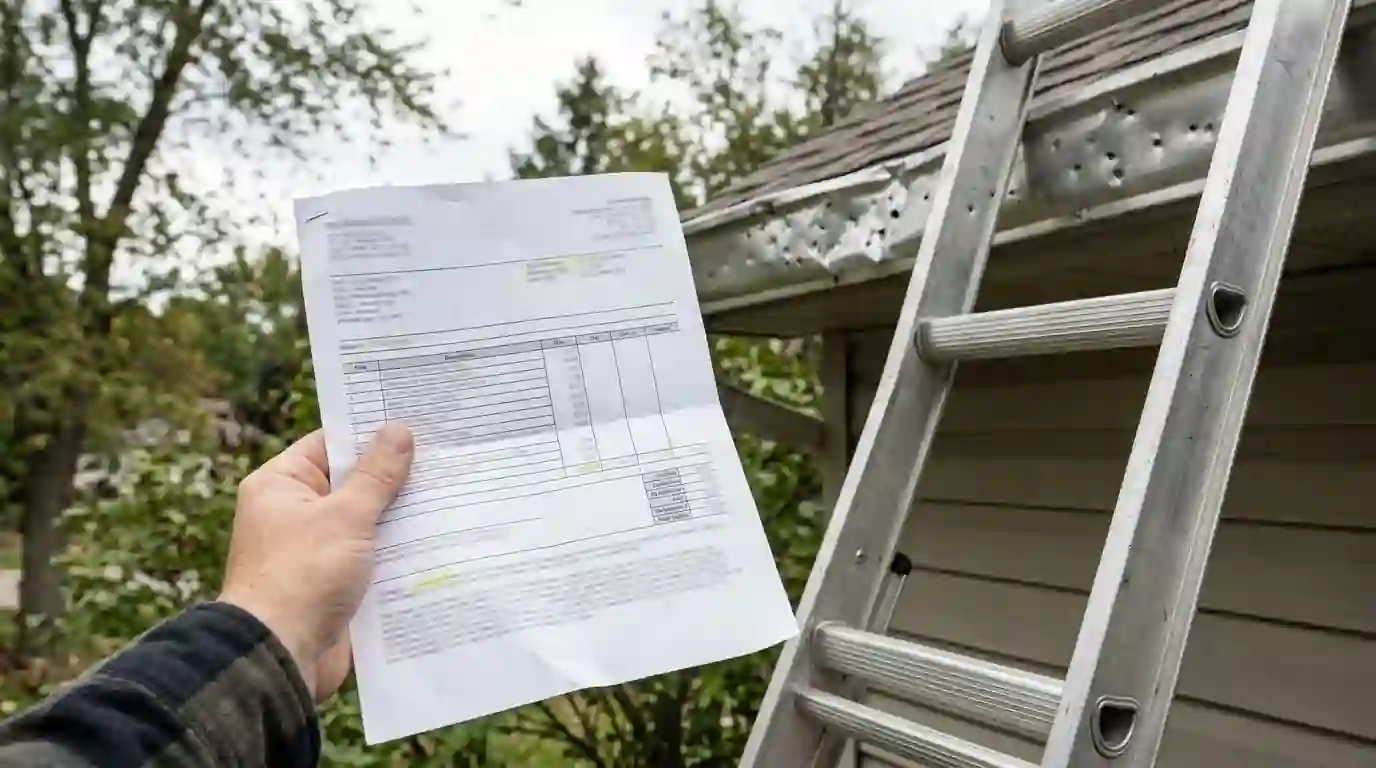
Step two: gather photos before anyone climbs up
Photos taken soon after the storm are some of the most useful records you'll have. Shoot from the ground and from windows rather than climbing onto a wet or damaged roof. Wide shots that show the whole house help establish context, and close shots with a coin or tape measure show scale.
A roofer's inspection adds the part you can't safely see. When we inspect after a storm, we photograph every slope, mark hits with chalk and note damage to vents, flashing, gutters and skylights. You get those photos, and you can share them with your insurer. Our guide to reading hail size and damage explains what those marks usually mean.
- Every side of the house, including the yard and fence line.
- Dents in gutters, downspouts and the AC unit.
- Any ceiling stains, wet insulation or drips in the attic.
- Hailstones next to a ruler, if you can catch them before they melt.
- Fallen limbs or debris that hit the roof.
Step three: read the parts of your policy that decide the payout
Before you report the claim, find your declarations page and the section on wind and hail. Many Texas policies carry a separate wind and hail deductible, often written as a percentage of the dwelling coverage instead of a flat dollar amount. That can make the deductible much larger than people expect, so check the exact figure in your own policy.
Look for how the roof will be valued. A replacement cost policy usually pays the actual cash value first, then releases the withheld depreciation after the work is done. An actual cash value policy pays the depreciated amount only. Some policies also limit cosmetic damage on metal roofs or set a separate schedule for older roofs. Note the deadline for reporting a claim, since time limits vary by policy.
Step four: report the claim and meet the adjuster
You can report a claim by phone or through your insurer's app or website. You'll get a claim number, and an adjuster will be assigned to inspect the roof. Texas has prompt-payment rules that set deadlines for insurers to acknowledge, investigate and decide claims, and the Texas Department of Insurance takes complaints if you believe a claim is being handled unfairly.
You're allowed to have your roofer present when the adjuster inspects. We can point out damage we documented and answer questions about how the roof is built, such as the number of layers or the type of underlayment. What we can't do is argue coverage or negotiate the dollar amount on your behalf, and we'll tell you so up front.
Step five: understand the estimate and the checks
The adjuster's estimate lists each line item: tear-off, underlayment, shingles, starter, ridge, flashing, vents and so on. Compare it with your roofer's scope. If the adjuster missed items that are needed to do the job to code, such as drip edge or replacing damaged decking found during tear-off, the roofer can send documentation to the insurer as a supplement request.
Payments often come in two parts on replacement cost policies: an actual cash value check first, then a depreciation check after the work is done and invoiced. If you have a mortgage, the lender's name is usually on the check too, and the lender may hold funds and release them in stages. Call your lender early so the paperwork doesn't slow the job.
- Replacement cost value is the cost to replace the roof with similar materials today.
- Depreciation is the amount withheld for the roof's age and condition.
- Actual cash value is replacement cost minus depreciation.
- Your deductible comes off the total, and you pay it yourself.
What Texas law says a roofer can and can't do
Texas law bars roofing contractors from acting as public adjusters. A roofer can't represent you in negotiating your claim, can't interpret your policy for you and can't promise a certain outcome. A public adjuster or an attorney can represent you if you need that kind of help.
Texas also bars contractors from waiving, rebating or absorbing your insurance deductible, including through fake discounts or inflated invoices. Any roofer who offers to cover your deductible is asking you to take part in something illegal. Your deductible is a cost you pay directly, and an honest estimate makes that clear from the first conversation.
What to do if the claim is denied or comes in low
Ask the insurer for the denial or the estimate in writing, along with the specific policy language they relied on. Sometimes a partial approval just reflects damage that was hard to see from where the adjuster stood. You can ask for a reinspection and send your roofer's photos and measurements as added documentation.
Many policies include an appraisal clause for disputes over the amount of loss, where each side picks an appraiser and an umpire settles differences. If you believe the claim is being handled improperly, the Texas Department of Insurance consumer line is a good place to start. For documentation and a clear repair scope, our insurance claim support covers the roofing side. Ring our line at (210) 750-1898; it's answered 24/7.