How big does hail have to be before shingles take a hit?
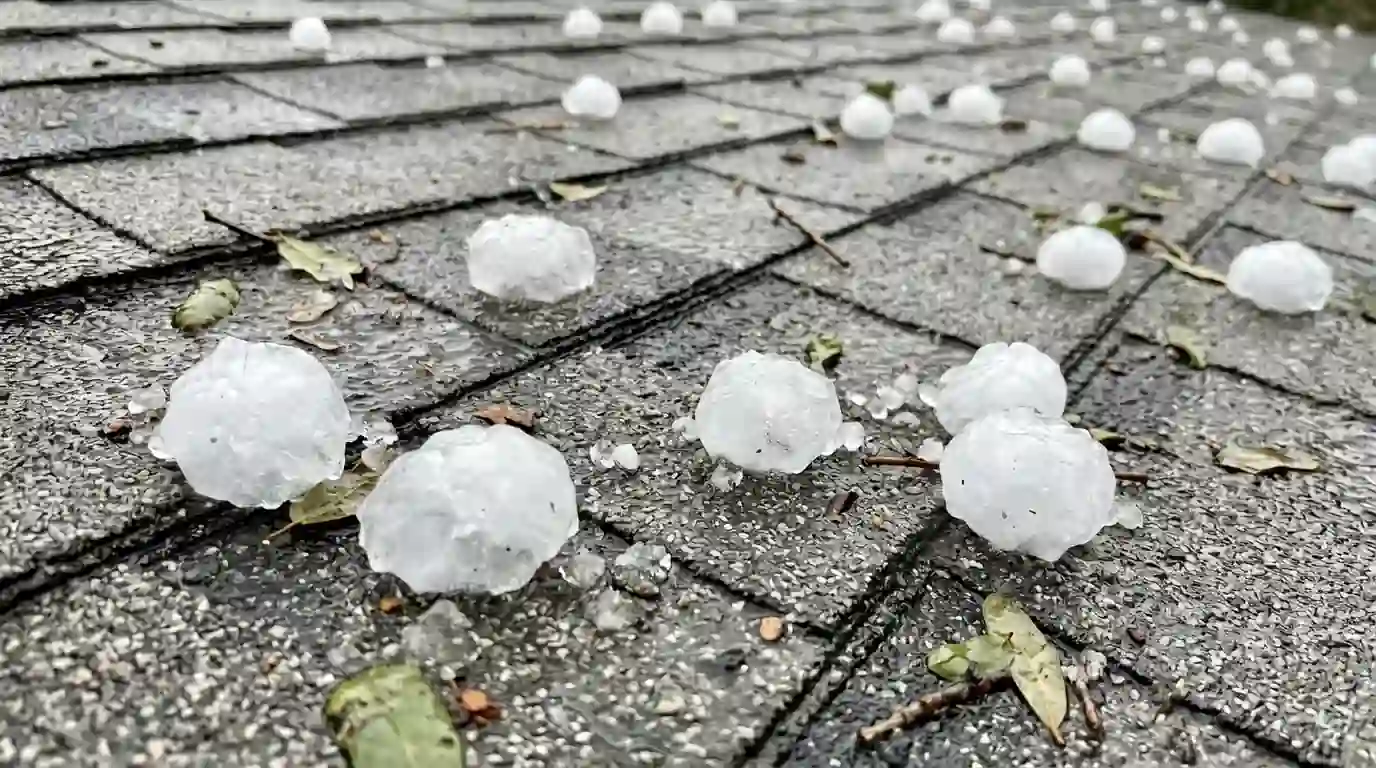
The National Weather Service treats hail 1 inch or larger as severe, and that lines up with what roofers see on asphalt shingles. Below that size, stones usually scuff granules or knock loose debris without breaking anything underneath. At 1 inch and up, a direct hit can crush granules into the asphalt and crack the fiberglass mat, and that kind of damage shortens a roof's life.
Size alone doesn't settle it, though. A 1 inch stone falling straight down on a new architectural shingle may leave nothing behind. The same stone driven sideways by storm winds into a roof that has baked through many Texas summers can bruise it badly. That's why two houses on the same street can end up with very different results.
- Pea size, about 1/4 inch, rarely harms a roof covering but can strip loose granules.
- Dime to penny size, about 3/4 inch, dents soft aluminum, window screens and AC fins.
- Quarter size, 1 inch, is the general threshold for shingle damage, especially on older roofs.
- Ping pong ball size, 1.5 inches, makes bruised and cracked shingles common.
- Golf ball size, 1.75 inches, often damages shingles across whole slopes and cracks tile.
- Tennis ball size and larger, 2.5 inches and up, can puncture shingles, shatter tile and dent metal panels.
What hail does to each type of roof
On asphalt shingles, a damaging hit leaves a soft spot that feels like a bruise on an apple when you press it. The granules get crushed or knocked away, exposing black asphalt that the sun then breaks down faster. In worse cases the mat cracks, which can open a path for water during the next heavy rain.
Clay tile tends to crack or lose corners because it's hard and brittle. Concrete tile chips, cracks across the face or breaks at the nail holes. Metal roofs usually dent rather than break, so the question becomes whether a dent is only cosmetic or has damaged a seam, a fastener or the paint finish. Flat roofs with modified bitumen or coatings can show punctures, cracked surfacing and exposed seams that are easy to miss from the ground.
Why roof age and wind change the answer
Asphalt shingles start out flexible and slowly lose that flexibility as heat drives oils out of them. Summer attic temperatures in San Antonio commonly pass 140 to 150 degrees, so shingles get cooked from below as well as from the sun above. A brittle 15-year-old shingle can fracture from hail that would bounce off a newer one.
Wind matters because it changes the angle and speed of each stone. Hail that arrives at a slant hits the slopes facing the storm much harder than the back side of the house. It's common to find heavy damage on one or two slopes and very little on the others. The density of the storm counts too, since a few large stones do less overall harm than a long barrage of mid-size ones.
Clues on the ground that tell you how big the hail was
You don't need to climb a ladder to get a rough idea of what hit your house. Soft metals and painted surfaces record hail well, and they're easy to check safely from the yard. Take photos with a coin or a tape measure in the frame so the scale is clear later.
If you can, collect a few stones right after the storm and photograph them next to a ruler before they melt. Compare what you see with neighbors and with local storm reports for your part of town.
- Dents along the top edge of gutters and on downspouts.
- Bent or flattened fins on the outdoor AC unit.
- Torn window screens and chipped paint on wood trim or fences.
- Fresh dents on mailboxes, grills, patio furniture or vehicles.
- Piles of shingle granules collecting at the bottom of downspouts.
How we tell hail damage from normal wear
Hail hits land in a random scatter, and each one usually shows crushed granules with a darker center. We press on suspect spots to feel for the soft give of a bruise, and we photograph every confirmed hit with a marker for scale. Adjusters commonly mark a test square on each slope and count hits inside it, so we document the roof the same way.
Plenty of marks that look like hail are something else. Blisters from trapped moisture pop open in round craters. Even granule loss across a whole slope usually points to age. Scuffs in straight lines tend to come from foot traffic, and a clean cut edge often means a tool or a branch. Knowing the difference keeps you from filing a claim for wear, and from missing real hail damage that needs repair.
What San Antonio's hail season means for your roof
Spring is the main hail season here, roughly March through June, though strong storms can show up outside that window. The April 12, 2016 storm that hammered north and west San Antonio showed how one evening can damage thousands of roofs at once. Smaller storms matter too, since repeated rounds of 1 inch hail add up on an aging roof.
Because damage often can't be seen from the street, a roof can sit with cracked shingles for months before a leak shows up inside. Checking soon after a storm also helps with insurance, since most policies set time limits for reporting damage. If you're unsure where to start, our notes on what to do the day after a hailstorm walk through the early steps.
When is it worth having the roof looked at?
A good rule is to get a closer look whenever you've seen quarter-size hail or larger at your house, or when the ground clues above show fresh damage. The same goes for any roof more than about ten years old after a strong storm, even if the hail seemed small. Our post-storm roof inspection includes photos of every slope so you can see what we see.
If you'd like a quick first read on whether a recent storm was likely to cause damage, start with our hail check. For homeowners planning a replacement anyway, Class 4 impact-resistant shingles are worth comparing, since they hold up better to the next round. Give us a call at (210) 750-1898 any time; the line is answered 24/7.