In the first hour: put safety ahead of the roof
Wait for the storm to fully pass. Hail cells in South Texas often bring lightning and strong winds, and a second round can follow the first. Once it's clear, walk around the outside of the house for downed power lines, broken branches hanging over the roof and broken windows.
Don't climb onto the roof. Wet shingles, loose granules and hailstones make the surface slick, and damage you can't see from the ground can make some areas unsafe to stand on. Leave the roof itself for a trained inspector with the right gear.
If a large live oak limb is resting on the roof or a wall, stay out of the rooms below it. Fallen limbs can shift as wind picks up or as the tree settles.
Check inside for leaks while it's still light
Go room by room and look at ceilings, especially near exterior walls, around light fixtures and under valleys. Fresh water stains, bubbling paint or drips all count. Then check the attic with a flashlight if you can do so safely, looking for wet insulation, water running along rafters or daylight through the decking.
If you find water, move furniture and electronics out of the way and set buckets or towels underneath. A bulging spot in drywall means water is pooling above it. Poking a small hole in the center with a screwdriver lets it drain into a bucket and can keep the whole ceiling from coming down.
Active leaks need a temporary cover quickly. Our emergency tarping goes on with battens fastened to protect the deck, and we photograph the damage first so it's on record before anything is covered.
What to photograph from the ground
Documentation from the first day carries real weight later. You don't need to be on the roof to collect useful evidence. Use your phone, keep the date and time stamps on, and take more photos than you think you need.
Save everything in one folder and back it up. Your notes about when the storm hit and how long it lasted will also help line up your claim with weather reports.
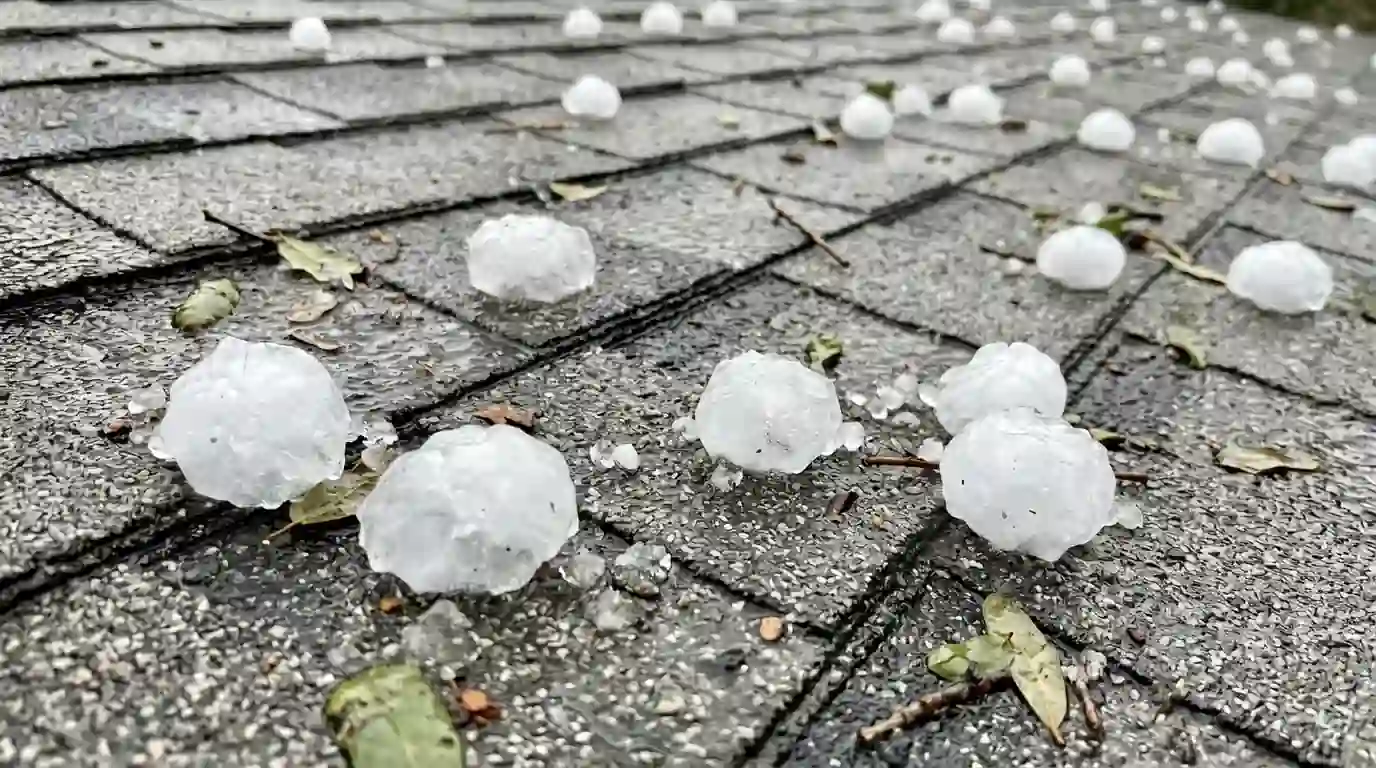
- Hailstones next to a coin or tape measure, taken right after the storm before they melt.
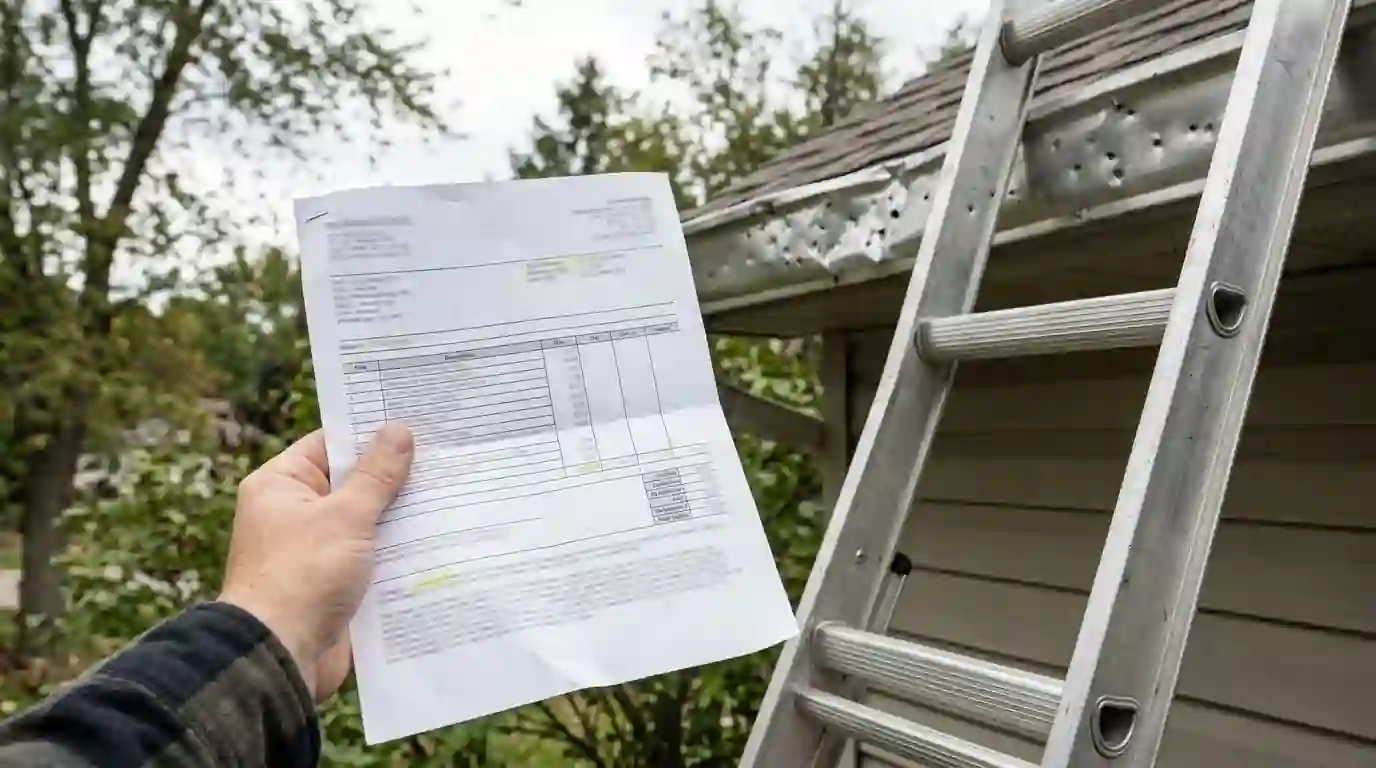
- Dents in gutters, downspouts, AC fins, mailboxes and metal patio covers.
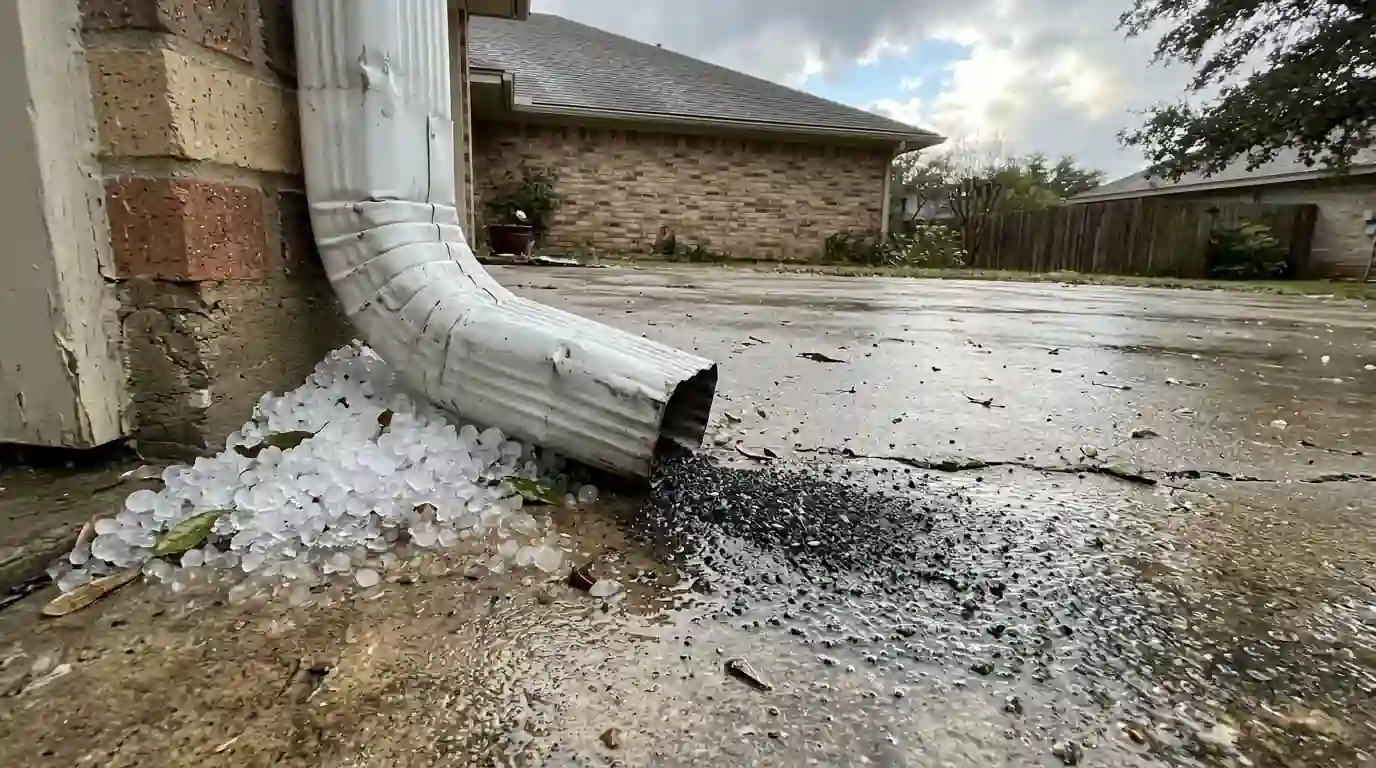
- Granules washed out at downspout outlets and on the driveway.
- Broken window screens, damaged siding and chipped paint on the side that faced the storm.
- Interior water stains, wet insulation and any damaged belongings.
How to tell if your roof may be damaged
Damage to soft metals and the side of the house facing the storm usually means the roof took hits too. Hail that leaves clear dents in gutters or AC fins has often bruised shingles, cracked tiles or dented metal panels on the slopes facing the same direction.
Size matters, but so does roof age and material. Older shingles bruise more easily than new ones. Our guide on which hail sizes damage roofs explains what different hailstone sizes tend to do to shingles, tile and metal.
Some hail damage looks minor from the yard and only shows up as leaks months later, when bruised spots shed granules and crack. That's why an inspection soon after the storm is worth it even when nothing is leaking yet.
Getting the roof inspected the right way
A thorough post-storm inspection covers every slope, not just the one you can see from the street. It includes test squares on each slope, notes on soft metals like vents and flashing, and photos that show both the damage and where it sits on the roof.
Our storm damage inspections typically run about $185 to $365, depending on roof size and access, and you get a slope-by-slope photo report you can hand to your adjuster. If the damage is minor, we'll tell you so, and a repair may be the right fix.
How to deal with storm chasers knocking on your door
After large storms, door-to-door crews arrive quickly from out of town. Some do honest work. Others push homeowners to sign on the spot, then disappear once the insurance check clears. A few habits keep you protected.
Texas law also bars roofing contractors from acting as your public adjuster and from waiving or rebating your insurance deductible. Anyone who offers to cover your deductible or negotiate your claim for you is offering something they can't legally do.
- Don't sign any contract or authorization during a doorstep visit.
- Ask for a local address and look it up before agreeing to an inspection.
- Read every page of anything you're asked to sign, especially assignment language.
- Get the inspection report and photos in hand before deciding anything.
- Compare more than one written estimate before work begins.
Before you file a claim, read your policy
Your policy sets the rules for what happens next. Look up your wind and hail deductible, which in Texas is often a percentage of your dwelling coverage rather than a flat amount. Check the deadline for reporting a claim and whether your policy pays replacement cost or actual cash value on the roof.
If the damage looks larger than your deductible, start the claim with your insurer. If it's close, an inspection report helps you decide before filing. Our guide on Texas roof claims step by step walks through the process from first call to final payment.
Hail damage doesn't wait for business hours. Call (210) 750-1898, day or night. We'll cover active leaks first and photograph everything for your records.