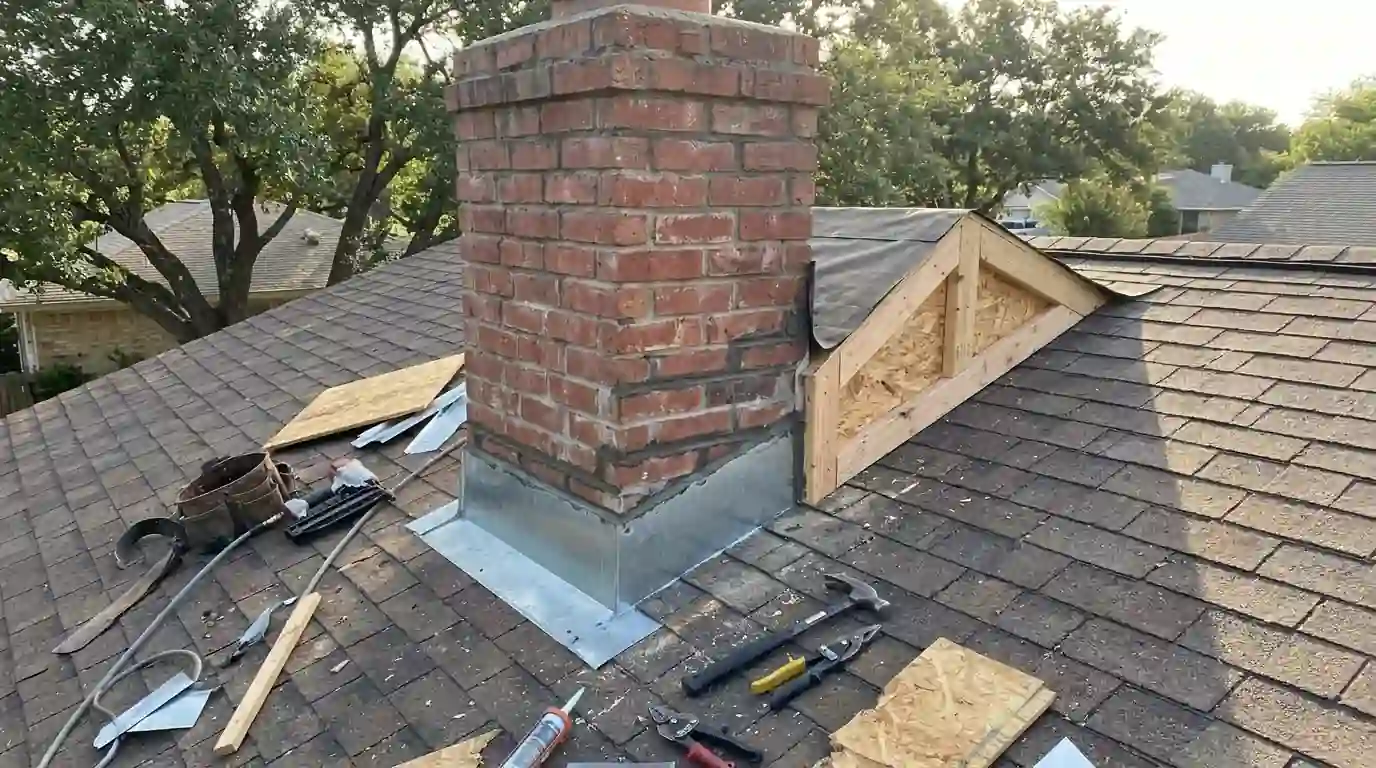
Where do chimneys leak?
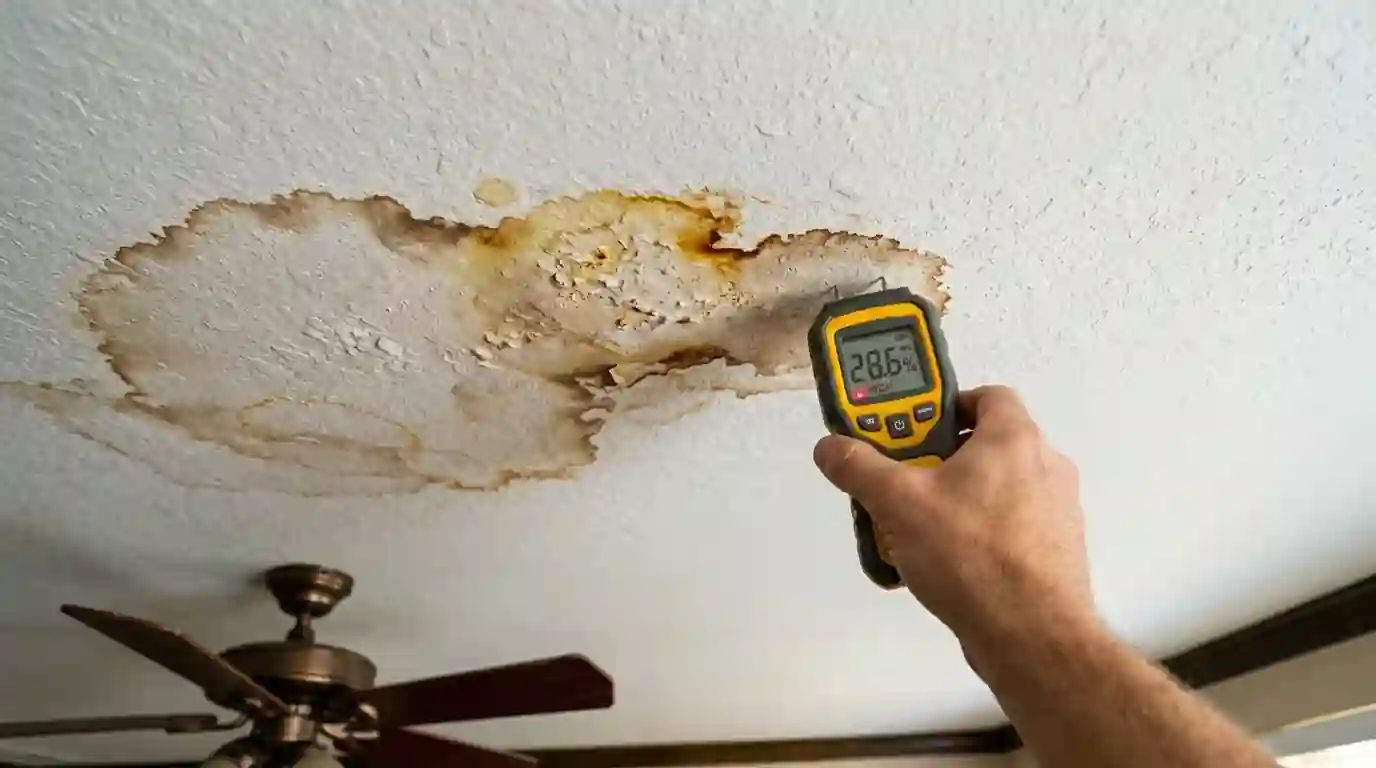
Chimney leaks usually show up as a stain on the ceiling or wall beside the fireplace, or as water inside the firebox after a storm. The trick is figuring out where the water entered. It might come through flashing at the roof line, soak through the masonry, or drop in from the top of the chimney.
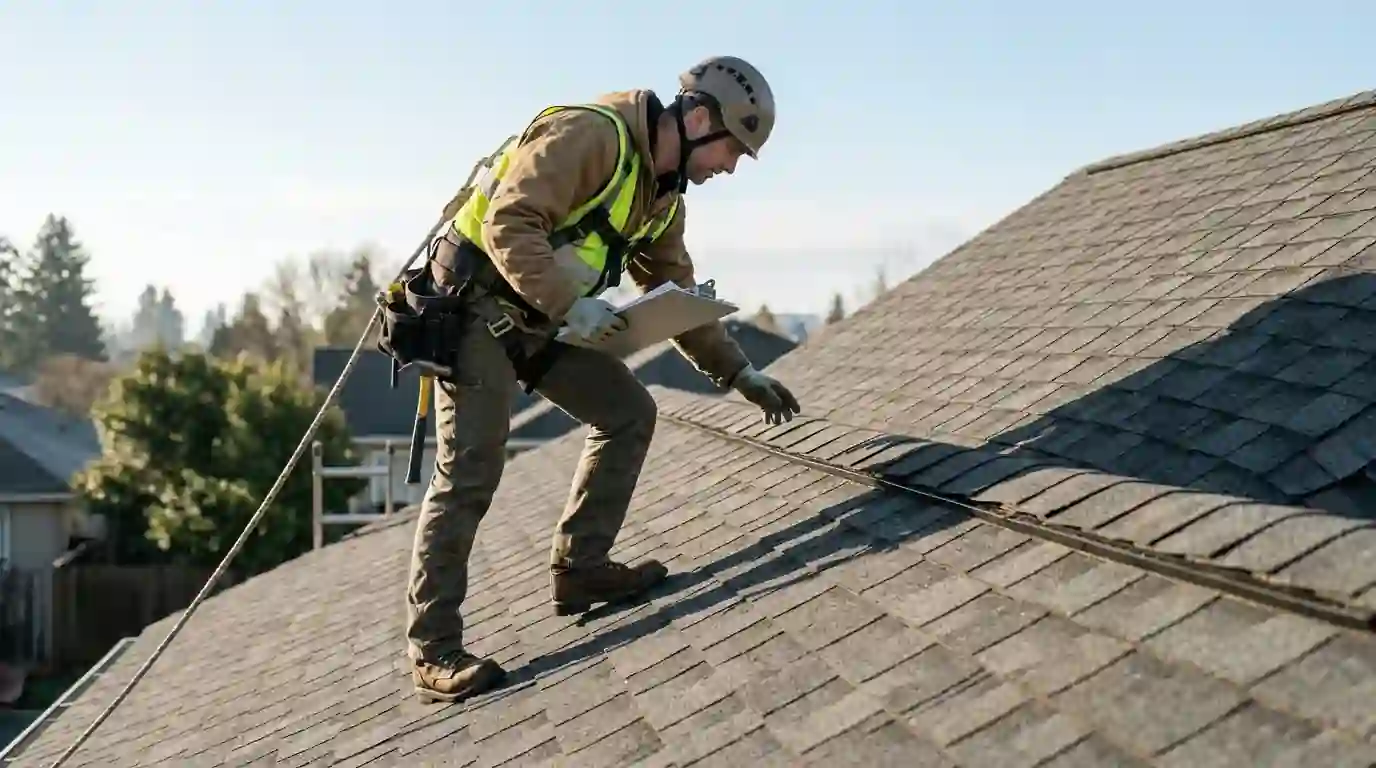
We check from the top down. A cracked crown or rusted chase cover lets water into the chimney structure itself. Failed counter flashing lets it in at the roof line. A missing cricket lets water pile up behind the chimney until it backs under the shingles. Sometimes it's more than one at once.
- Crown or chase cover on top of the chimney.
- Counter flashing set into the brick or stone.
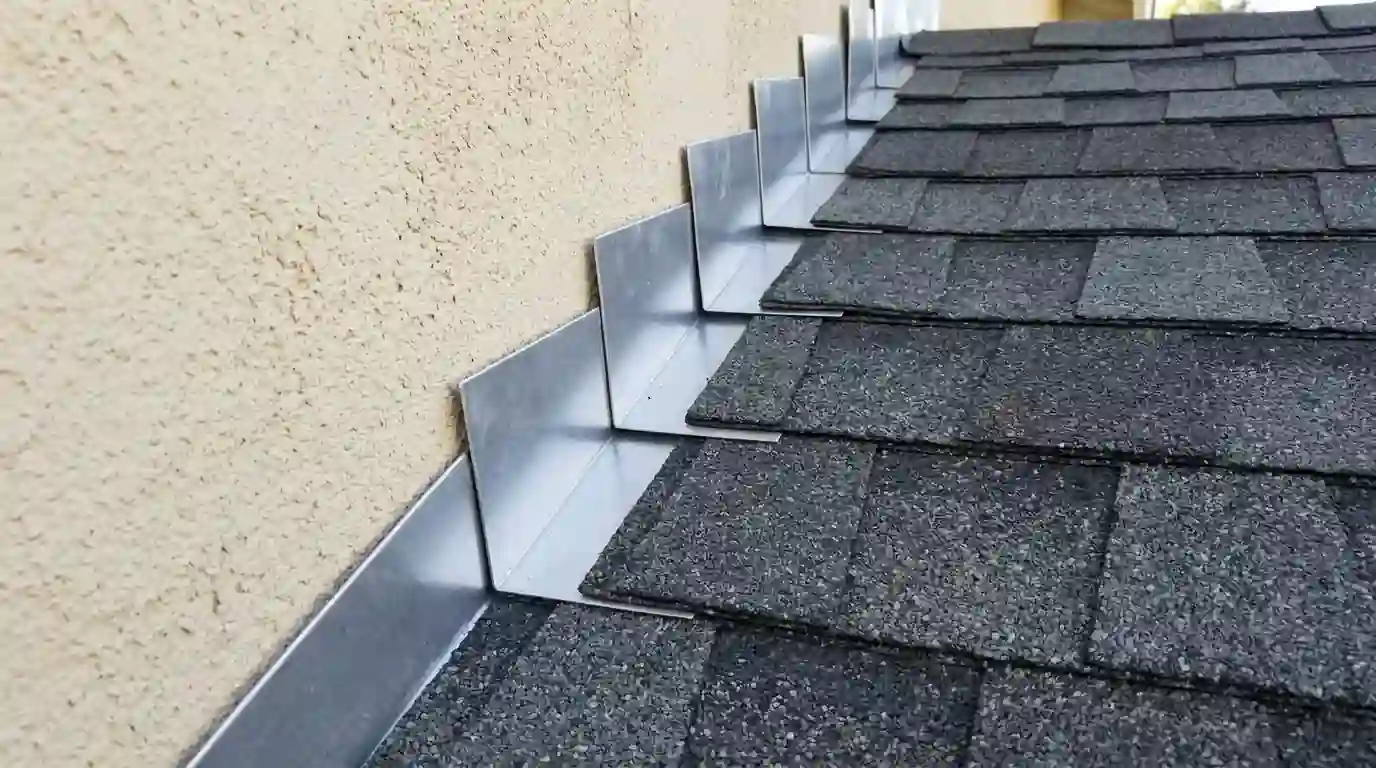
- Step flashing along the sides of the chimney.
- Cricket or saddle on the uphill side.
- Porous brick, stone or mortar joints.
Why the uphill side needs a cricket
A cricket, also called a saddle, is a small peaked roof built on the uphill side of a chimney. It splits the water running down the slope and sends it around both sides. Without one, water and debris pile up against the back of the chimney and sit there, slowly working under the shingles.
Building codes generally call for a cricket on chimneys wider than about 30 inches across the slope. Many older San Antonio homes have wide chimneys without one, and live oak leaves pile up behind them every spring. We frame the cricket from lumber, deck it, line it with underlayment and cover it with metal or shingles to match.
Adding a cricket is one of the most effective fixes for chronic chimney leaks. If your chimney leaks only in heavy rain, and the stain is on the uphill side, that's a strong sign it needs one. A cricket also keeps leaves from collecting behind the chimney, so the flashing there stops sitting in wet debris for weeks.
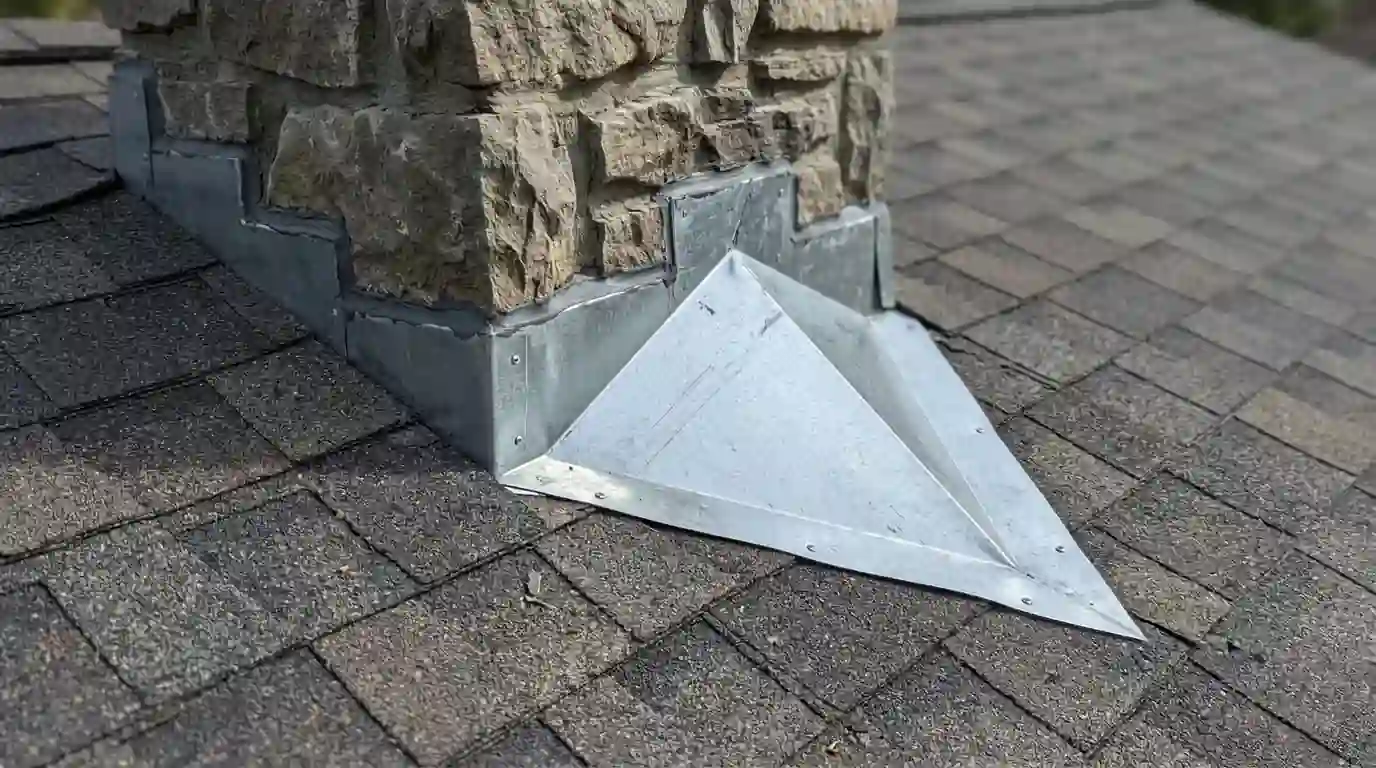
Counter flashing and reglets on brick and stone
On masonry chimneys, step flashing runs along the sides and laps with each shingle course. Counter flashing covers the top of those pieces and must be set into the chimney itself, not glued on. We cut a reglet, a shallow groove in a mortar joint, insert the bent edge of the counter flashing and seal it.
A common shortcut is surface-mounted flashing held on with screws and a bead of caulk. In South Texas sun, that caulk hardens and pulls away, and water slips behind the metal. Reglet-set flashing doesn't depend on sealant to stay watertight, so it holds up much longer. The general principles also apply to the wall joints covered on our wall and step flashing page.
Cracked crowns and rusted chase covers
A masonry chimney's crown is the concrete or mortar slab on top. It sheds water away from the flue and the brick. Crowns crack as they age and as summer heat expands and shrinks the concrete. Water that gets into those cracks soaks into the brick below and runs down inside the chimney. We seal small cracks or rebuild badly broken crowns with a proper overhang and drip edge.
Many newer homes in the area have framed chimneys, built from wood and finished with siding, stucco or stone veneer. Their top is a metal chase cover. Cheaper galvanized covers rust within a decade, and flat covers let water pool around the flue. We replace them with a sloped stainless or painted steel cover that sheds water off the edges.
A cap with a screen over the flue keeps rain, birds and debris out. If yours is missing or rusted through, we'll replace it at the same visit. A cap also stops rain from running straight down the flue liner, which is a common source of water in the firebox that gets blamed on flashing.
What about water soaking through the brick?
Brick and stone are porous. In long, wind-driven rains, water can soak through the face of the chimney and show up inside even when the flashing is fine. You'll often see white mineral stains, called efflorescence, on the outside brick where water has been passing through.
Repointing failed mortar joints and applying a breathable masonry water repellent can help. We'll point out what we see, but major masonry rebuilding or firebox issues are fireplace work rather than roofing. Our job is making sure the roof side of the chimney is sound.
When should chimney repairs wait for a reroof?
If your shingles are near the end of their life, chimney flashing and a new cricket make the most sense during the full roof replacement, since the shingles around the chimney have to come off anyway. On a roof with years left, a standalone chimney repair makes sense.
A chimney leak is also a good time to check the rest of the roof for wear. Our roof condition inspection covers every slope and the attic. And if the chimney is no longer used, removing it below the roof line and decking over the opening can be an option worth discussing.