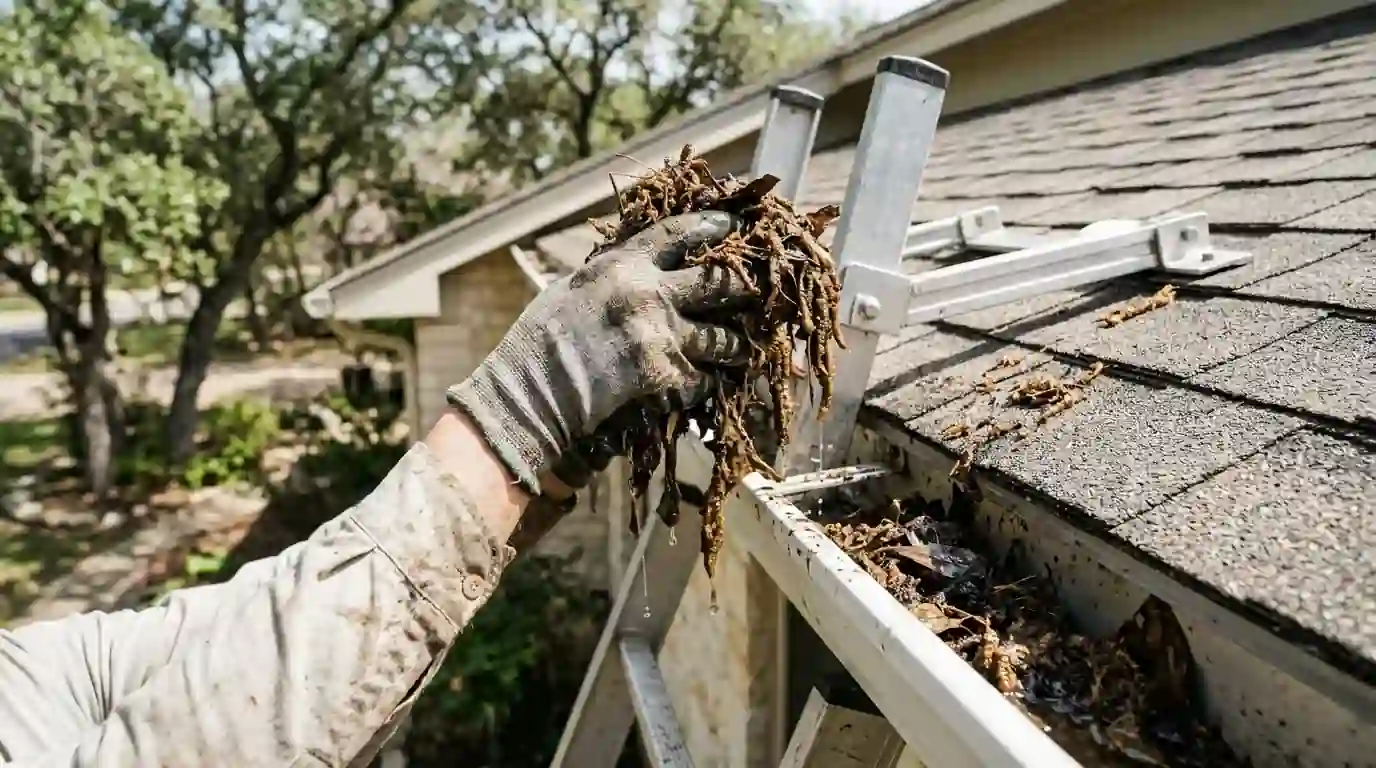
When should gutters be cleaned in San Antonio?
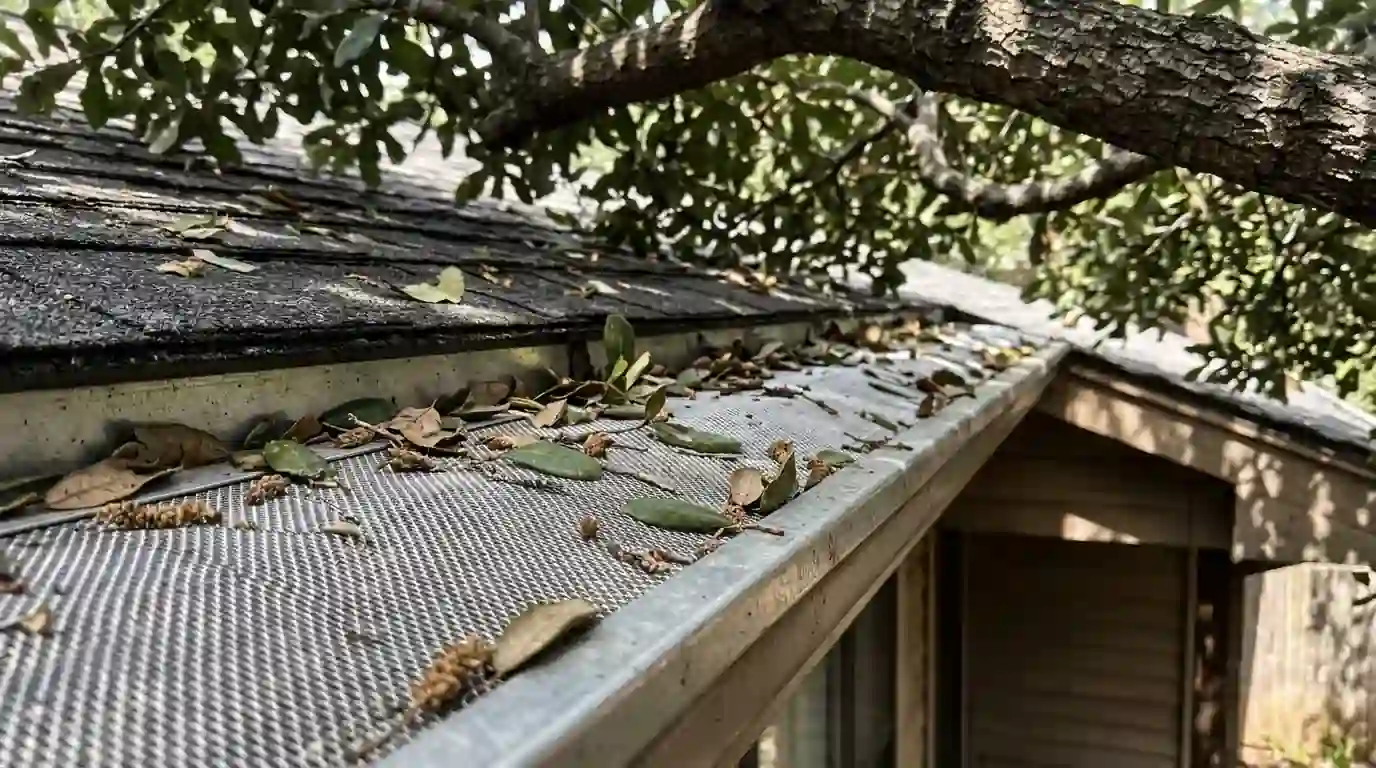
Timing matters more than frequency. Live oaks drop tassels and pollen from about March into April, followed by a spring leaf drop as new leaves push old ones off. A cleaning in late April or May clears that load before the heaviest early summer storms. Many homeowners schedule a second cleaning in late fall or early winter.
Homes with pecans, cedar elms or other deciduous trees nearby get a heavier fall load and may need that second cleaning in November or December. Homes with no trees overhead can often go a full year. We'll look at your trees and roof on the first visit and tell you what schedule fits.
What happens when gutters stay clogged?
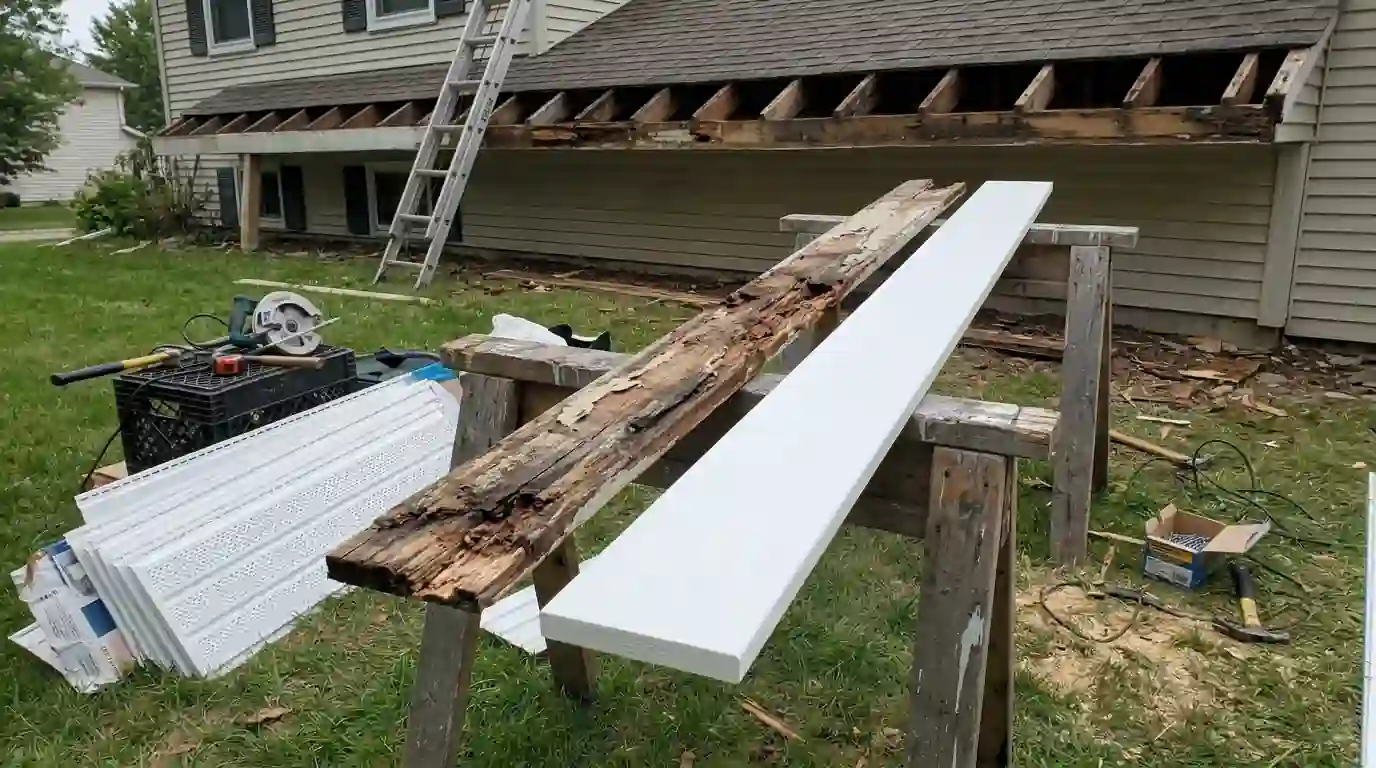
A clogged gutter overflows at the front during a downpour, and water lands right along the foundation. Over time that washes out soil, floods flower beds and can pond against the slab. Water can also back up behind the gutter and soak the fascia board, which leads to rot and gives squirrels an easy place to chew in.
Wet debris adds weight, which pulls hangers loose and creates sags where water then sits. Standing water breeds mosquitoes in warm months. In the worst cases, water backs up under the first row of shingles at the roof edge. Regular cleaning keeps all of that from starting.
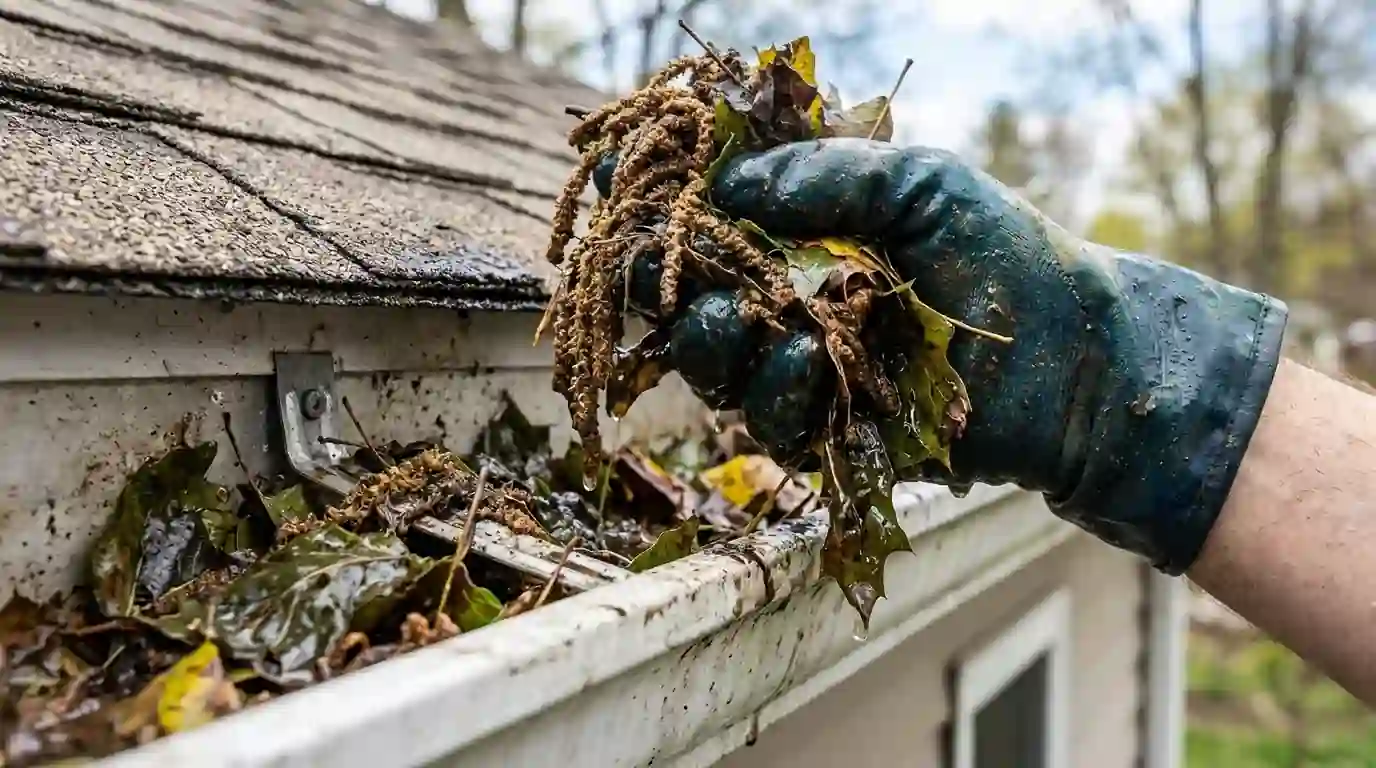
How do we clean gutters without making a mess?
We scoop debris out by hand into buckets or bags, not by blowing it all over your yard and roof. Packed tassels and wet leaves often pack into a dense mat that a blower can't move anyway. Once the gutter is clear, we rinse the run with a hose to wash out remaining grit and check the slope toward the outlet.
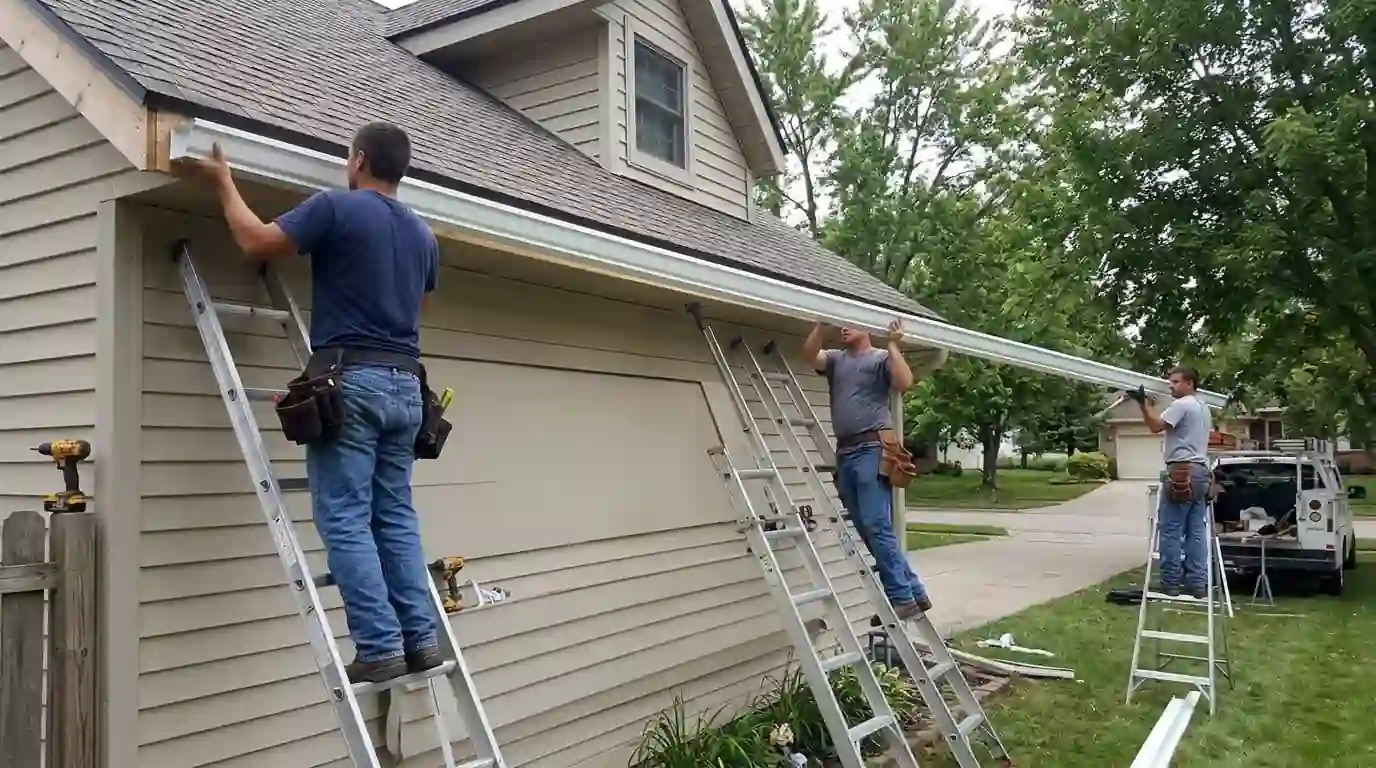
Every downspout is flushed from the top. If water backs up, we clear the clog with a plumber's snake or by removing the bottom elbow. We bag all debris and either haul it away or leave it at your curb for yard waste pickup. We work from ladders with standoffs so the gutters aren't bent.
What do we check on the roof edge while we're up there?
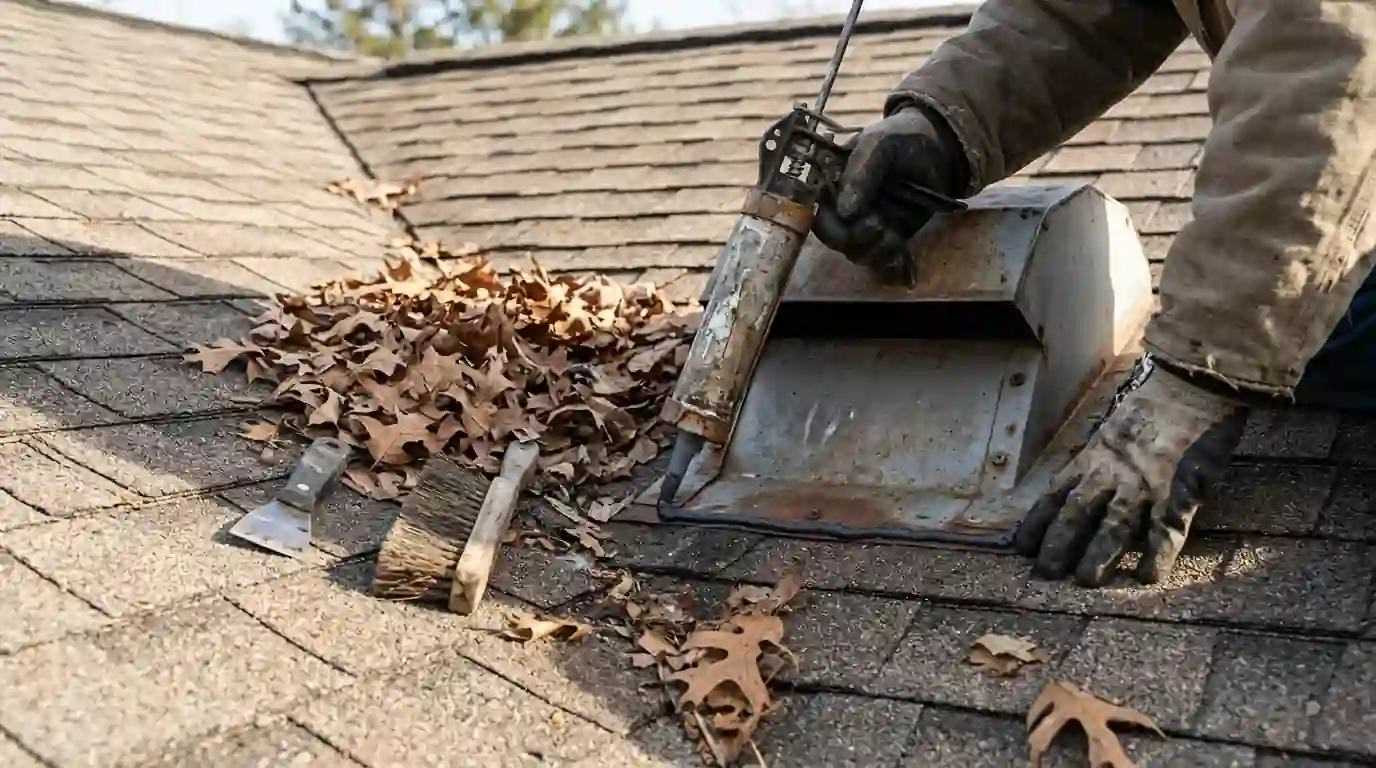
Since we're already at the roofline, we look at the first few feet of the roof and the fascia. We note lifted shingles at the edge, exposed nail heads, granule buildup in the gutter, missing drip edge and any soft spots in the fascia boards. Each item gets a quick photo.
Gutter cleaning isn't a full roof inspection, and we won't present it as one. If something at the edge looks worth a closer look, we'll tell you and show the photo. For a full slope-by-slope check, we offer a routine roof condition inspection, and for a twice-yearly roof tune-up there's our preventive roof maintenance visit.
How can you tell gutter cleaning isn't enough?
Some problems keep coming back after cleaning. If a run still overflows when it's clean, it may be undersized, missing a downspout, or sloped the wrong way. If corners drip, the sealant has failed. If the gutter sags or pulls away from the fascia, the hangers or the wood behind them are giving out.
We'll point out any of these during the cleaning. Fixes for sagging runs, leaking joints and guard options are covered under gutter repair and guard installation. Undersized or worn-out systems may be better off with new 6 inch seamless runs. Give us a call at (210) 750-1898 to set up a cleaning.
What can you do between cleanings?
From the ground, watch the downspouts during a steady rain. If water gushes from the bottom, they're clear. If water spills over the gutter front while the downspout only trickles, there's a clog. Also look for plants sprouting in the gutter line, which means debris has been sitting there long enough to become soil.
Trimming limbs that hang directly over the roof cuts down on debris and keeps squirrels off the roof. Don't climb a ladder to clean gutters on a two-story home or a steep roof edge by yourself. Falls from ladders are a real risk, and a quick cleaning visit costs far less than an emergency room visit.