Skip to content
Ortiz RoofingSan Antonio, Texas 24/7(210) 750-1898

Roof restoration

Silicone roof coating in San Antonio that restores sound roofs instead of hiding bad ones

A silicone coating can add years to a flat or metal roof that's worn but still dry and solid. It reflects summer sun, resists ponding water and seals small surface cracks. It can't fix a wet, failing roof, so we test first and tell you plainly when coating is the wrong move.

  • Phones answered 24/7
  • Flat, Commercial & Patio Roofs
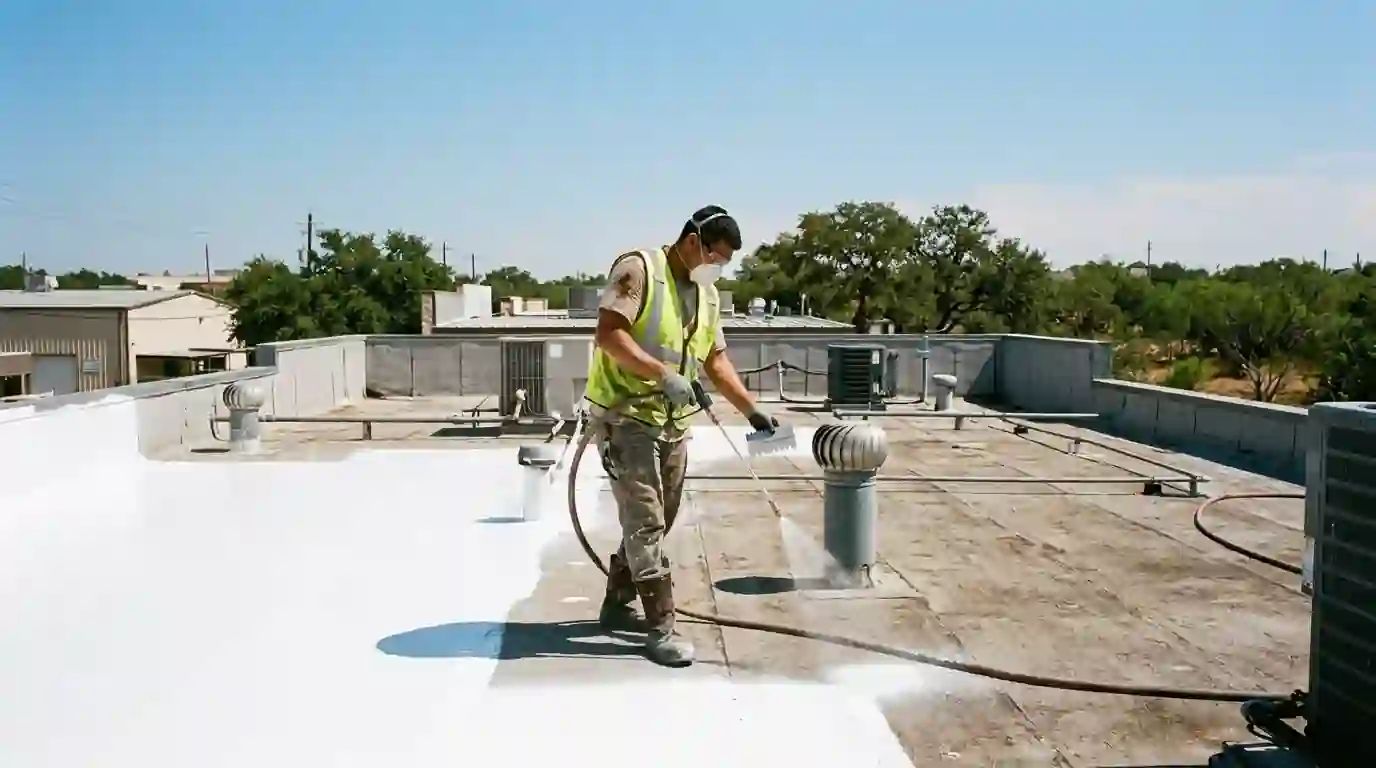
Worker spraying bright white silicone coating across a cleaned flat roof on a small San Antonio office building, coating gauge in hand, rooftop vents and clear blue sky.
Typical San Antonio range$3.45 to $6.20 per sq ft
Short answer

Silicone roof coating is a liquid-applied, highly reflective layer sprayed or rolled over an existing flat or metal roof after cleaning and repairs. It renews the waterproof surface and lowers roof temperatures without a tear-off. In San Antonio, silicone restoration typically costs $3.45 to $6.20 per square foot, depending on the substrate, repair work and coating thickness.

What a silicone coating does and doesn't do

Silicone cures into a seamless, rubbery membrane over the existing roof. It's highly resistant to UV and, unlike acrylic coatings, holds up under ponding water without breaking down. A bright white finish reflects most of the sun that hits it, lowering surface temperatures sharply on a South Texas afternoon.

What it can't do is dry out a wet roof or hold together a membrane that's coming apart. If the insulation underneath is soaked, coating over it traps the moisture and the roof keeps rotting from inside. A coating is a restoration for a roof that's still structurally sound, not a fix for one that's already failed.

Is your roof a good candidate for coating?

The strongest candidates are TPO, modified bitumen, built-up and metal roofs that are aging but mostly dry, with seams that can be repaired and decks that feel firm. Coating works well when the main problems are weathering, small cracks and heat, not widespread leaks.

We confirm that with a moisture survey across the roof and cores in suspect spots. As a rough guide, if more than a small share of the roof is wet, replacement usually makes more sense. Wet sections can sometimes be cut out and replaced before coating, which keeps restoration on the table for roofs that are mostly sound.

  • Good candidate: dry insulation across nearly all of the roof.
  • Good candidate: weathered surface with fine cracks but intact seams or seams that can be repaired.
  • Good candidate: metal roofs with surface rust but solid panels.
  • Poor candidate: wet insulation spread across large areas.
  • Poor candidate: decking that flexes or has rotted through.
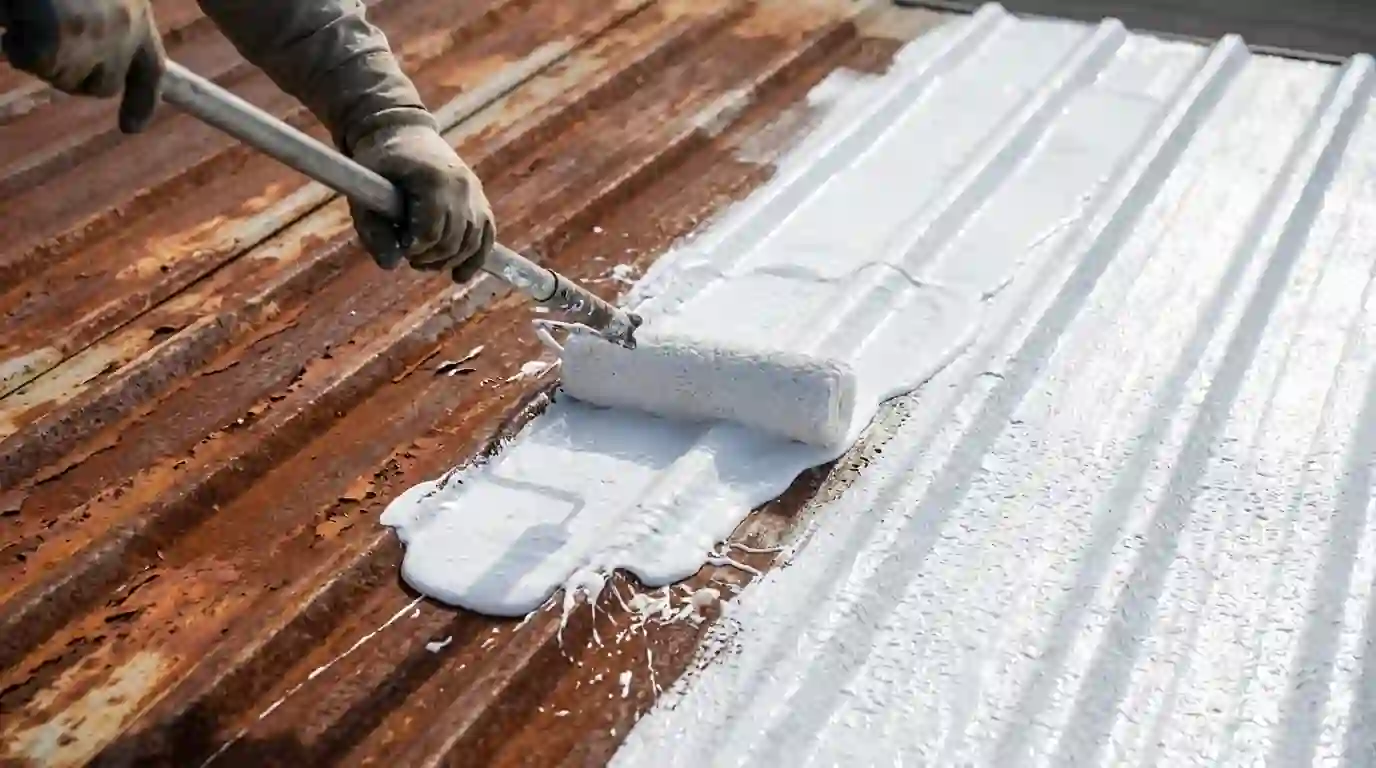
Roller applying white silicone coating over a weathered metal roof, half the surface already bright white
Silicone Roof Coating on a San Antonio area home.

Adhesion testing: the step that decides success

A coating is only as good as its bond to the roof. Before quoting a full job, we clean small test patches, apply the specified primer and coating, let them cure, and pull them to measure adhesion. Some old surfaces, like chalky TPO or certain granulated cap sheets, need a specific primer or more cleaning to bond well.

Skipping this step is how coatings peel off in sheets a couple of years later. The test costs a little time but tells us exactly which prep and primer your roof needs, and sometimes that the roof isn't a good candidate at all.

Prep and repairs before the coating goes on

Coating goes on last. First, we pressure wash the roof to remove dirt, chalk, pollen and oak debris, and let it dry fully. Then we repair everything: open seams get reinforced with fabric and mastic, blisters are cut and patched, wet areas are replaced, and loose flashing is secured.

On metal roofs, we tighten or replace backed-out screws, treat rust and seal laps and fasteners before the main coat. Our metal roof repair work covers those fixes in detail. For flat roofs with open leaks, repairing the leaking areas is the first stage of any restoration.

How the coating goes on and how thick it needs to be

Silicone is sprayed or rolled on in one or two coats, measured in dry mils, the actual thickness once cured. We set the target thickness from the manufacturer's spec and check it with a wet-mil gauge as we go. Thin spots wear through first, so consistent coverage matters more than how the roof looks from the ground.

Silicone cures with moisture in the air, and it should go on when no rain is expected for several hours. Afterward, the surface is slick when wet and collects dirt more readily than other coatings, so it should be walked carefully. If the coating is worn years later, it can usually be cleaned and recoated with more silicone.

Coating versus replacing a low-slope roof

Restoration generally costs less than a new roof, avoids tear-off debris and lets building use continue with little disruption. For small commercial owners, that cost difference can be significant, which is why we often discuss it on commercial projects. A new TPO system makes more sense when insulation is wet, decking is damaged or you need added insulation underneath.

We'll lay out both options with numbers so you can compare. Phone (210) 750-1898 if you'd like us to test your roof before deciding.
Warning signs

Signs your roof needs silicone roof coating

Flat roof aging but dry

A worn but dry membrane is the classic case where coating extends roof life without a tear-off.

Surface cracking and chalking

Fine cracks and a chalky surface show UV wear that coating can protect against.

Metal roof with surface rust

Light rust and loose fasteners on a solid metal roof can often be treated and coated.

Hot building under a dark roof

A reflective white coating can lower roof surface temperatures noticeably.

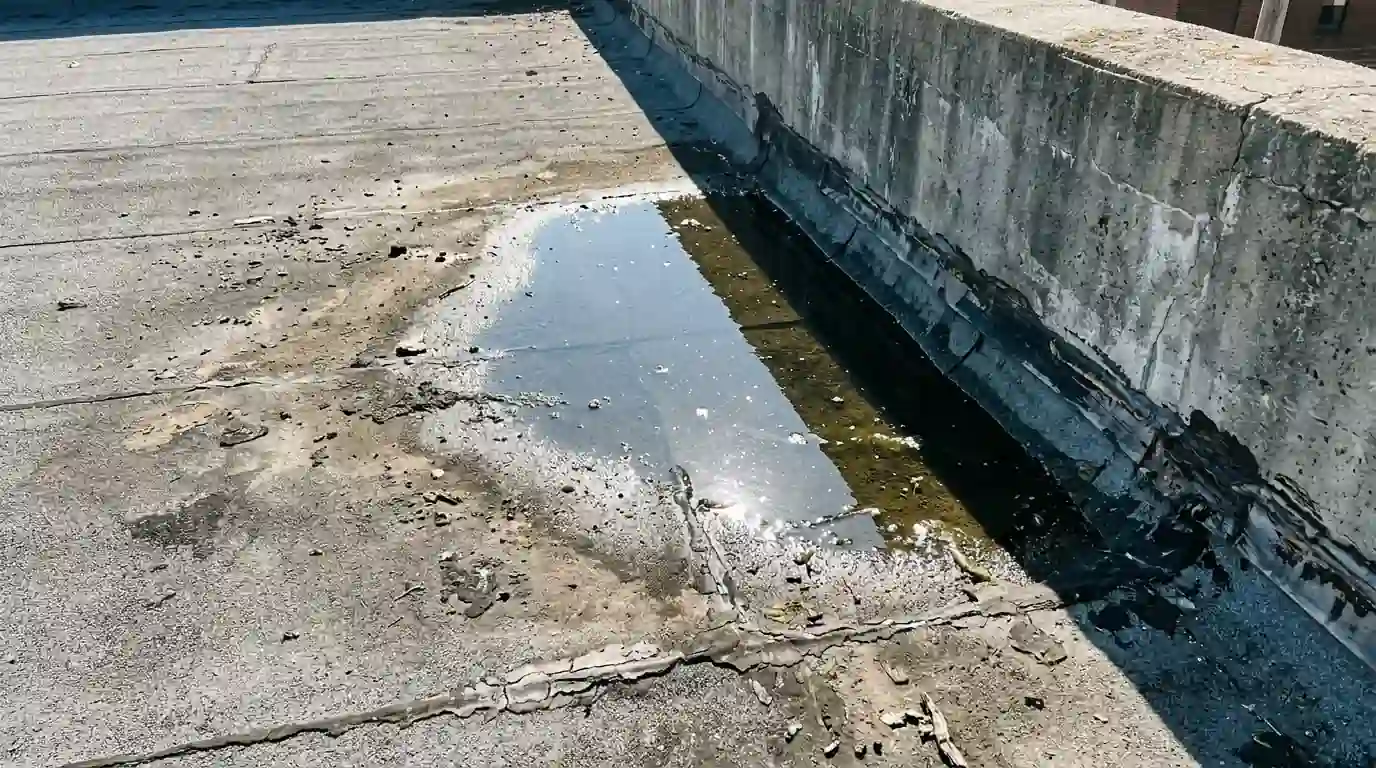
Ponding that won't fully drain

Silicone tolerates standing water better than acrylic, though drainage should still be improved.

Budget pressure on a replacement

If the roof is sound, coating can delay a full replacement for several years.

From first call to finished roof

How we handle silicone roof coating from start to finish

  1. Step 1

    Moisture survey and cores

    We scan the roof for wet areas and take cores to confirm what's underneath.

  2. Step 2

    Adhesion test patches

    Test patches with candidate primers are applied, cured and pulled to measure bond.

  3. Step 3

    Clean and dry

    The roof is pressure washed and left to dry before any repairs start.

  4. Step 4

    Repair seams and wet areas

    Seams, blisters, flashings and wet sections are fixed and reinforced.

  5. Step 5

    Prime where required

    Primer goes on surfaces that need it based on the adhesion test results.

  6. Step 6

    Apply and measure coating

    Silicone is applied to the target thickness and checked with a mil gauge across the roof.

What silicone roof coating usually costs in San Antonio

Silicone restoration in San Antonio typically runs $3.45 to $6.20 per square foot. The cost depends on the roof after inspection, including repairs, primer needs and coating thickness.

Line itemTypical range
Moisture survey and adhesion testing$345 to $685
Pressure washing and prep, per sq ft$0.38 to $0.67
Seam and flashing reinforcement, per linear foot$3.15 to $5.85
Primer where needed, per sq ft$0.42 to $0.88
Silicone coating material and application, per sq ft$2.35 to $3.95

What moves the price

  • Roofs with many seams or penetrations need more reinforcement work.
  • Wet sections must be cut out and replaced before coating.
  • Some substrates need primer, which adds material and labor.
  • Thicker coatings for longer service add material cost.
  • Access, building height and staging affect setup time.

Ranges are typical, not quotes. Your price depends on the roof we see at the inspection. See every service side by side in the roofing cost guide.

Materials we install and repair

  • GAF
  • Owens Corning
  • CertainTeed
  • Malarkey
  • TAMKO
  • Atlas Roofing
  • IKO
  • Eagle Roofing
  • Westlake Royal
  • DaVinci Roofscapes
  • Englert
  • Carlisle
  • Velux
  • Solatube
  • GAF
  • Owens Corning
  • CertainTeed
  • Malarkey
  • TAMKO
  • Atlas Roofing
  • IKO
  • Eagle Roofing
  • Westlake Royal
  • DaVinci Roofscapes
  • Englert
  • Carlisle
  • Velux
  • Solatube
  • GAF
  • Owens Corning
  • CertainTeed
  • Malarkey
  • TAMKO
  • Atlas Roofing
  • IKO
  • Eagle Roofing
  • Westlake Royal
  • DaVinci Roofscapes
  • Englert
  • Carlisle
  • Velux
  • Solatube

Answers

Silicone Roof Coating questions from San Antonio homeowners

How long does a silicone roof coating last on a San Antonio flat roof?

Service life depends mostly on applied thickness, prep and how well the roof drains. Thicker applications on well-prepared roofs last longer than thin coats. When the coating wears, it can usually be cleaned and recoated with silicone rather than torn off, which is one of the main advantages of restoration.

Can silicone coating go over a metal roof with rust?

Yes, if the rust is on the surface and the panels are still solid. We wire brush or wash loose rust, treat it with a rust-inhibiting primer, replace bad fasteners and seal laps first. Panels rusted through need replacing before coating. The goal is to coat a sound roof, not to hide holes.

Is silicone coating better than acrylic in San Antonio heat?

Silicone handles ponding water and UV exposure better, which suits many flat roofs here. Acrylic costs less and stays cleaner, but it can break down where water sits. On roofs with good drainage, acrylic can be a reasonable option. We recommend based on how your roof drains and what it's made of.

Will a silicone roof coating stop an active leak?

Not on its own. Leaks need to be found and repaired first, and wet insulation must be replaced before coating. Spraying over an active leak can trap water and make the damage worse. After repairs are made, the coating adds a continuous waterproof surface over the whole roof.

Related work

Other roof work that often goes with this job

Puddle of ponding water on an aged low-slope roof section beside a parapet wall in bright sun

Flat Roof Repair

Repairs for ponding, blisters and split seams on flat and low-slope sections of older San Antonio homes, porches and additions.

Learn more
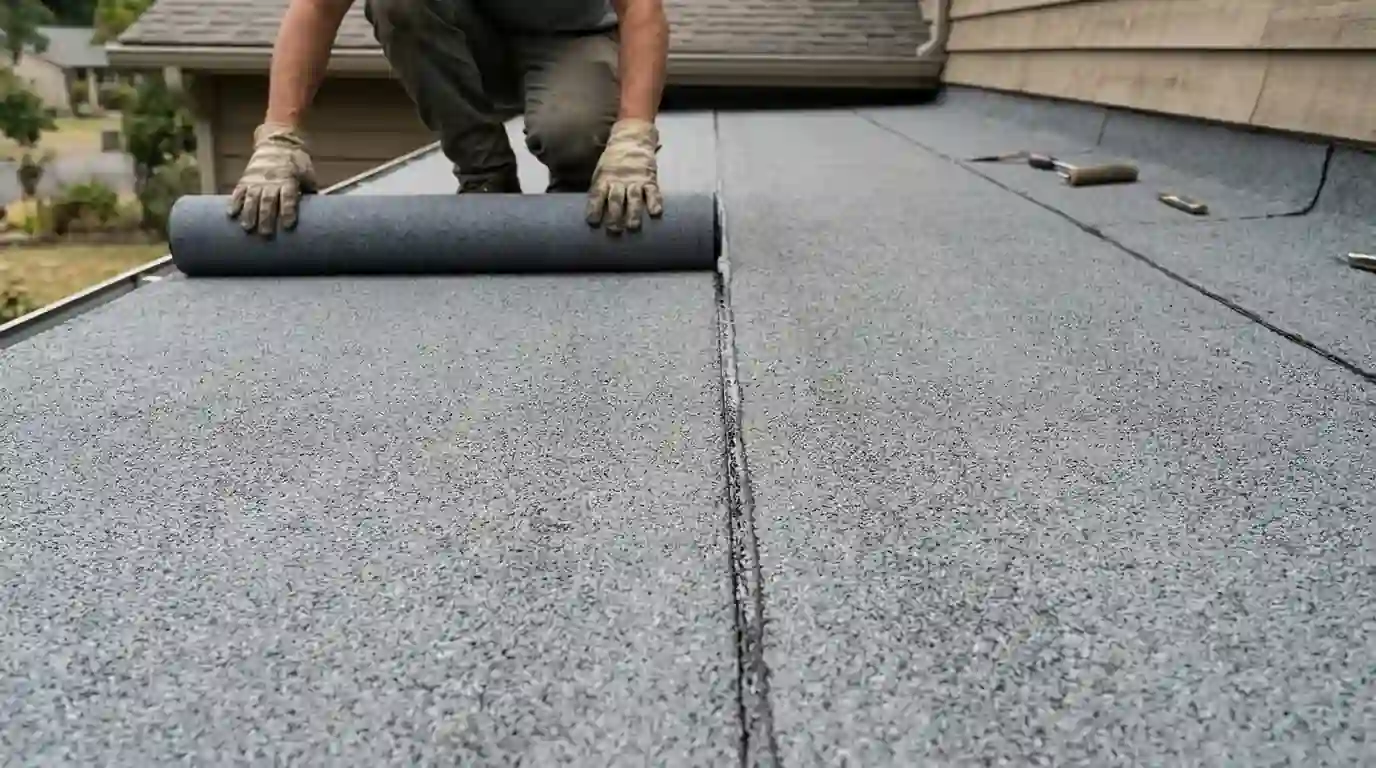
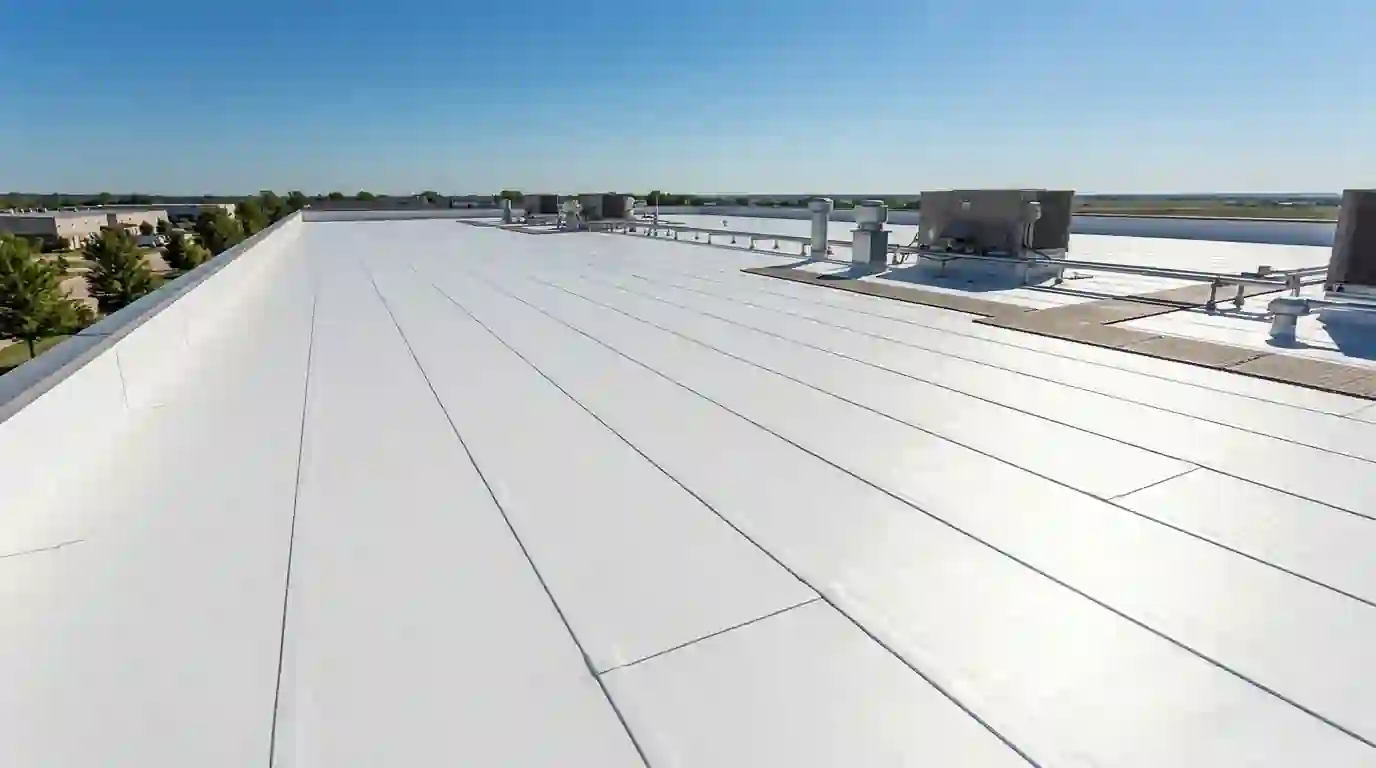
Bright white TPO membrane roof with heat-welded seams on a low commercial building under blue sky

TPO Roofing

White heat-welded TPO membrane for flat and low-slope roofs on San Antonio homes and small buildings, laid over new insulation board.

Learn more
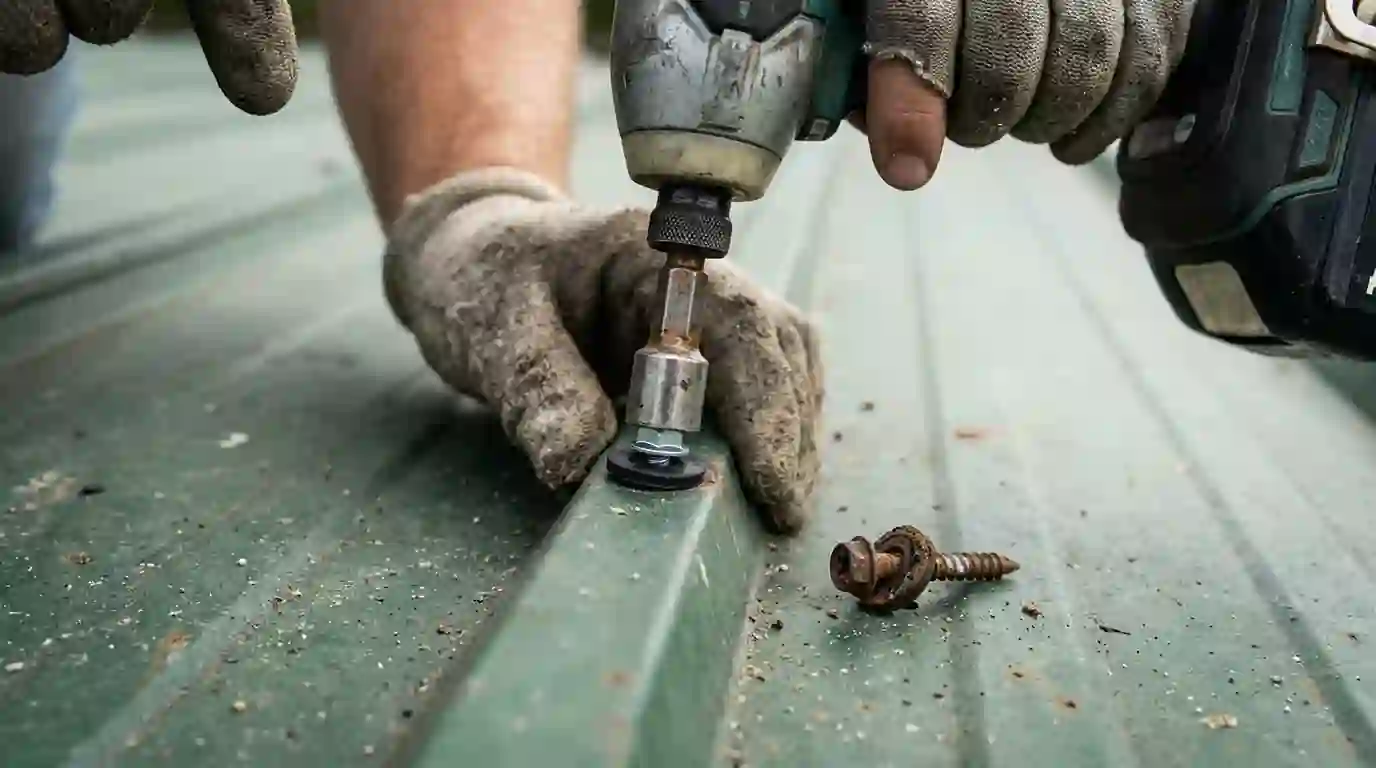
Roofer replacing a backed-out screw and worn washer on an exposed fastener metal roof panel

Metal Roof Repair

Backed-out screws, dried washers, leaking seams, loose trim and rust spots fixed on standing seam, 5V and corrugated roofs.

Learn more
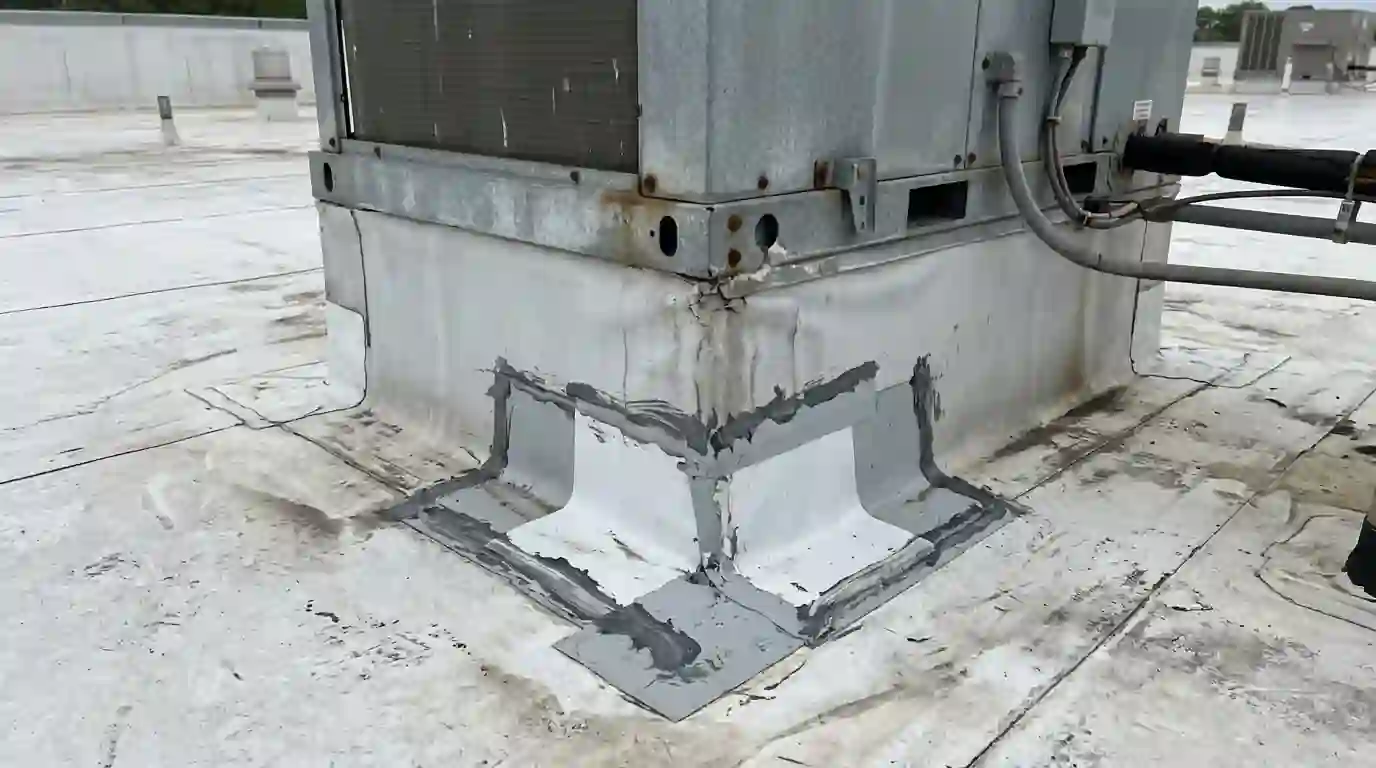
Patched membrane seam around a rooftop air conditioning unit curb on a commercial roof

Commercial Roof Repair

Leak repairs at rooftop HVAC units, drains, scuppers and parapets on San Antonio commercial buildings, with photo reports for managers.

Learn more

Roof trouble today? Talk to a roofer now.

Our phone line is answered 24/7. Tell us what you see and we will tell you the next step, even if that step is a tarp tonight and a full inspection tomorrow.

Call (210) 750-1898Answered 24 hours a day
Call (210) 750-189824/7