What composite slate and shake actually are
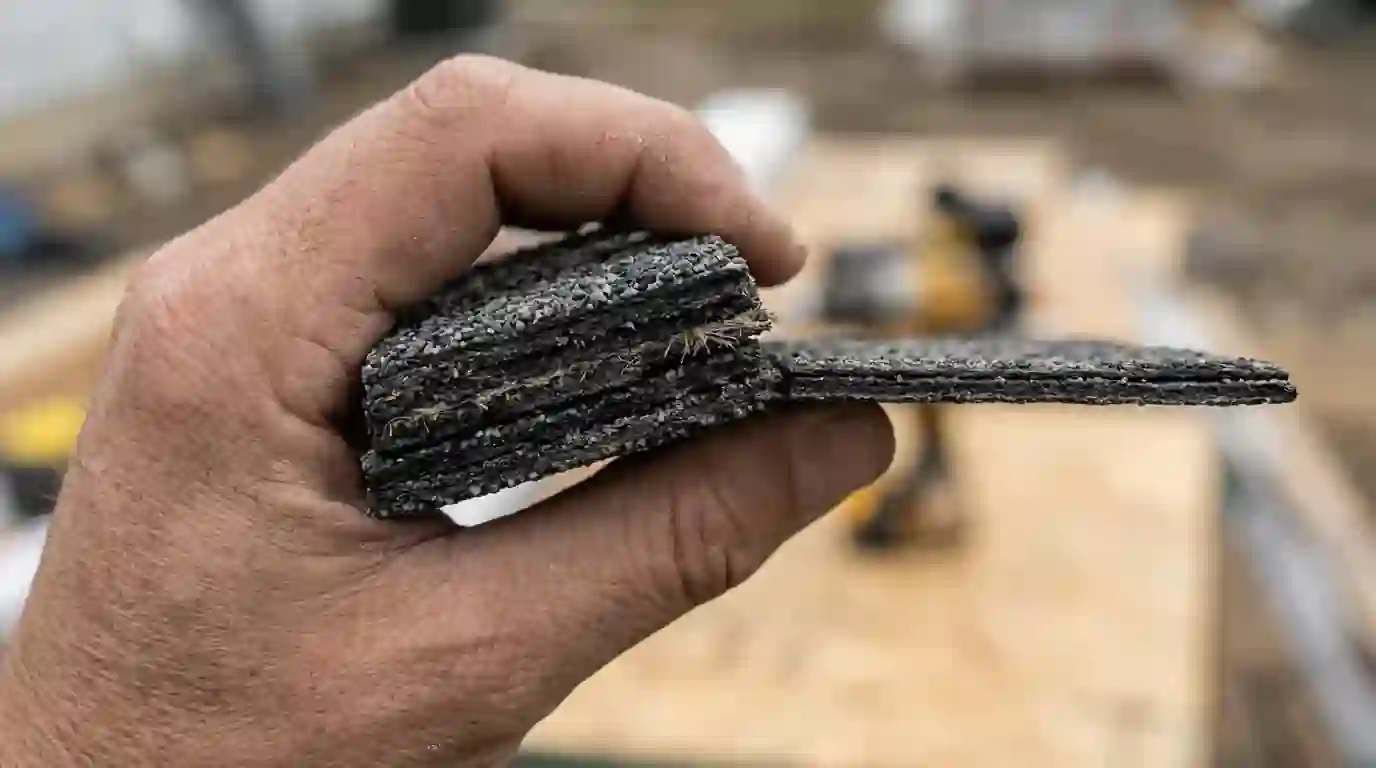
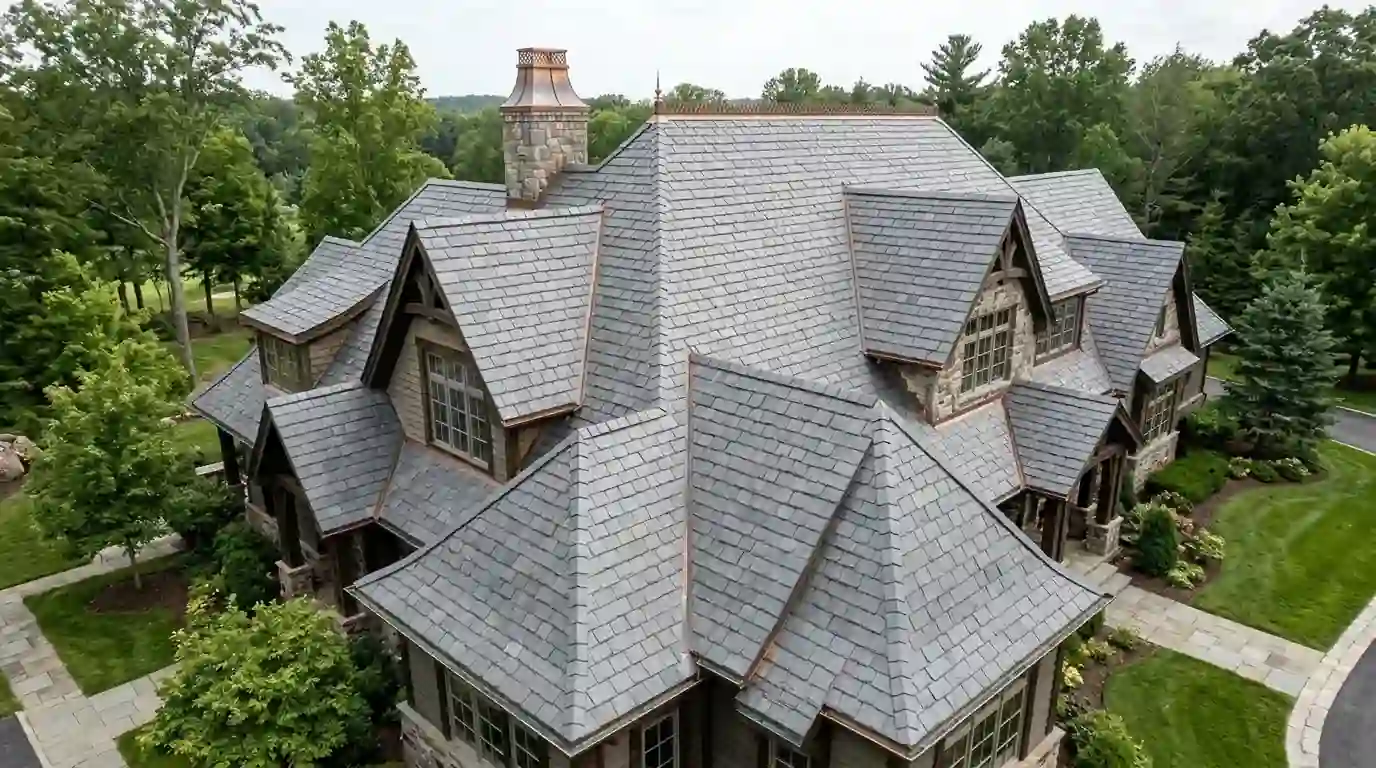
Most synthetic slate and shake products are injection-molded from a blend of polymers, rubber and UV stabilizers. Each tile is cast from molds taken off real stone or split cedar, so the edges, chisel marks and wood grain read as natural from the street. Better lines use several molds and blend multiple colors, so the finished roof doesn't look stamped out of one repeating pattern.
They aren't fiber cement and they aren't stone-coated steel. Those are different products with different fasteners, walking rules and failure points. When a bid simply lists a slate look, ask for the exact material and product line. That answer changes how the roof handles a June hailstorm, an attic that passes 140 degrees and many Texas summers of UV.
Why does roof weight matter so much on a custom home?
Natural slate and clay tile are heavy enough that many homes need added rafters or an engineer's review before they can carry them. Most composite slate weighs close to a heavy architectural shingle. That means a 1990s home in Stone Oak or Shavano Park framed for shingles can usually take a synthetic slate roof without structural changes, which real slate would rarely allow.
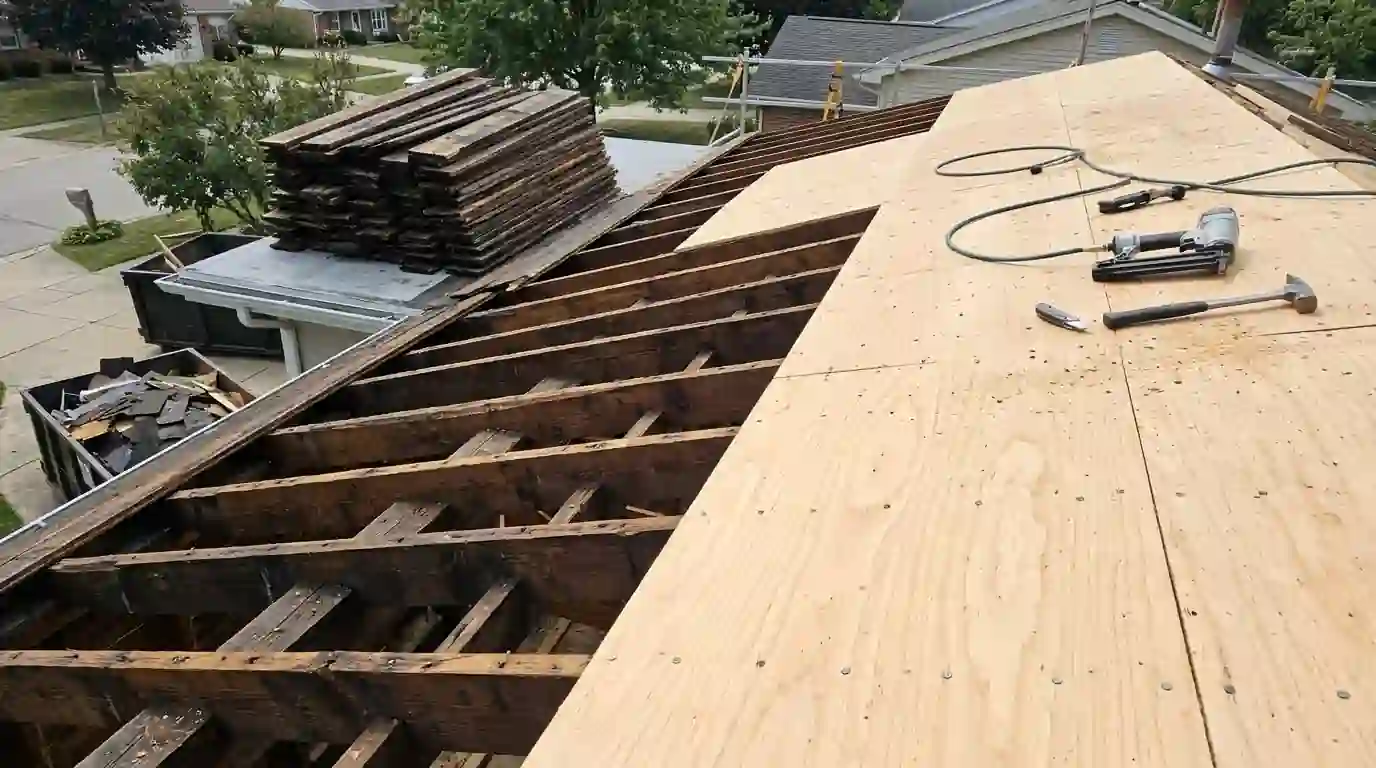
We still check. Before quoting, we go into the attic to look at rafter size and spacing, sagging ridges and any earlier cut-and-patch framing from past remodels. If the decking is thin, delaminated or made of spaced plank boards, it has to be replaced or covered with plywood, because composite tiles need a solid, flat nailing surface to lie true. Our work replacing tired decking covers that step in detail.
How do synthetic tiles hold up to San Antonio hail and heat?
Many composite slate and shake lines are tested to UL 2218 Class 4, the same impact standard used for Class 4 asphalt shingles. Class 4 means a sample survived steel balls dropped from set heights without cracking through. It doesn't mean a tile can't be scuffed or dented by very large hail, and it doesn't stop an insurer from adjusting a claim after a storm.
Texas requires insurers to offer a premium discount for qualifying impact-resistant roofs, but the amount varies by company and the product needs the right documentation. We hand over the product's rating paperwork after install so your agent can review it. Our guide to the Texas impact discount walks through what agents usually ask to see.
Heat is the other test. Composite tiles expand in July sun, so they're laid with a set side gap and nailed in the marked zone rather than jammed tight. Lighter blends such as weathered gray or cedar tan run cooler than charcoal slate, which matters most on west-facing slopes over bedrooms.
Getting a slate or shake look past the HOA
Gated and master-planned communities such as The Dominion and Cibolo Canyons often limit roofs to tile, metal or a slate appearance. Synthetic slate fits many of those guidelines, but architectural committees usually want a sample board, a color name and a spec sheet before approval. We prepare that packet and photograph the existing roof so the committee sees exactly what will change.
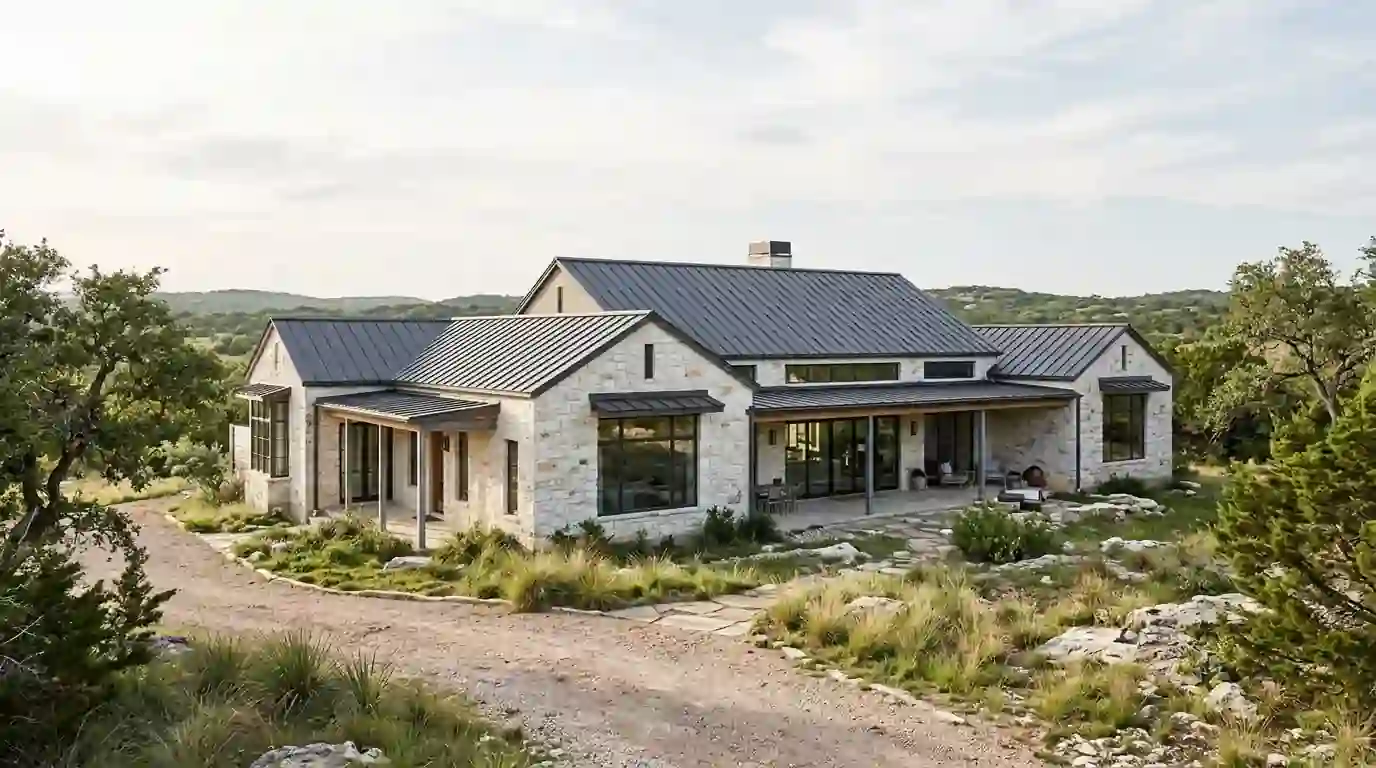
Shake profiles suit Hill Country stone homes and ranch-style customs where cedar was once common but is now hard to insure. You get thick butt edges and staggered lengths without the curling, splitting and fire risk of real wood. Ask to see three or four tiles laid together outdoors, because color blends shift a lot between showroom light and full Texas sun.
Is synthetic slate the right fit for your roof?
Composite slate makes the most sense on steeper roofs, usually 4:12 pitch and up, with slopes facing the street. On a low ranch roof or one hidden behind parapets, you're paying for a look nobody sees. Roofs with many valleys and dormers cost more per square because every valley needs hand-cut tiles and extra flashing metal.
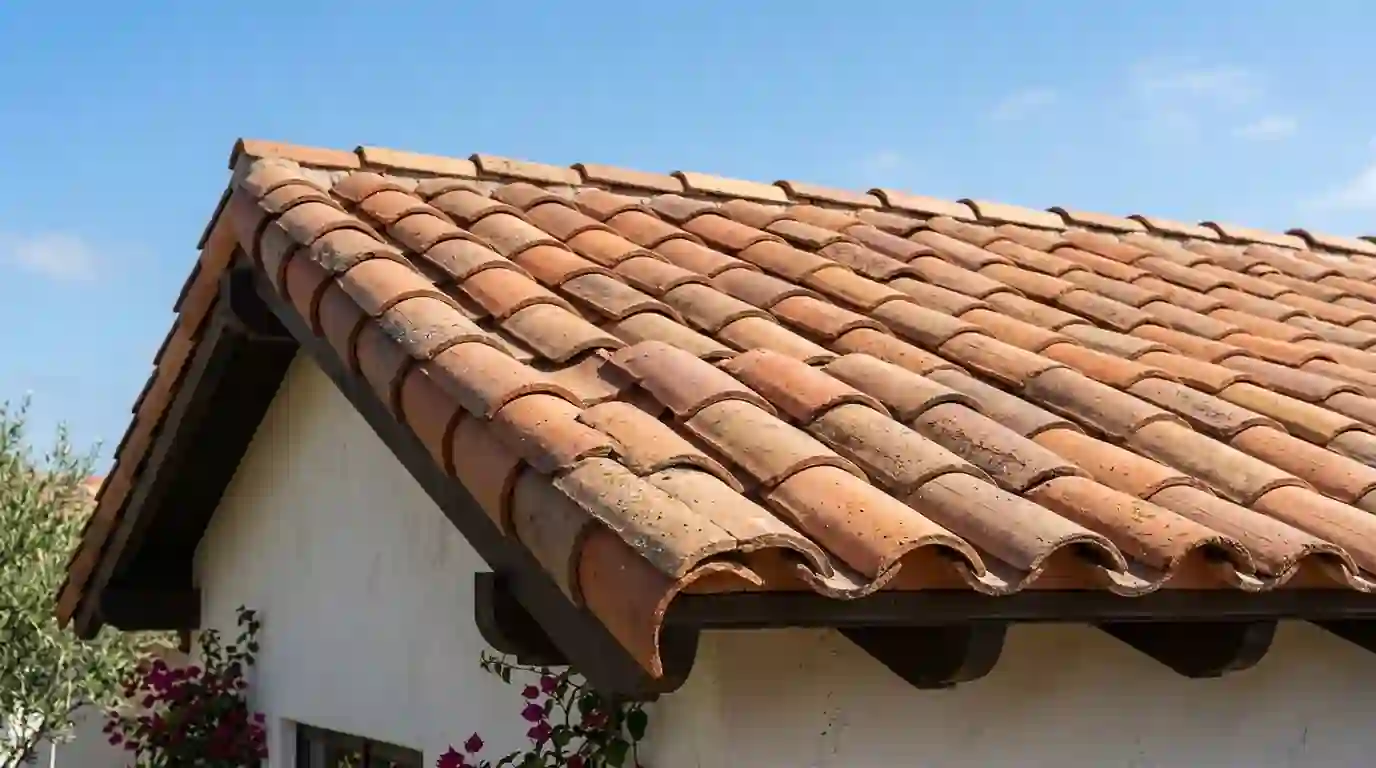
If your home has real slate in fair condition, repair is often wiser than replacement, and homes in historic districts may face review before switching materials. Our historic roofing work covers that path. Homeowners weighing heavy materials can also compare clay and concrete tile, the other common upscale option across north San Antonio.
- Good fit: steep roofs with street-facing slopes and a moderate number of valleys.
- Good fit: HOAs that require a tile, slate or shake appearance.
- Good fit: homes carrying heavy tile or slate that the framing no longer handles well.
- Weaker fit: low-slope roofs under 4:12 pitch or roofs hidden by parapet walls.
- Weaker fit: tight budgets where a Class 4 shingle meets the same insurance goal.