Skip to content
Ortiz RoofingSan Antonio, Texas 24/7(210) 750-1898

Metal roofs for outbuildings

Barn and shop metal roofing in San Antonio and the surrounding acreage

A shop, hay barn or pole building needs a roof that keeps tools and equipment dry without costing what a house roof does. We reroof and install R-panel and PBR metal roofs on outbuildings across Bexar County and the acreage beyond, from Spring Branch and Bandera to Floresville and Pleasanton.

  • Phones answered 24/7
  • Roof Replacement & Materials
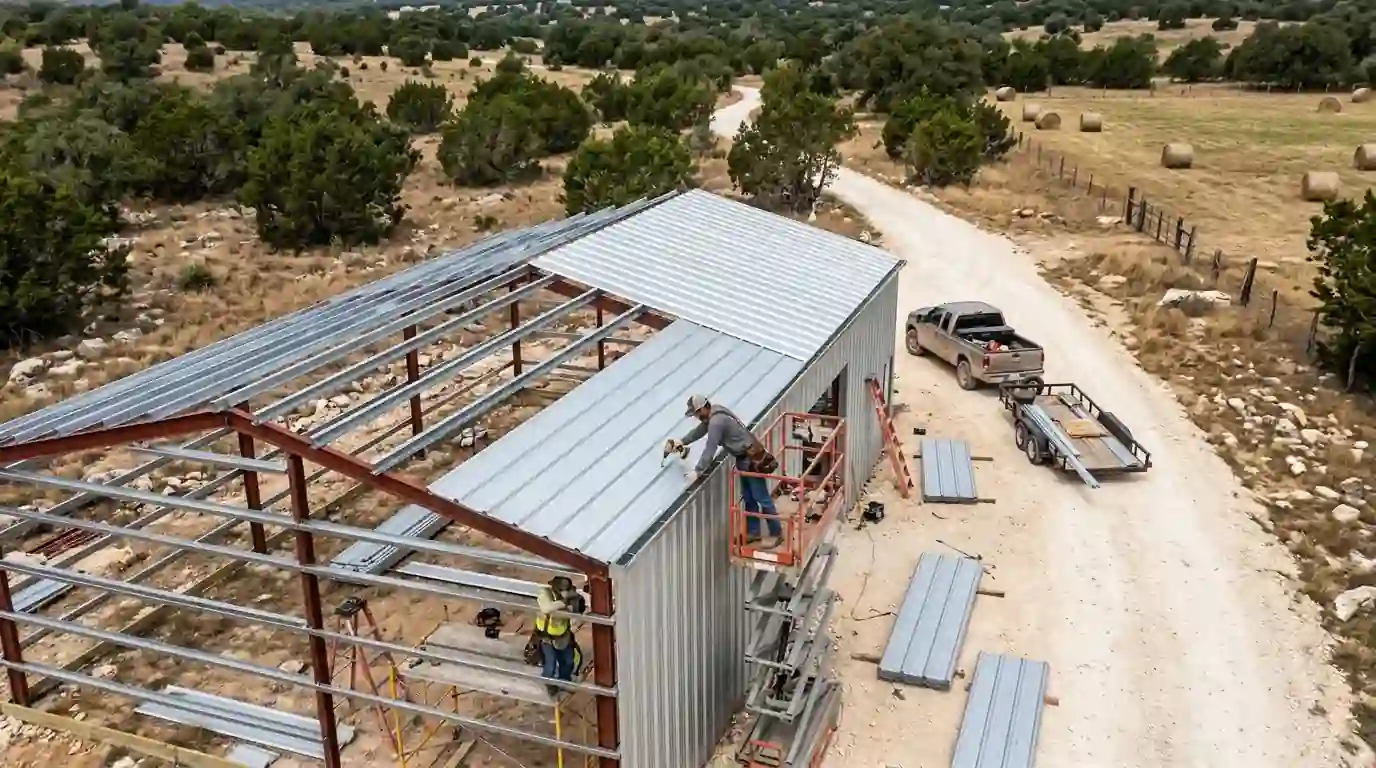
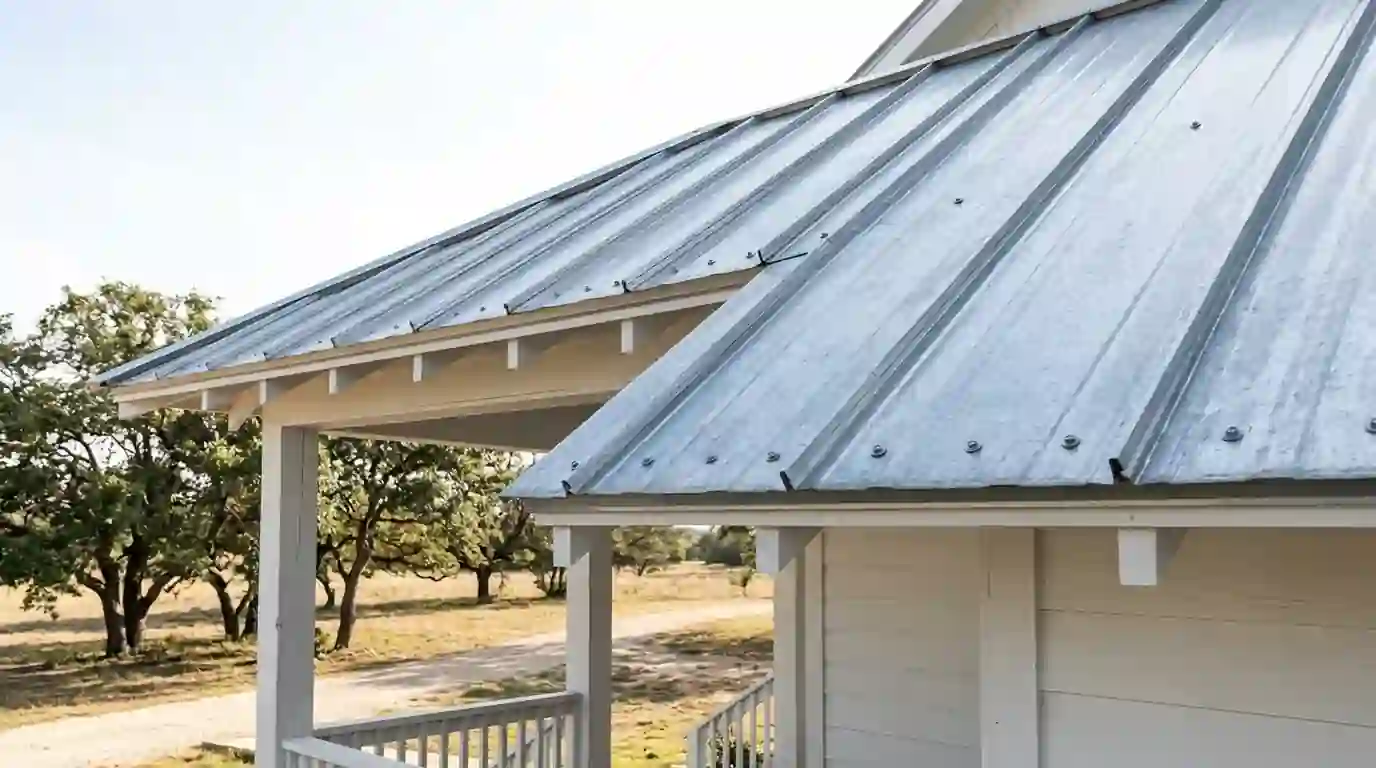
Galvalume PBR panels being fastened to steel purlins on a pole barn on Hill Country acreage near Bandera, cedar trees, round hay bales and a dusty caliche drive
Typical San Antonio range$3.85 to $6.70 per sq ft
Short answer

Barn and shop metal roofing uses exposed-fastener ribbed panels, usually R-panel or PBR, screwed straight to steel or wood purlins rather than solid decking. It's fast to install, sheds rain well at low pitches and handles hail better than shingles. Around San Antonio, installed prices typically run $3.85 to $6.70 per square foot, depending on panel gauge, insulation, tear-off and building condition after inspection.

R-panel or PBR: what's the difference on a shop roof?

R-panel and PBR panels look almost identical from the ground: wide flat pans with tall trapezoid ribs about a foot apart. The difference is at the side lap. PBR adds a small purlin bearing leg that sits on the purlin and supports the overlap, which keeps the seam from flexing under screws and foot traffic. R-panel lacks that leg and costs a little less.

On most enclosed shops and garages, PBR is worth the small upcharge because the stiffer lap seals better over time. On open hay barns, loafing sheds and equipment covers where a few drips don't matter, R-panel does the job. Both run in 26 gauge for most rural buildings, with 24 gauge available where purlin spacing is wide or hail is a big concern. If you're roofing a house rather than an outbuilding, the shallower ribs of 5V crimp panels suit a farmhouse better. Ribbed R-panel and PBR are built for buildings framed with open purlins, not for homes with plywood decking and finished ceilings below.

Purlins, spans and the framing under the panels

Outbuilding panels fasten directly to horizontal purlins, which are usually wood two by fours or two by sixes on older barns and steel Z or C purlins on newer pole buildings. Purlin spacing is what decides panel gauge. Most 26 gauge PBR spans two to three feet comfortably, while wider spacing calls for heavier steel or added purlins.

On older barns in Wilson and Atascosa counties, we often find purlins that have split around old nail holes, bowed between trusses or rotted where a leak sat for years. We replace those before new panels go on, because a screw can't hold in punky wood. Steel purlins get checked for rust at the eave and bolts that have loosened from years of wind flex.

Reroofing over existing tin is sometimes possible with a layer of spacer purlins on top. It saves tear-off cost and keeps the old roof as a backup layer, but it only works when the original framing is straight and solid. We'll show you from inside the building what we see before you choose.
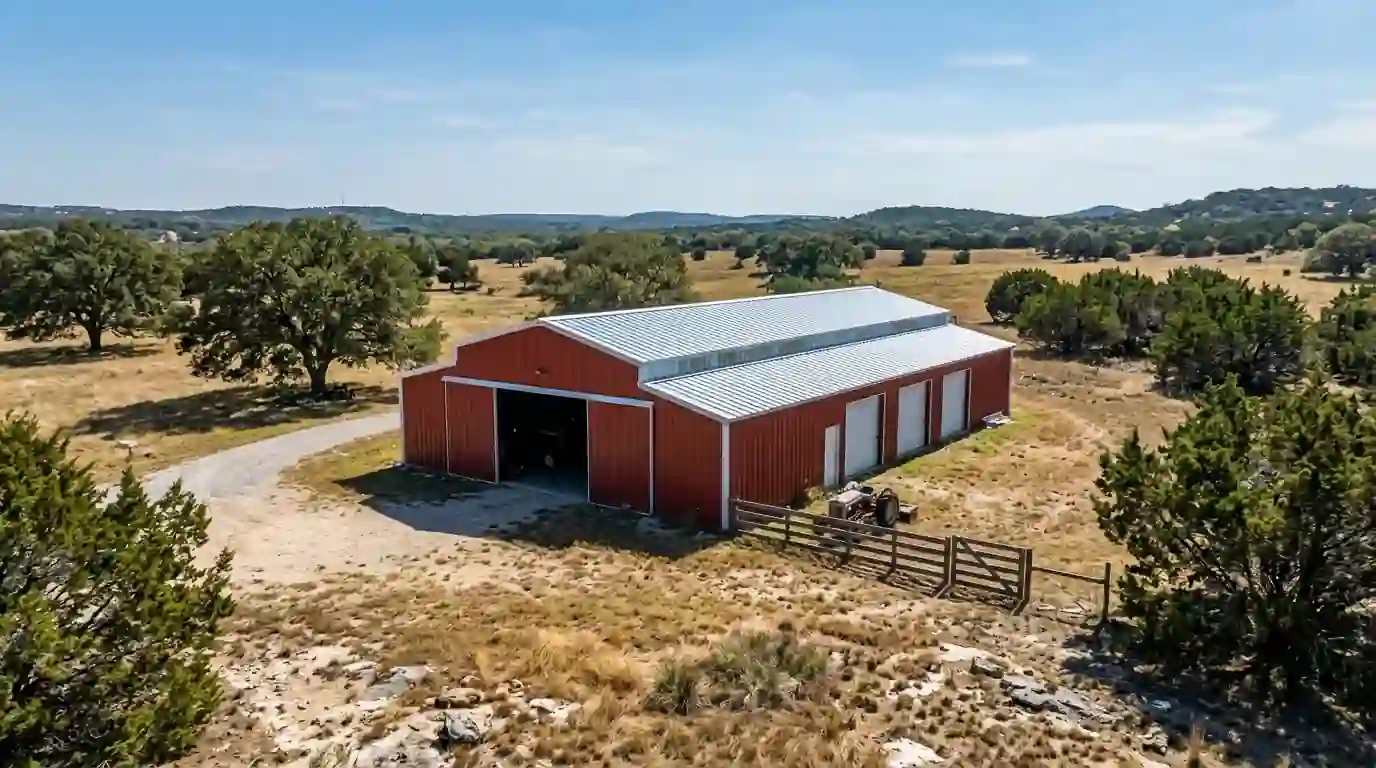
New galvanized R-panel metal roof on a red barn and equipment shop on Hill Country acreage, cedar trees around
Barn & Shop Metal Roofing on a San Antonio area home.

How do you stop a shop roof from dripping condensation?

On a cool spring morning after a warm, humid night, the underside of bare steel drops below the dew point and collects water. It then drips onto tools, trucks and hay as if the roof were leaking. That's the single most common complaint we hear about uninsulated metal shops in South Central Texas.

There are three common fixes. A fabric-backed panel or a drip-stop membrane adhered to the underside of the steel holds condensation until it evaporates. Faced fiberglass blanket laid over the purlins before the panels adds insulation and stops drips. Closed-cell spray foam applied after the roof is on seals and insulates in one step, at a higher cost.

For a hay barn, drip-stop is usually enough. For a heated or cooled shop, a man cave or a garage with a workbench, insulation pays back quickly in summer comfort. Summer attic and shop temperatures here commonly pass 140 degrees under bare metal, so a layer of insulation changes how usable the building is in July.

Clear skylight panels without the leaks

Translucent polycarbonate or fiberglass panels in the same rib profile let daylight into a barn or shop without wiring lights. They're popular on hay barns and workshops. The trade-off is that they're the softest part of the roof, and hail cracks fiberglass panels long before it dents steel.

We set clear panels with matching rib closures and extra fasteners at the laps, and we avoid placing them where water concentrates near a valley or lean-to tie-in. On buildings in hail-prone corridors north of San Antonio, we lean toward thicker polycarbonate, which flexes instead of shattering. Replacing yellowed or cracked old skylight panels is one of the quickest wins on an aging barn roof.

Ridge caps, closures and fasteners that keep weather out

Exposed-fastener roofs live or die by their screws. We use long-life fasteners with EPDM washers, driven snug but not crushed, set in the flat pan on purlins and in the rib at side laps. Overdriven screws split the washer, and underdriven screws let water wick in. Getting that right across thousands of screws is most of the job.

Foam closures fill the gaps under the ribs at the ridge and eave so wasps, birds and wind-driven rain can't get in. Butyl tape seals end laps where panels overlap on long runs. Gable trim and eave trim tie it all together. When older roofs start leaking at the screws, our fastener and seam repair work can buy years before a full reroof makes sense. If the outbuilding is really a carport or an attached porch cover, our patio and carport roofing page covers the different framing and tie-in work those need.

Working on acreage in Comal, Bandera and Wilson counties

Rural jobs bring their own logistics. We check gate widths, caliche drive conditions after rain, septic field locations and where a delivery truck can drop 30 foot panels without rutting the pasture. Livestock need to be moved out of barns during tear-off, since old screws and metal scraps end up on the ground.

We run a magnet sweep across the work area when we finish, because a stray screw in a horse's hoof or a tractor tire is a real problem. Hail on the Hill Country side of Comal County and across Bandera County ranch land can be as damaging as in town, so we photograph old damage before tear-off in case you want to file a claim.
Warning signs

Signs your roof needs barn & shop metal roofing

Rusted panel laps

Brown streaks and pinholes along the overlaps show where water has been sitting for years.

Dripping on dry days

Water on the floor after a cool, humid night points to condensation under bare steel, not a leak.

Backed-out screws

Screw heads standing proud of the panel have worked loose from wind flex and let water past the washer.

Cracked skylight panels

Yellowed or split fiberglass panels leak at every rain and let birds in.

Sagging between trusses

A wavy roof line from the ground suggests bowed or rotted purlins under the metal.

Old tin patched many times

Layers of tar, tape and caulk on the roof mean the panels are past the point where patching keeps up.

From first call to finished roof

How we handle barn & shop metal roofing from start to finish

  1. Step 1

    Walk the building inside and out

    We check purlins, trusses, existing panels and skylights from inside, then measure the roof and note access for delivery trucks.

  2. Step 2

    Choose panel, gauge and insulation

    We match R-panel or PBR and the gauge to your purlin spacing, and pick condensation control based on how you use the building.

  3. Step 3

    Tear-off or overlay prep

    We remove old panels or set spacer purlins, then replace damaged framing members.

  4. Step 4

    Insulation and panels

    Drip-stop or blanket insulation goes down, followed by panels screwed on a set pattern with closures at ridge and eave.

  5. Step 5

    Trim, ridge and clear panels

    Gable trim, eave trim, ridge cap and any skylight panels go on with sealed laps.

  6. Step 6

    Cleanup and magnet sweep

    We haul off scrap and sweep the ground for screws and metal shavings before we leave.

What barn & shop metal roofing usually costs in San Antonio

Barn and shop metal roofs around San Antonio typically run $3.85 to $6.70 per square foot installed. Your price depends on the building after inspection, mainly framing condition and insulation choice.

Line itemTypical range
26 gauge PBR or R-panel installed, per sq ft$2.35 to $3.65
Drip-stop or faced blanket insulation, per sq ft$0.68 to $1.45
Old panel tear-off and haul off, per sq ft$0.47 to $0.93
Purlin repair or replacement, per linear foot$6.85 to $13.40
Polycarbonate skylight panel, each$187 to $346

What moves the price

  • Moving from 26 to 24 gauge steel adds material cost but suits wide purlin spacing and hail exposure.
  • Closed-cell spray foam costs far more than drip-stop membrane but insulates and seals in one step.
  • Rotted or bowed purlins found during inspection are priced by the foot.
  • Overlaying old tin saves tear-off but needs spacer purlins and straight framing.
  • Long drives, soft ground and tight gates can add delivery and equipment time on rural lots.
  • Lean-to additions, multiple roof planes and clear panels each add trim and sealing work.

Ranges are typical, not quotes. Your price depends on the roof we see at the inspection. See every service side by side in the roofing cost guide.

Materials we install and repair

  • GAF
  • Owens Corning
  • CertainTeed
  • Malarkey
  • TAMKO
  • Atlas Roofing
  • IKO
  • Eagle Roofing
  • Westlake Royal
  • DaVinci Roofscapes
  • Englert
  • Carlisle
  • Velux
  • Solatube
  • GAF
  • Owens Corning
  • CertainTeed
  • Malarkey
  • TAMKO
  • Atlas Roofing
  • IKO
  • Eagle Roofing
  • Westlake Royal
  • DaVinci Roofscapes
  • Englert
  • Carlisle
  • Velux
  • Solatube
  • GAF
  • Owens Corning
  • CertainTeed
  • Malarkey
  • TAMKO
  • Atlas Roofing
  • IKO
  • Eagle Roofing
  • Westlake Royal
  • DaVinci Roofscapes
  • Englert
  • Carlisle
  • Velux
  • Solatube

Answers

Barn & Shop Metal Roofing questions from San Antonio homeowners

Should I choose R-panel or PBR for my barn metal roof?

For an enclosed shop, garage or any building with insulation, PBR is usually the better pick because the purlin bearing leg supports the side lap and keeps it sealed longer. For an open hay barn or equipment shed where small drips don't matter, R-panel saves a little money and does the job. Both use the same rib pattern and trim.

Can new shop metal roofing go right over my old barn tin?

Often it can. We fasten spacer purlins through the old panels into the original framing, then screw the new panels to those. It saves tear-off and disposal, and the old tin acts as a second layer. It only works if the original purlins and trusses are straight and solid, which we confirm from inside the building first.

Why does my metal shop roof drip on cool mornings when it isn't raining?

That's condensation. Warm, humid air inside the building hits the cold underside of the steel overnight and turns to water, which then drips. Fixes include a drip-stop membrane adhered to the panels, faced fiberglass blanket over the purlins, or spray foam under the roof. Ventilation at the ridge and eaves also helps move that moist air out.

How long do barn metal roof screws last in South Texas sun?

The steel screw itself lasts a long time, but the rubber washer under the head dries and cracks from heat and UV, often within 15 to 20 years. Wind flex can also back screws out. Replacing screws with longer-life fasteners and new washers is a common way to stretch an outbuilding roof's life before panels need replacing.

Related work

Other roof work that often goes with this job

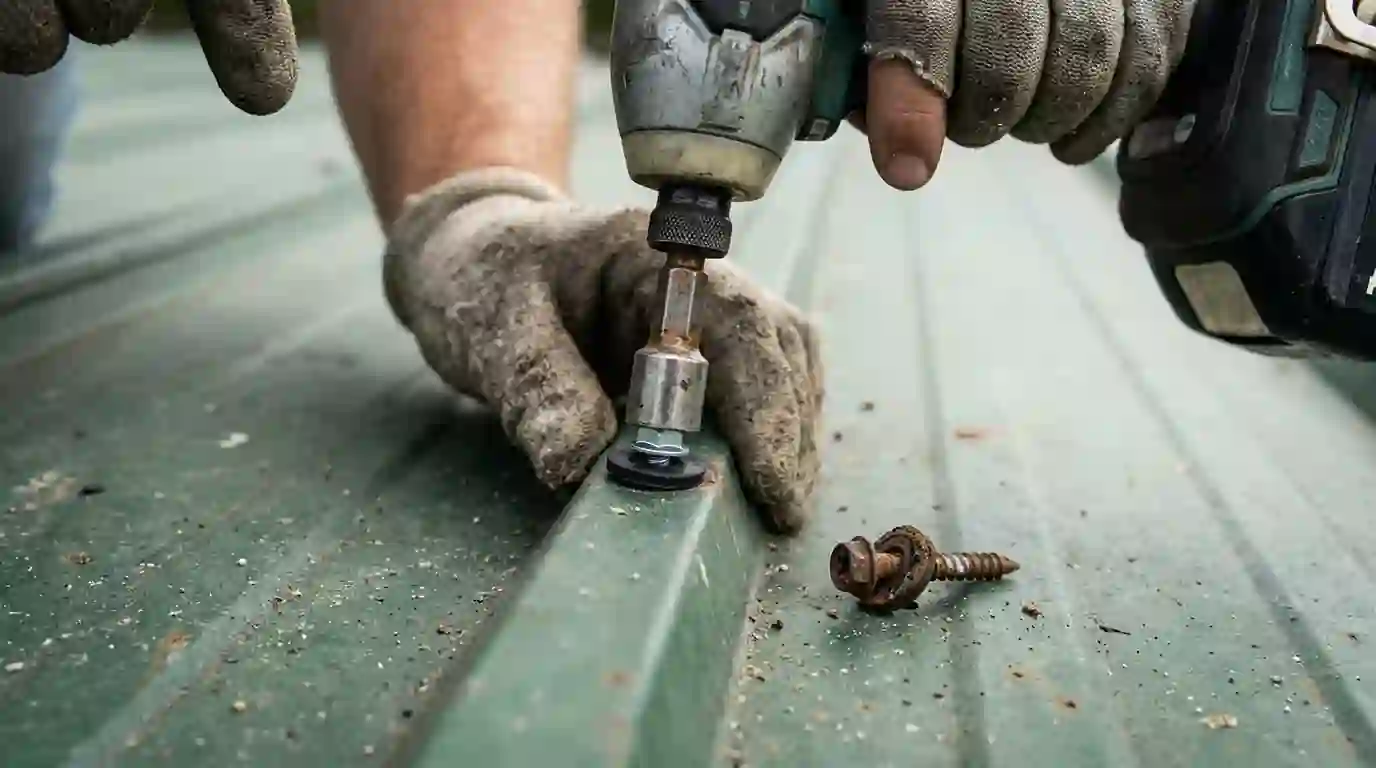
Roofer replacing a backed-out screw and worn washer on an exposed fastener metal roof panel

Metal Roof Repair

Backed-out screws, dried washers, leaking seams, loose trim and rust spots fixed on standing seam, 5V and corrugated roofs.

Learn more

Roof trouble today? Talk to a roofer now.

Our phone line is answered 24/7. Tell us what you see and we will tell you the next step, even if that step is a tarp tonight and a full inspection tomorrow.

Call (210) 750-1898Answered 24 hours a day
Call (210) 750-189824/7