Skip to content
Ortiz RoofingSan Antonio, Texas 24/7(210) 750-1898

Siding after the storm

Hail-damaged siding repair in San Antonio, handled with the roof claim

The same storm that bruises your shingles usually hits the walls facing it. We inspect and repair hail-cracked vinyl, split fiber cement, dented aluminum and battered trim on San Antonio homes, and we document the walls alongside the roof so both end up in one claim.

  • Phones answered 24/7
  • Roof Repair & Storm Damage
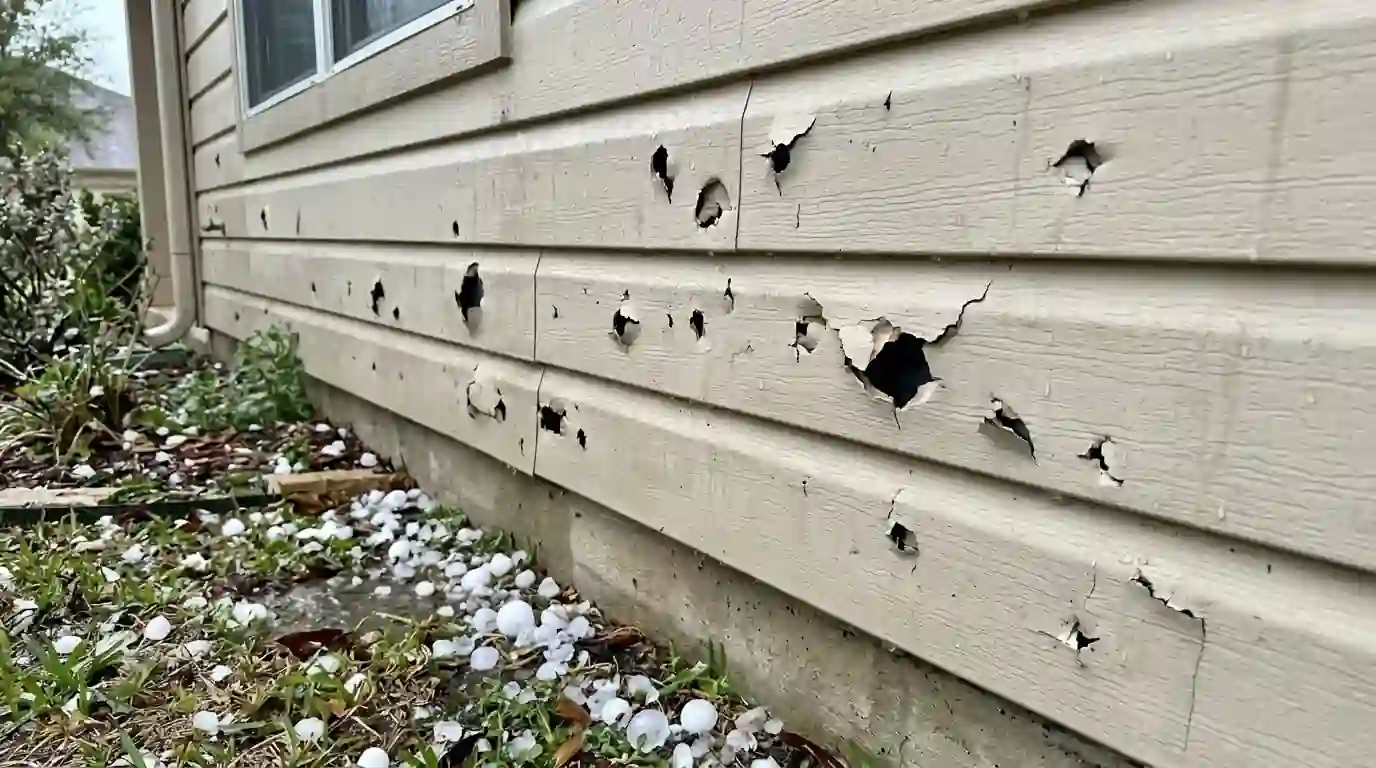
Close view of cracked and holed beige vinyl siding on the west wall of a two-story San Antonio suburban home after a spring hailstorm, scattered ice on the lawn
Typical San Antonio range$465 to $2,890 per elevation
Short answer

Hail-damaged siding repair means replacing cracked, holed or split siding pieces and dented trim on the walls that faced a storm. Vinyl cracks and punctures, fiber cement chips and splits, and aluminum dents. Most homeowners file it on the same insurance claim as the roof. In San Antonio, repairs typically run $465 to $2,890 per elevation, depending on material, matching and damage after inspection.

How hail damages vinyl, fiber cement and aluminum siding differently

Vinyl gets brittle with age and sun. On a cool spring morning, a wind-driven hailstone can punch a clean hole or leave a crescent-shaped crack along the lower lip of a course. Darker colors and older, thinner vinyl on 1990s homes take the worst of it, and cracks often aren't obvious until you look at the wall at an angle.

Fiber cement is harder, so hail chips the painted face or cracks a board near a nail. The danger is that bare fiber cement absorbs water and swells at the cracks. Even small chips should be sealed and painted, and split boards replaced. Aluminum siding and trim don't crack, but they dent, and the dents catch light so they're easy to see across a whole wall. Painted wood trim, window wraps, gutters, downspouts and AC fins take hits too. We note every item on the wall, not just the siding, because adjusters build their estimate from what's documented.

Which walls take the worst of a storm?

Hail in San Antonio usually rides in on strong northwest or west winds, especially in the spring season from March to June. Walls facing that direction take direct, angled strikes, while the opposite walls may come through untouched. That's why siding claims are usually written per elevation, meaning per wall face, rather than for the whole house.

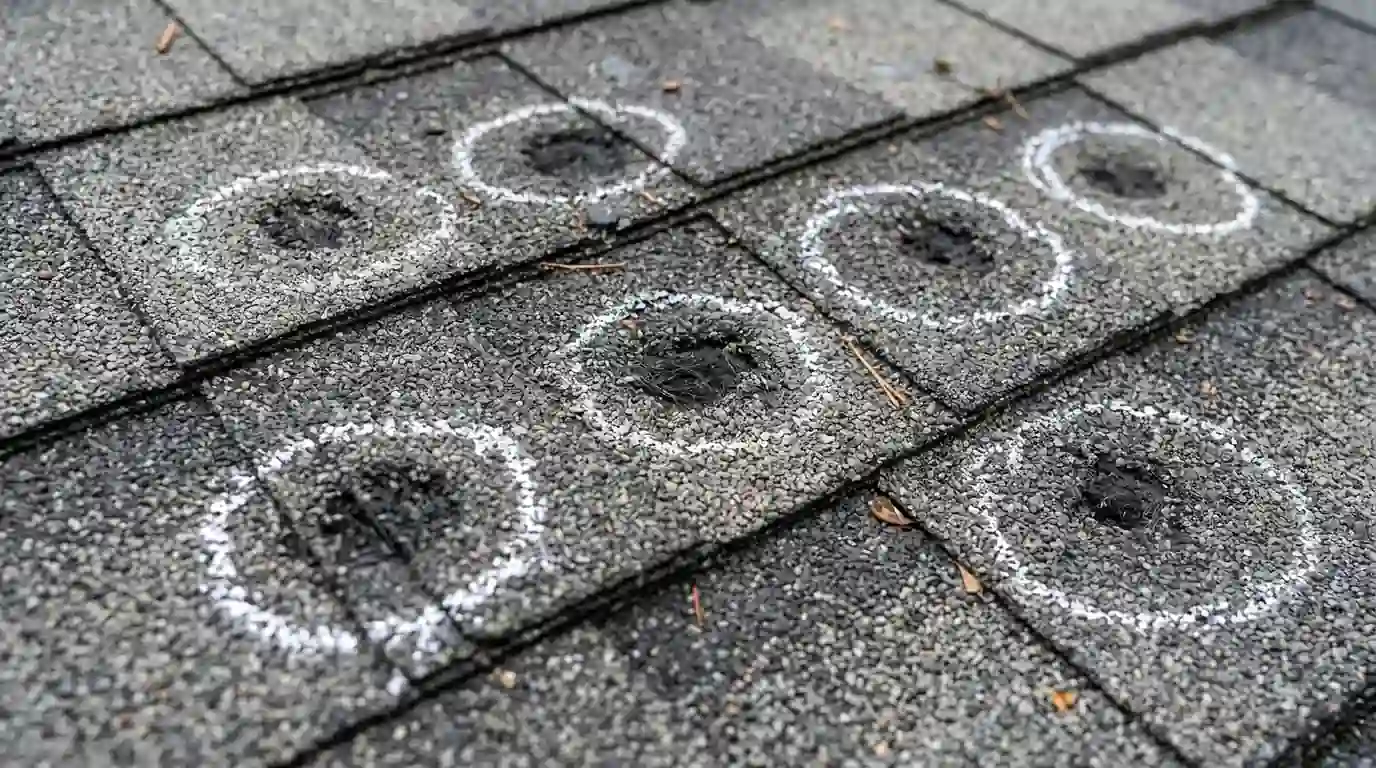
The April 12, 2016 storm showed this clearly on the north and west sides of town, where some homes needed new siding on two walls and nothing on the others. We walk every side, photograph each elevation with a marked scale, and record the spatter on soft metals like window screens and AC units that shows storm direction.
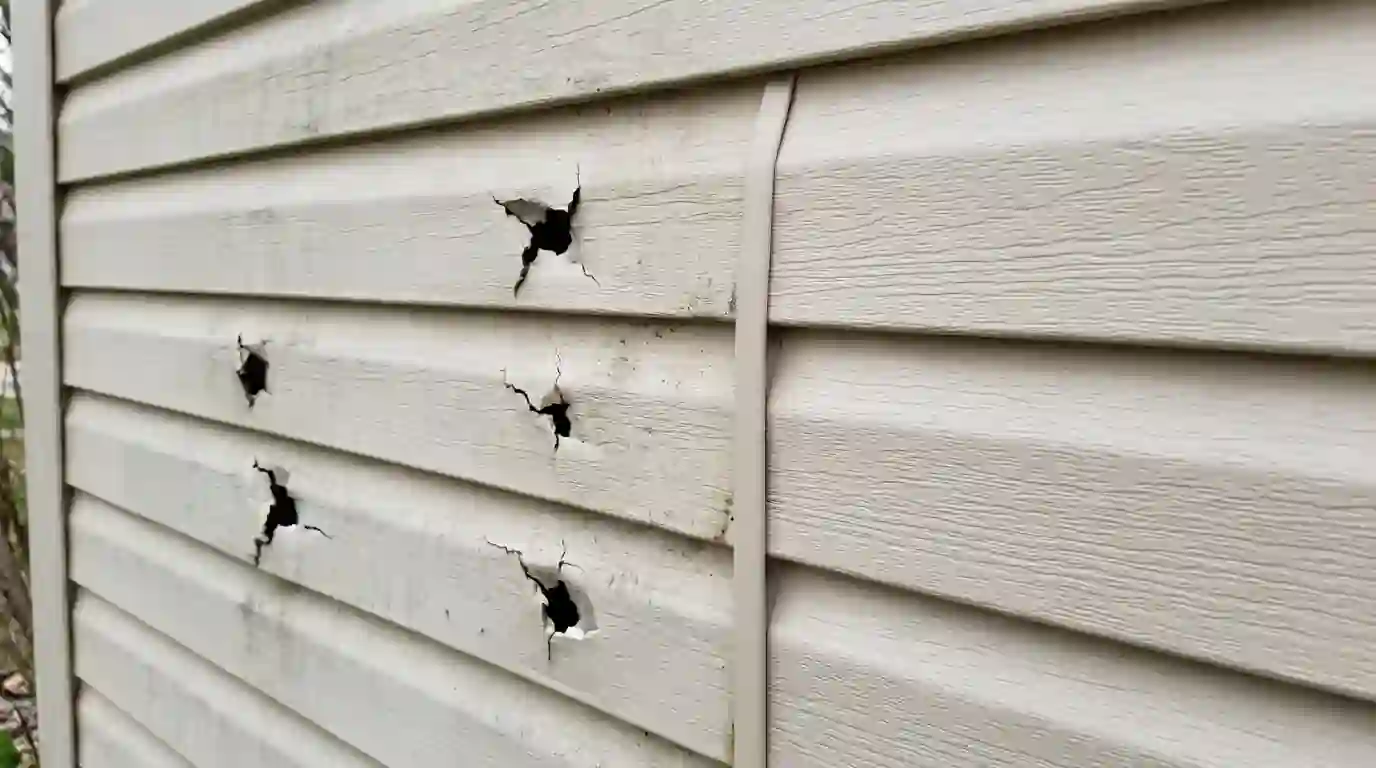
Close view of beige vinyl siding cracked and holed by hail beside a fresh replacement panel on a suburban home
Hail-Damaged Siding Repair on a San Antonio area home.

Filing siding damage on the same claim as the roof

Homeowners policies generally cover hail damage to the whole dwelling, so roof and siding go on one claim with one deductible. Filing them separately can mean paying the deductible twice. If you're already dealing with roof damage, our help with the roof claim includes walking the walls with your adjuster so nothing gets missed.

Texas law bars roofing contractors from acting as public adjusters and from waiving or rebating your deductible. What we can do is provide photos, measurements and a line-item repair scope, then meet the adjuster at the house to point out damage. Our step by step guide to Texas claims explains the timeline from filing to final payment. If you haven't called your insurer yet and aren't sure the damage is worth a claim, start with a post-storm walkaround of the roof and walls. We'll tell you what we see before you decide.

Can new siding match the profile you already have?

Matching is the hardest part of siding repair. Vinyl profiles change, colors fade, and manufacturers discontinue lines every few years. A brand-new piece of the same color can look noticeably darker than ten-year-old siding next to it. We pull a sample from a hidden spot and match profile, exposure height, texture and color as closely as current products allow.

When an exact match isn't available, adjusters may agree to replace the whole elevation so the wall looks consistent. Some policies cover matching across adjacent walls and some don't, so read your matching language. Fiber cement is easier because we prime and paint it, and the new boards can be painted to match the existing wall. For aluminum siding from the 1960s and 1970s, replacement panels are scarce. We'll show you options: salvaged pieces from a garage wall, a closely matching profile on the damaged side only, or a full elevation in a different material.

What happens behind the siding during a repair?

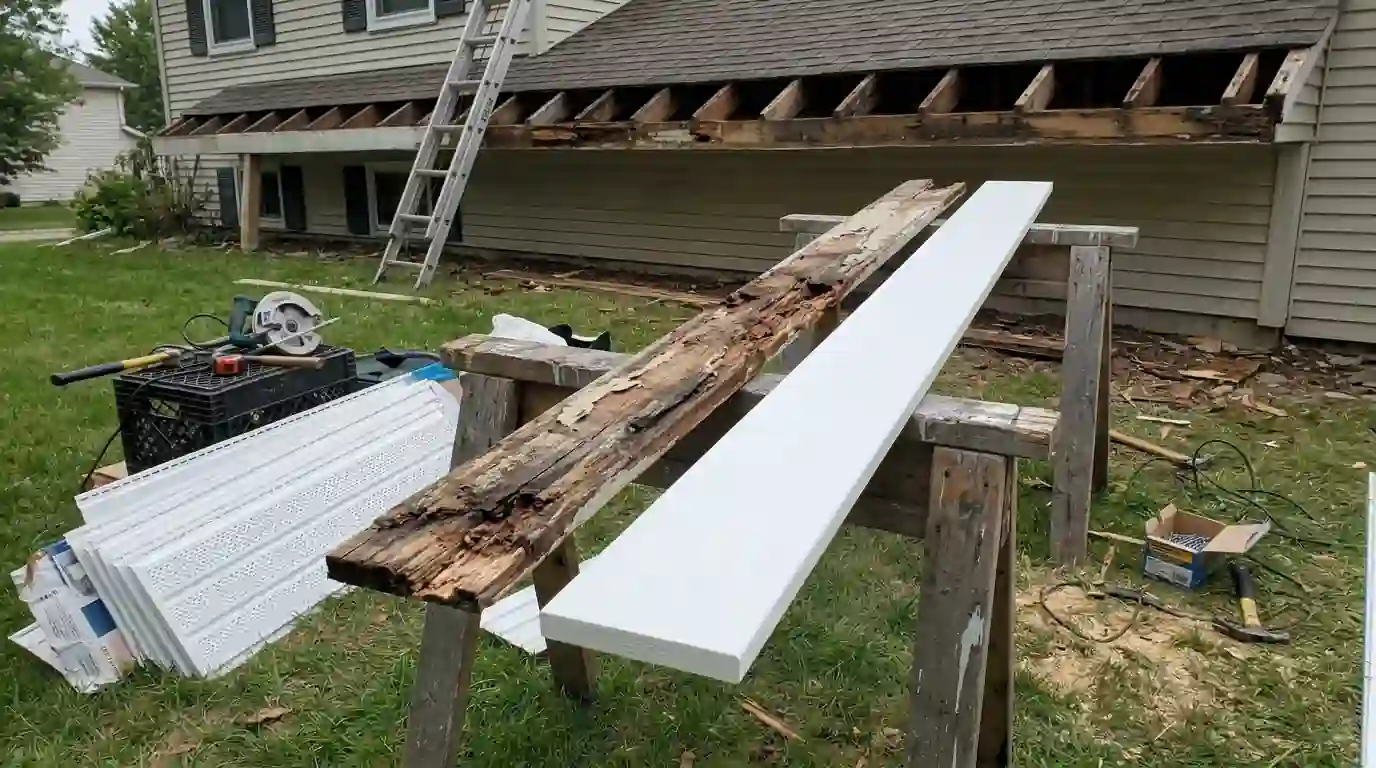
Once damaged siding comes off, we look at the house wrap, sheathing and window flashing underneath. Hail holes that sat open for weeks can let water reach the sheathing, especially below windows. Any wet or rotted wood gets replaced, and torn wrap is patched and lapped correctly, before new siding goes on.

We also check where the siding meets the roof. Step flashing, kick-out flashing at the bottom of roof-to-wall joints and the trim boards along the eaves all get looked at. Rotten eave boards and torn soffit screens are handled through our fascia and eave board repair work so the whole wall is right before we finish.
Warning signs

Signs your roof needs hail-damaged siding repair

Cracks along the lower lip

Crescent cracks at the bottom edge of vinyl courses on the storm-facing walls.

Holes in vinyl

Clean round punctures where large hailstones went straight through.

Chipped fiber cement paint

Small bare spots or cracks on painted boards, often near nails.

Dented aluminum

Dimpled siding, window wraps or corner trim that catch light at an angle.

Spatter on screens and AC fins

Fresh marks on soft metal show the storm hit that side of the house.

Wet drywall near windows

Damp spots inside below a window point to water getting behind damaged siding.

From first call to finished roof

How we handle hail-damaged siding repair from start to finish

  1. Step 1

    Walk all elevations

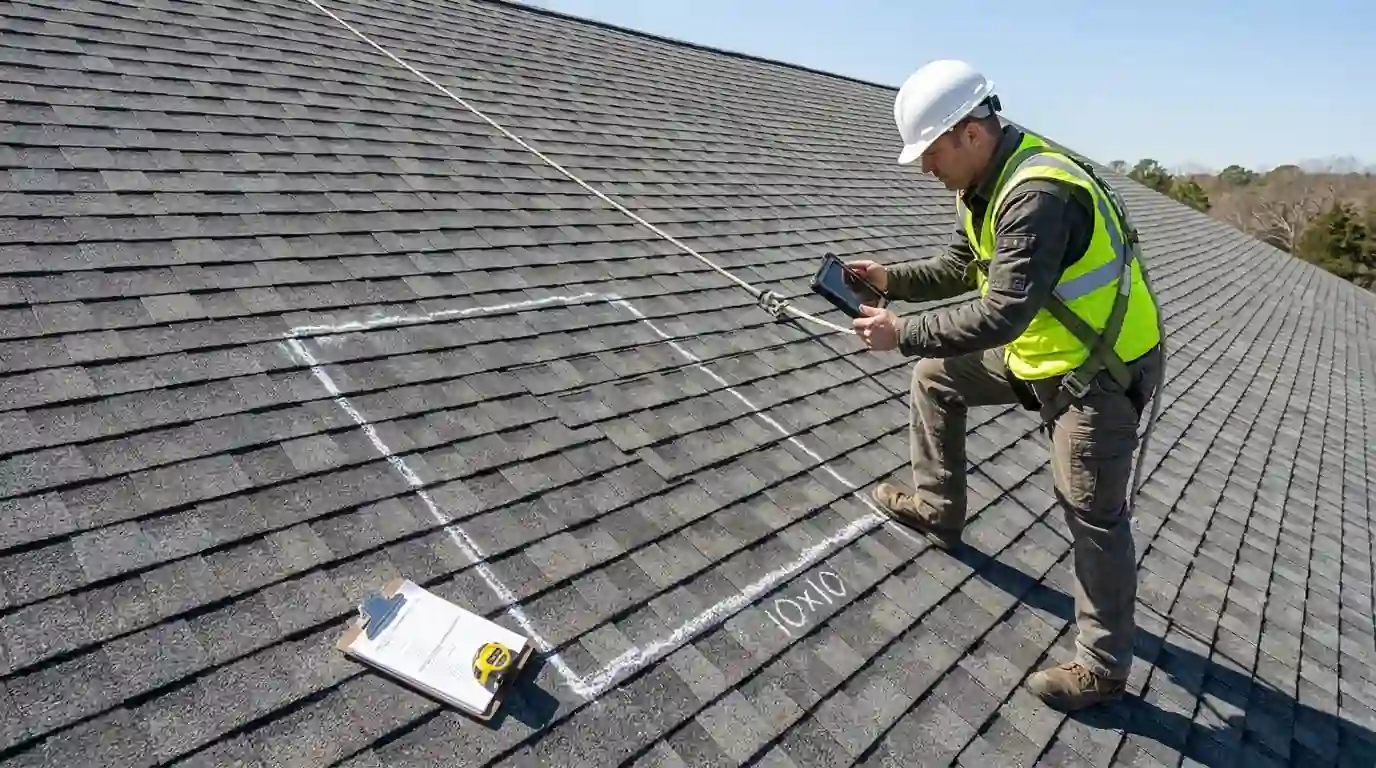
    We inspect every wall, window wrap and trim piece and mark damage with chalk.

  2. Step 2

    Photograph and measure

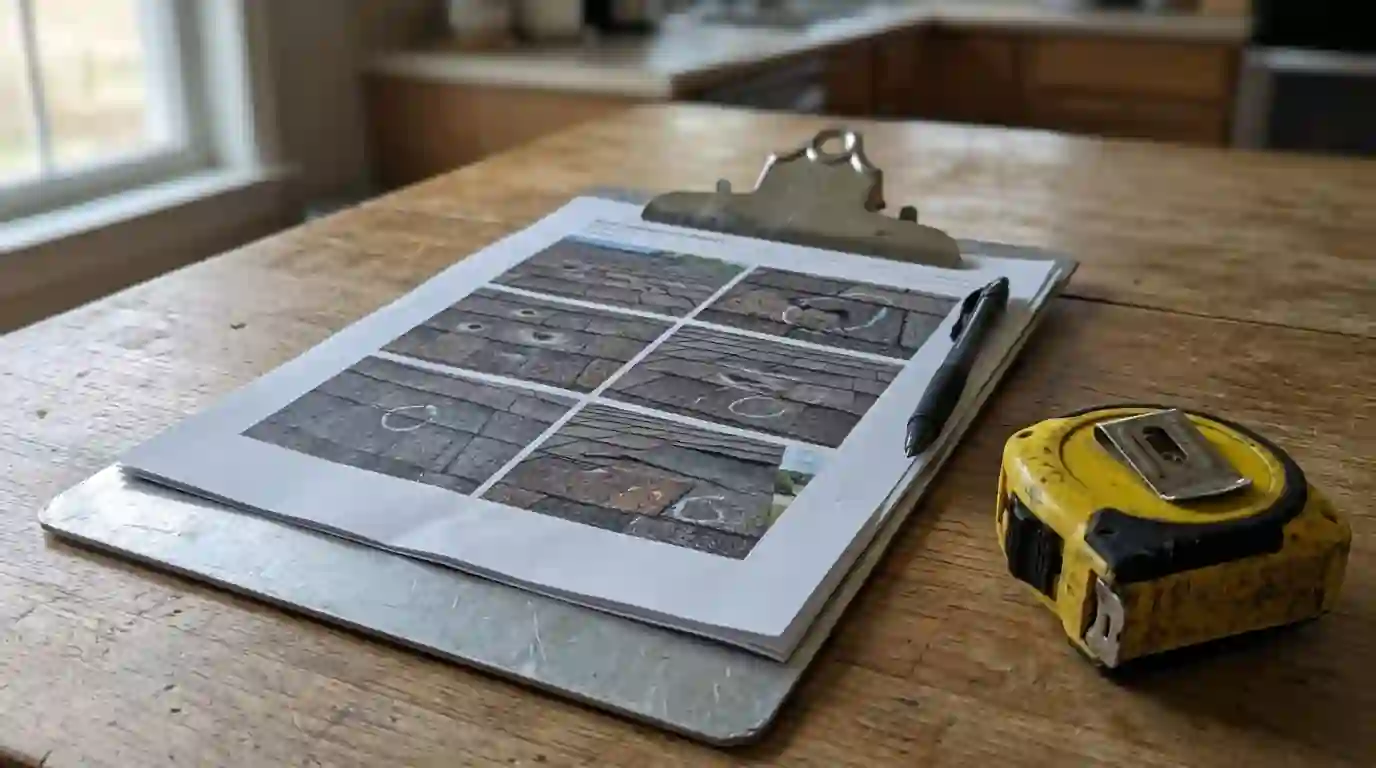
    Each elevation gets scaled photos and square footage so the claim is built from facts.

  3. Step 3

    Sample and match

    We remove a hidden piece to identify profile, exposure and color for matching.

  4. Step 4

    Meet the adjuster

    We walk the walls with your adjuster and supply a line-item scope for the repair.

  5. Step 5

    Remove and inspect behind

    Damaged siding comes off, and we repair wrap, sheathing and flashing underneath.

  6. Step 6

    Install and finish

    New siding and trim go on, fiber cement gets painted, and we clean nails and debris from beds and lawn.

What hail-damaged siding repair usually costs in San Antonio

Hail-damaged siding repair in San Antonio typically runs $465 to $2,890 per elevation. The real number depends on material, matching and what we find behind the siding after inspection.

Line itemTypical range
Vinyl siding course replacement, small area$465 to $935
Full vinyl elevation replacement$1,385 to $2,890
Fiber cement board replacement and paint, per elevation$745 to $2,615
Aluminum trim and window wrap replacement, per elevation$285 to $865
Sheathing and house wrap repair, per 4 by 8 section$145 to $265

What moves the price

  • Discontinued vinyl profiles may push repairs from a few pieces to a full wall for an even match.
  • Painting fiber cement adds labor, especially on two-story walls.
  • Second-story elevations need ladders or scaffolding and take longer.
  • Water damage behind the siding adds sheathing and wrap work.
  • Dense landscaping, fencing and AC units close to the wall slow access.

Ranges are typical, not quotes. Your price depends on the roof we see at the inspection. See every service side by side in the roofing cost guide.

Materials we install and repair

  • GAF
  • Owens Corning
  • CertainTeed
  • Malarkey
  • TAMKO
  • Atlas Roofing
  • IKO
  • Eagle Roofing
  • Westlake Royal
  • DaVinci Roofscapes
  • Englert
  • Carlisle
  • Velux
  • Solatube
  • GAF
  • Owens Corning
  • CertainTeed
  • Malarkey
  • TAMKO
  • Atlas Roofing
  • IKO
  • Eagle Roofing
  • Westlake Royal
  • DaVinci Roofscapes
  • Englert
  • Carlisle
  • Velux
  • Solatube
  • GAF
  • Owens Corning
  • CertainTeed
  • Malarkey
  • TAMKO
  • Atlas Roofing
  • IKO
  • Eagle Roofing
  • Westlake Royal
  • DaVinci Roofscapes
  • Englert
  • Carlisle
  • Velux
  • Solatube

Answers

Hail-Damaged Siding Repair questions from San Antonio homeowners

Can hail-damaged siding be added to my roof insurance claim after it's filed?

Usually, yes. Most insurers let you add damage to an open claim, and siding from the same storm falls under the same deductible. Call your insurer, tell them you found additional damage to the walls, and ask for a reinspection. Photos and measurements of each elevation make that conversation much easier and help avoid a second deductible.

What if the hail-damaged vinyl siding on my house is discontinued?

We first look for the closest current match in profile, exposure height, texture and color. If nothing matches well enough, many adjusters agree to replace the whole affected elevation so the wall looks consistent. Some policies include matching language that covers adjacent walls. We'll document why a match isn't possible so your adjuster can review it.

Does cosmetic hail denting on aluminum siding get repaired?

It depends on your policy. Dents that don't crack or open the siding are often considered cosmetic, and some Texas policies exclude cosmetic damage to metal surfaces. If coverage applies, dented panels and trim are replaced. If not, you can still repair the worst walls out of pocket, and we'll price that separately so you can decide.

How soon should hail-cracked siding be repaired in San Antonio?

Soon, especially before the next rain. Cracks and holes let water reach the house wrap and sheathing, and fiber cement swells when it soaks up water. If repairs can't happen right away, we can tape or temporarily cover open holes. Most claims have filing deadlines too, so documenting damage within weeks of the storm is wise.

Related work

Other roof work that often goes with this job

Roof trouble today? Talk to a roofer now.

Our phone line is answered 24/7. Tell us what you see and we will tell you the next step, even if that step is a tarp tonight and a full inspection tomorrow.

Call (210) 750-1898Answered 24 hours a day
Call (210) 750-189824/7