Skip to content
Ortiz RoofingSan Antonio, Texas 24/7(210) 750-1898

24/7 emergency response

Emergency roof repair in San Antonio when water is coming in right now

When water drips through a light fixture at two in the morning, you need someone to pick up. Our line is answered 24/7. We talk you through protecting the house, get a roofer out as soon as conditions allow, stop the water, and come back for the permanent repair once the weather clears.

  • Phones answered 24/7
  • Roof Repair & Storm Damage
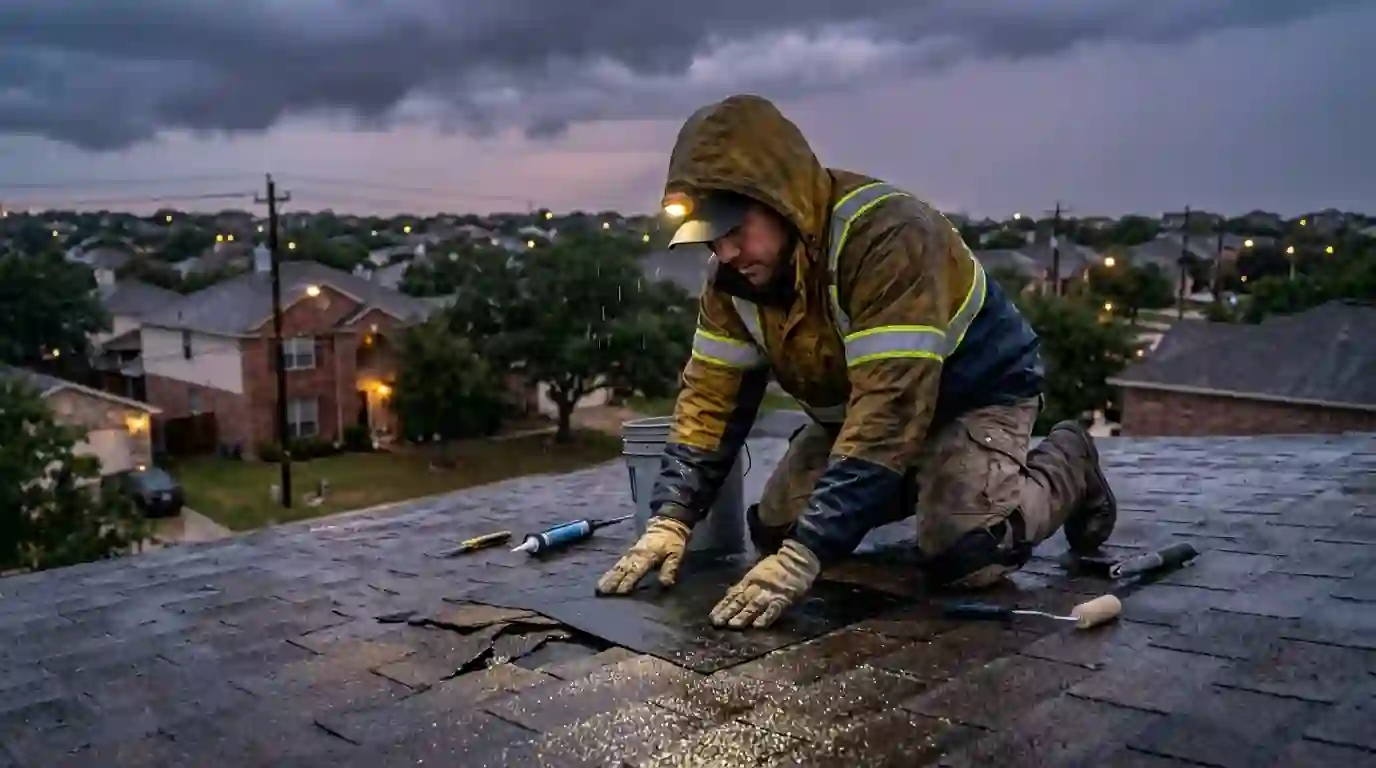
Roofer in a rain jacket kneeling on a wet shingle roof at dusk, pressing a dark membrane patch over a torn section, storm clouds over a San Antonio neighborhood behind him.
Typical San Antonio range$425 to $1,850
Short answer

Emergency roof repair in San Antonio usually costs $425 to $1,850 for the urgent visit plus the repair, depending on the damage and the hour. The first goal is stopping water, not finishing the repair: we dry-in the opening with patches, membrane or a tarp, protect the interior, then return in dry weather for a lasting fix.

What counts as a roof emergency?

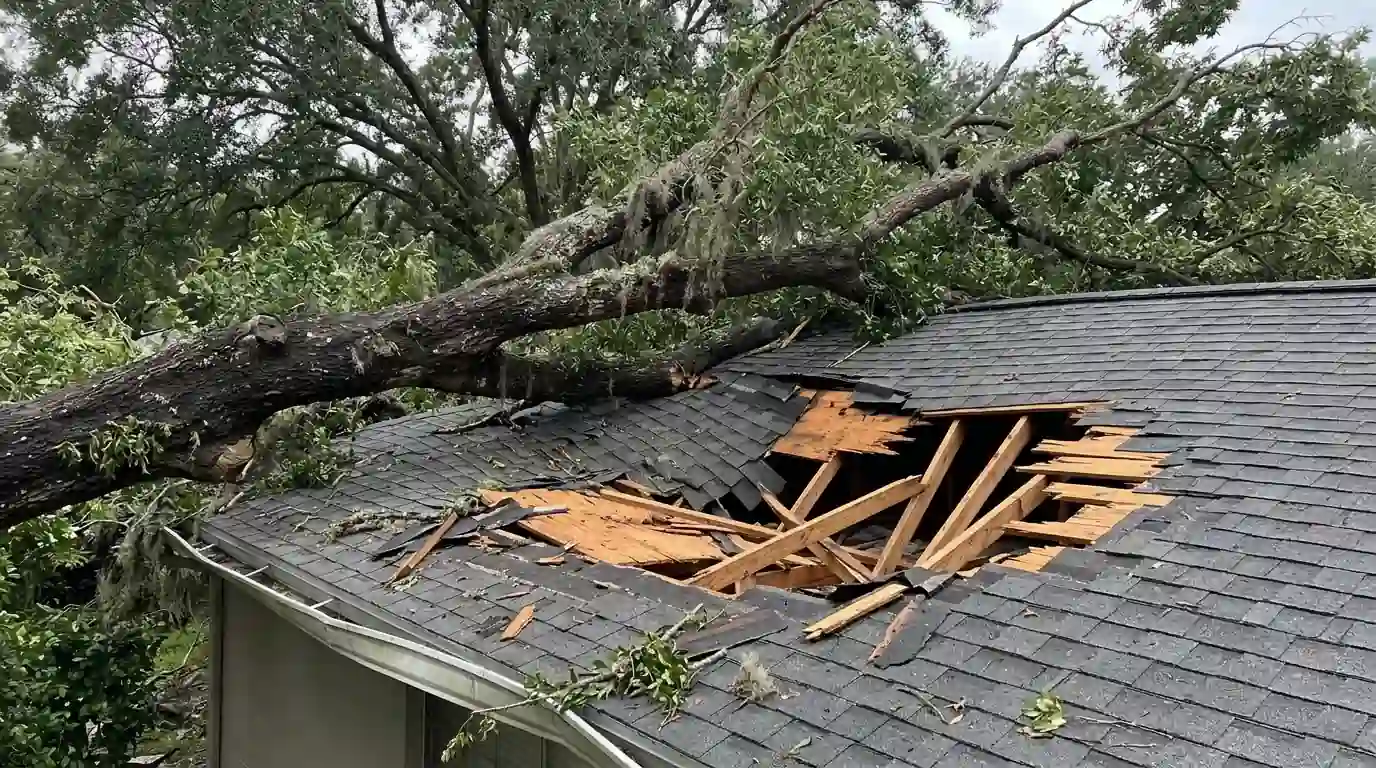
A roof emergency is water actively entering the house, or an opening that will let water in before ordinary scheduling can get to it. Water pouring through a ceiling, a sagging bulge full of water, a section of shingles torn away with rain on the way, or a limb punched through the decking all qualify.

A small stain that showed up after last week's rain usually isn't an emergency, even though it needs attention. That kind of problem gets a calm, daytime trace through our leak tracing and repair service. Call either way and we'll help you decide which it is.

  • Water dripping or streaming into living space.
  • A ceiling bulge holding water.
  • Shingles or panels torn off with more rain forecast.
  • A tree limb through the roof or decking.
  • Water near electrical fixtures or the breaker panel.

What to do in the first hour, before we arrive

Safety comes first. If water is near a light fixture, outlet or the electrical panel, turn off that circuit at the breaker if you can do so without standing in water. Keep people and pets out of rooms where the ceiling is sagging, because wet drywall can drop without warning.

Next, control the water inside. Move furniture and electronics, lay towels, and set buckets under drips. If a ceiling spot is bulging, poke a small hole at the lowest point with a screwdriver and let it drain into a bucket. One controlled drain does far less harm than a whole ceiling giving way.

Take photos and a short video of the damage inside and of anything you can see on the roof from the ground. Don't climb a ladder in rain, wind or the dark. Those photos help us bring the right materials and become part of your record if you file a claim later.
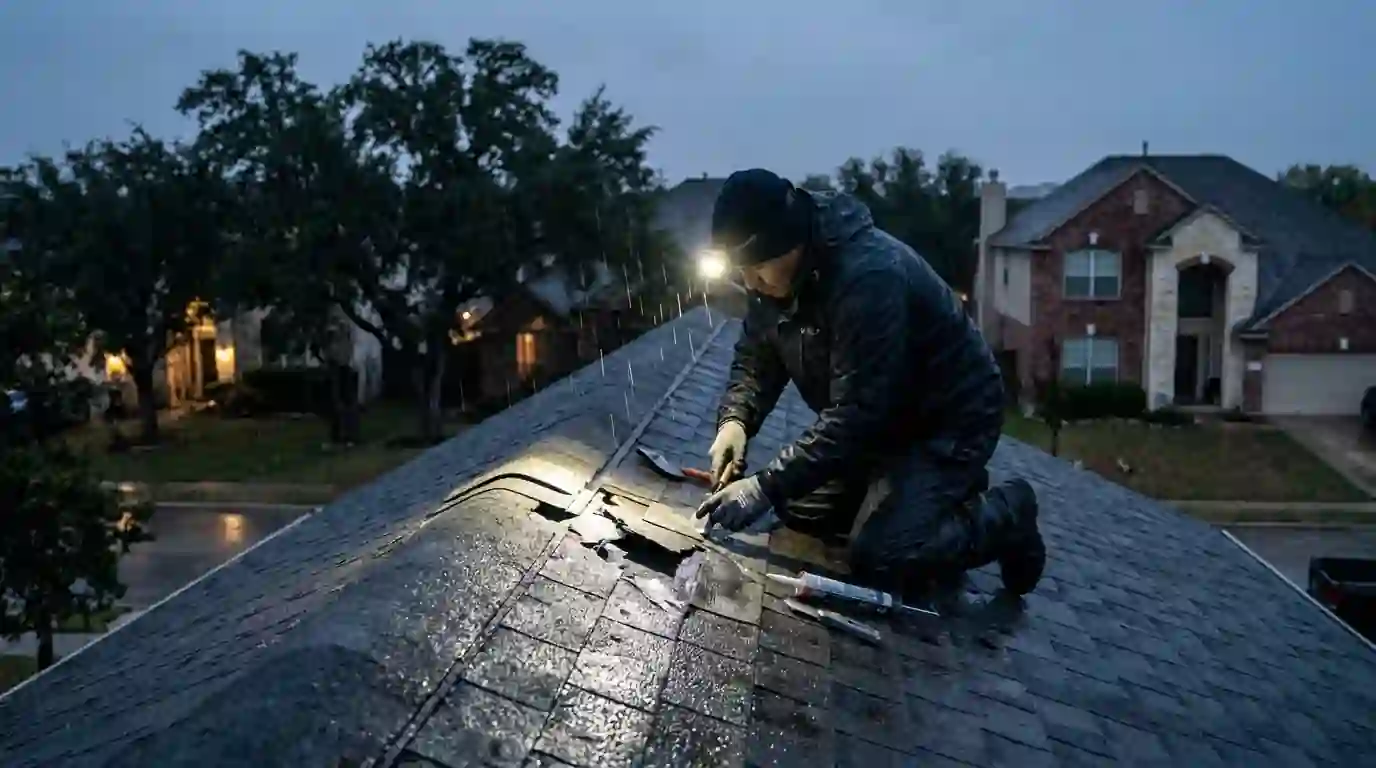
Roofer with a headlamp sealing a broken roof section at dusk during light rain on a suburban San Antonio house
Emergency Roof Repair on a San Antonio area home.

How we stop the water on an emergency visit

When we arrive, we check that the roof is safe to walk. During lightning or very high wind, we work from inside first, catching water and protecting the attic, and go up as soon as conditions allow. Nobody gets hurt rushing onto a wet roof in a storm.

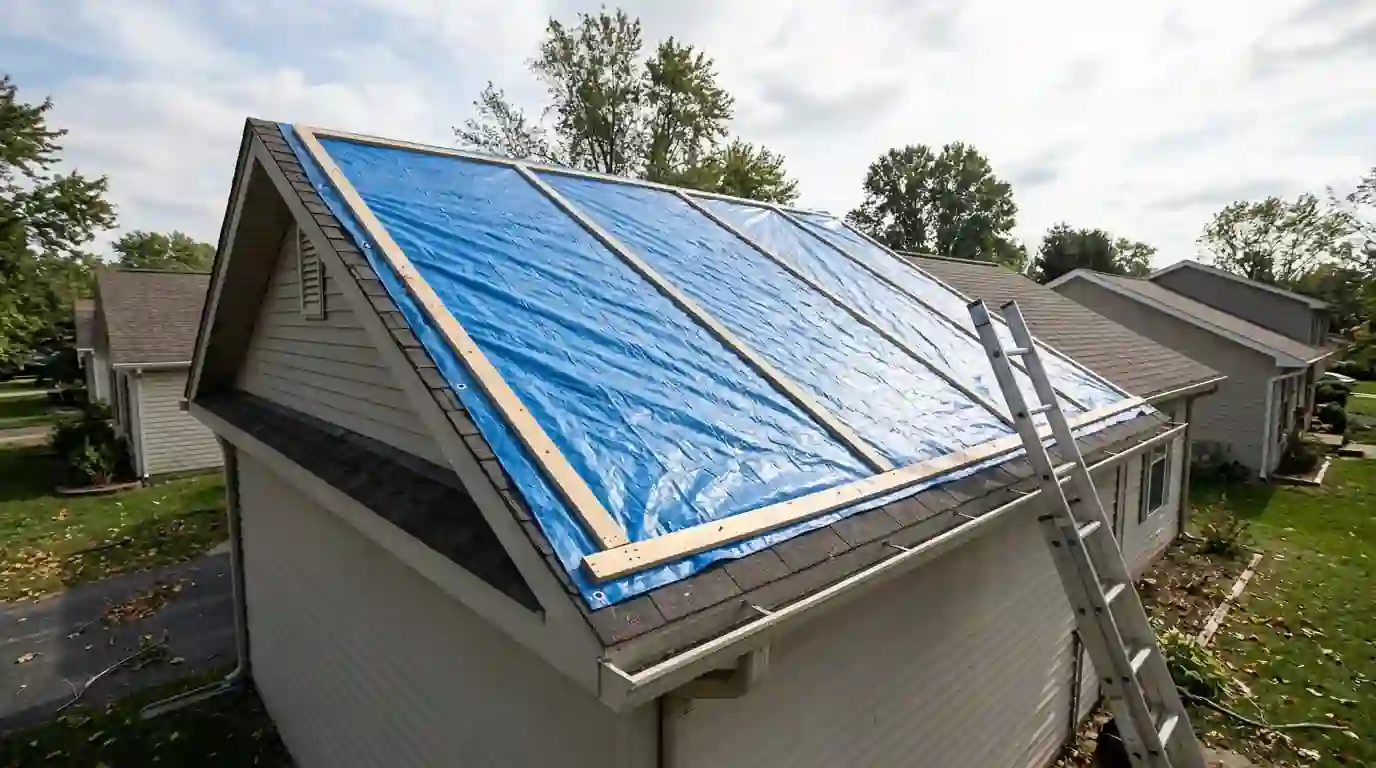
On the roof, we find the opening and close it the fastest reliable way. Small openings get a temporary patch of self-adhered membrane or replacement shingles. Larger damage gets a properly secured tarp, which is covered in more detail on our storm tarp installation page. We photograph the damage before covering it, so nothing is lost for your records.

Temporary dry-in versus the permanent fix

An emergency visit buys time. Temporary patches and tarps keep water out for days to weeks, but they aren't meant to last through a South Texas summer. Sun breaks down tarp material and patching membranes left exposed, and wind works on anything that isn't fully fastened.

Once the weather clears, we come back to make the permanent repair. That may be replacing shingles and underlayment, rebuilding flashing, swapping a broken pipe boot or replacing damaged decking. If the storm caused widespread damage, we'll recommend a full post-storm documentation visit before anything gets rebuilt.

We'll tell you plainly how long the temporary fix should hold and what could shorten that, like another storm or high wind. If weather turns before the permanent repair, phone us and we'll recheck the dry-in. A patch that held through one storm can still loosen in the next, so a quick look is cheaper than a second leak.

Why roof emergencies cluster in spring storm season

Most emergency calls in San Antonio come between March and June, when strong thunderstorms bring hail, straight-line winds and heavy rain in short bursts. A storm can tear shingles loose and soak the decking within minutes, and then the next cell arrives an hour later.

Late summer and fall can bring tropical moisture with long, soaking rain that finds every weak spot. Falling limbs from live oaks and pecans are another common cause, especially after a dry spell weakens branches. If a tree is involved, our fallen limb and tree damage repairs page explains how the cleanup and rebuild are coordinated.

How can you lower the odds of a nighttime emergency?

Most emergencies start as small problems that were already there. A cracked pipe boot, a loose ridge cap or a clogged valley often fails during the first heavy storm of the season. A roof check before spring catches these while they're simple daytime repairs. Our spring roof tune up covers exactly those weak spots, from boots to valleys.

Trim limbs that hang over the roof, clean gutters before storm season and keep our number saved in your phone. When a storm is forecast and you already know about a weak spot, call ahead and we can often get a temporary cover on before the rain arrives.
Warning signs

Signs your roof needs emergency roof repair

Water coming through the ceiling

Active dripping or streaming into a room means water is already past the roof and into the house.

A sagging ceiling bulge

A bulge holding water can give way, so it needs draining and the roof needs closing fast.

Missing roof sections

Torn-away shingles or panels with rain in the forecast leave decking exposed.

A limb through the roof

Punctured decking lets in rain and may have damaged rafters underneath.

Water near electrical

Water around fixtures, outlets or the panel is a safety risk that needs immediate attention.

Water running down walls

Water inside walls during a storm often means a flashing or roof edge failure upstairs.

From first call to finished roof

How we handle emergency roof repair from start to finish

  1. Step 1

    Answer and triage

    We answer 24/7, ask what you're seeing and walk you through protecting the house right away.

  2. Step 2

    Safe arrival

    We check conditions and start inside if lightning or wind makes the roof unsafe.

  3. Step 3

    Photos before cover

    Damage is photographed before anything is covered so your records stay complete.

  4. Step 4

    Temporary dry-in

    We close the opening with membrane, shingles or a secured tarp to stop water.

  5. Step 5

    Interior check

    We look at the attic for wet insulation and decking and tell you what needs drying out.

  6. Step 6

    Permanent repair

    Once the weather clears, we return to replace damaged materials and remove the temporary cover.

What emergency roof repair usually costs in San Antonio

Emergency calls plus the repair usually run $425 to $1,850 in San Antonio. The final price depends on the roof after inspection, the size of the opening and how much permanent repair is needed.

Line itemTypical range
After-hours emergency response visit$215 to $395
Temporary patch with membrane or shingles$145 to $385
Tarp dry-in for larger openings$395 to $1,140
Permanent shingle and underlayment repair$285 to $865
Damaged decking replaced$72 to $118 per sheet

What moves the price

  • Late-night or mid-storm visits cost more than daytime calls.
  • Steep pitches and two-story roofs need extra safety setup in wet conditions.
  • Larger openings need tarps rather than simple patches.
  • Tile and metal roofs need special care when walked in an emergency.
  • Wet decking or framing found during the visit adds to the permanent repair.

Ranges are typical, not quotes. Your price depends on the roof we see at the inspection. See every service side by side in the roofing cost guide.

Materials we install and repair

  • GAF
  • Owens Corning
  • CertainTeed
  • Malarkey
  • TAMKO
  • Atlas Roofing
  • IKO
  • Eagle Roofing
  • Westlake Royal
  • DaVinci Roofscapes
  • Englert
  • Carlisle
  • Velux
  • Solatube
  • GAF
  • Owens Corning
  • CertainTeed
  • Malarkey
  • TAMKO
  • Atlas Roofing
  • IKO
  • Eagle Roofing
  • Westlake Royal
  • DaVinci Roofscapes
  • Englert
  • Carlisle
  • Velux
  • Solatube
  • GAF
  • Owens Corning
  • CertainTeed
  • Malarkey
  • TAMKO
  • Atlas Roofing
  • IKO
  • Eagle Roofing
  • Westlake Royal
  • DaVinci Roofscapes
  • Englert
  • Carlisle
  • Velux
  • Solatube

Answers

Emergency Roof Repair questions from San Antonio homeowners

How fast can emergency roof repair reach my home during a storm?

We answer the phone 24/7 and dispatch as soon as it's safe to work. During widespread storms, we prioritize active leaks into living space and homes with water near electrical. While you wait, we'll walk you through controlling water inside, so damage stops growing even before a roofer arrives.

Will an emergency roof repair visit be a permanent fix?

Usually not. The emergency visit is about stopping water quickly with patches, membrane or a tarp. The permanent repair needs dry weather and the right materials, so we schedule it once the storm passes. Some small emergencies, like a single torn pipe boot, can be fixed fully on the first visit.

Should I call my insurer or a roofer first in a roof emergency?

Stop the water first. Most policies expect you to take reasonable steps to prevent further damage, and a temporary repair is part of that. Call us to stop the leak, keep receipts and photos, then report the claim to your insurer. Check your policy for its reporting deadlines.

Is it safe to stay in the house during an emergency roof leak?

Usually yes, as long as you keep out of rooms with sagging ceilings and away from water near electrical fixtures. Turn off affected circuits at the breaker if you can do it while standing dry. If a limb has broken through framing or you smell burning, leave the house and call 911.

Related work

Other roof work that often goes with this job

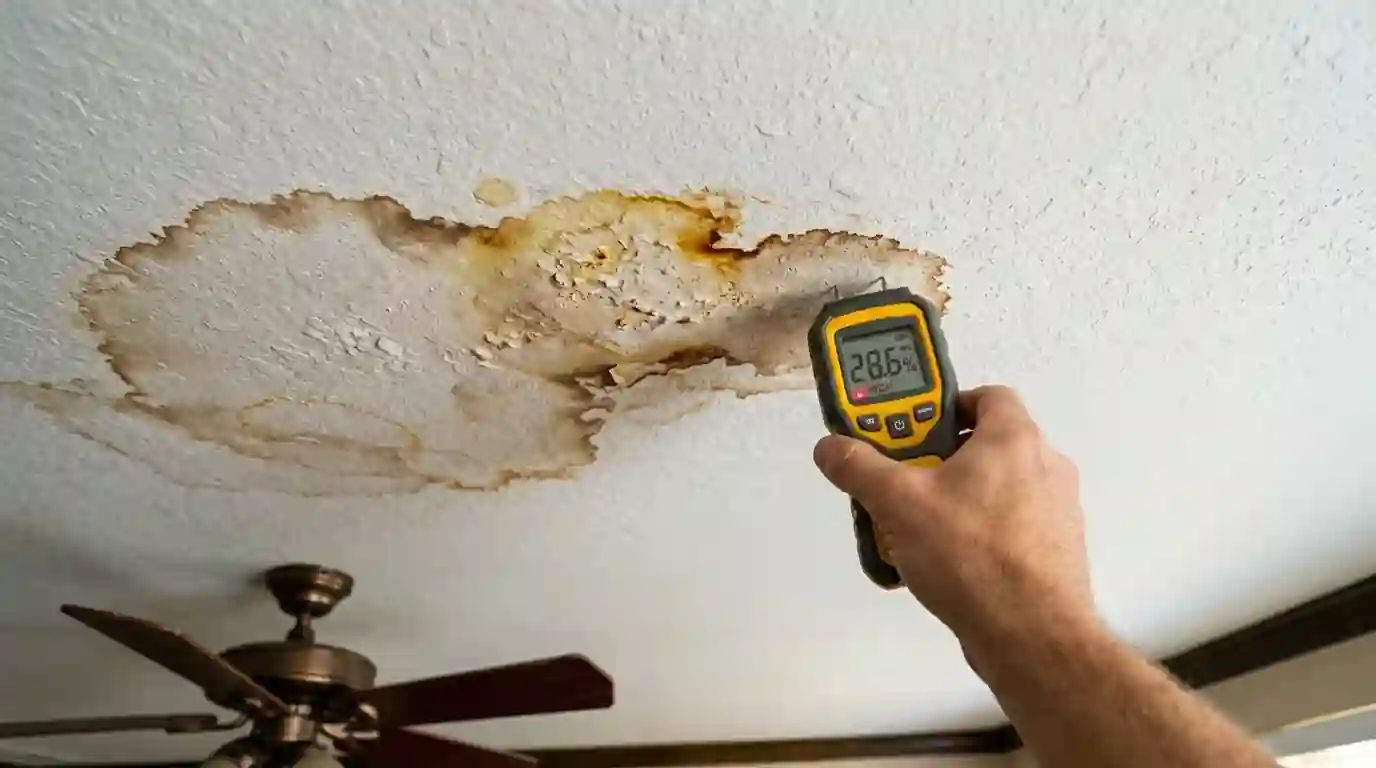
Brown water stain spreading across a white textured ceiling in a Texas living room, a moisture meter held up to the stain

Roof Leak Repair

We trace water from the ceiling stain back to its true entry point with attic checks and a moisture meter, then seal it for good.

Learn more

Roof trouble today? Talk to a roofer now.

Our phone line is answered 24/7. Tell us what you see and we will tell you the next step, even if that step is a tarp tonight and a full inspection tomorrow.

Call (210) 750-1898Answered 24 hours a day
Call (210) 750-189824/7