Skip to content
Ortiz RoofingSan Antonio, Texas 24/7(210) 750-1898

Sheathing and deck repair

Roof decking replacement in San Antonio, priced and photographed by the sheet

Decking is the wood layer every shingle, tile and nail depends on. When it's soft, delaminated or full of gaps, new roofing won't sit flat or hold fasteners. We find the bad sheets during tear-off and replace only those, priced per sheet so you see each one.

  • Phones answered 24/7
  • Roof Repair & Storm Damage
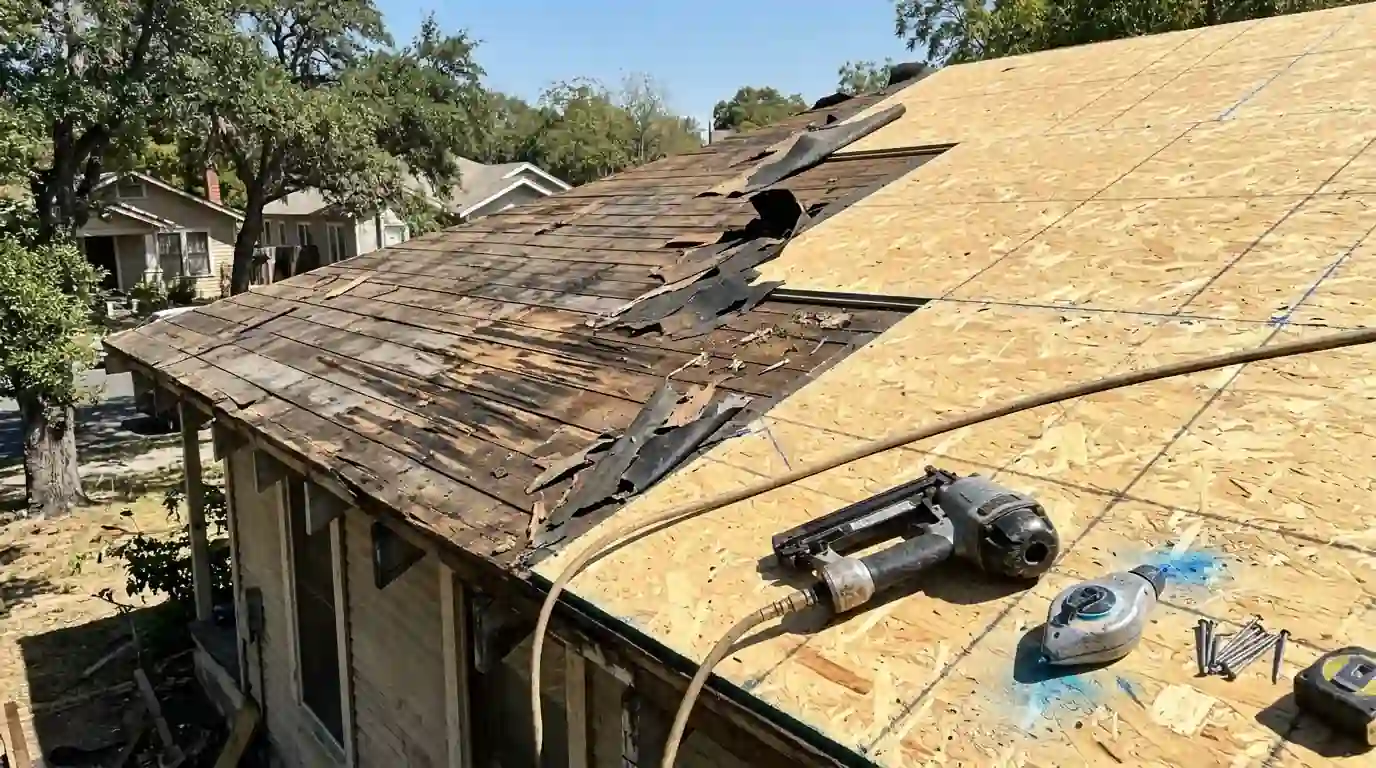
Partly stripped roof showing fresh pale OSB panels set beside dark water-stained original boards on a San Antonio bungalow, nail gun and chalk line resting on the deck, midday sun
Typical San Antonio range$72 to $118 per sheet replaced
Short answer

Roof decking replacement means cutting out rotten, delaminated or broken sheathing and installing new plywood or OSB before the roof covering goes back on. It's usually done during a reroof, when the old roofing is off and every sheet is visible. In San Antonio we typically charge $72 to $118 per 4x8 sheet replaced, and the final count is known only once the roof is open.

What failing roof decking looks like from inside and out

From the yard, bad decking shows up as a wavy or sagging slope, often in a regular pattern between rafters. In the attic, look for dark stains, white fuzzy growth on the underside of the sheets, or nail tips rusted orange. OSB that's been wet for a long time swells at the edges and flakes apart in layers. Plywood tends to delaminate, with the plies separating like a peeling book cover.

Walking the roof tells us more. A soft spot gives underfoot like a trampoline, and that's usually a sheet that lost its strength to a slow leak at a pipe boot, a valley or an old skylight. When a stain is still spreading, tracking down the active leak comes first. We mark suspect sheets with paint during the inspection so you see the likely count before tear-off.

Why many older San Antonio homes have plank decking

Homes built before plywood became common, including many in neighborhoods like Monte Vista and Alamo Heights, often have 1x6 or 1x8 board decking. Those boards are usually dense old lumber and can still be in decent shape after decades. The issue is the gaps between them, which can be wide enough that roofing nails miss wood and shingles sag along the joints over time.

When plank decking is sound but gappy, shingle makers commonly call for an overlay of 7/16 or 1/2 inch sheathing across the roof before shingles go on. When individual boards are rotted or split, we cut them out and replace them with matching lumber or plywood shimmed to the same height. We'll show you which approach your roof needs and why, with photos of the boards themselves.
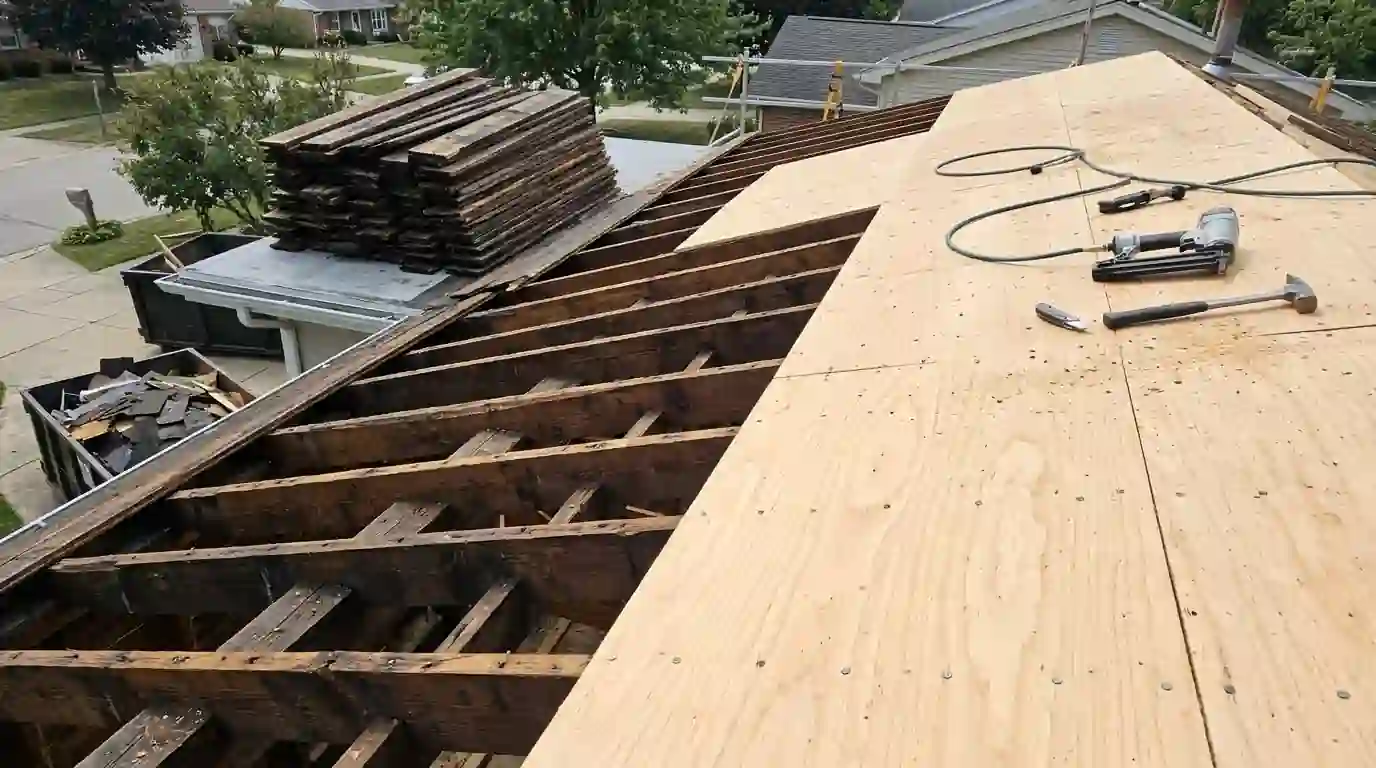
Fresh plywood sheets nailed over old rafters during a tear-off, with darker water-stained boards stacked to the side
Roof Decking Replacement on a San Antonio area home.

Do you have to replace all the decking during a reroof?

Usually not. Most tear-offs reveal a handful of bad sheets, typically around penetrations, valleys and the lower edge where water backs up from clogged gutters. Replacing the whole deck makes sense only when damage is widespread, when the existing sheathing is too thin to hold fasteners, or when plank gaps call for an overlay. Paying for a full deck you don't need is money better spent on ventilation.

Ask any roofer how decking will be priced before you sign. A per-sheet price written into a full roof replacement agreement protects you from a vague change order once the old roof is off. We photograph every sheet we replace, before and after, and the count on your invoice matches the photos you receive.

How attic heat and moisture wear out sheathing

Summer attic temperatures in San Antonio commonly pass 140 to 150 degrees, and the decking sits at the hottest point of that space. Heat alone doesn't rot wood, but it dries and shrinks sheathing so nails loosen over the years. The real damage comes when warm, humid air gets trapped and condenses on the underside of the deck during cool nights in winter and early spring.

Poorly balanced intake and exhaust vents are a common cause. If we see mildew across a whole slope rather than at one leak point, we look at the soffits and ridge before laying new sheets. Fixing the balance between soffit and ridge vents keeps new decking from failing the same way. Bathroom fans that dump straight into the attic are another culprit we check.

Plywood or OSB: which panel we install and why

Both are accepted roof sheathing, and both last when they're kept dry and fastened correctly. Plywood shrugs off brief wetting a little better and holds nails well near its edges. OSB is very consistent in thickness, and it's what you'll find on most newer tract homes around the city. We generally match what's already on your roof so new sheets sit flush with the old ones.

Whatever the panel, the details matter more than the brand. Sheets should break over rafters, keep a small expansion gap at the edges, and be nailed on the schedule the code and the roofing maker call for. Clips between rafters help on wider spacing. If you're adding a radiant barrier during the reroof, foil-faced radiant barrier sheathing can go in wherever we replace sheets.
Warning signs

Signs your roof needs roof decking replacement

Spongy spots underfoot

A roofer feels soft give between rafters when sheets have lost their strength to moisture.

Sagging between rafters

A slope that dips in a repeating pattern from the street often points to thin or wet sheathing.

Dark staining in the attic

Stains or white mildew on the underside of the deck point to long-term moisture, not a one-time leak.

Rusted nail tips

Orange or black nail points poking through the deck show condensation is collecting in the attic.

Shingles that won't lie flat

Ridges and buckles in fairly new shingles can trace back to swollen OSB edges below.

Daylight through board gaps

On plank decks, visible light between boards means fasteners may be missing solid wood.

From first call to finished roof

How we handle roof decking replacement from start to finish

  1. Step 1

    Mark soft areas before tear-off

    We walk every slope and paint suspected bad sheets so you see the expected count up front.

  2. Step 2

    Tear off and inspect bare deck

    With the old roofing off, every sheet is checked for rot, delamination and loose fastening.

  3. Step 3

    Photograph each bad sheet

    Each sheet slated for replacement is photographed in place and numbered on a roof sketch.

  4. Step 4

    Cut back to rafters

    Damaged sections are cut out on rafter centers so new panels have solid bearing on both ends.

  5. Step 5

    Install and fasten new sheathing

    New panels go in with edge gaps, clips where needed and nails on the required schedule.

  6. Step 6

    Dry in the same day

    Underlayment goes down over new and existing decking before the crew leaves the roof.

What roof decking replacement usually costs in San Antonio

Decking is priced by the sheet because nobody can count bad sheets exactly until the roof is open. Your total depends on the roof after inspection, and these are typical San Antonio figures.

Line itemTypical range
7/16 inch OSB sheet, removed and replaced$72 to $94
1/2 or 5/8 inch plywood sheet, removed and replaced$86 to $118
Plank board section replaced with matched lumber$9.85 to $16.40 per linear foot
Overlay sheathing across gapped plank decking$1.65 to $2.85 per sq ft

What moves the price

  • Number of sheets found rotten or delaminated after tear-off.
  • Sheathing thickness required by your roof covering, since tile and some metal systems call for thicker panels.
  • Plank decking, which takes more cutting and shimming than sheet goods.
  • Roof pitch and access, which affect how fast sheets can be carried up and set.
  • Leak or ventilation problems that have to be corrected so new decking stays sound.

Ranges are typical, not quotes. Your price depends on the roof we see at the inspection. See every service side by side in the roofing cost guide.

Materials we install and repair

  • GAF
  • Owens Corning
  • CertainTeed
  • Malarkey
  • TAMKO
  • Atlas Roofing
  • IKO
  • Eagle Roofing
  • Westlake Royal
  • DaVinci Roofscapes
  • Englert
  • Carlisle
  • Velux
  • Solatube
  • GAF
  • Owens Corning
  • CertainTeed
  • Malarkey
  • TAMKO
  • Atlas Roofing
  • IKO
  • Eagle Roofing
  • Westlake Royal
  • DaVinci Roofscapes
  • Englert
  • Carlisle
  • Velux
  • Solatube
  • GAF
  • Owens Corning
  • CertainTeed
  • Malarkey
  • TAMKO
  • Atlas Roofing
  • IKO
  • Eagle Roofing
  • Westlake Royal
  • DaVinci Roofscapes
  • Englert
  • Carlisle
  • Velux
  • Solatube

Answers

Roof Decking Replacement questions from San Antonio homeowners

How many sheets of roof decking usually need replacing on a reroof?

It varies with the roof's age and leak history. A well-vented roof with no long-running leaks may need only a few sheets around pipes and valleys. A roof with years of slow leaks or trapped attic moisture can need a full slope or more. We mark likely spots before tear-off and confirm the count, with photos, once the old roofing is removed.

Can roof decking be replaced without a full reroof?

Yes, for small areas. We remove the roofing over the damaged sheets, replace the decking, and weave new underlayment and shingles back in. It's a common fix after a long-running leak at one penetration. If soft spots are scattered across several slopes, though, patching area by area costs more over time than replacing the roof covering once.

Is plank roof decking a problem for new shingles?

Not always. Sound plank decking with tight joints can take new shingles. When boards have wide gaps, cupping or splits, nails may miss wood and shingles can sag along the joints, so an overlay of new sheathing is often needed to meet the shingle maker's installation instructions. We check board condition and gap width before recommending either option.

Will new roof decking fix the mildew in my attic?

Replacing stained sheets removes the damaged wood, but mildew will come back if the cause stays. Most widespread attic mildew comes from weak ventilation or warm, moist air from the house leaking into the attic. We look at soffit intake, ridge exhaust and bath fan ducting so the new decking stays dry after the roof goes back on.

Why is roof decking priced per sheet instead of as one total?

Because hidden damage can't be counted from the surface. A per-sheet price tells you the cost of each sheet before work starts, so the final number is fair whether we find four bad sheets or forty. We photograph every replaced sheet, and the count on your invoice matches those photos.

Related work

Other roof work that often goes with this job

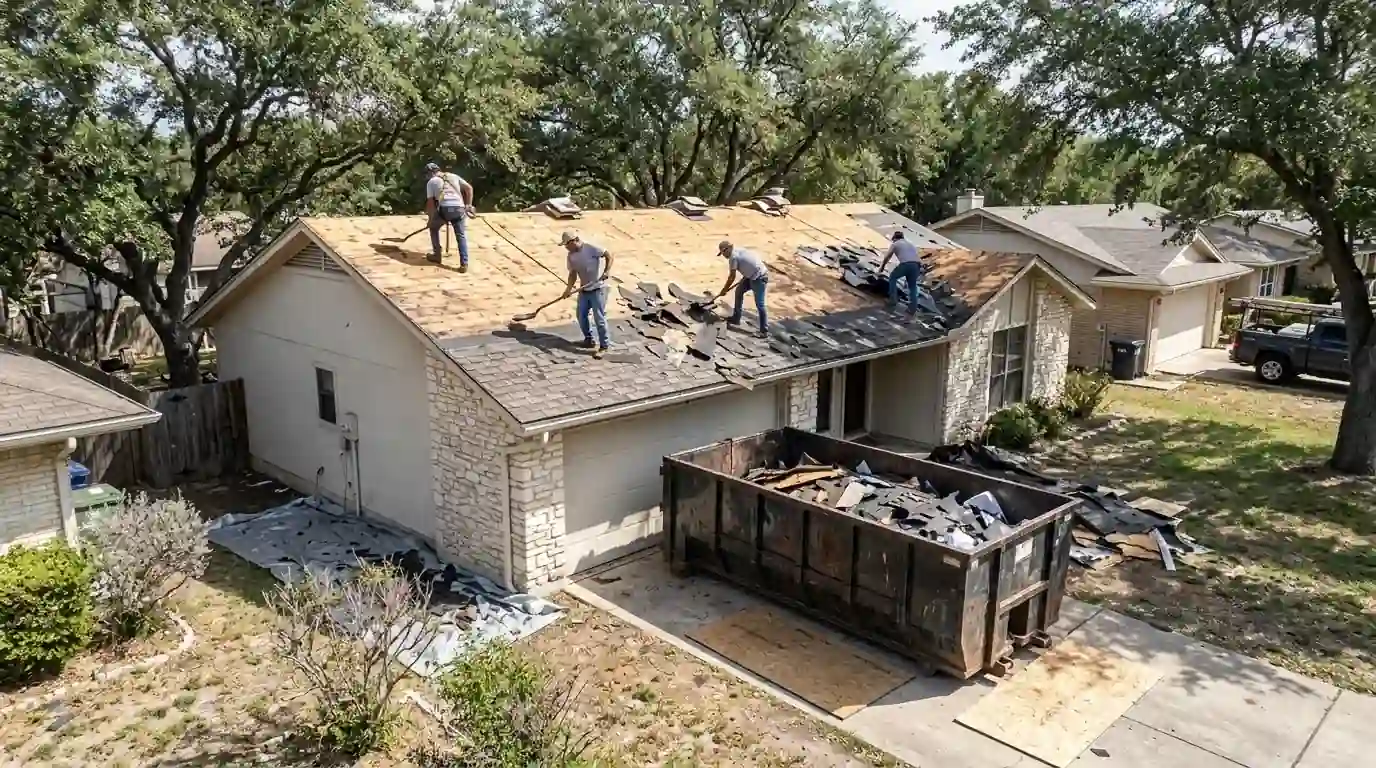
Crew tearing off old shingles down to the deck on a single-story San Antonio home, dumpster in the driveway

Roof Replacement

Full tear-off to the deck, new underlayment, drip edge, flashing and vents, then a magnet sweep of the yard before we leave.

Learn more
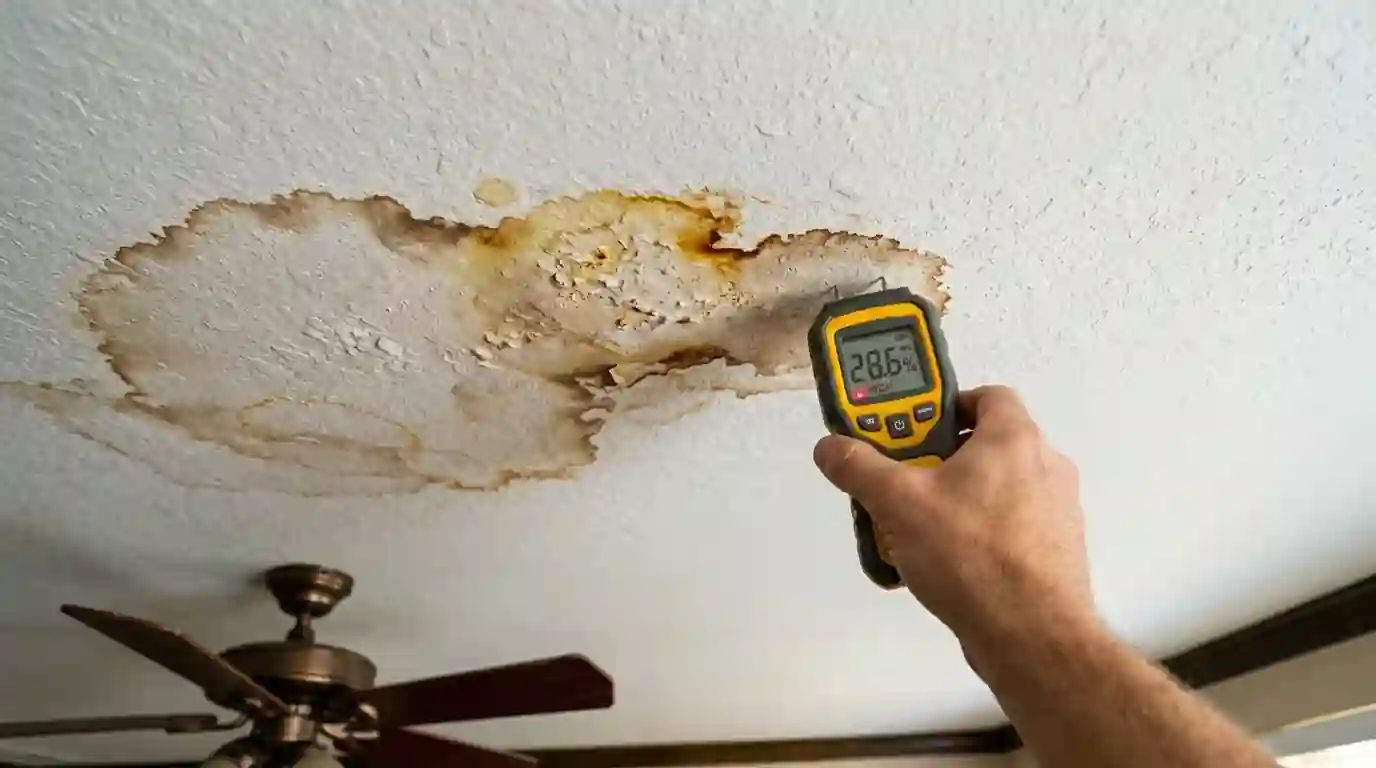
Brown water stain spreading across a white textured ceiling in a Texas living room, a moisture meter held up to the stain

Roof Leak Repair

We trace water from the ceiling stain back to its true entry point with attic checks and a moisture meter, then seal it for good.

Learn more

Roof trouble today? Talk to a roofer now.

Our phone line is answered 24/7. Tell us what you see and we will tell you the next step, even if that step is a tarp tonight and a full inspection tomorrow.

Call (210) 750-1898Answered 24 hours a day
Call (210) 750-189824/7