What hail actually does to each kind of roof
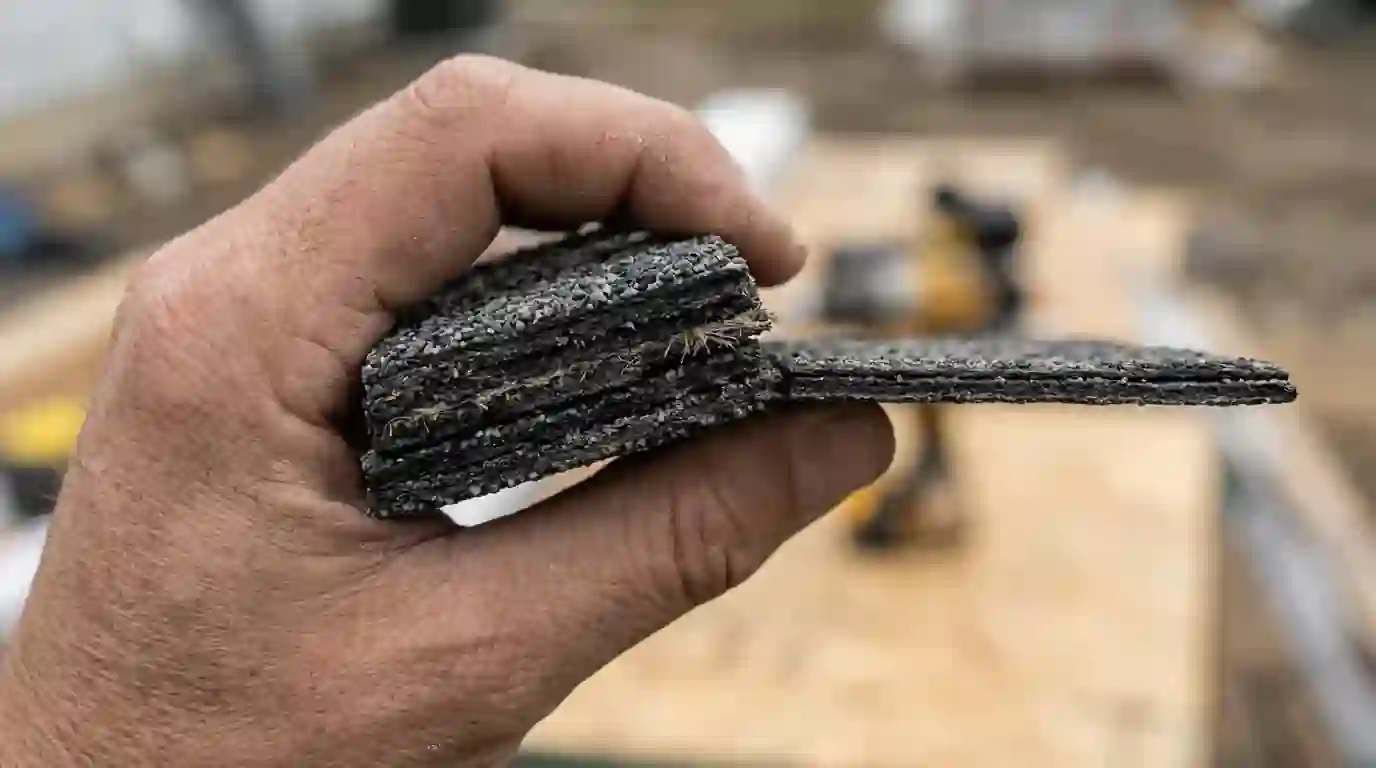
On asphalt shingles, hail knocks granules loose and bruises the mat underneath. A bruise feels soft, like a bad spot on an apple, and the asphalt there breaks down faster in sun. Larger stones can fracture the mat outright, which may not leak today but will within a few seasons.
Clay and concrete tile crack, chip at the edges or break into pieces that slide out of place. Metal roofs dent, and the question becomes whether the dents are only cosmetic or whether seams, fasteners or paint finishes were damaged. Each material needs a different test, so we don't use one checklist for every roof.
- Shingles: granule loss, soft bruises, fractured mats and split tabs.
- Tile: cracked faces, broken corners, shifted or missing pieces.
- Metal: dents, opened seams, chipped coatings and loosened fasteners.
- All roofs: dented vents, gutters and flashing that show hail size and direction.
Why hail season hits San Antonio so hard
Spring, roughly March through June, brings the strong thunderstorms that drop most of the area's hail. The April 12, 2016 storm is still the one people remember, when large hail hit the north and west sides hard and many neighborhoods needed new roofs. Smaller storms come through most years and leave scattered damage that's easy to miss.
Hail often falls in narrow bands, so one street can be fine while the next one over needs repairs. That's why a neighbor's roof result doesn't tell you much about yours. If you're not sure your area was hit, our free hail check page explains how to find out quickly. Dented mailboxes, pitted patio furniture and torn plant leaves on your own lot are also good signs that hail reached the roof.
When is hail damage small enough to repair?
Repair makes sense when hits are scattered, the roof is otherwise healthy and the damaged pieces can be matched. A few bruised shingles on one slope, a handful of cracked tiles or a dented ridge vent are all normal repair jobs. We replace the damaged pieces and leave the rest of the roof alone.
Repair stops making sense when bruising shows up across every slope or tile breakage is widespread. Patching dozens of spots on an older roof creates a mismatched surface that still has hidden damage underneath. In those cases a claim is usually worth exploring, and our insurance claim help page explains how we support that process without acting as your adjuster.
Age matters too. A newer roof with light damage almost always gets repaired. A roof in its last few years with moderate hail damage often gets replaced, because a repair spends money on a surface that was close to done anyway. We'll show you the granule wear and bend test results so the call is based on what you can see.
Cosmetic dents versus functional damage on metal
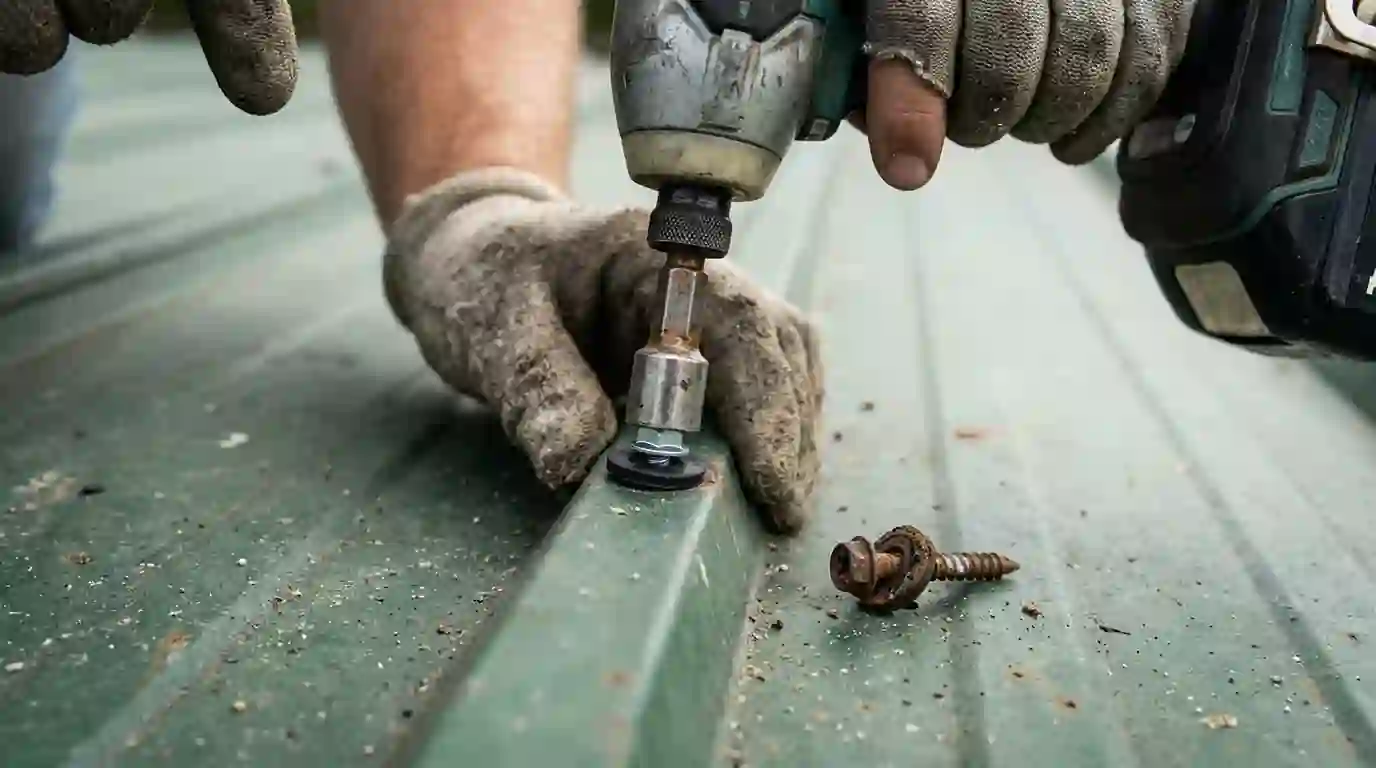
Metal roofs handle hail well, but they show it. Small dents on standing seam or 5V panels may only affect appearance while the panel still sheds water. Functional damage is different: split seams, cracked paint that will rust, punctures or fasteners knocked loose. Many policies treat these two very differently, so we document them separately. A roof can have hundreds of small dents and still have no functional damage, or only a few dents and a split seam that will leak.
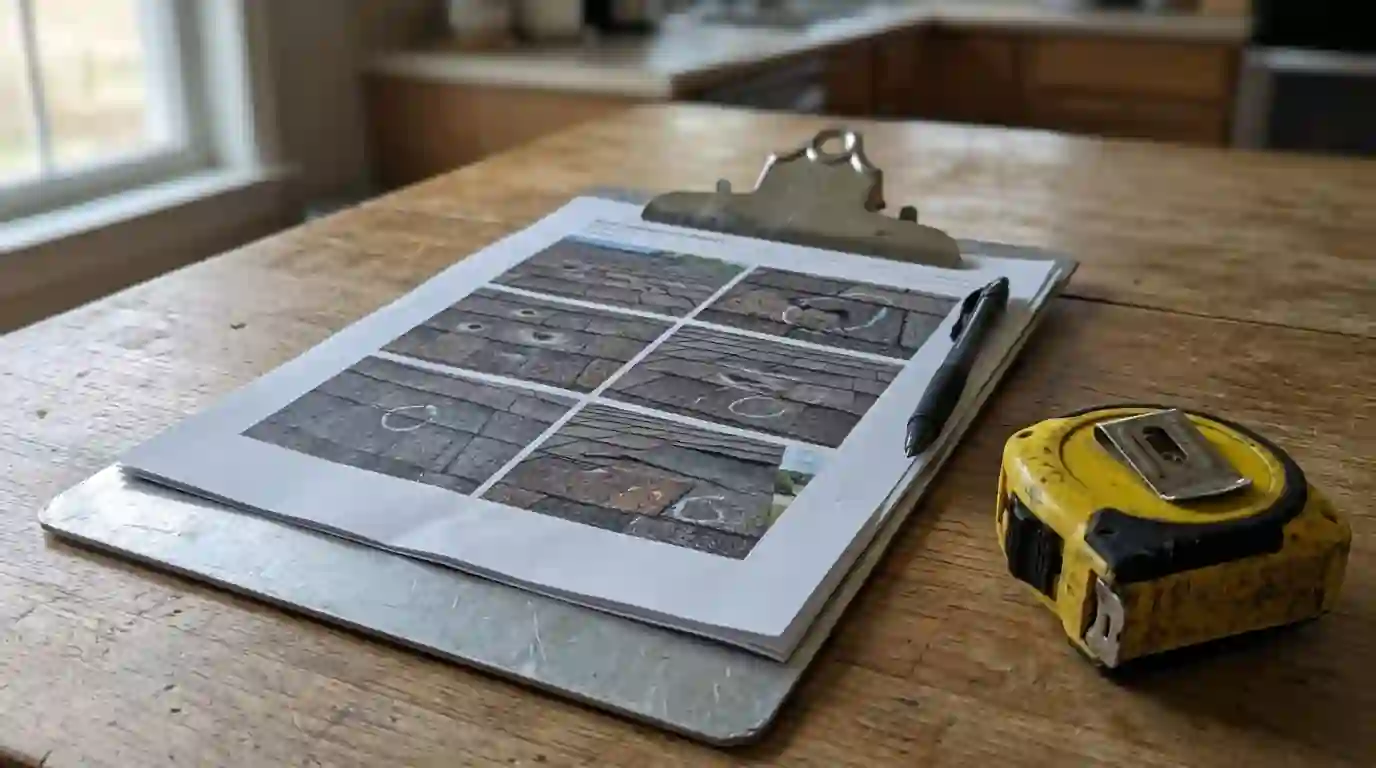
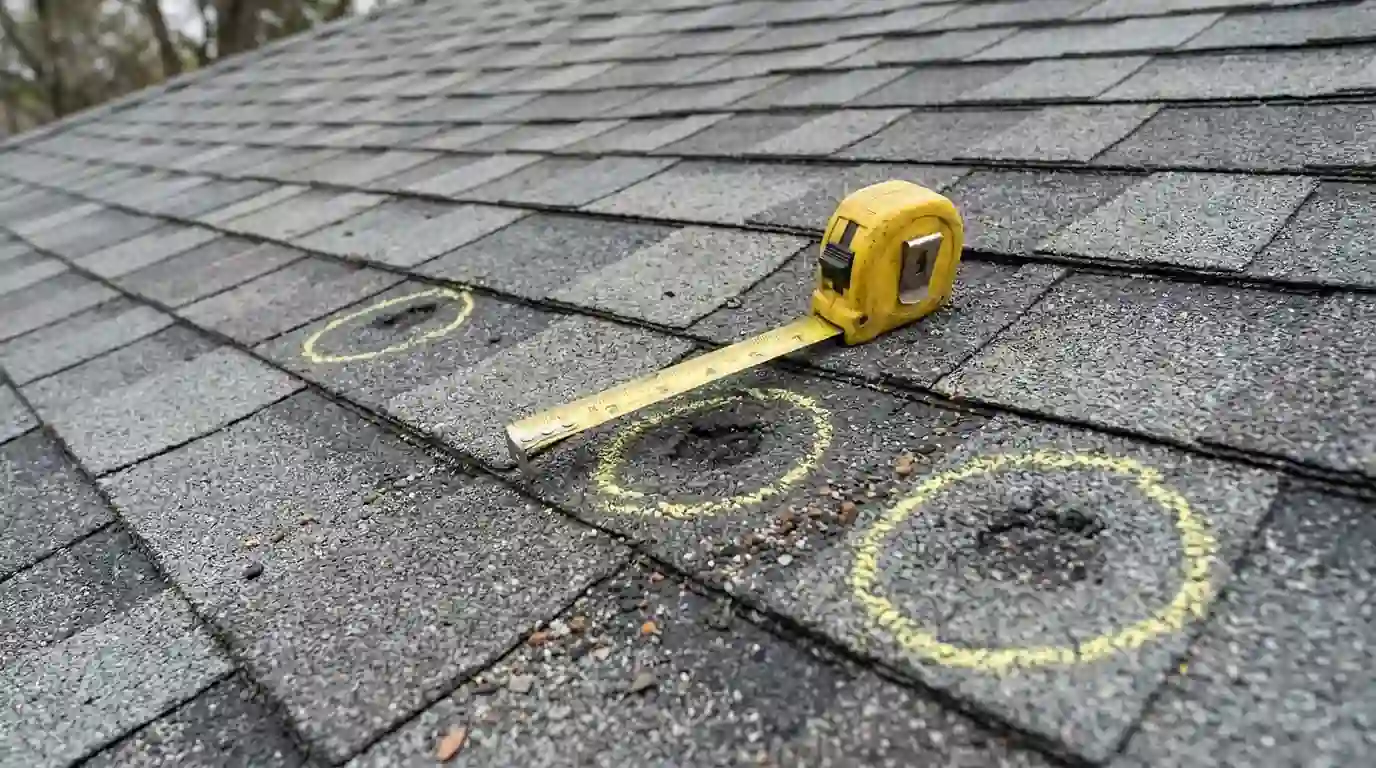
We photograph dent patterns with a chalk outline and a measuring tape for scale, and we note any panel where the finish has cracked. If you have metal on a home or barn, our metal repair and seam fixes page covers the repair side once the hail question is settled. Gutters and trim on metal homes get the same documentation.
What happens during a hail repair visit?
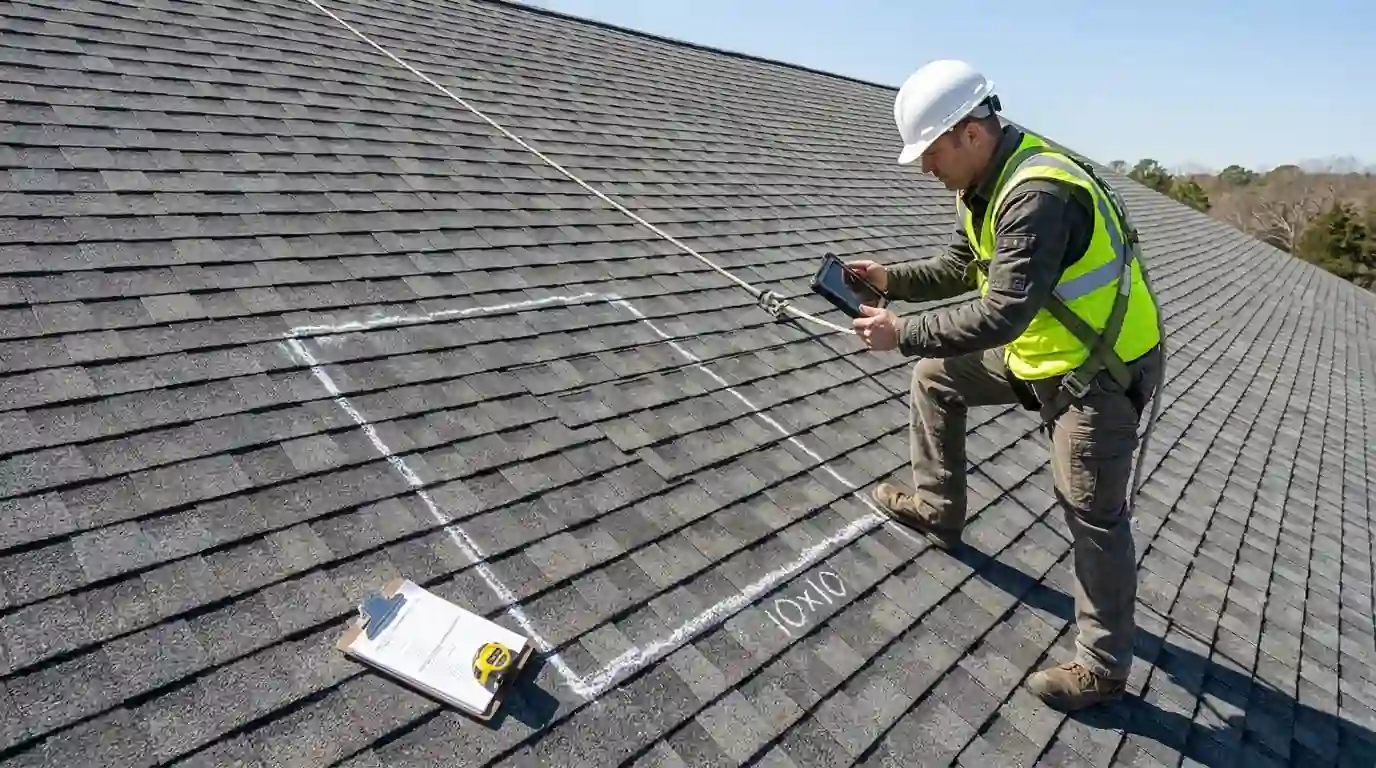
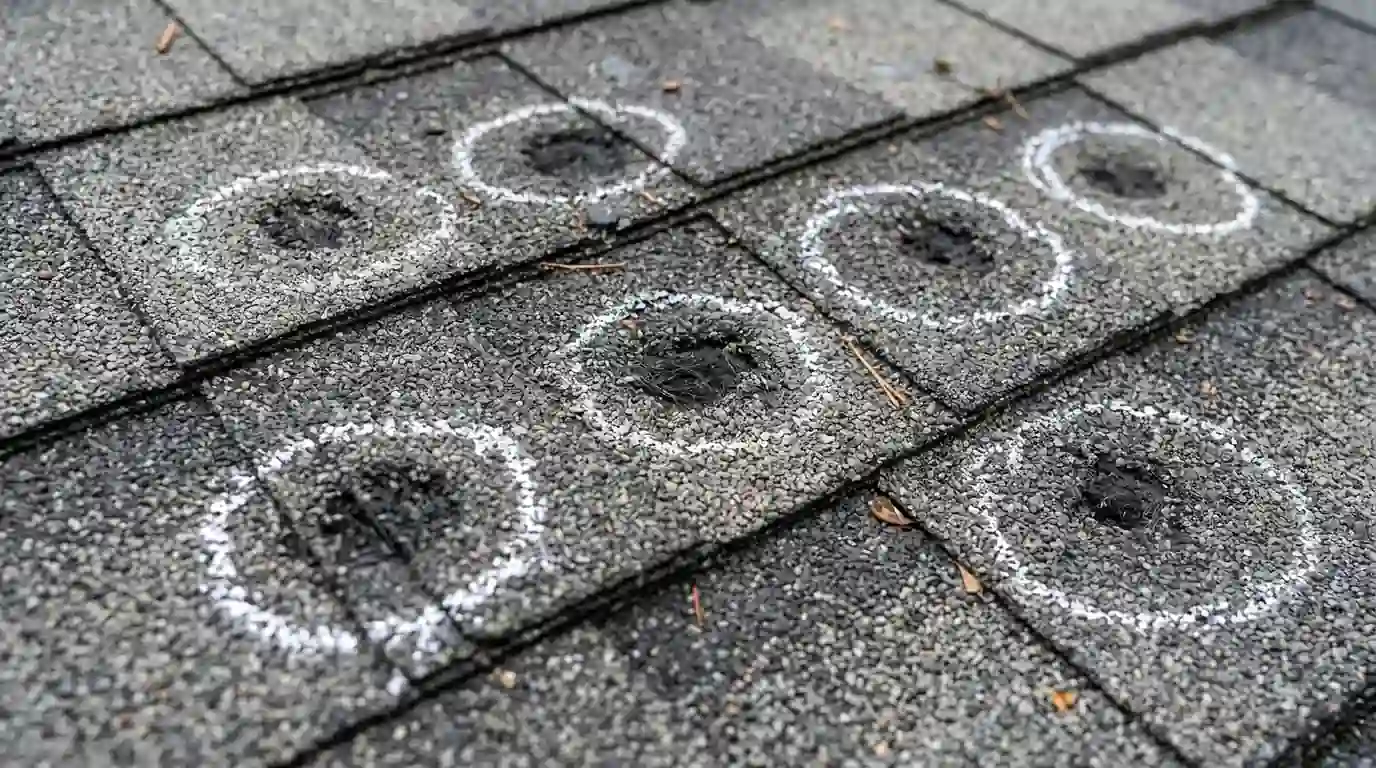
We inspect every slope, mark hits with chalk and photograph them with a coin or tape for size. Soft metals like vents, gutters and window wraps help confirm the storm's hail size and direction. Then we sort what we find into repair now, monitor and claim-worthy, and walk you through the photos.
For repairs, damaged shingles are lifted out and replaced with matching pieces, sealed by hand. Cracked tiles are removed without disturbing their neighbors and replaced with matching profiles. Dented vents and caps are swapped out. You get finished photos showing every repaired spot, plus notes on any area we chose to watch rather than repair.
How can you protect the roof before the next hail season?
Repaired roofs still face next spring. If your roof has taken hail more than once, ask about impact-resistant shingles when the time comes to replace it. Texas requires insurers to offer a premium discount for qualifying UL 2218 Class 4 roofs, though the amount varies by insurer, and our guide to Class 4 shingles explains what that rating means and what it doesn't.
Between storms, keep limbs trimmed back from the roof so wind and hail don't drive branches into it. After any storm with pea-sized or larger hail, a quick look at your vents and gutters from the ground tells you whether the roof deserves a closer check.