Skip to content
Ortiz RoofingSan Antonio, Texas 24/7(210) 750-1898

Vents and pipe boots

Roof vent and pipe boot repair in San Antonio, the small fix behind many leaks

The rubber collar around a plumbing vent pipe is a small part that causes a big share of roof leaks. San Antonio sun cracks it years before the shingles wear out. We replace failed boots, dented or rusted vents and loose exhaust caps, usually in one short visit.

  • Phones answered 24/7
  • Roof Repair & Storm Damage
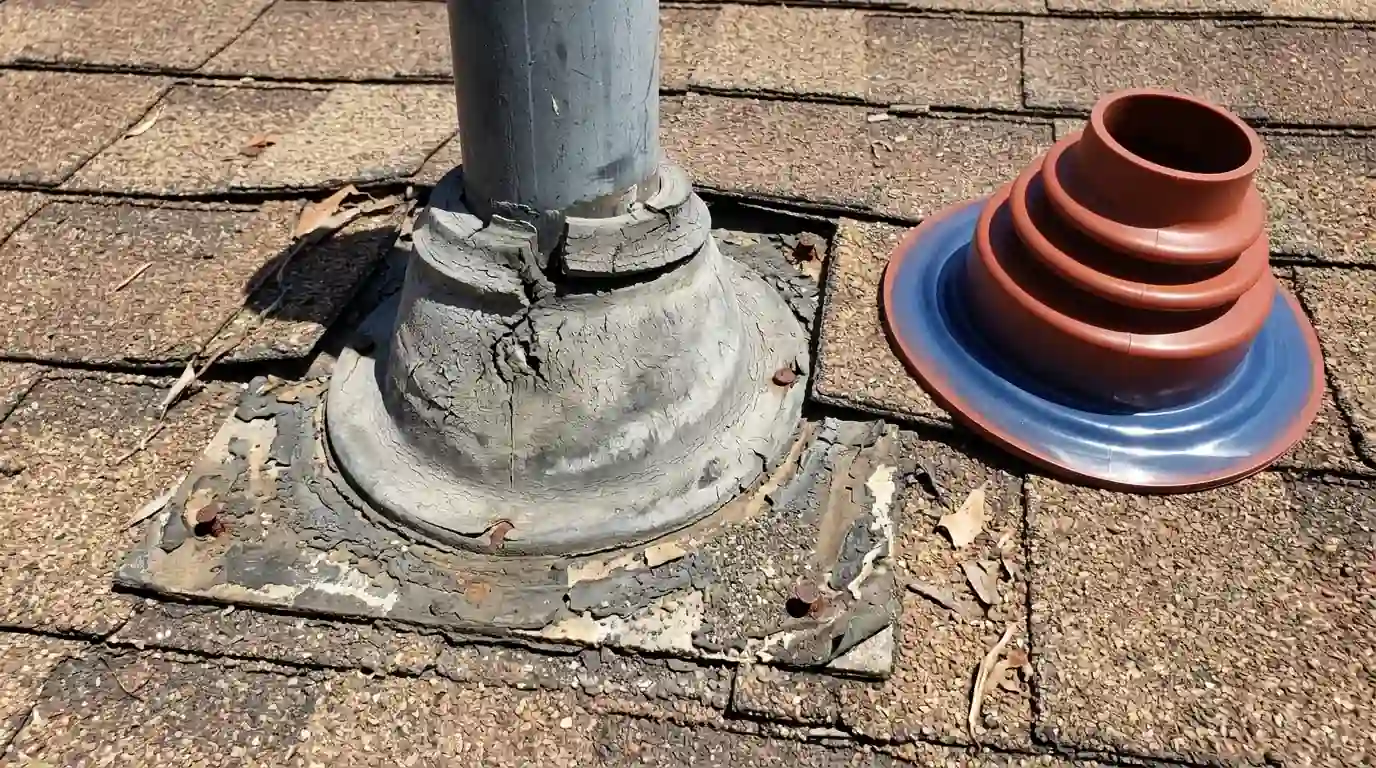
Close view of a sun-cracked rubber pipe boot around a plumbing vent on a weathered brown shingle roof in San Antonio, a new silicone boot resting beside it, bright sun.
Typical San Antonio range$165 to $545
Short answer

Roof vent and pipe boot repair in San Antonio usually costs $165 to $545, depending on how many penetrations need work and what type of boot or vent is used. Rubber pipe boots often crack from UV after several summers, letting water run down the pipe. We replace them with longer-lasting boots and check every vent while we're on the roof.

Why pipe boots crack so often in San Antonio

A standard pipe boot is a metal or plastic base with a rubber collar that hugs the vent pipe. The base slides under the shingles above and over the shingles below. The rubber collar is what keeps water from running down the pipe into the attic, and it's the weak point.

Rubber breaks down under UV and heat. On a south or west slope in San Antonio, a collar can start to crack and shrink after several summers, often long before the shingles around it need replacing. Once there's a gap between rubber and pipe, every rain sends a little water down the pipe and onto the decking or drywall.

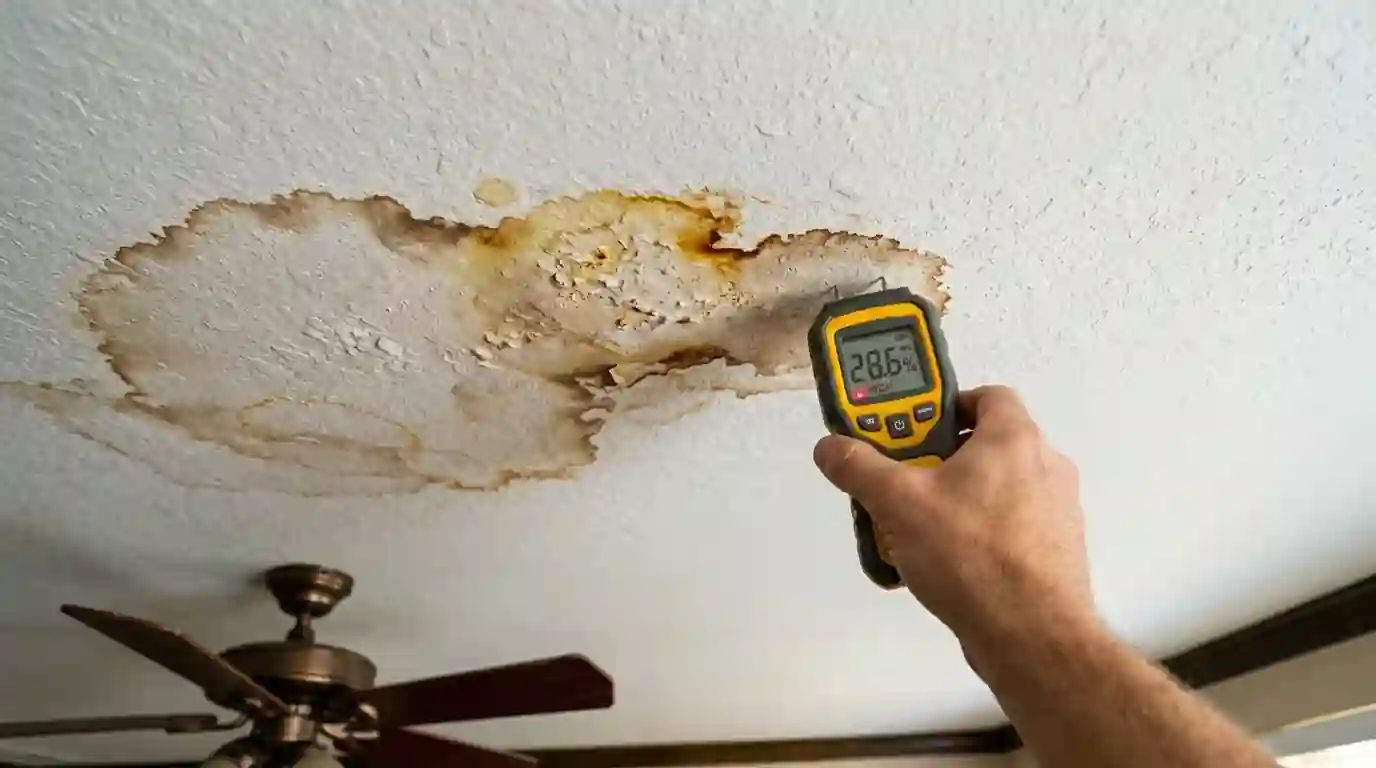
These leaks are often slow and easy to miss. You might see a small stain on a bathroom or hallway ceiling, or nothing at all until the drywall sags. If you've had a leak traced to a pipe, our ceiling stain and leak tracing page explains how we confirm the source.

Which pipe boot should replace the old one?

We match the boot to the pipe and the roof. For most homes, a boot with a UV-resistant silicone or EPDM collar lasts longer than basic rubber. Lead boots, which are folded over the top of the pipe, hold up well and don't crack, though they can be damaged by squirrels chewing on the soft metal.

On metal roofs, pipe flashings use a flexible base that's sealed and screwed to the panel ribs. On tile roofs, the boot sits under the tile with a lead or soft metal skirt formed over the tile profile above it. Each needs a different method, so tell us your roof type when you call.

  • Silicone or EPDM collars for longer UV life on shingle roofs.
  • Lead boots that fold over the pipe top and don't crack in sun.
  • Flexible retrofit flashings for metal panel roofs.
  • Lead-skirted boots formed to fit under clay and concrete tile.
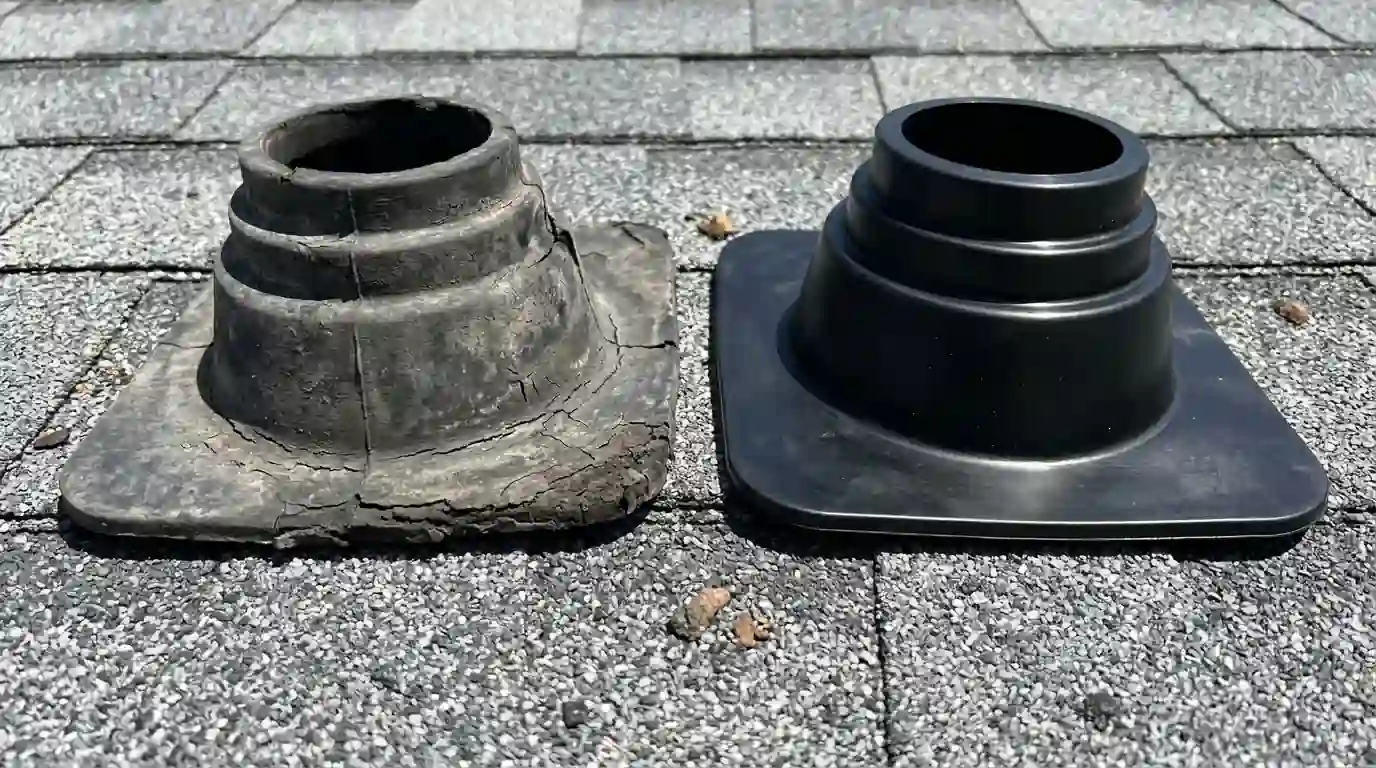
Cracked rubber pipe boot beside a brand new replacement boot on a gray shingle roof under bright sun
Roof Vent & Pipe Boot Repair on a San Antonio area home.

Turbines, box vents and exhaust caps

Roof vents fail in their own ways. Turbine vents seize up as bearings wear, and a stuck turbine can wobble loose or let wind-driven rain in. Box vents, the square low-profile kind, dent in hail and rust at the seams. Bathroom and kitchen exhaust caps lose their dampers or come loose at the base.

We replace damaged vents with the same style or with a better match for your attic. If your attic stays extremely hot or vents seem mismatched, that's a ventilation design question rather than a simple repair. Our intake and exhaust balancing page covers how we size and lay out a balanced system.

Hail often dents vents even when the shingles look fine. A dented vent isn't always leaking, but it's good evidence of hail size. If a storm just passed through, a post-storm roof report will record vent damage along with the rest of the roof. That record is useful later if the dents turn out to matter.

How a proper pipe boot replacement is done

We carefully break the seal on the shingles above the old boot and lift them without cracking. The old boot is removed, nails are pulled and the opening is checked for soft decking. The new boot slides under the upper shingles and over the lower ones so water flows across it, not behind it.

New nails go in where the shingles above will cover them, and those shingles are sealed back down by hand. On exhaust vents, we check that the duct actually connects to the vent from inside the attic. A disconnected bath fan duct can dump moist air into the attic and look like a leak.

Should you replace all the pipe boots at once?

If one boot has cracked from sun, the others on the same roof are usually close behind, especially on the same slope. Replacing all of them in one visit costs less than separate trips, and it removes one of the most common leak sources for years.

We'll photograph each boot and vent so you can see their condition. If the rest are still flexible and tight, we'll tell you so. Boots and vents are also checked as part of our seasonal roof maintenance visit, which catches cracking early. Spring is a good time, before the summer sun does its worst on rubber that's already brittle.

Abandoned vents and old satellite holes

Many roofs have openings that no longer do anything: an old exhaust cap from a removed range hood, an unused vent pipe, or lag holes from a satellite dish taken down years ago. Each one is a potential leak point with no purpose. They're easy to forget because nobody uses them, which is exactly why they go unchecked for years.

We can remove abandoned vents, deck over the opening and shingle it to match, so there's one fewer penetration to worry about. Satellite mount holes get filled and covered with new shingles instead of a dab of caulk that will dry and crack. That's a small job when we're already on the roof for a boot.
Warning signs

Signs your roof needs roof vent & pipe boot repair

Cracked rubber around a pipe

Visible cracks or a gap between the rubber collar and the pipe let water run straight down.

Stain near a bathroom or kitchen

Ceiling stains below plumbing vents often trace to a failed pipe boot above.

A stuck or wobbling turbine

Turbines that don't spin or that rock in wind can loosen and let rain in.

Dented or rusted box vents

Hail dents and rust at seams on low-profile vents can open leaks.

Loose exhaust caps

Caps that rattle or have missing dampers let in rain, pests and debris.

Chewed lead boots

Squirrels gnaw soft lead around pipe tops, leaving holes that leak.

From first call to finished roof

How we handle roof vent & pipe boot repair from start to finish

  1. Step 1

    Attic check below penetrations

    We look for wet decking and stains around each pipe and vent from inside.

  2. Step 2

    Roof inspection and photos

    Every boot, vent and cap is photographed so you can see its condition.

  3. Step 3

    Lift and remove

    Shingles above the failed part are lifted carefully and the old boot or vent comes out.

  4. Step 4

    Check the decking

    We probe around the opening for soft wood and replace it if needed.

  5. Step 5

    Install and seal

    The new boot or vent is lapped correctly, nailed under shingles and sealed by hand.

  6. Step 6

    Duct and final check

    Exhaust ducts are checked for connection in the attic, and you get finished photos.

What roof vent & pipe boot repair usually costs in San Antonio

Pipe boot or vent repairs in San Antonio usually cost $165 to $545. The price depends on the roof after inspection, mainly the number of penetrations and the roof material.

Line itemTypical range
Single pipe boot replaced on a shingle roof$165 to $265
Each additional pipe boot on the same visit$75 to $135
Turbine or box vent replaced$185 to $345
Exhaust cap replaced and duct reconnected$155 to $295
Abandoned vent removed and decked over$195 to $385

What moves the price

  • Tile and metal roofs need specialty boots and more labor.
  • Steep or two-story roofs add access time.
  • Soft decking found around a pipe adds a per-sheet charge.
  • Lead boots and silicone collars cost more than basic rubber.
  • Several boots on one visit lower the cost per boot.

Ranges are typical, not quotes. Your price depends on the roof we see at the inspection. See every service side by side in the roofing cost guide.

Materials we install and repair

  • GAF
  • Owens Corning
  • CertainTeed
  • Malarkey
  • TAMKO
  • Atlas Roofing
  • IKO
  • Eagle Roofing
  • Westlake Royal
  • DaVinci Roofscapes
  • Englert
  • Carlisle
  • Velux
  • Solatube
  • GAF
  • Owens Corning
  • CertainTeed
  • Malarkey
  • TAMKO
  • Atlas Roofing
  • IKO
  • Eagle Roofing
  • Westlake Royal
  • DaVinci Roofscapes
  • Englert
  • Carlisle
  • Velux
  • Solatube
  • GAF
  • Owens Corning
  • CertainTeed
  • Malarkey
  • TAMKO
  • Atlas Roofing
  • IKO
  • Eagle Roofing
  • Westlake Royal
  • DaVinci Roofscapes
  • Englert
  • Carlisle
  • Velux
  • Solatube

Where we do this work

Roof Vent & Pipe Boot Repair across San Antonio and nearby cities

We handle roof vent & pipe boot repair from downtown San Antonio out to the Hill Country and the I-35 corridor. Here are the places we cover most, with their main ZIP codes. The full service area lists all 62 neighborhoods, cities and counties.

Answers

Roof Vent & Pipe Boot Repair questions from San Antonio homeowners

How long do rubber pipe boots last on a San Antonio roof?

Basic rubber pipe boots often start cracking after several summers on sunny slopes here, well before the shingles wear out. Silicone, EPDM or lead boots usually last longer. Checking boots each spring and fall catches cracks early, before a slow leak stains the ceiling.

Can a cracked pipe boot be sealed instead of replaced?

A rubber boot can be wrapped with a retrofit collar or sealed in an emergency, but those fixes are short-term. The cracked rubber keeps breaking down. Replacing the boot takes about the same time on the roof and lasts far longer, so we treat sealing only as a temporary measure.

Should I replace my turbine vents during pipe boot repair?

Only if they're stuck, wobbling, dented or rusted. Working turbines can stay. If your attic runs very hot, it may be worth looking at the whole ventilation layout before swapping vents one for one, since adding the wrong exhaust can upset the balance between intake and exhaust.

Why does my bathroom ceiling stain even with a new vent boot?

Check the bath fan duct in the attic. If it's disconnected or vents into the attic instead of through the roof cap, warm moist air condenses on the decking and drips down, looking like a roof leak. We check duct connections when we replace exhaust vents for that reason.

Related work

Other roof work that often goes with this job

Brown water stain spreading across a white textured ceiling in a Texas living room, a moisture meter held up to the stain

Roof Leak Repair

We trace water from the ceiling stain back to its true entry point with attic checks and a moisture meter, then seal it for good.

Learn more
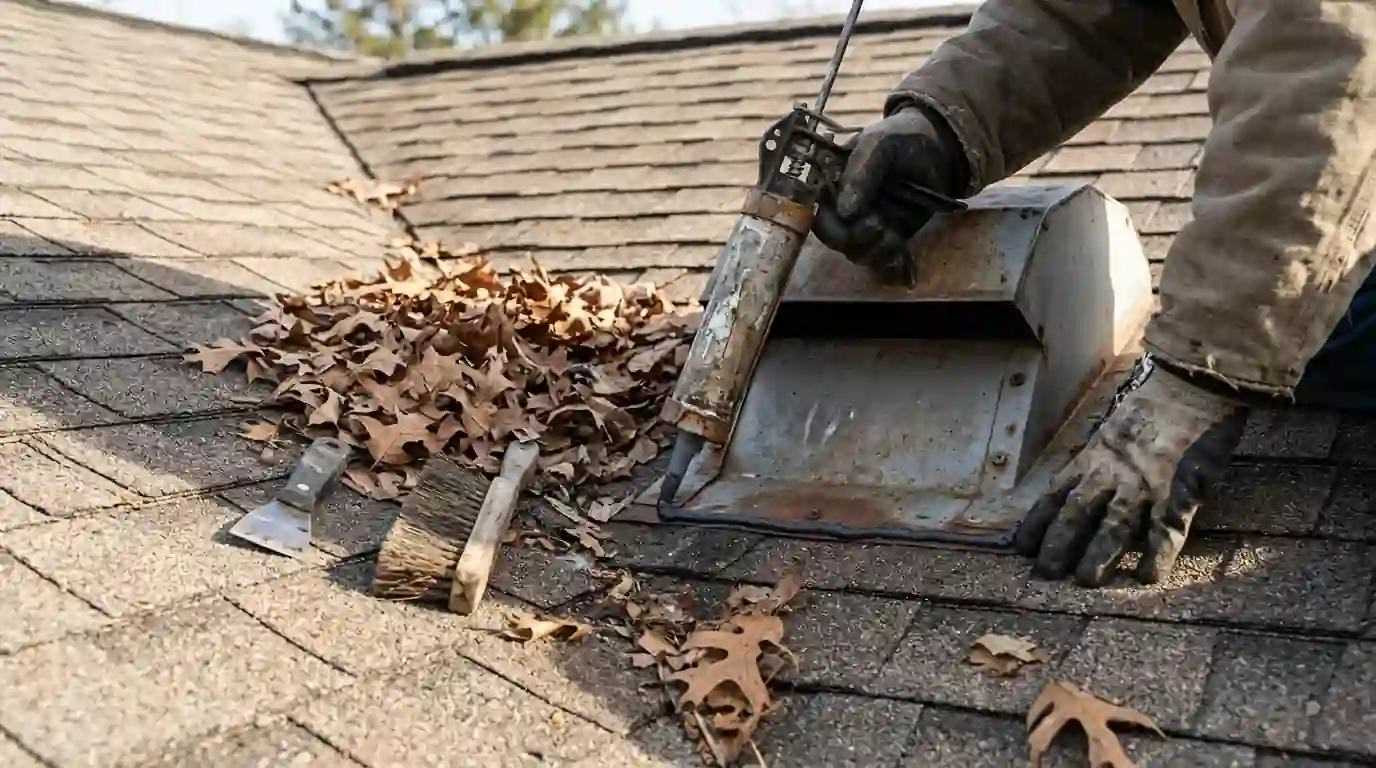
Roofer clearing oak leaves from a roof valley and resealing a vent flange with a caulk gun

Roof Maintenance

Twice-yearly roof tune-ups that clear debris, reseal penetrations, tighten fasteners and keep water moving off the roof.

Learn more
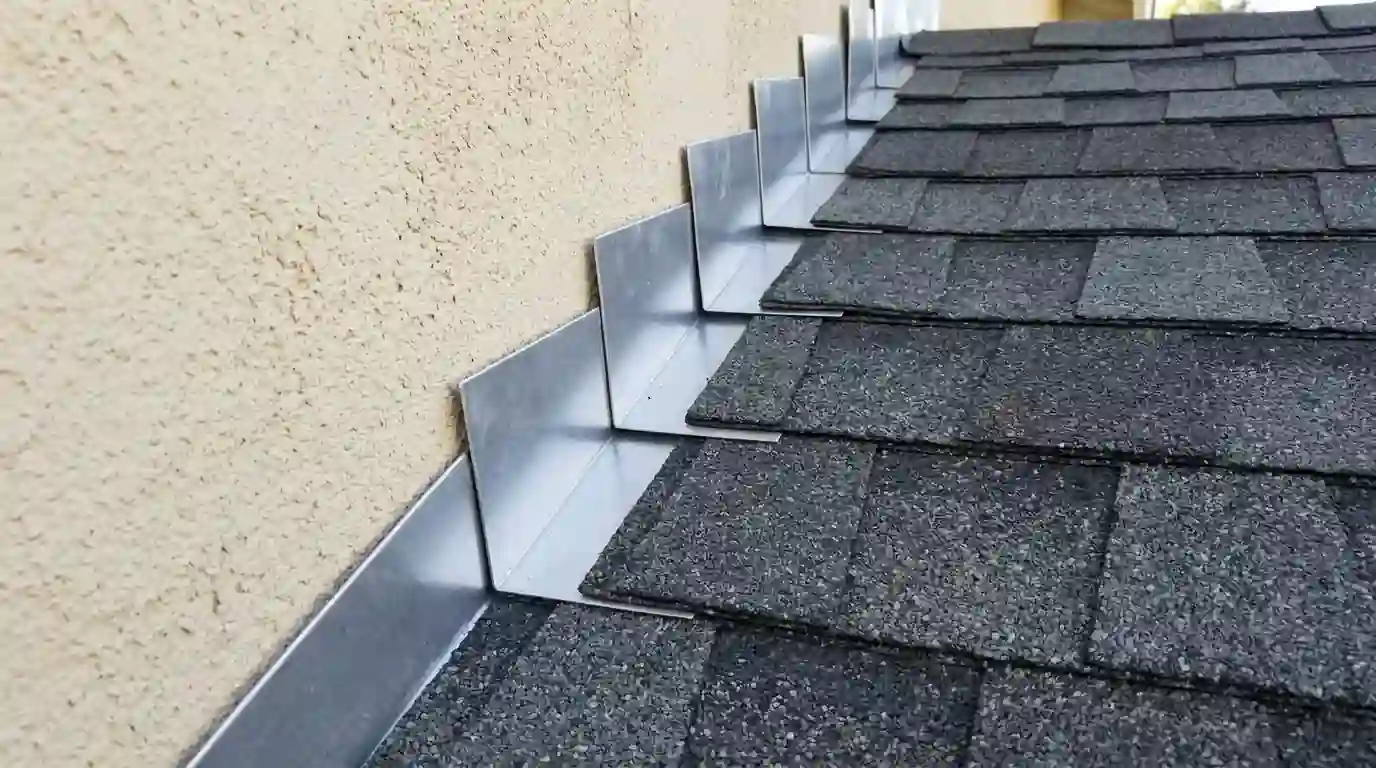
New aluminum step flashing tucked under shingles where a sloped roof meets a cream stucco wall

Roof Flashing Repair

New step, counter, headwall and kick-out flashing where roofs meet stucco and stone walls, the joint that leaks most on local homes.

Learn more
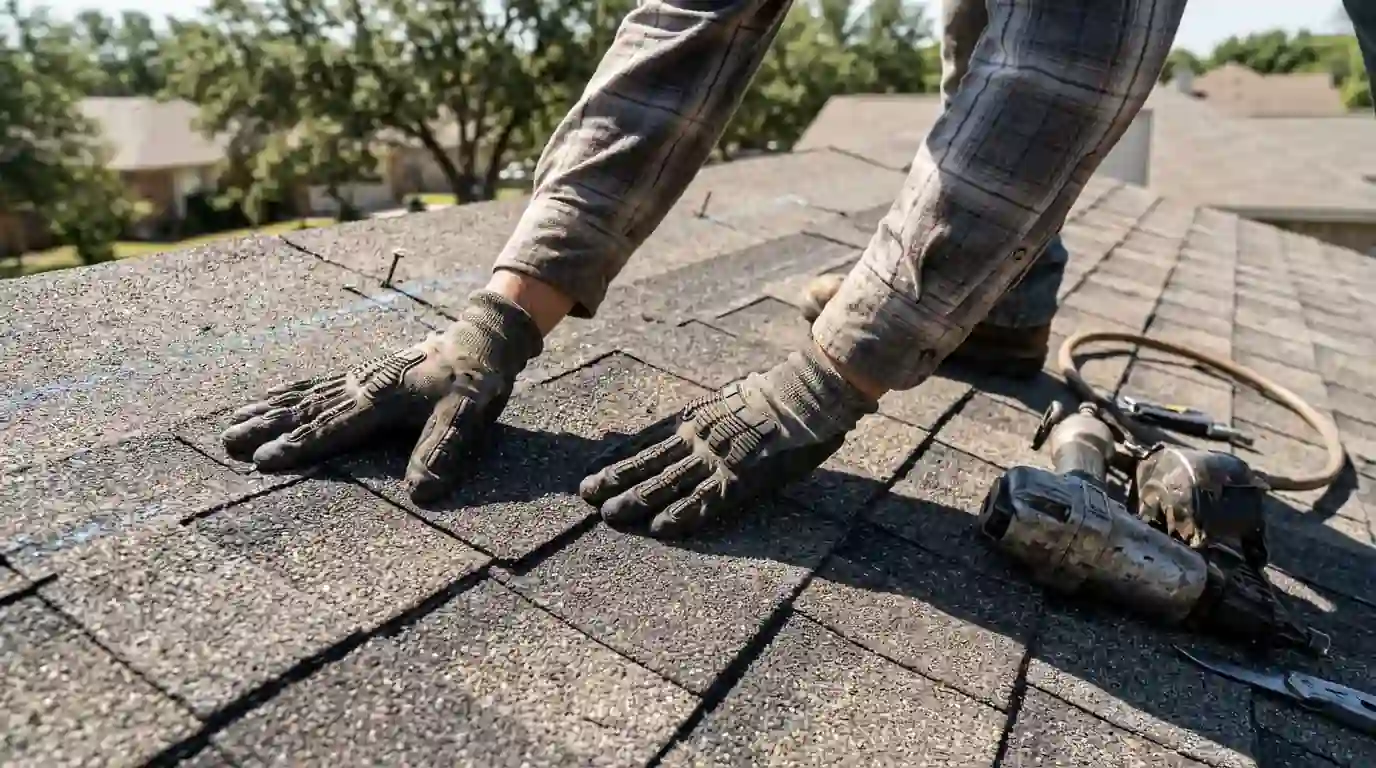
Close view of a roofer's gloved hands pressing a replacement architectural shingle into place on a sunny San Antonio ranch home roof, nail gun beside it

Roof Repair

Fixes for lifted shingles, nail pops, cracked ridge caps and small storm spots, with a straight answer on repair versus replacement.

Learn more

Roof trouble today? Talk to a roofer now.

Our phone line is answered 24/7. Tell us what you see and we will tell you the next step, even if that step is a tarp tonight and a full inspection tomorrow.

Call (210) 750-1898Answered 24 hours a day
Call (210) 750-189824/7