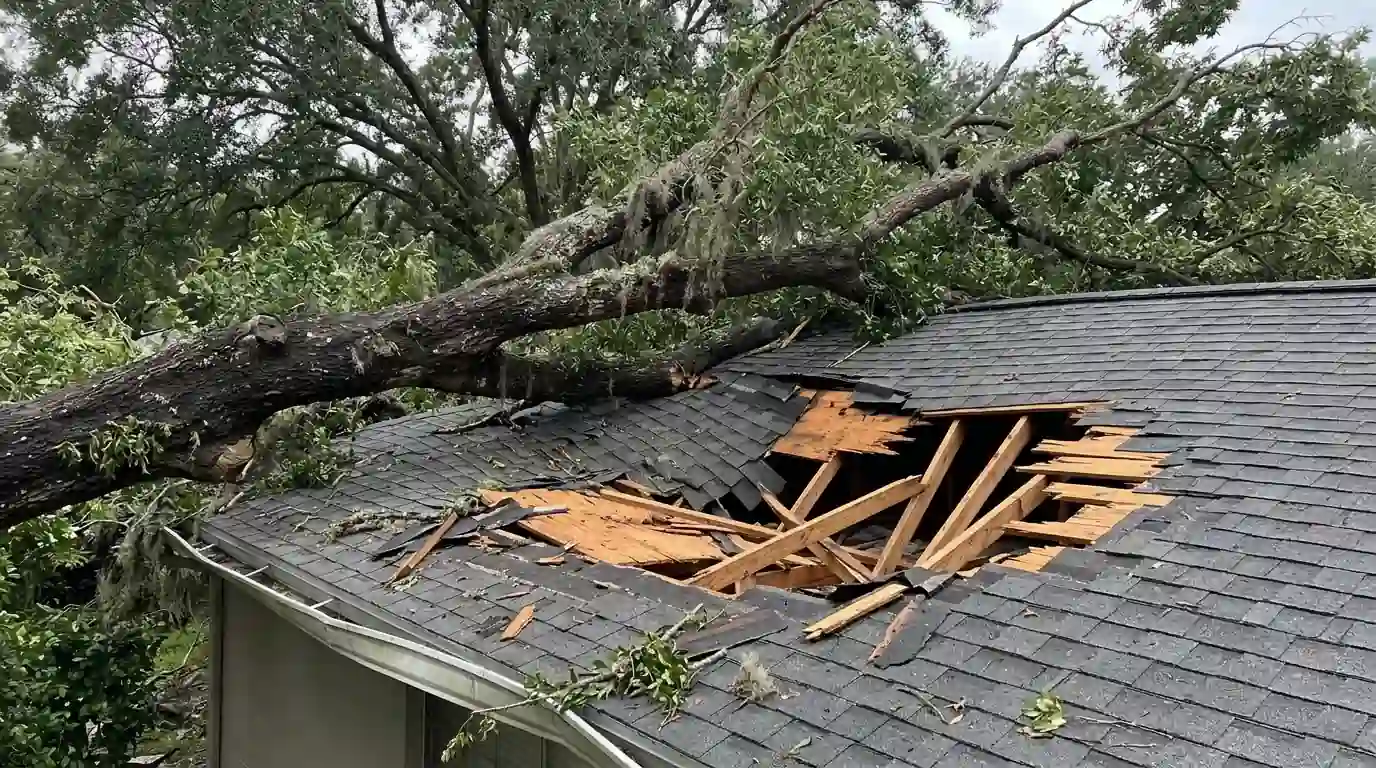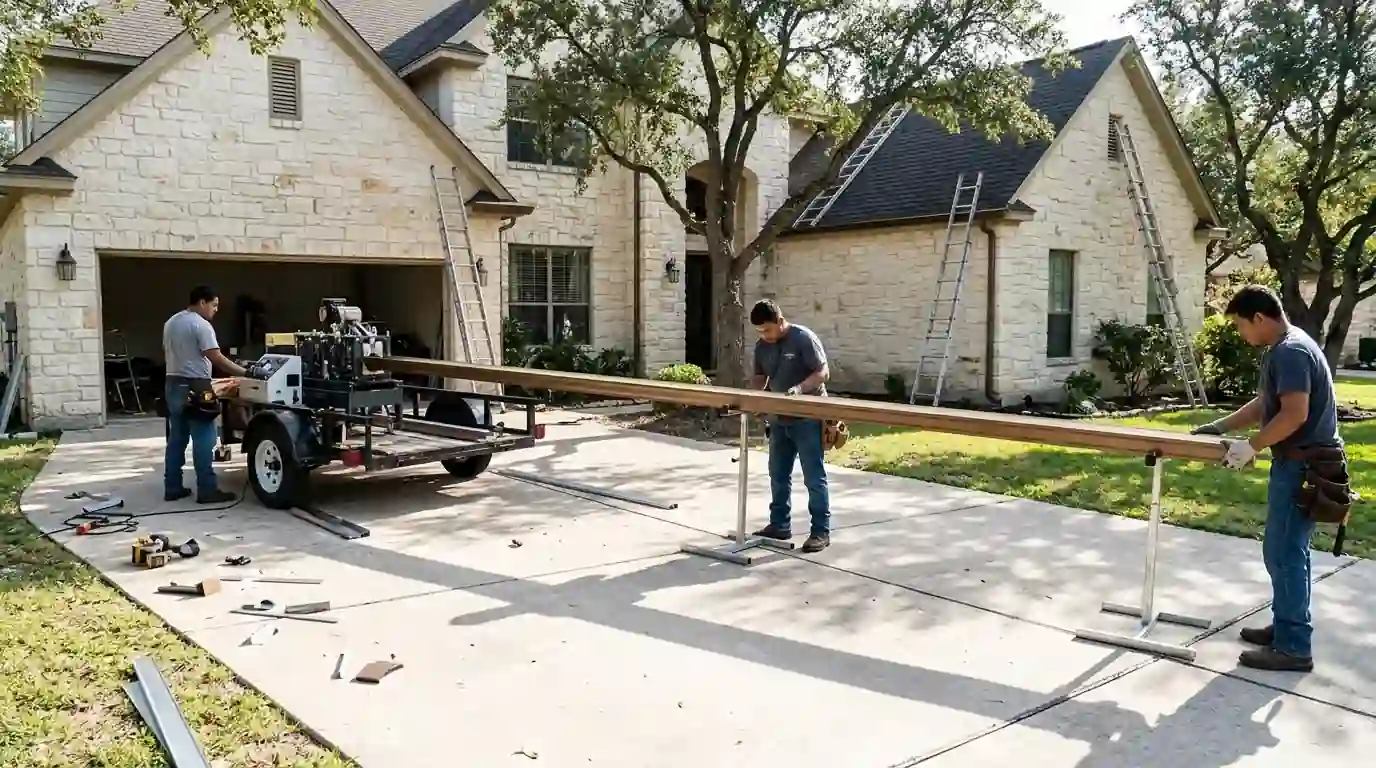
How wind damages a roof without tearing it off
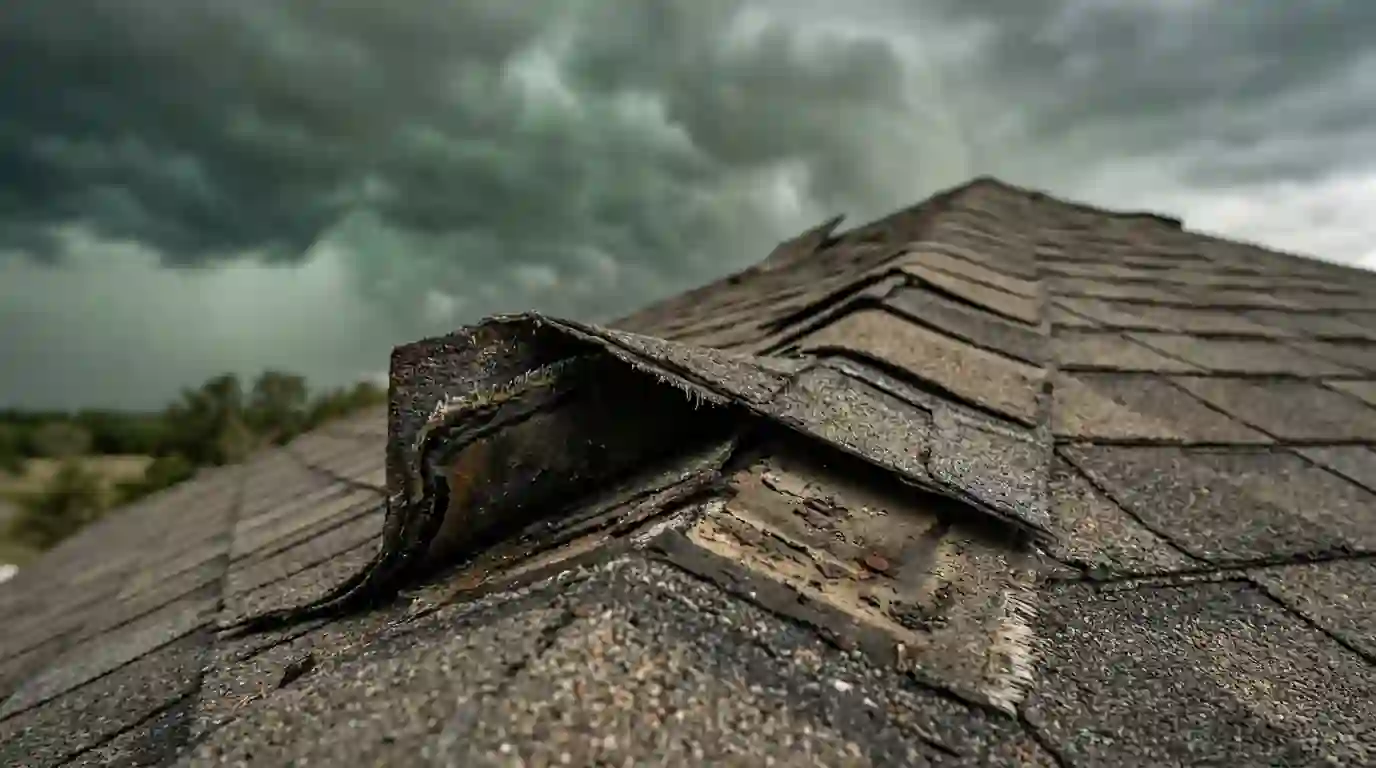
Each shingle is held down by nails and a strip of factory sealant that bonds it to the shingle below. When wind gets under the leading edge, it lifts the tab and bends it back along the nail line. If the bend is sharp enough, the shingle creases, and that crease is a permanent weak spot.
Even without a crease, a lifted tab often comes back down unsealed. Now it flutters in every breeze, and the next storm has a much easier time pulling it free. Roofs in San Antonio are more prone to this as they age, because years of heat dry out the sealant until it barely holds. A ten-year-old roof that came through earlier storms untouched can start losing tabs once that bond gives out.
Why some roof slopes take more wind than others
Wind doesn't load a roof evenly. Edges, corners and ridges see the strongest uplift, which is why missing ridge caps and peeled rake shingles are so common after storms. Gable roofs have tall, flat end walls that catch wind and create strong lifting forces along the rake edges.
Hip roofs slope on all four sides, so wind flows over them more smoothly and they usually fare better. They still lose hip caps, though, since those run along every exposed edge. Homes on open lots or hilltops on the north and west sides get hit harder than homes sheltered by neighbors and mature live oaks.
Spring brings most of the strong thunderstorms, and straight-line winds from collapsing storms can be as damaging as a small tornado over a narrow path. If one storm damaged your roof, check which side faced the wind, because that's where we'll focus first. The far side of the roof still gets checked, since swirling gusts can lift tabs there too.
- Rake edges on gable ends lose shingles first.
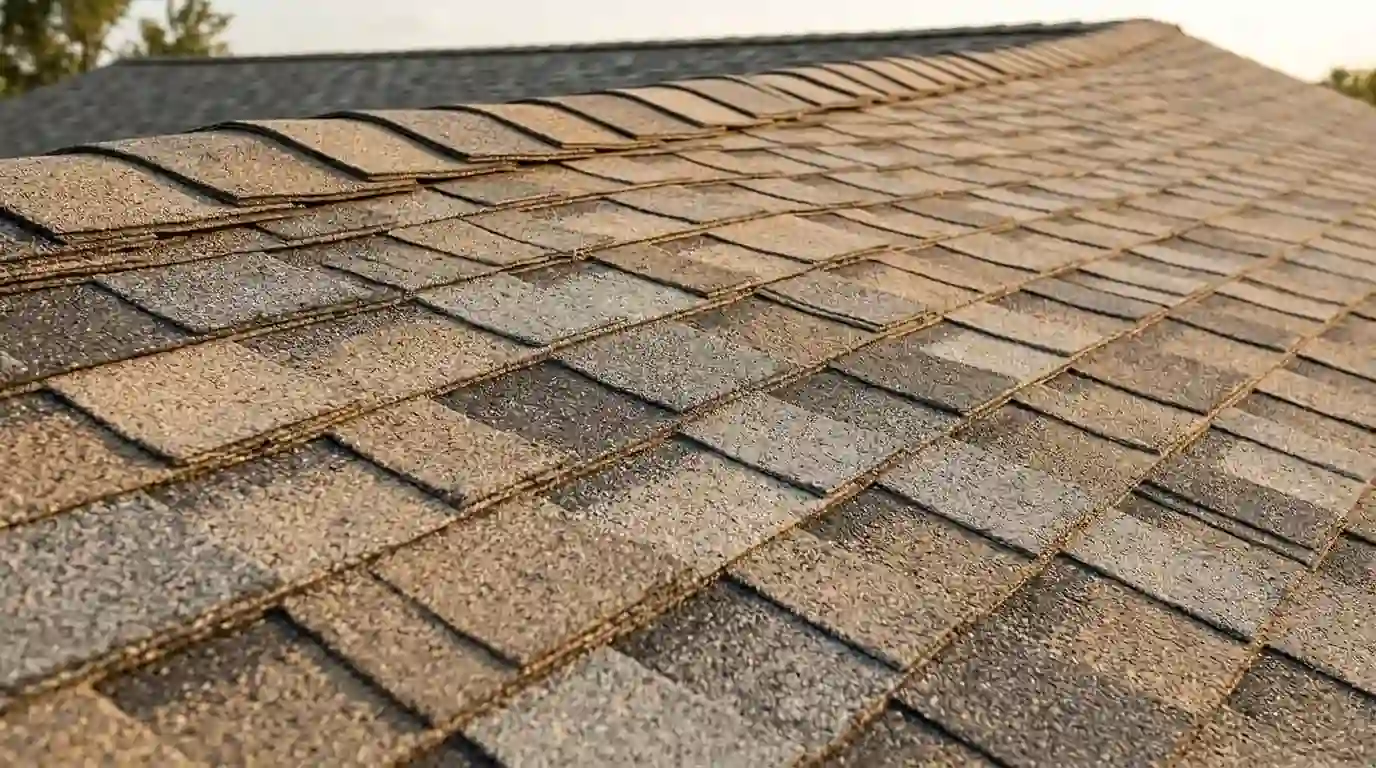
- Ridge and hip caps peel off along the peaks.
- Corners of the roof see the strongest uplift.
- The slope facing the storm takes the most lifted tabs.
How do we check for broken seal strips?
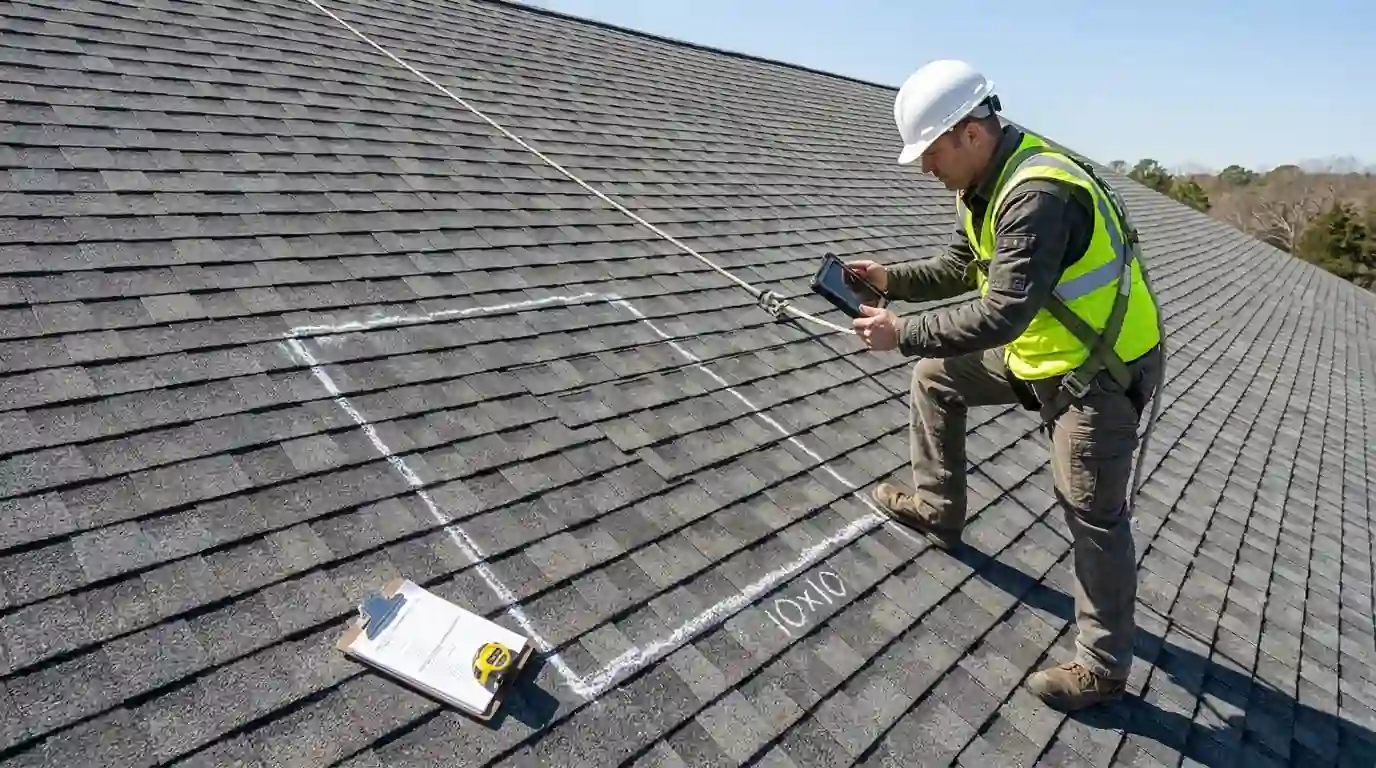
We walk the roof and gently test the leading edge of tabs on each slope, especially near edges and the ridge. A sealed tab resists lifting. An unsealed one comes up with almost no effort, and we can see whether the sealant line is torn, dusty or never stuck in the first place.
We also look for horizontal crease lines just above the sealant strip, and for missing granules in a straight band where a tab has been flapping. We mark and photograph each damaged area so you can see the pattern. That record also helps if the damage ends up part of an insurance-ready storm report.
What a proper wind repair looks like
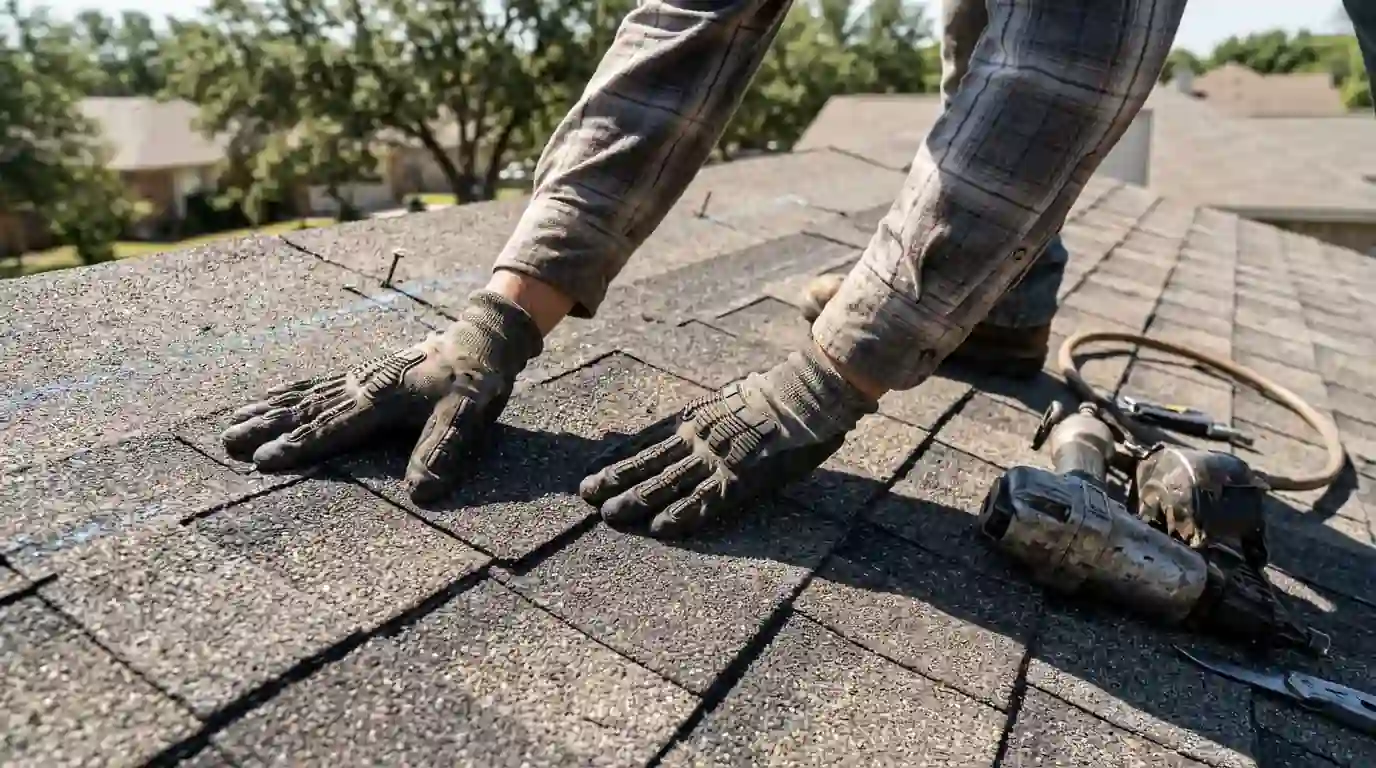
Creased shingles get replaced, because gluing down a creased tab leaves a cracked mat that will tear again. Tabs that lifted without creasing can be hand sealed with roofing cement at several points. Missing ridge caps are replaced with matching caps nailed at the correct exposure and sealed at the head.
Along the edges, we check that drip edge and starter shingles are fastened well, since loose edge metal lets wind get under the first course. If the roof is near the end of its life and seal strips are failing everywhere, we'll say so and suggest comparing the cost with a full tear-off and new roof rather than resealing slope after slope.
What should you do right after a windstorm?
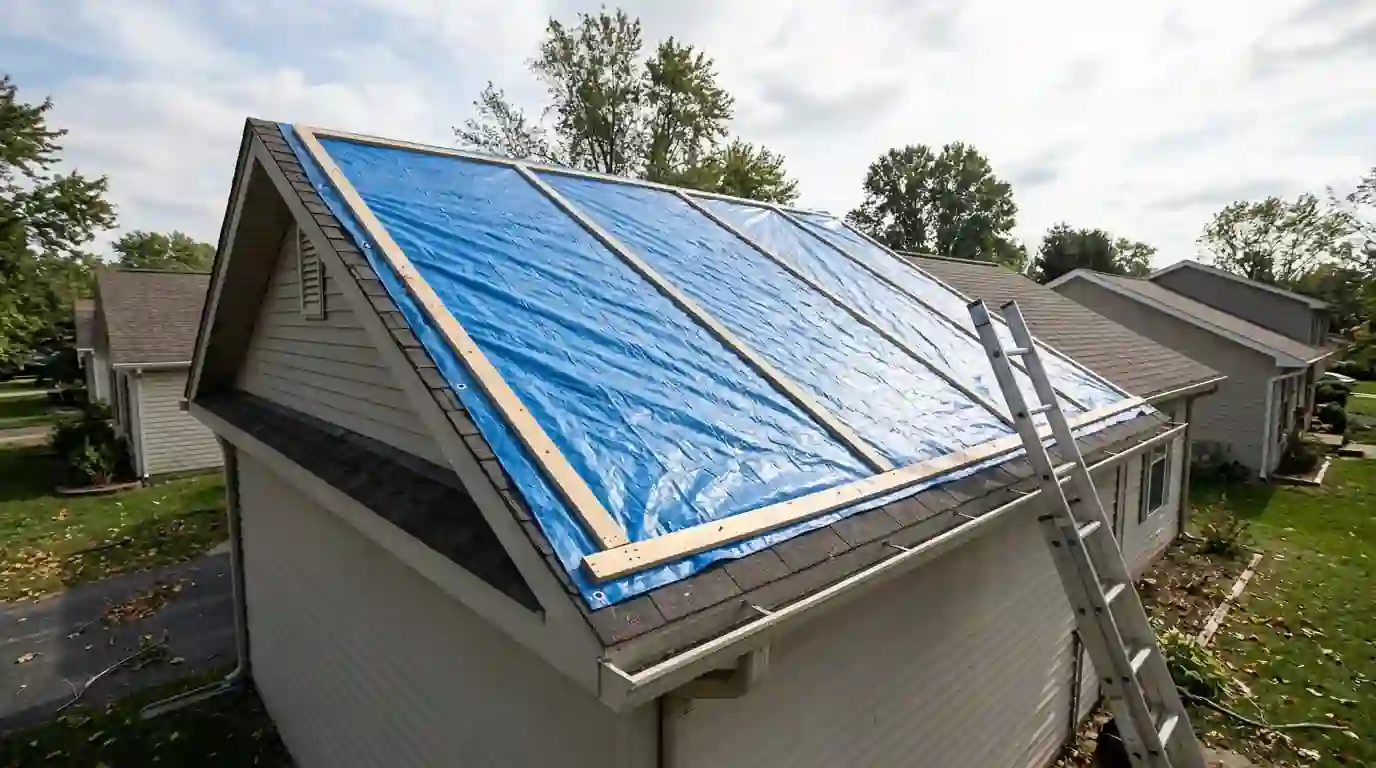
Walk the yard and look for shingle pieces, ridge caps and bits of trim. Take photos from the ground of any bare spots on the roof. If you can see exposed underlayment or bare decking, that area needs cover before the next rain, and our tarp and dry-in service handles that quickly.
Don't climb up to nail shingles back on yourself. Wind-damaged roofs often have loose pieces that slide underfoot, and a lifted shingle reattached the wrong way can trap water. Photos from the ground plus the date of the storm are all we need to get started.
How can you make the roof hold up better in the next storm?
Keep limbs trimmed back so branches don't whip against the roof and break tabs loose. When it's time for new shingles, ask about products with higher wind ratings and proper starter strips along every edge, because the first course is where wind usually gets in.
A quick look at the roof after big storms catches unsealed tabs before they tear off. Small resealing jobs cost far less than replacing a whole section later. It's also worth checking that attic ventilation is balanced, since a very hot attic speeds up how fast seal strips dry out and let go.