How each panel is built and fastened
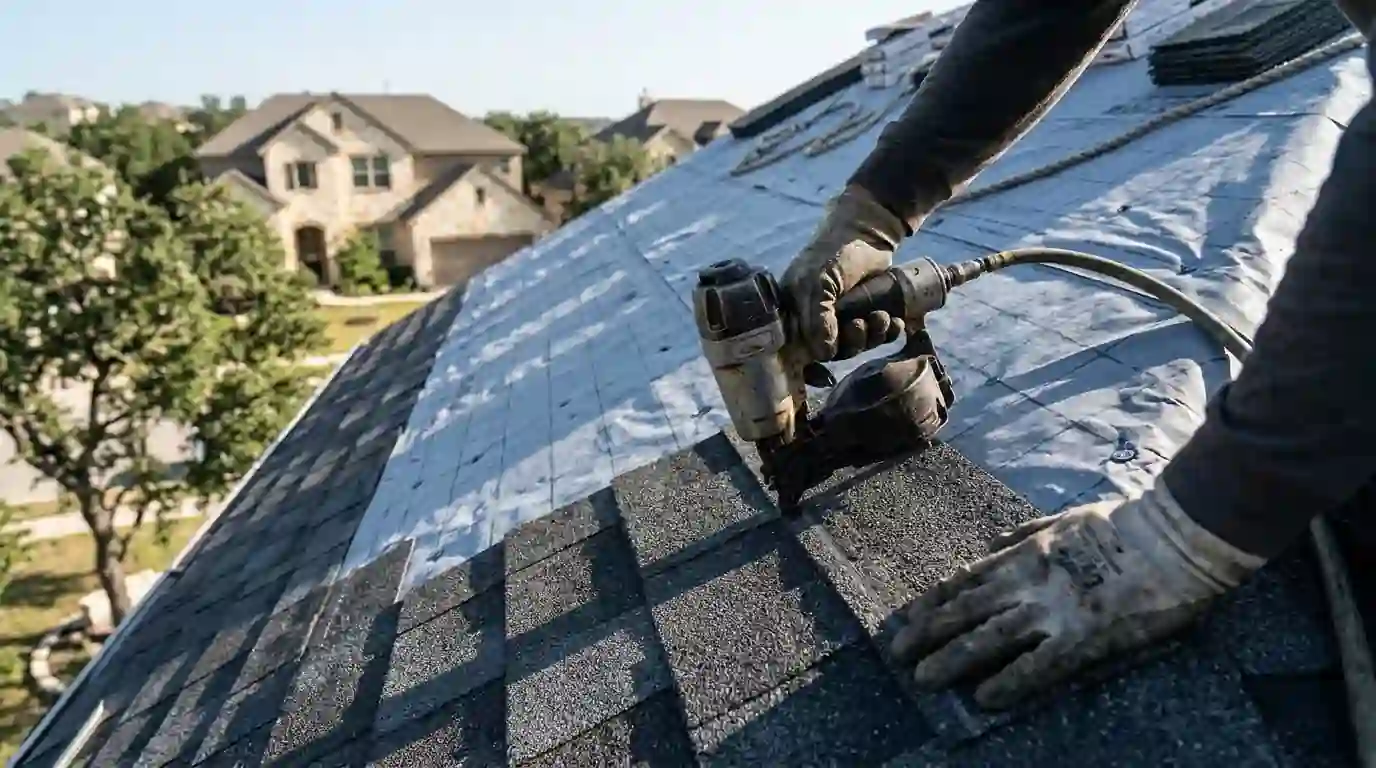
A standing seam roof uses long panels that run from eave to ridge with raised edges on each side. Neighboring panels lock together at those seams, either by snapping or by machine folding. Clips hidden under the seam hold the panel to the deck, so no fastener passes through the face of the metal where water runs.
5V crimp is an older Texas favorite with five V-shaped ridges pressed into each panel. It's fastened with screws driven through the flat of the panel into the deck or purlins, each with a rubber or neoprene washer to seal the hole. That design is simple, fast to install and easy to repair, which is why it's common on farmhouses, barns and Hill Country ranch homes.
Why exposed fasteners matter in Texas heat
Metal grows and shrinks with temperature, and a Hill Country roof can swing a long way between a cool spring dawn and a summer afternoon. On a standing seam roof, the clips let each panel slide slightly as it moves. On a screwed-down 5V roof, the metal pulls against every screw, slowly working the holes larger over years.
The washers under those screws also face full sun. Over time they dry out, crack and stop sealing, and that's where most leaks on exposed-fastener roofs start. None of this makes 5V crimp a bad roof. It just means you should plan on checking fasteners on a schedule and replacing worn screws, often with a slightly larger size, as part of normal metal roof upkeep.
- Look for rust stains running downhill from screw heads.
- Check for screws that have backed out or sit crooked.
- Watch for cracked or flattened washers under the screw heads.
- Note any stains on the ceiling or decking in a line under a panel seam.
How they compare on hail and wind
Both kinds of metal resist hail well compared with many other roofs, since metal tends to dent instead of crack. Gauge plays a big role. Heavier gauges such as 24 gauge, common on standing seam, resist dents better than the thinner gauges often used for 5V crimp, though some 5V panels are made in heavier gauges too. Several standing seam and 5V products carry a UL 2218 Class 4 impact rating.
Dents on metal are often cosmetic, and some insurance policies limit coverage for cosmetic metal damage. Read that section of your policy before you choose. For wind, standing seam's locked seams and clips hold well when installed to the maker's spacing, while 5V crimp depends on correct screw spacing, especially at the eaves, rakes and ridge.
Which style suits which Hill Country home
Standing seam fits limestone and stucco homes with modern or Texas farmhouse styling, roofs with long simple slopes, and owners who want minimal upkeep for decades. It also works well under solar panels, since clamps attach to the seams without drilling through the roof. Homes on the larger lots around Boerne and Fair Oaks Ranch often lean this way.
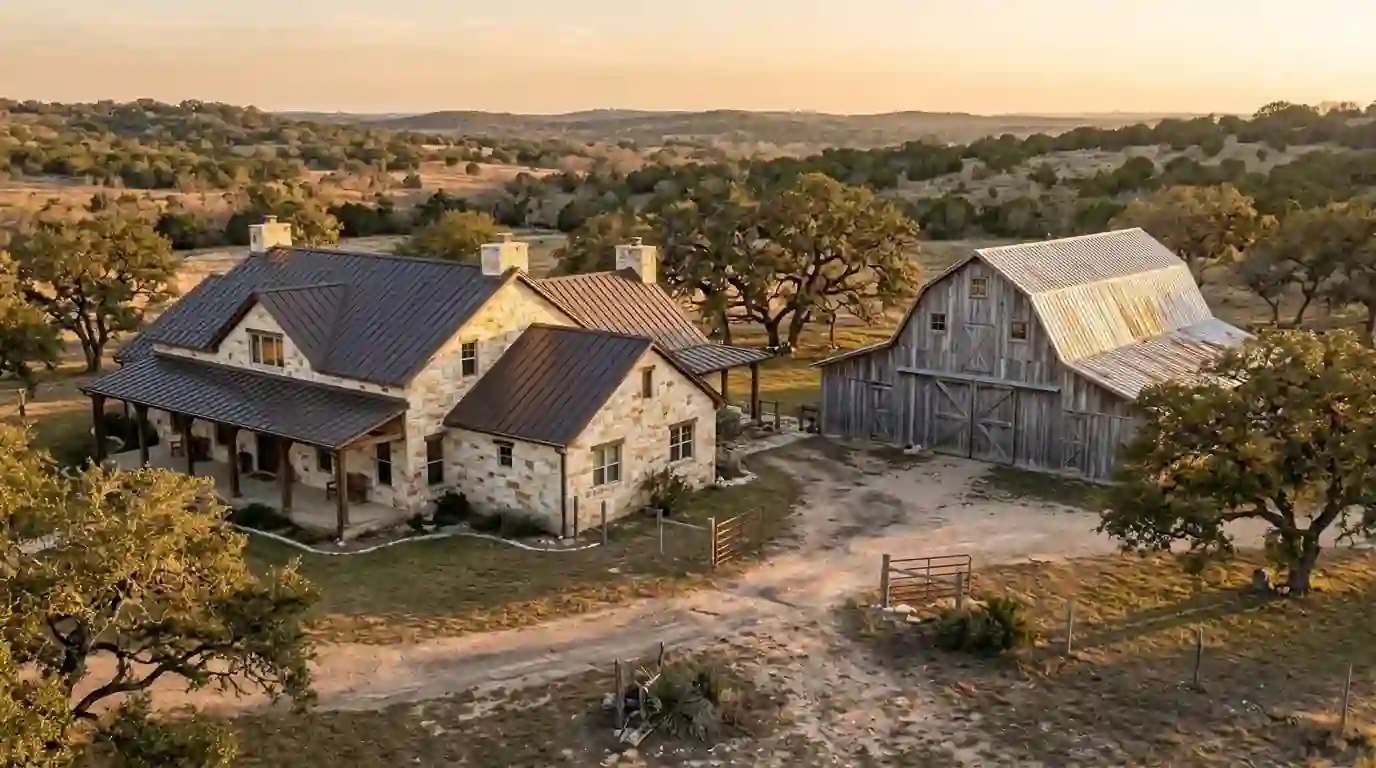
5V crimp suits traditional ranch houses, cabins, porches, barns and workshops, and it's a good fit where budget comes first. It matches the look of older Hill Country buildings, so it's also chosen to keep a new addition in step with an original structure. Some HOAs set rules on metal roof styles or colors, so check before ordering panels.
Installation details that decide how long either roof lasts
Under any metal roof, the underlayment carries water that gets past the panels and protects against condensation. A high-temperature synthetic underlayment holds up better under metal in Texas sun than older felt. Panel finish matters too: Galvalume bare metal and painted finishes with Kynar-type coatings resist fading and rust better than basic paint.
Trim and flashing are where most metal roof leaks begin, whatever the panel. Ridge closures, valley metal, chimney flashing and pipe boots all need care. On 5V roofs, screws should be driven snug enough to seal the washer without crushing it. On standing seam, panels must be cut and hemmed cleanly at the eaves and the seams kept straight so they lock fully along their length.
What the cost difference usually comes from
Standing seam generally costs noticeably more than 5V crimp on the same house. The reasons are heavier metal, hidden clip systems, more trim work and often panels that are formed to length on site. 5V crimp uses less labor, simpler trim and lighter material in many cases.
Over a long ownership, the gap narrows somewhat because 5V needs fastener maintenance that standing seam doesn't. The real price depends on roof size, pitch, the number of valleys and penetrations, tear-off of the old roof and access on sloped or rocky lots. We price both after an inspection, and our typical cost ranges give a starting point.
How to choose between the two
Start with how long you'll own the house and how much upkeep you're willing to do. If you plan to stay a long time and want the roof to need little attention, standing seam usually wins. If cost is the main limit, or you're roofing a barn, porch or ranch house where the classic look fits, 5V crimp is a sensible choice.
Either way, you'll get a better roof from correct underlayment, trim and fastening than from the panel type alone. Learn more on our standing seam roofing page, or phone (210) 750-1898 to have both options measured and priced on your home.