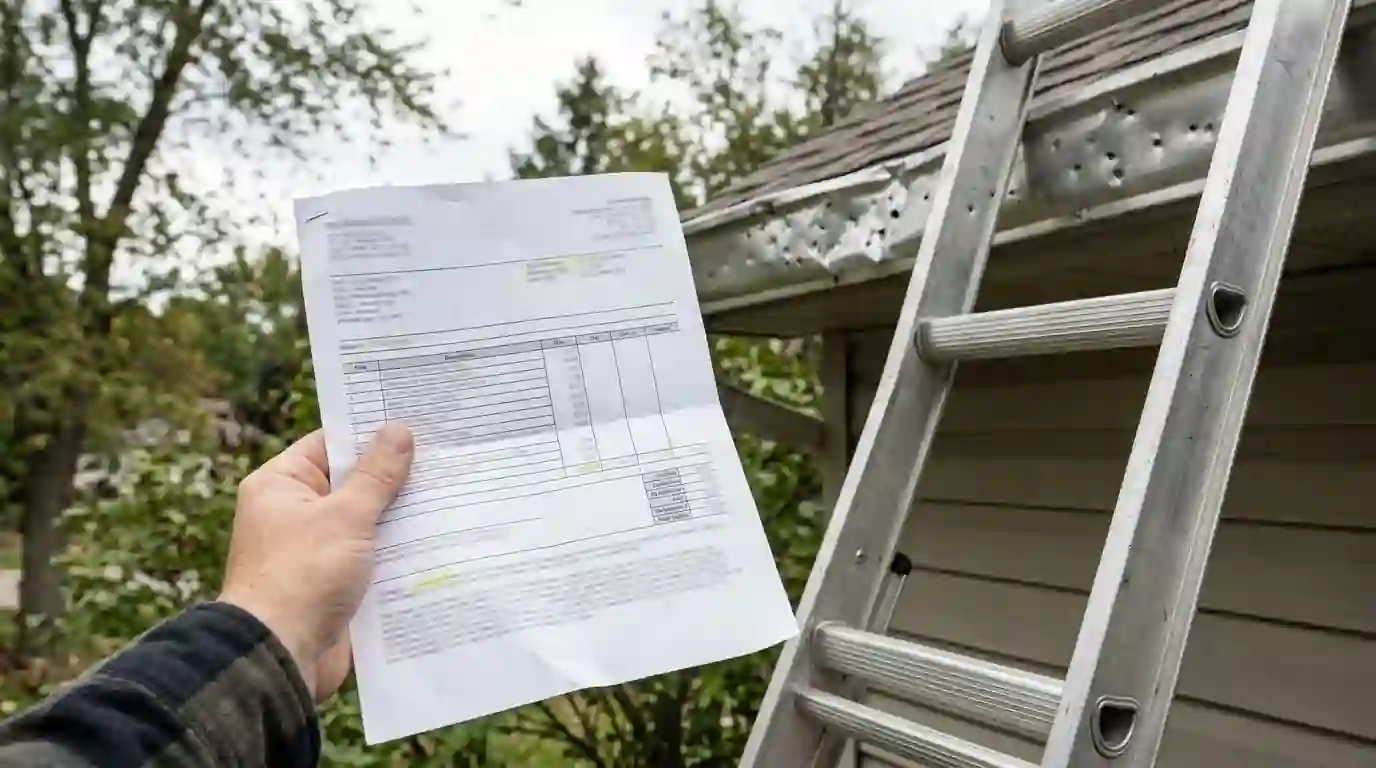
Why does your attic get so hot in a San Antonio summer?
Sun hits the shingles all day, and a dark roof gets far hotter than the air around it. That heat soaks through the decking and radiates down into the attic, the way a stovetop warms your hand before you touch it. Summer attic temperatures here commonly pass 140 to 150 degrees, and they stay high well after sunset.
Many San Antonio homes run their ductwork, and often the air handler, through the attic. So the cool air your system just made travels through the hottest space in the house before it reaches a vent. Any heat that sneaks into those ducts is heat you pay to remove a second time.
Attic heat also works on the roof itself. Shingles that bake from below as well as above tend to dry out and lose flexibility sooner, which is one reason South Texas roofs age faster than the same product in a milder climate.
How a radiant barrier actually blocks heat
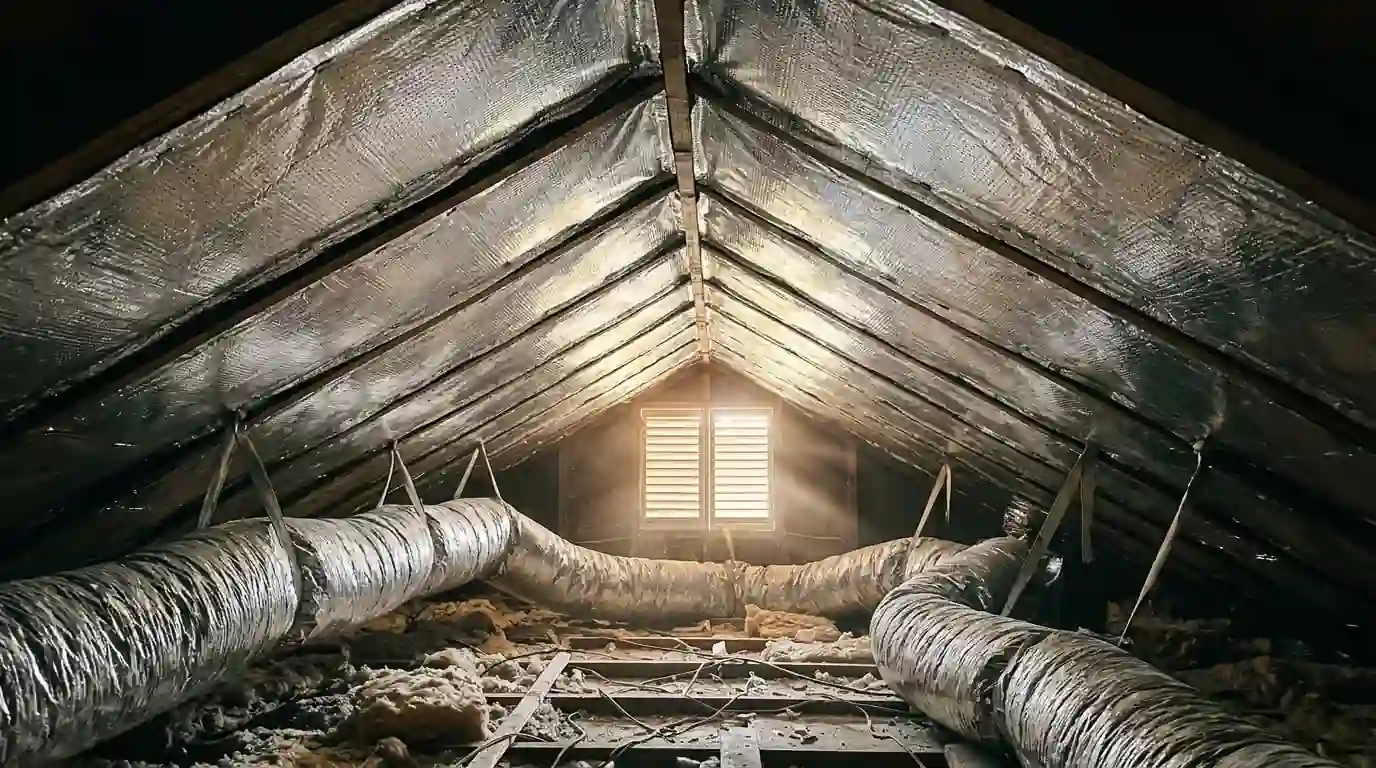
Heat moves three ways: conduction through solid material, convection through moving air, and radiation across open space. Insulation slows conduction. Venting carries hot air out. A radiant barrier targets the third path, reflecting radiant heat back toward the roof and giving off very little heat from its own shiny face.
That last detail matters. Foil only works when it faces an air gap. Pressed tight against insulation or another surface, it simply conducts heat and loses most of its value. This is why placement decides whether a barrier is worth the money, and why two homes with the same product can get very different results.
Which installation method fits your attic?
There are four common ways to add a barrier, and they aren't equal. Here's how they compare in the attics we climb into around Bexar County.
Stapling foil to the rafters is the usual retrofit choice. It's slow, careful work in a hot, cramped space, so it goes much better in the cooler months. The barrier should be perforated so moisture can pass through, and it shouldn't block soffit intake or the air path up to the ridge vent.
- Foil-faced roof decking goes on during a reroof, foil facing down, with a clean air space below it from day one.
- Foil stapled under the rafters can be added to an existing attic, with the shiny side facing the attic floor.
- Foil laid over floor insulation is quick, but dust settles on it and steadily cuts how much heat it reflects.
- Spray-on radiant coatings on the underside of the deck reflect less than foil and depend heavily on even coverage.
Why ventilation and insulation come before foil
A radiant barrier lowers the heat that reaches your attic floor, but it can't fix an attic that doesn't breathe. If hot air has nowhere to go, it builds under the deck and the barrier just sits in it. Balanced intake and exhaust venting keeps air moving from the soffits up and out at the ridge.
Insulation on the attic floor is the main defense for your living space. Foil has no meaningful insulating value of its own, so a thin layer of old, compressed blown insulation still lets the ceiling heat up. We often see attics where topping off insulation and clearing blocked soffit vents would do more than any foil.
Think of the barrier as the third piece of the set. When venting and insulation are already sound, the barrier trims the heat load on your ducts and gives the cooling system some breathing room on the worst afternoons.
When is a reroof the smart time to add one?
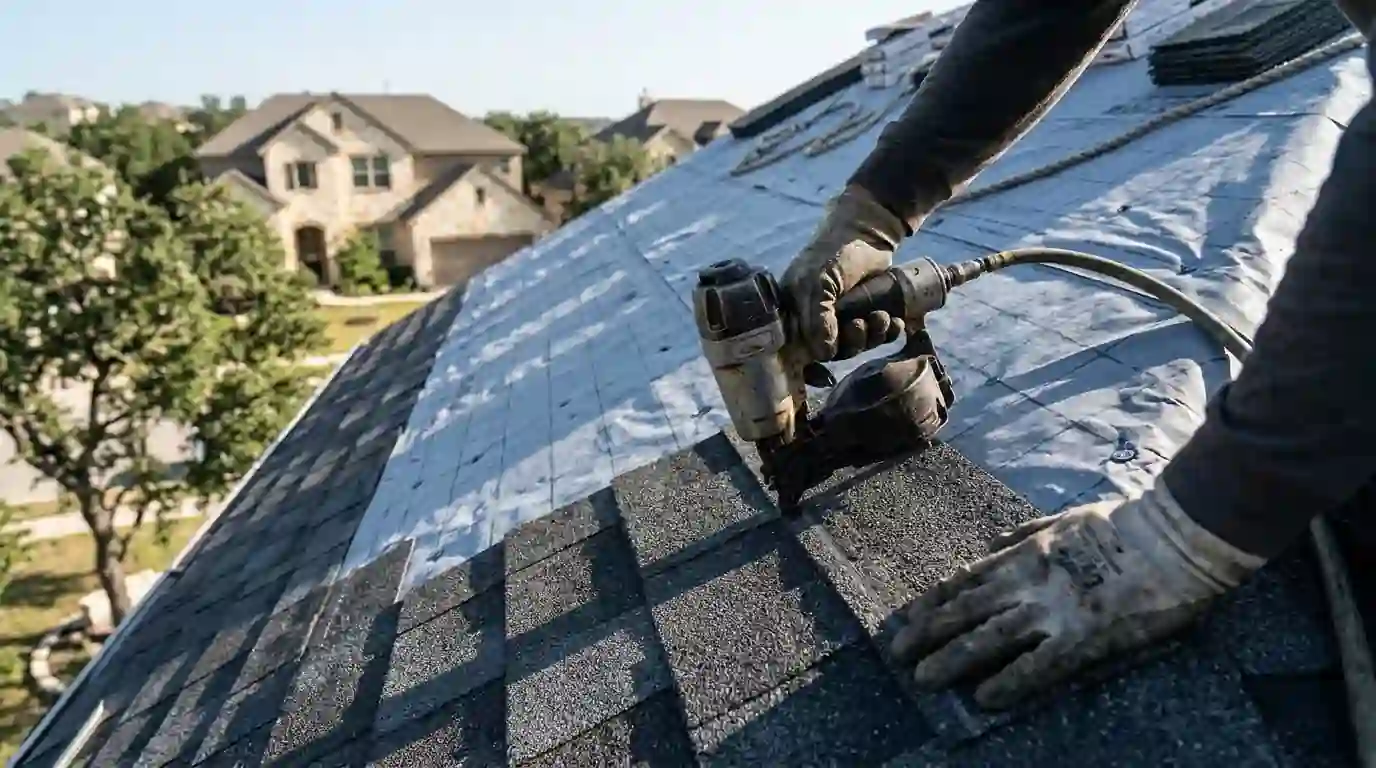
If your roof is near replacement, waiting for the reroof usually makes sense. Foil-faced decking goes on as part of the new deck, so the barrier ends up exactly where it should be, facing an open attic, with no extra labor in the cramped space below. The added material cost over plain decking is modest next to a separate retrofit.
It also lets us check the rest of the system while the roof is open. During a full tear-off and replacement, we look at rafter condition, venting at the ridge and soffits, and bath fan ducts that dump moist air into the attic instead of outside.
If the roof still has plenty of life, a rafter retrofit is the better option. Typical retrofits run about $0.68 to $1.24 per square foot, and the final number depends on attic size, access and clearance once we've been up there to look.
What savings can you realistically expect?
Be wary of anyone who promises a specific percentage off your electric bill. Results depend on where your ducts run, how much insulation you have, your roof color and how the house sits to the sun. A home with attic ducts and a dark roof facing west tends to notice more than one with ducts inside conditioned space.
What homeowners usually notice first is the attic itself. It feels less brutal when you climb up in August, rooms under the attic hold their temperature a little better late in the day, and the AC doesn't run quite as hard. Those are real gains, just not dramatic ones.
Other choices stack with a barrier. Lighter roof colors reflect more sun before heat ever reaches the deck, and shingle lines in lighter shades are worth a look if you're replacing the roof anyway.
Mistakes that make a radiant barrier useless
Most disappointing results trace back to a handful of installation errors. These are the ones we find most often when we open up an attic that still runs hot after a barrier went in.
If you already have a barrier and the attic still feels like an oven, give us a call at (210) 750-1898. The line is answered 24/7, and we'll check placement, venting and insulation before anyone suggests spending more.
- The foil faces the wrong way or is pressed flat against insulation with no air gap.
- Solid, unperforated foil traps moisture against the wood on humid nights.
- The barrier covers soffit vents or blocks the airflow channel up to the ridge.
- Foil was laid across the attic floor and is now buried under a layer of dust.
- Seams and tears were left open around ducts, the attic hatch and recessed lights.