Why a new roof comes with more than one warranty
Roof problems come from two places: the product and the installation. A shingle that blisters or loses granules early because of how it was made is a material defect. A leak around a chimney because the flashing was lapped the wrong way is an installation error. Different parties stand behind each one.
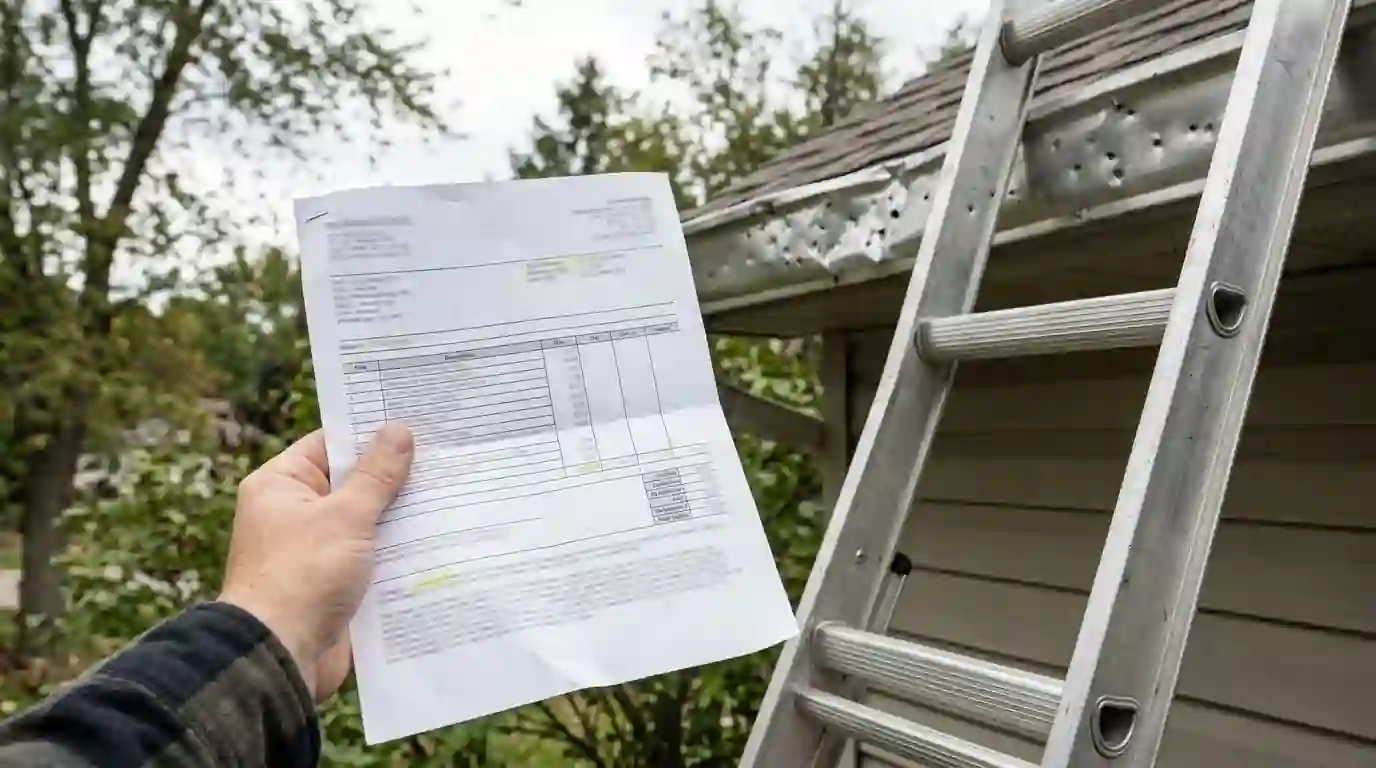
That's why an estimate should list the warranties separately, with who issues each one and what it covers. If an estimate just says the roof is warrantied, ask for the actual documents before you sign. The fine print decides what you'll be able to claim later.
What a manufacturer material warranty covers
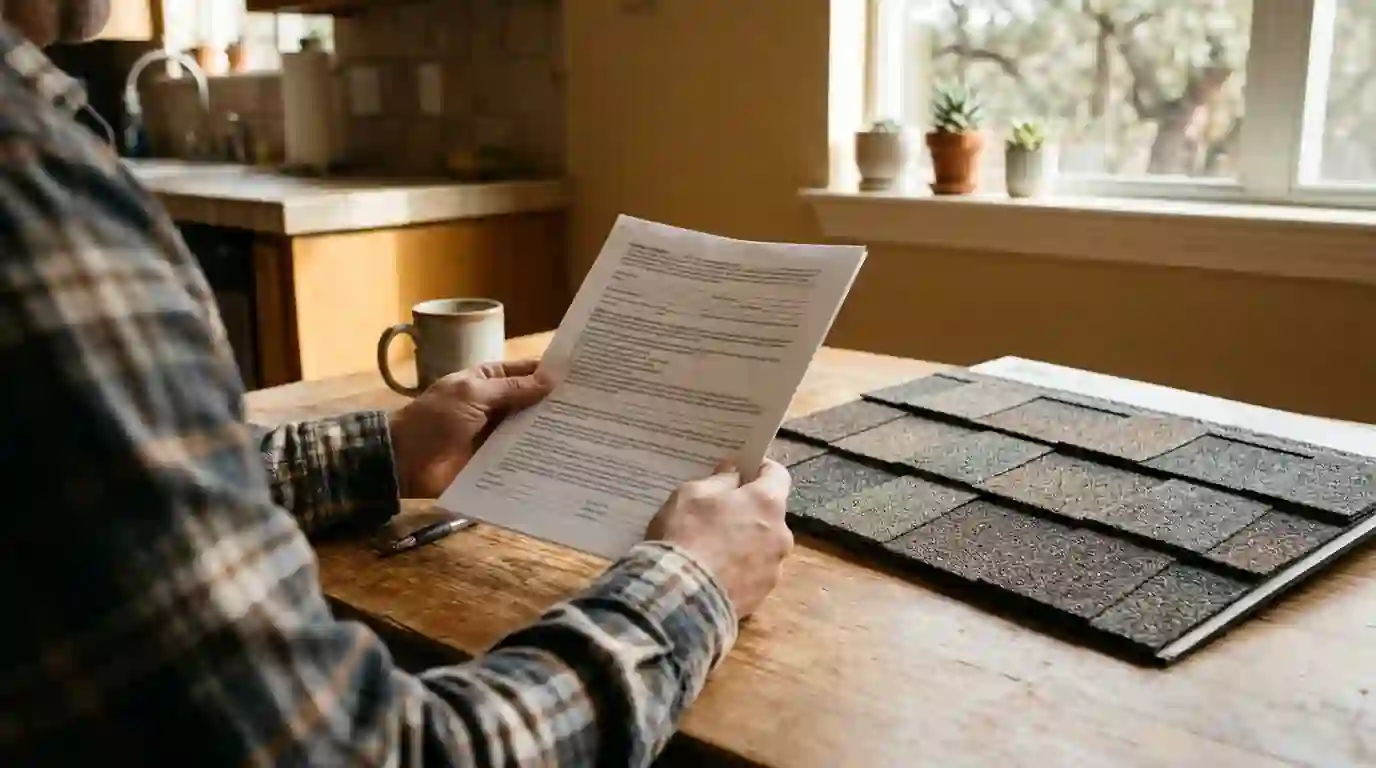
A standard material warranty comes from the company that made the shingles, metal panels or tile. It covers manufacturing defects that cause the product to fail under normal conditions. It generally doesn't cover installation mistakes, storm damage, foot traffic, or problems caused by poor attic ventilation.
Many material warranties are prorated after an early period. During that first window, the manufacturer may cover more of the cost of replacement material. After it, coverage shrinks as the roof ages, and labor to tear off and reinstall is often limited or excluded. Some shingle lines also carry a separate algae resistance or wind rating with its own terms and conditions.
- Covers: defects in the product itself.
- Usually excludes: installation errors, hail, falling limbs and owner damage.
- Often limited: labor, disposal and tear-off costs.
- Watch for: proration schedules and registration deadlines.
How enhanced system warranties work
Many manufacturers offer upgraded warranties when a roof uses their complete system: starter strip, shingles, hip and ridge caps, underlayment and sometimes ventilation products, all from the same maker. Some of these upgrades require the job to be done by a contractor in the manufacturer's program.
Enhanced coverage may stretch the non-prorated period, include more labor, or add limited coverage for certain installation errors. Each manufacturer writes its own terms, so compare the actual documents rather than the tier names. Also check whether the warranty must be registered, who registers it and what proof of the installation you'll receive once the job is done.
What a workmanship warranty from your roofer covers
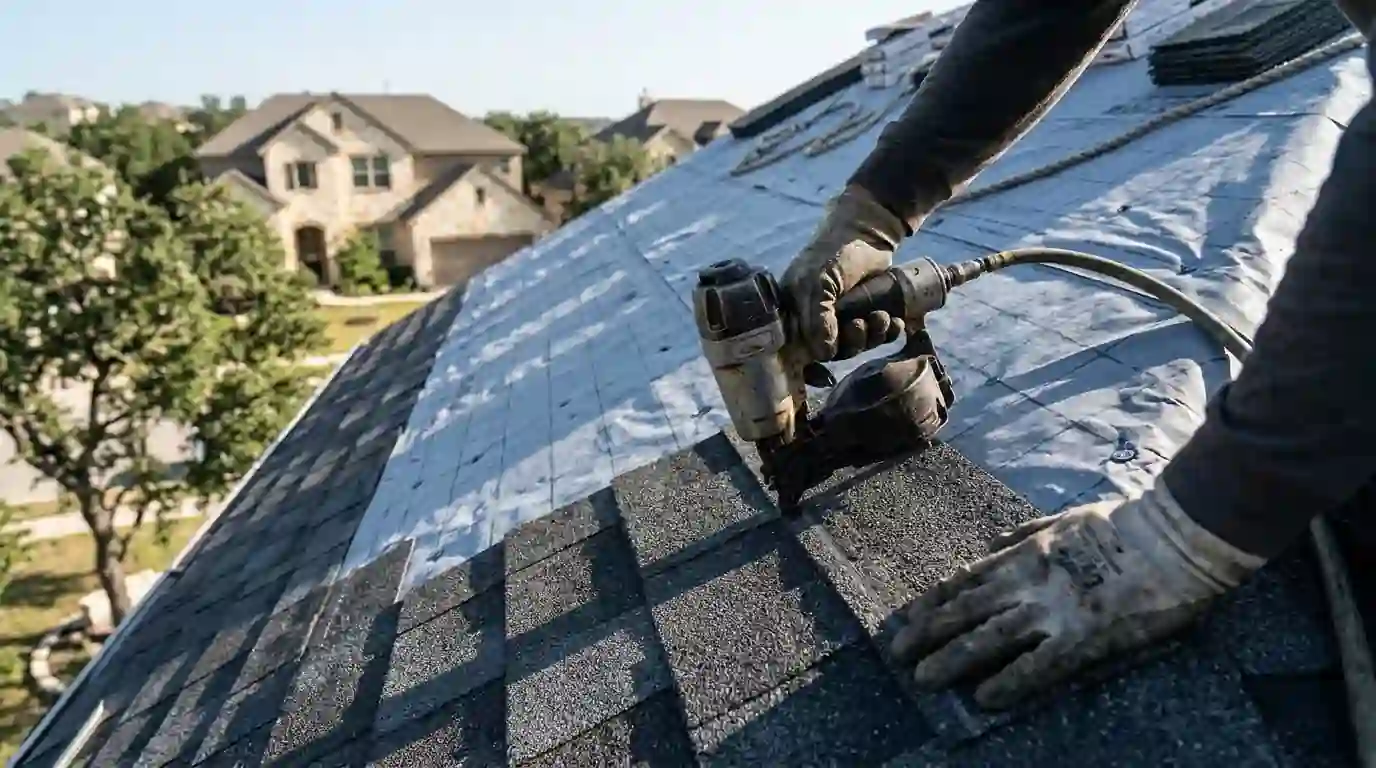
A workmanship warranty is the contractor's promise to fix problems caused by how the roof was put on. That includes leaks from flashing, missing or high nails, poorly sealed pipe boots and ventilation set up wrong. In practice, most early roof leaks trace back to installation details, not defective shingles.
The value of this warranty depends on two things: what the written terms say and whether the contractor is still around to honor it. Ask how warranty calls are handled, how quickly someone comes out, and whether the warranty covers interior damage or only the roof repair. When a leak does show up, our leak tracing and repair starts by finding where the water enters before anything is opened up.
Common ways homeowners void a roof warranty
Warranties come with conditions, and some of the most common problems happen after the crew leaves. Read the maintenance and alteration sections closely. A satellite dish bolted through the shingles or a solar install that skips the right flashing can cut coverage on that part of the roof. If you plan to add panels, ask about solar panel removal and reinstall so the roof work and the mounts are coordinated.
- Installing products from mixed brands when a system warranty requires one maker.
- Leaving an attic short on ventilation, which many shingle warranties require.
- Letting another company cut into the roof for a dish, vent or solar mount without proper flashing.
- Skipping registration when the manufacturer requires it within a set time.
- Pressure washing shingles or walking the roof in ways the manufacturer warns against.
- Not reporting a problem in writing within the period the warranty specifies.
Do roof warranties transfer when you sell the house?
Some do and some don't. Many manufacturer warranties allow one transfer to a new owner, sometimes with a notice deadline or a fee, and some reduce coverage after transfer. Workmanship warranties vary even more, since each contractor sets its own rules.
If you're selling, gather the warranty documents, the invoice and the product details in one folder for the buyer. A roof certification for a home sale can also give buyers and lenders a current view of the roof's condition. Buyers should ask the seller for those documents early, before the option period ends.
Questions to ask before you sign a roofing contract
Warranty language is easy to skim and hard to use later. Ask these questions while you're comparing estimates, and get the answers in writing. If two contractors quote similar prices, the clearer warranty terms are often the tiebreaker.
For a broader look at how roof age and climate affect the decision, our guide on roof life spans in South Texas heat is a good companion read. If you'd like us to walk through the warranty terms on your own estimate, phone (210) 750-1898.
- Which manufacturer warranty applies, and is it standard or enhanced?
- Who registers it, and when will I get the confirmation?
- What does your workmanship warranty cover, and is interior damage included?
- Does either warranty transfer if I sell, and what does it take?
- What maintenance or ventilation conditions do I need to meet?