How to tell which tile you have
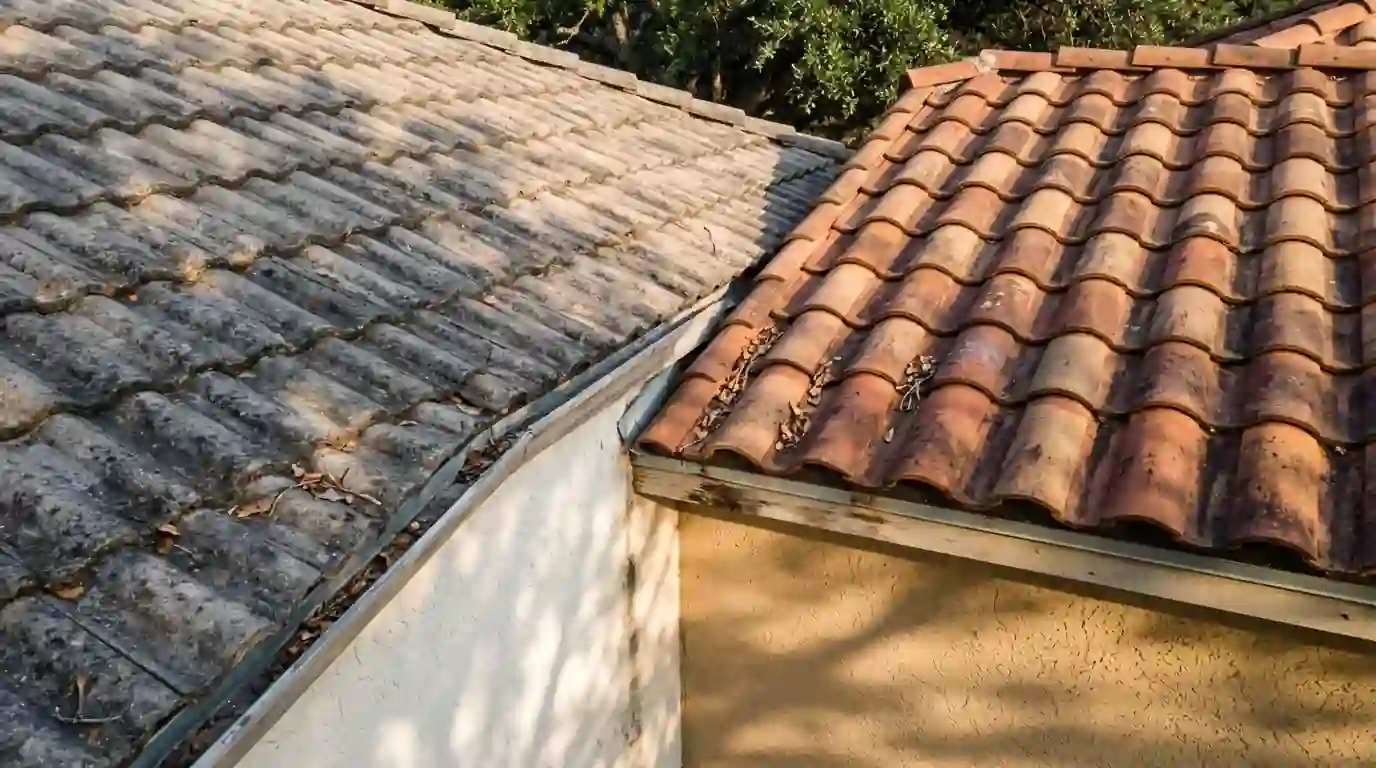
From the ground, look at a broken edge or the underside of a tile if any have slipped out. Clay usually shows an even terracotta or fired color all the way through, with a smooth, slightly glassy break. Concrete shows gray cement and sand at the break, with color mostly on the surface. Concrete tiles also tend to be thicker and have a sandier texture.
Age and neighborhood give hints too. Many historic homes in places like Monte Vista and Alamo Heights have clay barrel tile, while a large share of newer homes in north side subdivisions were built with concrete tile in flat, S or barrel profiles. If you're unsure, an inspection settles it in a few minutes, and it matters because the two materials aren't interchangeable for repairs.
Weight and what your roof framing can carry
Both are heavy compared with shingles, and concrete is usually the heavier of the two. A house built for tile has rafters or trusses sized for that load. A house built for shingles often isn't, so switching a shingle roof to tile can require an engineer's review and added framing.
Going the other way is easier. Swapping heavy concrete tile for a lighter material takes load off the structure, which is one reason some owners move to synthetic tile or metal when the time comes. If you're thinking about a change in material, start with the framing question before falling for a look.
Color, finish and how each one ages
Clay holds its fired color very well because the color is part of the material. Glazed clay can stay bright for a lifetime of the house. Concrete tile gets its color from pigment mixed in or applied to the surface, and over years of sun the surface weathers, so colors soften and the texture gets rougher.
That difference matters most during repairs. Matching a 20-year-old concrete tile is often harder than matching clay, because new concrete tiles are brighter than the faded ones around them. We keep salvaged tiles from tear-offs where possible, and we may move matching tiles from a less visible slope to the front so the patch blends in.
How hail and foot traffic treat each material
Clay is hard but brittle. Large hail can crack it or knock off corners, and so can careless foot traffic from satellite installers, painters or anyone stepping in the wrong place. Concrete is tougher against small impacts but still cracks from large hail and from walking on unsupported spots. Neither material is a good surface for casual walking.
Some concrete tile products carry a UL 2218 Class 4 impact rating, which may qualify for the Texas impact-resistant roof discount; our guide to the Class 4 insurance discount explains how that works. After a big storm, cracked tiles can hide under intact ones, so a hand inspection of the slopes is more reliable than looking from the yard.
- Keep foot traffic off the tile unless the person knows where to step.
- Ask antenna, solar and HVAC installers to work from walk pads or ladders.
- Look for loose tile pieces in gutters and flower beds after storms.
- Watch ceilings near valleys for stains, since broken tile there leaks first.
The underlayment is the real clock on a tile roof
Tile sheds most of the rain, but the waterproofing layer is the underlayment beneath it. Older tile roofs often sit on felt that dries out and cracks in Texas heat long before the tiles wear. When that layer fails, leaks show up even though the tiles look fine.
The usual fix is a lift and relay: we remove the tiles carefully, stack them, replace the underlayment and battens as needed, then reinstall the good tiles and replace broken ones. Today's synthetic and self-adhering underlayments last much longer than old felt in attic heat. Our tile roof repair work covers both spot fixes and full relays.
What drives the cost of clay vs concrete
Clay tile usually costs more than concrete, sometimes by a wide margin, because of the material itself and the slower, more careful installation it needs. Concrete tile is one of the more affordable ways to get a tile look. Both cost more than shingles because of weight, handling and specialty flashing.
Real prices depend on roof size, pitch, the tile profile, how many tiles can be reused, underlayment choice and access. Historic properties can add cost when the City of San Antonio Office of Historic Preservation reviews exterior changes in local historic districts. We price each roof after an inspection, and the price ranges on our cost page give a rough starting point.
Choosing the right tile for your home
On a historic home, clay is often the right choice for appearance and may be expected in review. On newer homes with concrete tile, staying with concrete keeps the look consistent with neighbors and HOA rules, and it usually costs less. If the framing allows and the budget fits, clay can be a long-term upgrade.
Whatever you choose, plan for the underlayment and flashings as much as the tile. Give us a call at (210) 750-1898 and we'll look at your roof, identify the tile and tell you what it needs.
- Pick clay for color that lasts and a historic look.
- Pick concrete for lower cost and a wide range of profiles.
- Pick either only after confirming the framing can carry the weight.
- Plan underlayment replacement as part of any major tile work.